
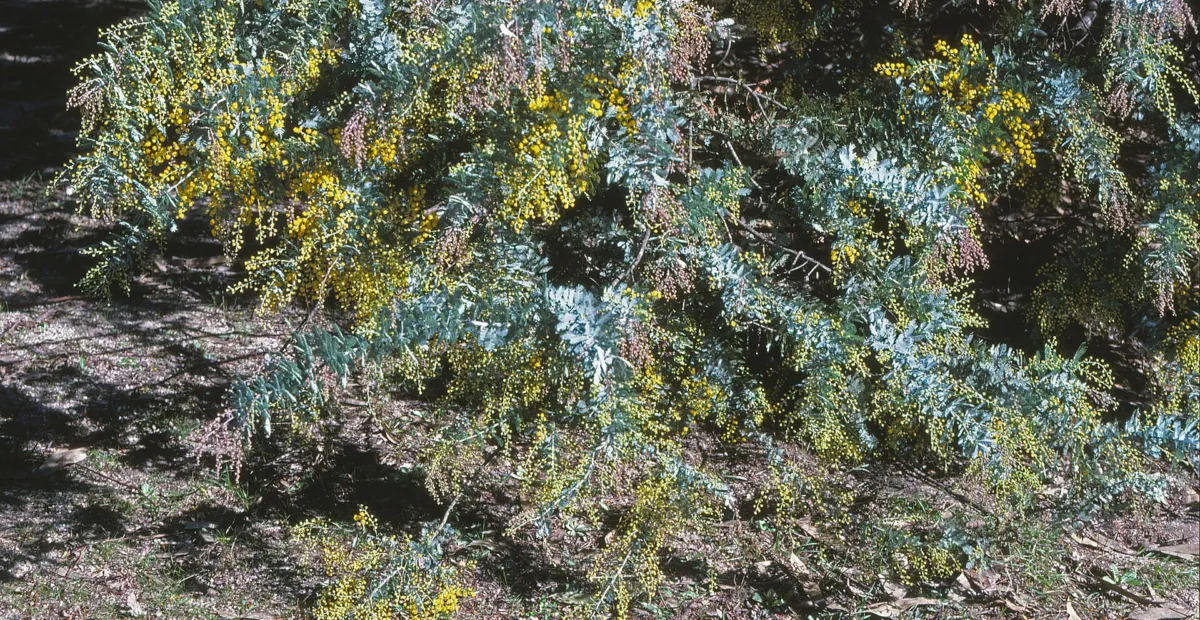
 Source:
 Cootamundra wattle (Acacia baileyana) short overview
Cootamundra wattle is an evergreen Australian shrub or small tree valued for its graceful, arching habit, finely divided blue-gray foliage, and abundant rounded yellow flower heads. It blooms mainly during the cooler season in the Northern Hemisphere, often from December into early spring. Give it full sun, excellent drainage, and protection from hard freezes; in colder parts of the United States, grow it in a container and overwinter it under cover.
Taxonomic classification
Cootamundra wattle (Acacia baileyana) care guide
Light and placement
Give full sun, ideally six or more hours of direct light, with the canopy sheltered from strong winter winds. A south- or west-facing position is useful in marginal climates. Too little light produces sparse, stretched growth and weaker flowering; excessive reflected heat combined with drought can scorch foliage, especially in containers.
Watering and humidity
Water deeply when the upper few inches of soil have dried, then let excess water drain fully. Keep newly planted specimens more evenly watered during their first growing season, but reduce irrigation after establishment. Water less often in cool winter weather and never leave container roots standing in a saucer of water.
Soil and growing medium
Use a sandy or loamy soil that drains rapidly after rain. Slightly acidic to neutral conditions are suitable. Avoid heavy, persistently wet clay and sites where water collects around the root crown. In containers, use a porous, peat-free mix amended with coarse bark, pumice, or perlite.
Feeding
Feed lightly in spring with a balanced, slow-release fertilizer or a modest layer of mature compost. Avoid heavy nitrogen applications, which can produce weak, lush growth and reduce structural quality. Do not fertilize drought-stressed, freshly transplanted, or dormant plants; water first if the soil is dry.
Growth and habit
This vigorous evergreen develops arching branches and can mature into a broad shrub or small tree. Young plants benefit from formative training, while established specimens usually need only selective thinning. Growth is strongest in warm, sunny conditions with free drainage; severe frost, root disturbance, and waterlogging can shorten its useful life.
Planting and repotting
Plant outdoors in spring after the local danger of hard frost has passed, choosing a sunny, sheltered site. Set the root ball level with the surrounding soil; do not bury the stem base. Water deeply during the establishment season, then allow the surface to dry between waterings. Space well away from structures and overhead utilities.
Repot container plants in spring when roots fill the pot, moving up only one container size. Handle the root ball carefully and use a very free-draining mix. Large specimens can be top-dressed instead of repeatedly shifted into larger pots.
Propagation and pruning
Propagation
Sow seed in spring after nicking or otherwise treating the hard seed coat; warm conditions improve germination. Semi-hardwood cuttings may be taken in summer, though results can be variable. Use clean tools and a sterile, sharply drained medium.
Pruning
Prune in spring after the main frost risk has passed. Remove dead, damaged, crossing, or badly placed branches and lightly shape young plants. Mature plants generally resent hard cutting, so preserve the main framework and avoid severe reductions unless recovery conditions are excellent.
Overwintering
Protect from hard freezes, especially while young. In Zones 8–10, use a sheltered microclimate and mulch the root area without touching the trunk. In colder areas, move container plants into a bright, cool, frost-free space before temperatures fall below the mid-20s°F; keep the mix only lightly moist.
Uses
Use as a specimen shrub or small tree, a sheltered screen, or a container plant for cool-season floral interest. Its silvery foliage and yellow flower heads provide ornamental contrast and can support flower-visiting insects. It is not recommended as a culinary or medicinal plant without authoritative species-specific guidance.
Appearance
The plant has smooth gray to slate-colored bark, arching branches, and young twigs that may be softly hairy. Its leaves are finely bipinnate, glaucous blue-gray, and fern-like, with small rounded glands along the leaf axis. Dense yellow flower heads provide a strong seasonal contrast against the cool-toned foliage.
Flowering
Small, rounded yellow flower heads are produced in dense racemes near branch ends. In the Northern Hemisphere, flowering is commonly reported from December through March, although local timing varies with climate and winter temperatures. Flowering is most reliable after a warm growing season and in a bright, sheltered position.
Pollination and visitors
The dense yellow flower heads are visited by bees and other insects seeking pollen and floral rewards. The available evidence supports bee visitation as a characteristic interaction, but a single species-level pollinator could not be established confidently for this exact plant.
Acacia baileyana photos
Click any photo for a larger view. Source, author and license are shown separately.
Diseases and pests
Diseases
Generally manageable when planted in well-drained soil. Honey fungus has been reported, especially where roots remain wet or infected woody material is present. Remove affected plant debris, improve drainage, and avoid replanting immediately into heavily infested soil.
Pests
Watch for scale insects, mealybugs, spider mites, aphids, and whiteflies, particularly on stressed or protected plants. Inspect leaf axils and young growth, improve airflow, and use targeted horticultural soap or oil only according to the product label. Avoid routine broad-spectrum insecticides during flowering.
Related diseases and pests
Only Plant Doctor profiles whose host data indicate this plant may be affected are shown here.
 PestChilli thripsScirtothrips dorsalis Hood
 PestCottony Cushion ScaleIcerya purchasi
 DiseaseBotryosphaeria canker and diebackBotryosphaeria dothidea (Moug. ex Fr.) Ces. & De Not.
 PestCalifornia red scaleAonidiella aurantii
 PestBroad mitePolyphagotarsonemus latus (Banks)
 DiseaseLate blightPhytophthora infestans
 Environmental stressFrost heaving
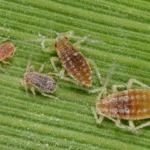 PestMealy Plum AphidHyalopterus pruni (Geoffroy, 1762)
Toxicity and pollen
Reliable, species-specific evidence establishing toxicity to people, dogs, cats, or children was not located. Do not treat the plant as proven safe: discourage chewing, prevent access to large quantities of foliage, flowers, or pods, and contact a poison-control or veterinary service if ingestion causes symptoms.
- Typical season
- Typically December–March in much of the United States where it flowers
- Pollination / pollen
- Insect-dispersed pollen; some airborne release possible
Acacia pollen is documented as capable of causing sensitization in some people, although its overall allergy relevance is often described as limited and varies by region. Flowering plants can still bother sensitive individuals. Keep windows closed during heavy local flowering if symptoms occur and avoid handling abundant blooms when affected.
Native habitat
In its native range, the species occurs in inland southeastern New South Wales, generally in a temperate climate with seasonal moisture and periods of dryness. It is associated with open woodland and shrubland settings and performs best in mineral soils that drain freely rather than remaining saturated.
Interesting fact
The species is native to a restricted area of southern New South Wales near Cootamundra and Wagga Wagga. Its winter flowering makes it valuable in Northern Hemisphere gardens when relatively few woody plants are in bloom. The foliage is truly bipinnate, giving the plant a soft, fern-like texture. It has also received historical horticultural recognition in Europe.
Frequently asked questions (FAQ)
The most relevant questions about this plant, with short and direct answers.
🌱Quick care
What is Acacia baileyana called?⌄
Acacia baileyana is commonly called cootamundra wattle. It is a small evergreen tree or large shrub in the Fabaceae family, native to southeastern New South Wales, Australia.
How large does Acacia baileyana get?⌄
Acacia baileyana can reach roughly 20 to 33 feet tall and 13 to 20 feet wide in favorable conditions. In gardens, size is often smaller when the plant is regularly pruned or grown in a challenging climate.
Is Acacia baileyana fast growing?⌄
Yes, Acacia baileyana is generally fast growing when planted in full sun with good drainage. Fast growth also means it may need early structural pruning and enough room for its mature spread.
Is cootamundra wattle evergreen?⌄
Cootamundra wattle is usually evergreen, retaining its attractive gray-green, finely divided foliage year-round in suitable climates. Severe cold, drought, or root stress can cause leaf loss or dieback.
🌤️Environment and placement
How much sun does cootamundra wattle need?⌄
Cootamundra wattle grows best in full sun, meaning at least 6 hours of direct sunlight daily. Adequate light supports denser growth and heavier flowering.
What USDA hardiness zone is Acacia baileyana?⌄
Acacia baileyana is best suited to mild U.S. climates and should be protected from hard freezes. Its exact performance varies with plant age, exposure, cultivar, and winter conditions, so local frost history matters more than a single zone label.
Can cootamundra wattle survive frost?⌄
Cootamundra wattle tolerates light frost once established but should be protected from hard freezes. Young plants and container specimens are especially vulnerable to freezing weather.
Can Acacia baileyana tolerate drought?⌄
Established Acacia baileyana is drought tolerant and generally needs low to moderate water. Provide supplemental water during prolonged drought, extreme heat, or the first growing season after planting.
Is Acacia baileyana good for a privacy screen?⌄
Yes, Acacia baileyana can serve as a fast-growing screen because it develops a spreading crown and dense gray-green foliage. Its ultimate size, relatively short expected lifespan, and possible self-seeding should be considered before planting it near boundaries.
Can I grow Acacia baileyana indoors?⌄
Acacia baileyana is not well suited to permanent indoor culture because it needs strong light and eventually becomes too large. A bright, protected greenhouse or temporary indoor location may work for young plants in cold climates.
💧Care and problems
How often should I water Acacia baileyana?⌄
Water Acacia baileyana regularly while it establishes, then allow the soil to dry between deep waterings. Mature plants are drought tolerant, but extended heat and drought may require supplemental irrigation.
Does Acacia baileyana need fertilizer?⌄
Acacia baileyana usually needs little fertilizer once established and can grow in relatively lean soil. If growth is weak, use a light application of a balanced, low-nitrogen fertilizer only after ruling out drainage, watering, or root problems.
Why are the leaves on my cootamundra wattle turning brown?⌄
Brown foliage can result from drought, hard frost, root damage, poor drainage, transplant shock, or severe heat. Check soil moisture and roots first, then remove clearly dead growth after the cause is corrected.
What pests affect Acacia baileyana?⌄
Acacia baileyana may be affected by mites, scale insects, and mealybugs, particularly when grown under stress or in protected conditions. Inspect new growth and leaf undersides, and improve watering, airflow, and plant vigor before using treatments.
Is cootamundra wattle susceptible to root rot?⌄
Yes, cootamundra wattle can develop root problems in persistently wet or poorly drained soil. Plant it in well-drained ground, avoid frequent shallow watering, and do not allow containers to sit in water.
🪴Planting and repotting
What type of soil is best for cootamundra wattle?⌄
Use sandy or loamy, well-drained soil for cootamundra wattle. It tolerates relatively lean soils, while constantly wet or poorly drained soil can promote root problems.
Can Acacia baileyana grow in containers?⌄
Acacia baileyana can be grown in a large container when young, provided the pot has excellent drainage. Because it becomes a substantial shrub or small tree, container culture requires eventual root-space management or planting in the ground.
How do I plant Acacia baileyana in the ground?⌄
Plant Acacia baileyana in full sun, set at the same depth it was growing in its nursery container, and backfill with the native soil. Water deeply after planting and keep the root zone moderately moist until new growth shows establishment.
How far apart should cootamundra wattles be planted?⌄
Space cootamundra wattles according to their expected mature width, commonly about 13 to 20 feet apart for specimen-sized plants. Allow additional room from buildings, sidewalks, utility lines, and other trees.
Does cootamundra wattle have invasive roots?⌄
Cootamundra wattle is not generally selected for highly destructive roots, but its roots still need adequate space and should not be kept in constantly wet soil. Plant it away from foundations, narrow walkways, and underground utilities when possible.
✂️Propagation and pruning
How should I prune Acacia baileyana?⌄
Prune Acacia baileyana lightly after flowering to shape the plant and remove weak, crossing, or damaged branches. Begin structural pruning while it is young because mature branches may be less tolerant of severe cuts.
Can I prune cootamundra wattle into a tree form?⌄
Yes, cootamundra wattle can be trained into a tree form by gradually removing lower branches and retaining one or more strong leaders. Avoid removing too much foliage at once, especially during hot or dry weather.
When is the best time to prune cootamundra wattle?⌄
The best time to do major shaping is generally just after flowering or before the next flush of new growth. Remove dead or hazardous branches whenever necessary, using clean, sharp tools.
How do you grow Acacia baileyana from seed?⌄
Grow Acacia baileyana from seed by scarifying the hard seed coat or treating it with carefully handled boiling water, then sowing it in a well-drained medium. Germination is usually improved by using fresh, viable seed and warm conditions.
Can Acacia baileyana be propagated from cuttings?⌄
Yes, Acacia baileyana can be propagated from semi-hardwood cuttings, although success may vary. Cuttings are particularly useful for preserving selected foliage forms that may not come true from seed.
Should I soak cootamundra wattle seeds before planting?⌄
Yes, pre-treatment is usually helpful because cootamundra wattle seeds have a hard coat. Scarification or a carefully controlled hot-water treatment can improve water uptake, but boiling-water methods require caution to prevent injury and uneven results.
⚠️Toxicity and safety
Is Acacia baileyana invasive in the United States?⌄
Acacia baileyana has invasive or naturalization concerns in some regions outside its native range, although the risk varies by climate and location. Do not plant it near natural areas unless local invasive-plant guidance considers it appropriate, and remove unwanted seedlings promptly.
Does cootamundra wattle spread by seed?⌄
Yes, cootamundra wattle produces seed pods and can self-seed under favorable conditions. Collect or remove mature pods and pull volunteer seedlings before they become established.
Is Acacia baileyana toxic to dogs or cats?⌄
Species-specific toxicity information for Acacia baileyana is uncertain, so do not assume it is safe for pets or people to eat. Prevent chewing on leaves, flowers, seeds, or pods and contact a veterinarian or poison-control service if ingestion causes symptoms.
Are cootamundra wattle seeds edible?⌄
The seeds of cootamundra wattle should not be eaten because species-specific food-safety information is not sufficiently established for routine home use. Keep seeds and pods away from children and pets.
🌸Flowering and special interest
When does Acacia baileyana bloom?⌄
Acacia baileyana usually blooms from late winter into early spring, producing bright yellow flower clusters. Bloom timing can shift with local temperatures and winter conditions.
Why is my cootamundra wattle not flowering?⌄
Insufficient sunlight, excessive shade, drought stress, immature growth, or severe pruning before bud formation can reduce flowering. The plant generally performs best when it receives full sun and is not heavily fertilized with nitrogen.
Are Acacia baileyana flowers fragrant?⌄
Acacia baileyana flowers may be lightly fragrant and appear in showy yellow clusters. Fragrance intensity varies with weather, plant form, and individual growing conditions.
What does Acacia baileyana ‘Purpurea’ look like?⌄
Acacia baileyana ‘Purpurea’ is a cultivated form valued for purplish or purple-tinged new foliage rather than the standard gray-green color. Its care is broadly similar to the species, including full sun and excellent drainage.
Similar plants
 Yellow lantern chili (Capsicum chinense) care guideCapsicum chinense
 Capsicum baccatum care guideCapsicum baccatum
 Serrano (Capsicum annuum ‘Serrano’)Capsicum annuum 'Serrano'
 Purple Beauty (Capsicum annuum ‘Purple Beauty’)Capsicum annuum 'Purple Beauty'
 Numex Twilight (Capsicum annuum ‘Numex Twilight’)Capsicum annuum 'Numex Twilight'
 Explosive Ember Chili Pepper (Capsicum annuum ‘Explosive Ember’)Capsicum annuum 'Explosive Ember'