
Late blight
Phytophthora infestansLate blight overview
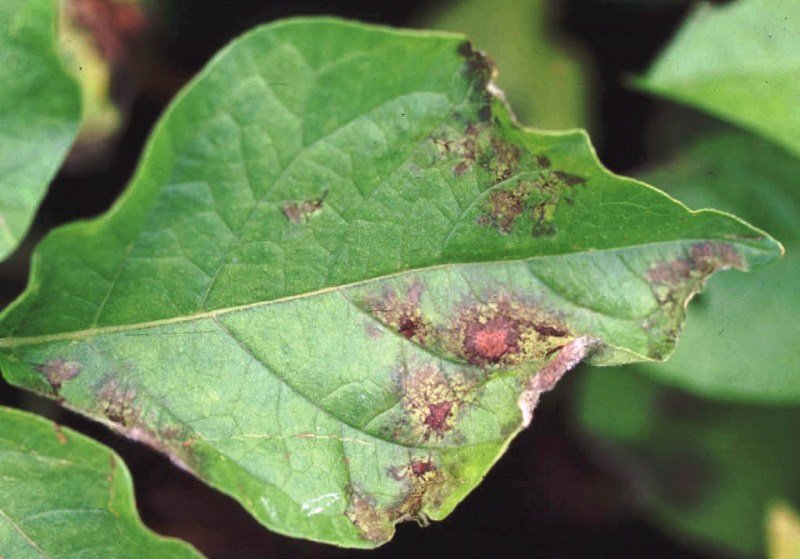
Late blight is a fast-moving, potentially devastating disease of tomatoes and potatoes caused by the water mold Phytophthora infestans. It produces water-soaked to dark brown leaf and stem lesions, firm brown fruit lesions on tomato, and reddish-brown to dark decay in potato tubers. Cool, wet weather can accelerate spread across a garden or field within days.
Typical conditions
Overview
Late blight primarily affects potato (Solanum tuberosum) and tomato (Solanum lycopersicum). It may also infect closely related solanaceous hosts, including hairy nightshade, and petunia under some protected-culture conditions. Disease severity varies with the pathogen strain, host cultivar and weather.
Early infections may appear as pale, water-soaked or greasy areas that enlarge into irregular dark brown lesions. During humid weather, a thin white downy growth may develop at lesion margins or on leaf undersides. Epidemics can progress quickly when susceptible plants remain wet for extended periods.
Symptoms and identification
- Leaves: large, irregular brown to black blotches, often with a green-gray or water-soaked margin; lesions are not necessarily restricted by major veins.
- Stems and petioles: firm, dark brown lesions that may girdle tissue and cause rapid wilt or collapse.
- Tomato fruit: firm, dark brown, slightly sunken lesions that enlarge across green or ripe fruit; secondary bacteria may cause soft rot.
- Potato tubers: shallow to deep reddish-brown, brown, purple-brown or granular internal discoloration, often followed by bacterial soft rot.
- Humid conditions: thin white sporulation may be visible on infected foliage, stems or fruit.
Late blight can resemble early blight, bacterial spot, Septoria leaf spot, sunscald and other fruit rots. Laboratory or extension diagnostic confirmation is advisable when an outbreak is suspected.
Causes and spread
The disease develops when viable pathogen material, a susceptible host and favorable environmental conditions occur together. Important sources in the United States include infected potato seed tubers, potato cull piles, volunteer potatoes, infected tomato transplants and windblown spores from infected crops or nearby hosts.
Sporangia are moved by wind, rain splash, irrigation water and handling of wet plants. New infections require surface moisture, and cool, humid weather favors repeated cycles of spore production. Some pathogen lineages infect both tomato and potato, whereas others show stronger host preference. Hairy nightshade can act as an infected weed host in some regions.
Life cycle and persistence
Phytophthora infestans produces sporangia on infected plant tissue, especially during cool, humid periods. These structures can be carried through the air or splashed onto nearby plants. In cool conditions, sporangia may release motile zoospores; direct germination is more common at warmer temperatures within the pathogen's favorable range.
After landing on a wet plant surface, infection can occur within hours under ideal conditions. Lesions may become visible roughly 5–7 days later, and new sporulation from those lesions can begin another infection cycle. Infected tubers, cull piles and volunteer plants can bridge the pathogen between seasons. Where compatible mating types occur together, long-lived oospores may also form, although their importance varies by region.
Treatment and control
Act quickly after the first confirmed symptoms. If only a few lesions are present, remove affected leaves or shoots during dry weather, place them directly into a sealed bag and remove them from the garden. Avoid handling wet plants because spores spread readily from damp tissue.
When infection is extensive, remove and destroy the entire plant or crop section. For potatoes, kill or remove infected tops before harvest when advised locally, allowing adequate time for tuber skins to set and reducing the chance of spores washing into the soil. Discard visibly infected tubers and manage cull piles so they cannot produce volunteer plants.
Fungicides are most effective as protectants applied before or at the beginning of infection risk and are not a cure for badly diseased tissue. In commercial production, applications are selected using local forecasts, disease-warning systems, crop stage and resistance-management guidance.
Low-impact and biological control
In a home garden, sanitation and moisture management are the principal low-input measures. Remove infected tissue promptly, destroy severely affected plants, eliminate volunteer potatoes and tomatoes, improve spacing and airflow, and water at the soil surface in the morning.
Choose cultivars described by reliable U.S. university or seed sources as late-blight resistant or tolerant for the crop and region, but monitor them because resistance may be incomplete or less effective against particular pathogen lineages. No unregistered home remedy should be assumed to control an active epidemic. Biological products, copper products or other materials should be used only when they are legally registered and labeled for the specific crop and disease.
Prevention
- Plant certified disease-free potato seed and inspect tomato transplants carefully before purchase and planting.
- Remove potato cull piles, volunteer potatoes and volunteer tomatoes before the growing season.
- Use resistant or tolerant cultivars when suitable, while recognizing that no cultivar is completely protected under all pathogen lineages and weather conditions.
- Space and stake or cage plants to improve airflow, and avoid dense foliage touching the ground.
- Use drip irrigation or a soaker hose rather than overhead watering; irrigate early enough for foliage to dry quickly.
- Scout frequently, especially after cool rainy periods, and seek confirmation from a county Extension office or plant diagnostic laboratory when symptoms are suspicious.
- Remove and dispose of infected plants and crop debris promptly. Do not save seed or tubers from diseased plants.
- Rotate tomato, potato, pepper and eggplant plantings where practical, while remembering that rotation alone will not prevent spores arriving from outside the garden.
Interesting facts
- Although commonly called a fungus, Phytophthora infestans is a fungus-like water mold.
- Late blight was the disease associated with the Irish potato famine of the 1840s.
- Under favorable conditions, a single lesion can produce very large numbers of sporangia and initiate repeated infection cycles.
- Pathogen populations contain multiple genetic lineages, so host susceptibility and fungicide performance can vary by location and season.
- Tomato and potato fruit or tuber tissue may remain firm at first, but secondary bacteria frequently cause soft rot after infection.
Use only pesticide products legally authorized for late blight on the specific crop in your state and country. Follow the current product label exactly, including crop listing, rate, protective-equipment requirements, reentry interval, preharvest interval, application timing and maximum seasonal use. Do not rely on a generic spray schedule; consult your state Extension recommendations and rotate fungicide modes of action to reduce resistance risk. Pesticides cannot restore tissue that is already dead or rotted.