
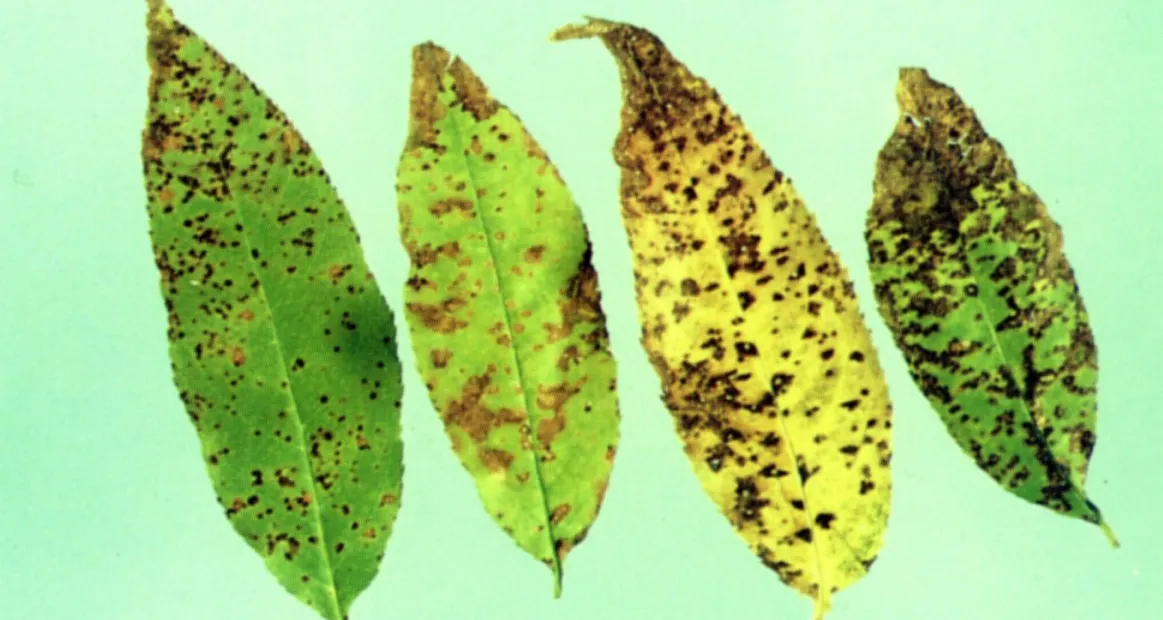
Cherry leaf spot
Blumeriella jaapii (Rehm) ArxCherry leaf spot overview
Cherry leaf spot is a fungal disease caused by Blumeriella jaapii, especially damaging to tart and sour cherries in humid growing regions of the United States. Small purple to reddish-brown spots enlarge, develop yellowing, and may fall out to create a shot-hole appearance. Severe infection causes premature defoliation, reduced fruit quality, weaker tree growth and greater winter-injury risk. Identification should consider other Prunus leaf-spot pathogens with similar symptoms.
Typical conditions
Overview
Cherry leaf spot typically begins as small, circular purple, red-purple or reddish-brown lesions on the upper surface of leaves. Lesions may enlarge and merge, while infected tissue yellows and dies. On susceptible trees, leaves can drop prematurely during the growing season.
The disease is particularly consequential on tart cherry because early defoliation reduces photosynthetic capacity and can impair fruit maturation, fruit quality and next-season fruiting. Similar symptoms may occur with other Prunus leaf-spot diseases, so host, timing, lesion appearance and the presence of pale spore masses on the underside of leaves should be considered together.
Symptoms and identification
- Small purple to reddish-brown circular spots, often first noticeable on older leaves in early summer.
- Yellow areas develop around lesions, and heavily spotted leaves may turn broadly yellow or brown.
- Dead spots can dry and drop out, producing a characteristic shot-hole or ragged appearance.
- Pale pinkish-white spore masses may develop on the lower leaf surface under humid conditions.
- Leaves may yellow and fall about several weeks after infection, sometimes leaving trees partly or largely defoliated before normal autumn.
- Rarely, spots occur on petioles, fruit stems or fruit. Severe early defoliation can be followed by poor fruit coloring or maturation, reduced vigor, weak fruiting spurs and greater winter injury.
Causes and spread
The pathogen is carried primarily in infected fallen leaves. Spring rain releases spores from overwintered leaf tissue, and subsequent conidia spread short distances by rain splash or wet irrigation. Dense plantings, prolonged leaf wetness, repeated rainfall and nearby unmanaged cherry or plum hosts increase the number of infection opportunities.
Moving infected leaves, pruning debris or contaminated plant material can also transfer inoculum locally. The disease is not caused by poor nutrition alone, although stressed trees may tolerate defoliation less effectively.
Life cycle and persistence
Blumeriella jaapii survives the winter mainly in infected fallen cherry leaves. In spring, the fungus develops fruiting structures in the leaf litter and releases ascospores during wet periods. These spores initiate primary infections on newly expanding foliage.
New lesions produce conidia, especially on the underside of leaves. Rain and irrigation splash conidia to nearby foliage, where they germinate when the leaf surface remains wet. Repeated secondary infection cycles can continue from late spring into summer. The exact timing varies with local temperature, rainfall, cultivar and canopy drying, but sanitation before spring spore release is a central disease-management step.
Treatment and control
Remove badly infected fallen leaves and improve canopy drying, but do not expect sanitation to reverse existing lesions. Newly emerging leaves are protected best when an authorized fungicide program is timed preventively according to local extension guidance and the product label. Once extensive spotting and defoliation are visible, control is more difficult because fungicides generally protect healthy tissue rather than restore damaged leaves.
For fruiting cherries, coordinate any treatment with crop stage, harvest interval, pollinator precautions and resistance-management requirements. Confirm the diagnosis before repeated applications, particularly when symptoms are unusual, concentrated on twigs or fruit, or do not match the typical purple-spot-to-shot-hole progression.
Low-impact and biological control
No reliably effective homeowner organic treatment can eradicate established infections. Organic and low-input management should focus on reducing the primary inoculum and keeping foliage dry:
- Remove fallen cherry and nearby susceptible Prunus leaves in autumn and again before spring growth; dispose of them through an actively managed composting system or municipal yard-waste program rather than leaving intact infected litter under the canopy.
- Prune selectively during the appropriate dormant season to improve air movement and shorten leaf-drying time, while avoiding unnecessary pruning wounds.
- Water at the soil line or use drip irrigation rather than overhead watering.
- Choose cultivars or ornamental selections with documented lower susceptibility for new plantings.
- Where permitted by the current U.S. organic-production or home-garden label, a copper-based product may provide protection, but copper can injure foliage and must be used strictly according to the label. “Organic” does not mean risk-free or universally legal on every cherry crop.
Prevention
- Start with healthy, appropriately sited nursery stock and favor cultivars with documented resistance or lower susceptibility where available.
- Remove or thoroughly shred fallen leaves before spring warming and spore release; sanitation is most useful when practiced across the whole planting, not just one tree.
- Maintain adequate spacing and prune to improve sunlight penetration and air circulation.
- Avoid frequent overhead irrigation and manage weeds or dense groundcover that keep the canopy humid.
- Monitor older leaves beginning in late spring or early summer, especially after rainy periods.
- In commercial orchards or high-value plantings, use local extension disease-forecasting and scouting information to time protective applications rather than treating automatically throughout the season.
Interesting facts
- The disease was historically associated with the names Coccomyces hiemalis and Cylindrosporium padi, so older extension and horticultural references may use those names.
- Tart cherry is generally more vulnerable than many sweet-cherry and plum selections, but susceptibility varies substantially among cultivars and ornamental Prunus taxa.
- A “shot-hole” appearance is not diagnostic by itself; bacterial diseases, other fungi and abiotic injury can also cause leaf tissue to drop out.
- Early defoliation matters beyond appearance: it can reduce current-season fruit quality and increase stress and winter-injury risk.
- Fungicide resistance, including resistance to some commonly used modes of action, has been reported; integrated programs are preferable to calendar-only reliance on one chemistry.
Use only fungicide products legally authorized and currently labeled in the United States for cherry leaf spot on the specific crop and site. Follow the current label for application timing, rate, personal protective equipment, re-entry and preharvest intervals. Do not assume that a product labeled for ornamental cherries is legal on fruiting cherries. Rotate fungicide groups where permitted and avoid repeated use of one mode of action because resistance has been documented in Blumeriella jaapii populations.