
Currant Aphid
Cryptomyzus ribisCurrant Aphid overview
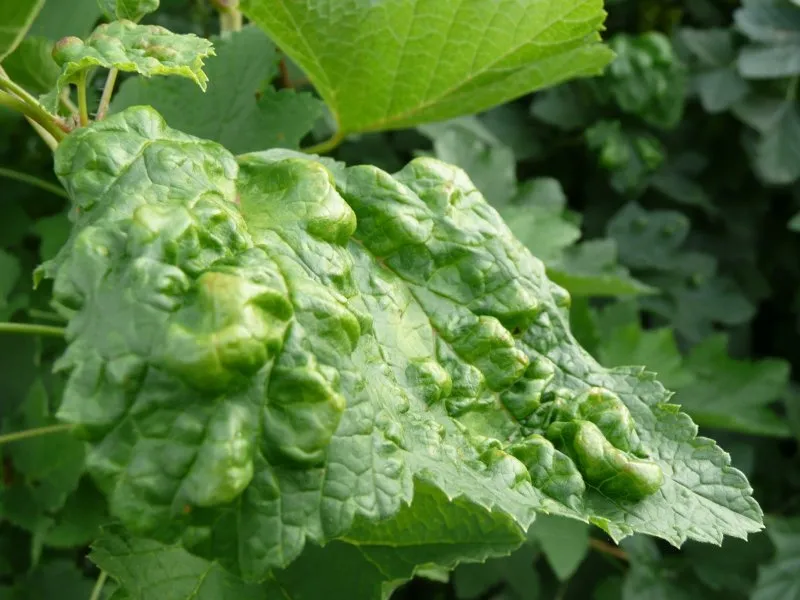
Currant aphid, Cryptomyzus ribis, is a sap-sucking pest of currants that feeds mainly on the undersides of young leaves. Feeding produces raised blisters, puckering, cupping, curling and red to yellow-green discoloration on the upper leaf surface. Infestations are often most noticeable in spring and may look alarming, but established plants usually retain their ability to crop unless populations are heavy or prolonged.
Typical conditions
Overview
Currant aphid (Cryptomyzus ribis) is a small, soft-bodied aphid associated primarily with currants (Ribes spp.). It feeds in colonies on the undersides of young leaves, where its sap feeding causes the leaf surface above the colony to become raised and blister-like. Red, white and black currants may be affected; gooseberry records occur but are less consistently reported.
The damage is usually cosmetic or moderate rather than catastrophic. Natural enemies commonly suppress colonies as the season progresses, and distorted leaves do not necessarily indicate a disease or a serious loss of fruit production.
Symptoms and identification
- Raised, puckered or blistered areas on the upper surfaces of young leaves.
- Leaf margins and blades may curl, cup or become distorted.
- Red currant foliage may develop crimson, reddish-brown or red patches; blackcurrant foliage may appear yellow-green.
- Pale yellow to green aphids may be found clustered on the lower leaf surface, often hidden within the leaf cavity.
- Honeydew can make foliage sticky and may support superficial sooty mold.
- Heavy infestations can reduce shoot vigor, but fruit yield is often little affected on otherwise healthy plants.
Causes and spread
Damage is caused by aphids piercing leaf tissues and removing plant sap. Colonies build on tender leaves in spring, and winged forms can disperse to other currant plants. The species has a host-alternating life cycle in some regions, moving from Ribes to plants in the genus Stachys; the extent and importance of this migration can vary geographically.
Warm, dry weather favors rapid aphid multiplication. Ant attendance may protect colonies from predators and help aphids persist, while dense growth and excessive nitrogen can encourage tender foliage that is attractive to sap-feeding insects.
Life cycle and persistence
Eggs are laid on currant bark, young canes or near buds in late season and overwinter there. They are shiny black and hatch in early spring as currant buds open. The first generations feed on expanding leaves and reproduce parthenogenetically, giving birth to live young rather than laying eggs.
Several generations may develop during the growing season. Winged females may move to other currants or, where the alternate-host cycle occurs, to Stachys plants. Late-season sexual forms return to currants, mate and lay overwintering eggs. Timing varies with climate; in much of the United States, the most visible leaf distortion occurs from spring into early summer.
Treatment and control
Begin with inspection and physical suppression. A firm stream of water directed at the undersides of leaves can dislodge aphids, and badly infested tender tips may be clipped and discarded. Repeat monitoring every few days because new colonies can develop on fresh growth.
If treatment is justified by persistent colonies, declining vigor or contamination of marketable fruit, choose a product specifically labeled for aphids on the crop being grown. Coverage of leaf undersides is essential, but avoid unnecessary broad-spectrum sprays that can kill natural enemies and pollinators. Treat during calm conditions, avoid open flowers, and observe the required preharvest interval for edible currants.
Low-impact and biological control
- Use water sprays to knock aphids from foliage, repeating as needed.
- Encourage lady beetles, lacewings, hoverfly larvae and parasitoid wasps by avoiding routine insecticide use and providing nectar-bearing flowers.
- Use insecticidal soap or horticultural oil only when the product is labeled for currants and aphids; thorough contact with colonies is required, and repeat applications may be necessary.
- Test oils or soaps on a small portion of foliage first, and do not apply during heat, drought stress or other conditions that increase plant-injury risk.
- Remove heavily colonized leaves or shoot tips when infestations are localized and disposal is practical.
Prevention
- Inspect currants from bud break through early summer, especially the undersides of newly expanding leaves.
- Maintain balanced fertility; avoid excessive nitrogen that produces lush, aphid-prone growth.
- Prune currants to maintain an open canopy and remove badly infested shoot tips when practical.
- Control ants only when they are actively defending aphid colonies; reducing ant access can improve predator activity.
- Preserve flowering plants and unsprayed margins that support lady beetles, lacewings, hoverflies and parasitoid wasps.
- Do not remove healthy currant plants solely because of moderate blistering; monitor plant vigor and new growth instead.
Interesting facts
- The raised “blisters” are a plant response to aphid feeding; the insects are usually concealed on the underside of the same leaf.
- Cryptomyzus ribis is often called currant aphid or redcurrant blister aphid.
- Its life cycle may alternate between currants and Stachys plants, although migration patterns differ among regions.
- Natural enemies frequently bring infestations under control by mid- to late summer.
- Leaf distortion from this aphid can be mistaken for a virus, nutrient disorder or fungal disease.
Use only pesticides legally authorized and currently labeled in the United States for aphids on the specific currant crop and site. Follow the current product label exactly, including rate, protective equipment, pollinator precautions, reentry interval and preharvest interval. Do not rely on an older recommendation or a product labeled only for ornamental plants.