
 Source:
 Incense Cedar (Calocedrus decurrens) short overview
Incense Cedar (Calocedrus decurrens) is a stately evergreen conifer native to the mountains and mixed-conifer forests of Oregon, California, western Nevada, and northern Baja California. Its narrow, upright form, aromatic scale-like foliage, fibrous cinnamon-brown bark, and small winged cones provide year-round structure. Once established, it tolerates heat and drought, but it needs room to mature and performs best in deep, well-drained soil with reliable moisture during establishment.
Taxonomic classification
Incense Cedar (Calocedrus decurrens) care guide
Light and placement
Give full sun for the strongest crown development, especially in open landscapes; light partial shade is tolerated and may suit young trees or hot, dry sites. A southwest-facing exposure can be acceptable where summer moisture is adequate. Sparse, slow growth may indicate excessive shade, while scorch or drought wilt suggests heat and water stress rather than a need for more shade.
Watering and humidity
Water slowly and deeply over the root zone rather than sprinkling the foliage. Keep young trees evenly supplied through the first several growing seasons, then taper as roots establish. Mature trees are highly drought tolerant but should not be placed in standing water; provide occasional deep irrigation during prolonged, exceptional drought.
Soil and growing medium
Use deep, well-drained sandy loam, loam, or clay loam. The species tolerates a broad range of parent materials, including rocky and serpentine soils, but it performs poorly in persistently flooded ground. Soil reactions range from strongly acidic to nearly neutral, with some tolerance of slightly basic conditions.
Feeding
Usually needs little fertilizer once established in reasonably fertile soil. In poor urban ground, apply a thin compost mulch or a balanced, slow-release fertilizer in early spring according to the product label. Do not fertilize drought-stressed, newly transplanted, or late-season trees, and avoid excess nitrogen that can promote weak growth.
Growth and habit
Young trees commonly form a dense, symmetrical pyramid with branches extending low on the trunk. Older specimens develop a swollen base, a tapering trunk, and a more open or irregular crown. Growth is generally slow, especially in dense shade, dry stress, or during early seedling establishment, so allow time for the tree to develop.
Planting and repotting
Plant in spring or early fall in a site with ample vertical and lateral space. Set the root flare at soil level rather than burying the trunk. Water deeply through the first several summers, mulch broadly without touching the bark, and avoid compacted or waterlogged sites. Allow generous spacing from structures, overhead wires, and other large trees.
Best planted out while young; container culture is temporary because the species develops a broad, vigorous root system and ultimately becomes a very large tree. If grown in a container, shift to a larger pot before roots circle densely, disturb the root ball as little as possible, and transplant during cool weather.
Propagation and pruning
Propagation
Propagate primarily from seed. Fall sowing can improve emergence; alternatively, cold-stratify cleaned seed for about 8 weeks at roughly 37–41°F before sowing. Germination is best in a suitable mineral or lightly littered medium. Vegetative reproduction is not considered a reliable natural strategy.
Pruning
Prune selectively during the dormant season to remove dead, damaged, crossing, or hazardous branches and to preserve a strong central structure. Avoid topping, heavy crown reduction, and unnecessary large cuts. Mature trees can develop valuable natural form, so routine shaping is usually unnecessary.
Overwintering
Established trees generally need no winter protection in suitable USDA Zones 5–8. Water newly planted trees before the ground freezes where autumn is dry, maintain a loose mulch layer over the root zone, and protect young trunks from rodents or mechanical injury. Do not wrap foliage routinely unless a local exposure problem has been identified.
Uses
Used as a specimen, screening tree, restoration species, erosion-control plant, and native woodland or large-property landscape tree. Its durable wood has been used for lumber, shingles, siding, fence posts, and pencil stock. It is not a culinary plant, and traditional uses should not be treated as modern medical guidance.
Appearance
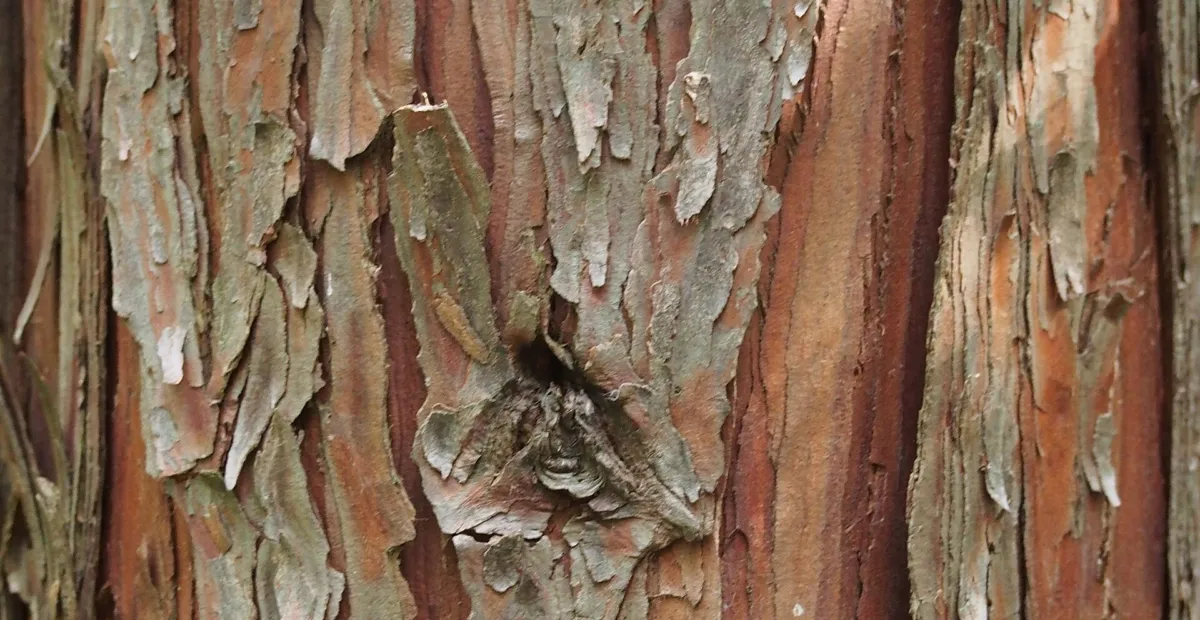
The foliage consists of small scale-like leaves arranged in dense, flattened sprays and releases an incense-like scent when crushed. Young trees have a neat pyramidal outline. Mature trunks develop thick, fibrous, deeply furrowed cinnamon- to reddish-brown bark, while the small cones are brown, pendant, and winged.
Pollination and visitors
Pollination is by wind, not by insects or other animals. The tree is monoecious, so male and female reproductive structures occur on the same individual. Honey bees may collect honeydew associated with incense-cedar scale, but that is not pollination of the tree.
Calocedrus decurrens photos
Click any photo for a larger view. Source, author and license are shown separately.
Diseases and pests
Diseases
Maintain vigor, drainage, and good air circulation. Watch older or fire-scarred trees for pocket dry rot, and monitor for incense-cedar rust, annosus root disease, and other trunk or root rots. Remove hazardous dead wood through professional assessment rather than making unnecessary large wounds.
Pests
Inspect young trees for cutworms, deer browsing, and drought stress. Western conifer seed bug and incense-cedar scale may occur, while many insects associated with cones, bark, and foliage usually cause little serious damage. Favor site selection, watering during establishment, and sanitation over routine insecticide use.
Related diseases and pests
Only Plant Doctor profiles whose host data indicate this plant may be affected are shown here.
 DiseaseHeterobasidion root diseaseHeterobasidion annosum
 DiseaseBotryosphaeria canker and diebackBotryosphaeria dothidea (Moug. ex Fr.) Ces. & De Not.
 DiseaseCedar-Apple RustGymnosporangium juniperi-virginianae Schwein.
 DiseasePocket PlumTaphrina pruni
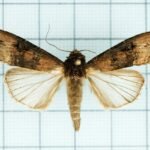 PestBlack cutwormAgrotis ipsilon (Hufnagel, 1766)
Toxicity and pollen
No well-established human or companion-animal poisoning syndrome was identified in the authoritative sources reviewed for this species. Because evidence is limited rather than definitive, do not ingest foliage, bark, cones, or extracts, and prevent pets and children from chewing plant material. Contact a poison-control or veterinary service after a concerning exposure.
- Typical season
- Late winter to early spring in much of the United States; timing varies with elevation and climate
- Pollination / pollen
- Wind-dispersed, airborne conifer pollen
The species releases abundant, easily airborne conifer pollen from male cones in late winter and early spring. Cupressaceae pollen can contribute to seasonal allergic rhinitis, and documented allergic reactions to Incense Cedar pollen exist. Exposure is most relevant during local pollen release; sensitive people should use normal seasonal-allergy precautions.
Native habitat
Native to montane and mixed-evergreen forests from Oregon through California, western Nevada, and northern Baja California. It occupies shaded ravines, stream courses, exposed slopes, dry southwestern aspects, riparian settings, and serpentine ridges, from low elevations to roughly 9,700 feet in the southern part of its range.
Interesting fact
The common name refers to the incense-like aroma released when the foliage is crushed. Mature bark can become several inches thick and helps protect older trunks from some ground fires. The species is an important commercial softwood and a major source of pencil stock in the United States. Individual trees can live for more than 500 years.
Frequently asked questions (FAQ)
The most relevant questions about this plant, with short and direct answers.
🌱Quick care
What is Calocedrus decurrens commonly called?⌄
Calocedrus decurrens is commonly called Incense Cedar. It is an aromatic evergreen conifer in the cypress family, Cupressaceae, and is native to the western United States.
How fast does Incense Cedar grow?⌄
Incense Cedar generally has a medium growth rate, although growth varies with climate, soil depth, moisture, and competition. Young trees establish more slowly in drought-prone or compacted sites.
How tall does Incense Cedar get?⌄
In cultivation, Incense Cedar commonly reaches about 30 to 70 feet tall and 10 to 20 feet wide. In favorable natural conditions, mature trees can become considerably larger.
Is Incense Cedar evergreen?⌄
Yes, Incense Cedar is an evergreen tree with flattened, scale-like sprays of foliage. Older inner foliage may brown and shed naturally, especially in autumn.
🌤️Environment and placement
How much sun does Incense Cedar need?⌄
Incense Cedar grows in full sun to partial shade. Full sun supports the densest, most symmetrical growth, while young trees can tolerate some protection from intense heat or wind.
What USDA hardiness zone is Incense Cedar suited to?⌄
Established Incense Cedar is generally suited to USDA Zones 5 through 8, depending on local conditions and plant provenance. It can tolerate temperatures near -22°F when established, but young trees need more protection from severe cold.
Is Incense Cedar drought tolerant?⌄
Yes, established Incense Cedar is highly drought tolerant. Water it regularly during the first few growing seasons, then reduce irrigation once the root system is well established.
Can Incense Cedar grow in clay soil?⌄
Incense Cedar can grow in clay loam and other clay-based soils if drainage is good. Avoid sites where heavy clay stays saturated, because the tree is sensitive to continually wet conditions.
What is the best soil for Incense Cedar?⌄
The best soil is deep, well-drained sandy loam, loam, or clay loam. It tolerates a relatively broad pH range, but poor drainage is more problematic than moderately acidic or alkaline soil.
Can I plant Incense Cedar near a house?⌄
Plant Incense Cedar well away from buildings, overhead wires, sidewalks, and other permanent structures because it becomes a large tree. A site with ample vertical and horizontal clearance is preferable to a narrow foundation bed.
Is Incense Cedar suitable for a privacy screen?⌄
Yes, Incense Cedar can provide an evergreen screen, particularly where there is enough room for its mature width. Space trees according to their expected mature size rather than their nursery-container size.
💧Care and problems
How often should I water Incense Cedar?⌄
Water deeply when the soil begins to dry during establishment, usually once or twice weekly during hot, dry periods. After establishment, irrigate only during prolonged drought, extreme heat, or unusually dry winters.
Why is my Incense Cedar turning brown?⌄
Browning may result from drought stress, root damage, poor drainage, winter injury, pests, or disease. Inspect whether browning is limited to older inner foliage or occurs on entire branches, and address watering or drainage problems first.
Does Incense Cedar need fertilizer?⌄
Incense Cedar usually does not need routine fertilizer when planted in reasonably fertile soil. Test the soil before feeding, because unnecessary fertilizer can promote weak growth or aggravate root stress.
What pests affect Incense Cedar?⌄
Incense Cedar is generally not troubled by major insect pests, but weakened trees may attract bark beetles or wood-boring insects. Cone insects, scale insects, and western conifer seed bugs may occur but are usually less serious on healthy trees.
What diseases affect Incense Cedar?⌄
Important problems include heart or pocket dry rot, root diseases, rust, and leafy mistletoe. Preventing trunk wounds, avoiding saturated soil, and maintaining overall tree vigor can reduce risk, but advanced heart rot may require an arborist assessment.
Can Incense Cedar tolerate wet soil?⌄
No, Incense Cedar does not perform well in continually wet or poorly drained soil. Improve drainage or choose a better-drained planting site before planting rather than relying on frequent amendments after the tree is established.
🪴Planting and repotting
When is the best time to plant Incense Cedar?⌄
Plant Incense Cedar in fall or early spring when temperatures are mild and soil moisture is dependable. Avoid planting during frozen soil, extreme summer heat, or extended drought unless reliable irrigation is available.
How do I plant an Incense Cedar tree?⌄
Dig a broad hole no deeper than the root ball, set the tree with its root flare at or slightly above grade, and backfill with the native soil. Water thoroughly, apply a few inches of mulch without touching the trunk, and keep the root zone evenly moist during establishment.
Can Incense Cedar be grown in a container?⌄
Incense Cedar is not a good long-term container plant because it develops into a large tree and eventually needs substantial root space. A container may be suitable temporarily for a young nursery tree before planting it in the landscape.
Does Incense Cedar have aggressive roots?⌄
Incense Cedar is not generally considered to have unusually aggressive surface roots. However, any large tree can affect nearby paving, foundations, irrigation lines, or other plants when planted in a confined space.
✂️Propagation and pruning
How do you propagate Incense Cedar from seed?⌄
Propagate Incense Cedar primarily from seed collected from mature cones. Cold-stratify the seed at about 37–41°F for roughly eight weeks, or sow fresh seed in fall, then plant it shallowly in a well-drained medium.
Can Incense Cedar grow from cuttings?⌄
Incense Cedar can be propagated from cuttings, but rooting is difficult and generally less reliable than growing it from seed. Commercial propagation may also use grafting for selected cultivars.
When should Incense Cedar seeds be collected?⌄
Collect Incense Cedar seeds from mature cones in late summer or early fall, when the cones have developed their brown coloration and begin releasing seed. Store cleaned seed in a cool, dry place if it will not be sown promptly.
How should Incense Cedar be pruned?⌄
Prune Incense Cedar mainly to remove dead, damaged, diseased, crossing, or poorly attached branches. Make proper cuts outside the branch collar and avoid topping or removing large amounts of live foliage from the tree at once.
Can Incense Cedar be sheared?⌄
Incense Cedar can be lightly sheared to maintain a denser or more formal shape, especially when young. Repeated severe shearing is undesirable because old interior wood may not reliably produce new foliage.
⚠️Toxicity and safety
Is Incense Cedar poisonous to dogs, cats, or people?⌄
The toxicity of Calocedrus decurrens is insufficiently documented in the available horticultural references. Avoid ingestion, prevent pets and children from chewing the foliage or cones, and contact a veterinarian or poison-control service if plant material is swallowed.
🌸Flowering and special interest
Does Incense Cedar have flowers?⌄
Incense Cedar produces small, inconspicuous male and female reproductive structures rather than showy flowers. It is wind-pollinated, with pollen released in late winter or early spring.
When does Incense Cedar produce cones?⌄
Seed cones mature in late summer and become brown or reddish brown as they develop. Each small cone contains only a few winged seeds that are dispersed mainly by wind.
Is Incense Cedar fragrant?⌄
Yes, Incense Cedar has aromatic foliage and wood, especially when the foliage is crushed or the wood is freshly cut. The fragrance is one of its notable ornamental and cultural features.
Similar plants
 Yellow lantern chili (Capsicum chinense) care guideCapsicum chinense
 Capsicum baccatum care guideCapsicum baccatum
 Serrano (Capsicum annuum ‘Serrano’)Capsicum annuum 'Serrano'
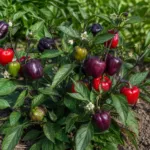 Purple Beauty (Capsicum annuum ‘Purple Beauty’)Capsicum annuum 'Purple Beauty'
 Numex Twilight (Capsicum annuum ‘Numex Twilight’)Capsicum annuum 'Numex Twilight'
 Explosive Ember Chili Pepper (Capsicum annuum ‘Explosive Ember’)Capsicum annuum 'Explosive Ember'