
Apple Leaf Mining Moth
Lyonetia clerkellaApple Leaf Mining Moth overview
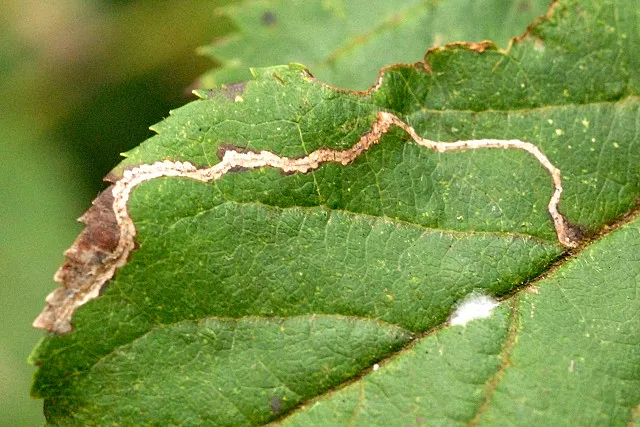
Apple leaf mining moth, Lyonetia clerkella, is a small moth whose green larvae tunnel inside leaves of apple and other rosaceous trees. The characteristic damage is a narrow, pale, winding mine that may widen or become brown as the larva develops. Infestations are often cosmetic, but repeated heavy mining can reduce photosynthetic leaf area and cause premature leaf browning or drop.
Typical conditions
Overview
Apple leaf mining moth is a small, predominantly nocturnal moth associated mainly with apple and certain other woody rosaceous hosts. Larvae live inside the leaf rather than feeding openly, creating pale, sinuous galleries that gradually widen. Damage is commonly noticed from summer into early fall and is usually aesthetic or minor on established trees.
Heavy populations can brown substantial portions of the canopy and contribute to premature leaf loss, particularly on young trees, succulent shoots or stressed plants. Do not assume every apple leaf mine is this species: North American orchards also contain several other leafminer moths, including congeners with overlapping hosts.
Symptoms and identification
- Narrow, pale, winding or serpentine mines in the leaf blade.
- Mines may widen toward the larva’s later development and become tan or brown.
- Fine frass may hang from openings or appear as dark material within the gallery.
- Several mines in one leaf can cause localized necrosis, early browning and premature leaf drop.
- Fully grown larvae leave the mine and form a small, suspended silken “hammock” cocoon, often beneath a leaf.
Causes and spread
Adults deposit eggs singly, usually in or near the underside of young leaves. Newly hatched larvae enter the leaf tissue and spread locally as they mine. Movement between trees occurs mainly through adult flight, while infested nursery stock and transported plant material can assist long-distance spread.
Population increases are favored when susceptible young foliage is abundant and natural enemies are disrupted. Nearby unmanaged host plants may also act as reservoirs, although host records and local abundance vary by region and species identification.
Life cycle and persistence
The species is multivoltine, with up to about three overlapping generations reported in favorable temperate conditions. Adults overwinter in bark crevices, vegetation or other sheltered sites, then become active in spring. Eggs hatch after roughly two to three weeks depending on temperature.
Larvae generally develop inside a single mine for approximately three weeks, then exit to pupate externally in a silken hammock. Summer generations may occur from late spring through summer, with the final generation extending into early fall. Exact timing depends on latitude, temperature, host growth and local conditions.
Treatment and control
For home orchards and ornamental trees, treatment is often unnecessary because damage is primarily cosmetic and healthy established trees usually tolerate moderate mining. Remove a limited number of mined leaves by hand, especially on young trees, and maintain adequate water during drought.
When injury is extensive, monitor the first mines and determine whether larvae are still active before acting. Insecticides aimed at exposed adults or newly hatched larvae are generally more effective than applications made after larvae are protected inside the leaf, but product choice and timing must be based on confirmed identification, crop use and local extension guidance. Avoid routine broad-spectrum spraying, which can kill parasitoids and trigger secondary pest problems.
Low-impact and biological control
Use sanitation, hand removal and canopy management as first measures. Encourage naturally occurring parasitoid wasps and predators by avoiding unnecessary insecticides and providing diverse flowering plants nearby. Biological control is usually most valuable through conservation rather than homeowner release programs.
Organic-labeled products are not automatically safe, effective or legal for every crop or situation. If a product is considered, verify that the formulation is permitted for the specific crop and target pest in the United States, follow the current label exactly, observe harvest intervals and protect pollinators and aquatic organisms.
Prevention
- Inspect new trees and nursery stock before planting; quarantine and remove leaves with active mines when practical.
- Monitor young apple and related-tree shoots from spring through late summer, concentrating on fresh mines and newly mined leaves.
- Maintain balanced irrigation, nutrition and pruning so trees can replace damaged foliage without excessive succulent growth.
- Remove and dispose of heavily infested leaves and fallen debris where feasible; do not compost material containing live larvae or pupae.
- Preserve flowering plants and unsprayed habitat that support parasitoids and predatory insects.
- Use a hand lens or submit adults, larvae or mined leaves for expert confirmation when the species matters for a regulatory or treatment decision.
Interesting facts
- The larva spends most of its feeding period concealed between the leaf’s upper and lower epidermis.
- The winding mine is the source of the common name “apple leaf mining moth.”
- The adult is small, with a wingspan of roughly 8–9 mm and narrow, fringed wings.
- Heavy infestations can make foliage appear scorched, but reports commonly describe the pest as having limited economic impact on healthy trees.
- Several leafminer species may occur together on apple, so mine shape alone is not always sufficient for species-level identification.
Use pesticides only when monitoring shows that damage justifies treatment and the pest identification is sufficiently reliable. In the United States, use only products legally registered and currently labeled for the specific crop and leafminer problem in your state; follow the current label for rate, timing, protective equipment, reentry and harvest restrictions. Do not use a product solely because it is labeled for a different leafminer species.
Affected plants
The plants below are linked to this problem by structured host-plant data. The list updates automatically as new plant profiles are added.
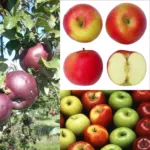 Apple tree (Malus domestica) care guideMalus domestica
 Sweet birch (Betula lenta) care guideBetula lenta
 Black Birch (Betula nigra) care guideBetula nigra
 Paper birch (Betula papyrifera) care guideBetula papyrifera
 Silver birch (Betula pendula) care guideBetula pendula
 Cutleaf European White Birch (Betula pendula ‘Laciniata’)Betula pendula 'Laciniata'
 Tristis (Betula pendula ‘Tristis’)Betula pendula 'Tristis'
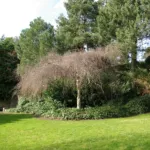 Youngii (Betula pendula ‘Youngii’)Betula pendula 'Youngii'
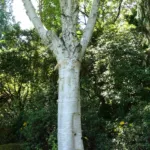 Jacquemontii (Betula utilis ‘Jacquemontii’)Betula utilis 'Jacquemontii'
 Pyracantha ‘Golden Charmer’Pyracantha 'Golden Charmer'
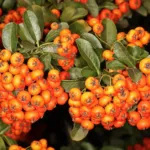 Pyracantha ‘Orange Charmer’Pyracantha 'Orange Charmer'
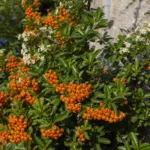 Pyracantha ‘Orange Glow’Pyracantha 'Orange Glow'