
 Source:
 Pyracantha ‘Orange Charmer’ short overview
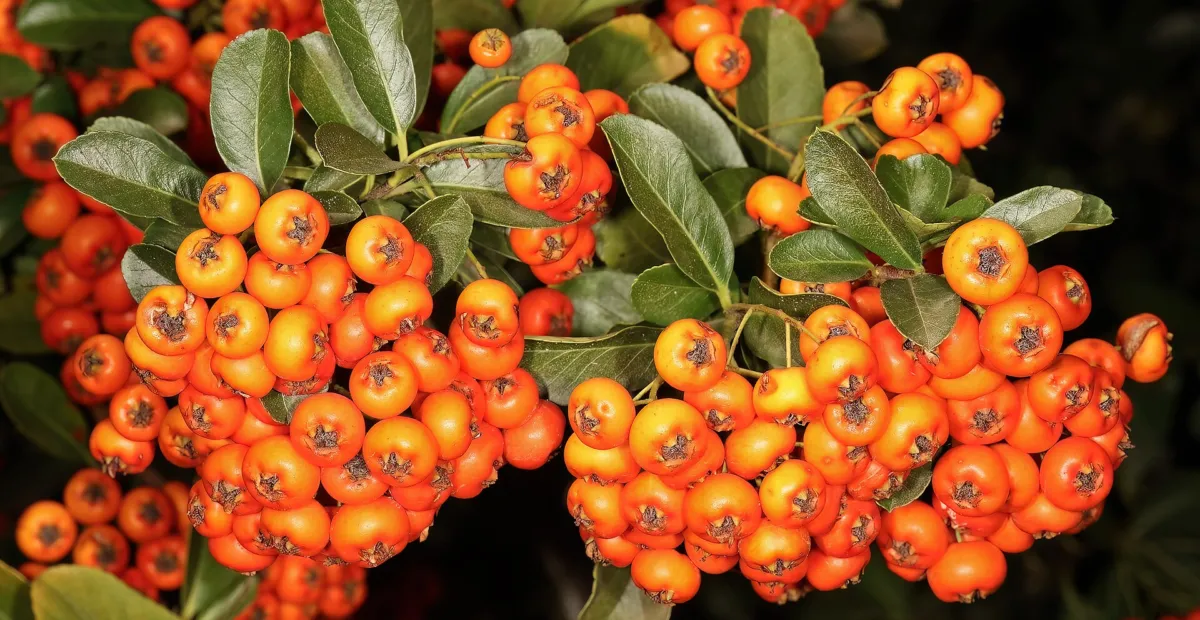
Pyracantha 'Orange Charmer' is a thorny evergreen shrub with white late-spring flowers and abundant bright orange berries in autumn. This German-origin selection suits sunny or partly shaded borders, walls, screens and wildlife-friendly plantings. It needs well-drained soil, careful pruning and protective gloves because of its sharp spines. The cultivar is valued for reliable fruiting and reported resistance to pyracantha scab.
Taxonomic classification
Pyracantha ‘Orange Charmer’ care guide
Light and placement
Choose full sun for the heaviest flowering and orange fruit display, ideally with an east-, south- or west-facing aspect. Partial shade is tolerated, especially in hot climates, but deep shade can produce weak, sparse growth and fewer flowers and berries. Scorched leaf margins or bleached foliage indicate excessive reflected heat or drought rather than a need for more shade.
Watering and humidity
Water deeply and slowly when the upper several inches of soil begin to dry, directing water to the root zone rather than wetting the foliage. Keep plants consistently watered during the first growing season; mature specimens tolerate short dry periods once established. Increase watering during prolonged summer heat and reduce it in cool, wet weather.
Soil and growing medium
Use moderately fertile soil that drains freely yet does not dry excessively during establishment. It tolerates loam, sand, clay and both acidic and alkaline conditions, but avoid persistently waterlogged ground. Improve heavy soil with organic matter and plant slightly high where drainage is marginal.
Feeding
Apply a balanced, slow-release shrub fertilizer in early spring if growth is weak or soil fertility is poor. A thin mulch of compost can be spread over the root zone without touching the stems. Avoid heavy nitrogen feeding, which can promote lush, disease-prone shoots and reduce the balance between flowering, fruiting and sturdy growth.
Growth and habit
This is a vigorous, evergreen shrub with an upright-to-spreading habit. It can be grown as a free-standing bush or trained against a wall or fence. Flowering and fruiting occur most reliably when some older flowering wood is retained, so maintenance should combine selective thinning with support tying rather than indiscriminate shearing.
Planting and repotting
Plant in fall or early spring while the soil is workable. Set the root ball at the same depth as in its nursery container, or slightly proud of heavy soil. Allow roughly 5–8 feet between plants for informal screening, less if training against a support. Water deeply during the first growing season.
Container plants can be moved into a slightly larger pot in early spring, before strong new growth. Use a sturdy, well-drained container mix and protect hands and arms from the spines. Repot only when roots have filled the existing pot; excessive pot size can keep the mix wet.
Propagation and pruning
Propagation
Use semi-ripe cuttings in summer or hardwood cuttings in the dormant season. Seed can be sown after about three months of cold stratification, but seedlings will not reliably reproduce the cultivar. Cuttings are preferred for maintaining the selected orange fruit color and growth traits.
Pruning
Prune after flowering, removing unwanted or overcrowded shoots while retaining as much two-year-old wood as practical. Flowers and subsequent fruit are produced mainly on older spurs. On mature plants, selective removal of about one-fifth of older wood can rejuvenate the shrub without eliminating the next berry crop. Wear heavy gloves and eye protection.
Overwintering
Established plants generally overwinter outdoors in suitable climates. In colder Zone 7 locations, mulch the root zone after the ground cools and protect newly planted shrubs from drying winter winds. Container plants have less root insulation and should be placed in a sheltered spot or protected with insulating material; do not keep the soil constantly wet.
Uses
Use it as an informal hedge, barrier planting, wall-trained shrub, screen, foundation accent or wildlife-garden plant. Dense thorny growth provides shelter for birds, while the autumn fruit adds ornamental value and can be used by wildlife. The fruit is not recommended as a household food crop, and the spines make it unsuitable beside narrow walkways.
Appearance
The shrub has glossy dark green, oblong to elliptic leaves and sharply spiny branches. Its dense branch network gives it value as a barrier and screen. Small white flowers appear in tight clusters, followed by conspicuous orange pomes held in closely set trusses. The combination of evergreen foliage, thorns and orange fruit is distinctive.
Flowering
Small white flowers are borne in dense clusters in late spring, mainly on growth made the previous year. After pollination, the flowers develop into closely packed orange pomes that color in autumn. Retaining flowering wood is important when pruning because severe cutting can reduce the following season’s bloom and berry display.
Pollination and visitors
The small white flowers are insect-pollinated and are described for Pyracantha as attracting generalist insect visitors. The available evidence does not establish a single primary visitor species for this exact cultivar, so no specific bee, butterfly or hoverfly species is assigned.
Pyracantha 'Orange Charmer' photos
Click any photo for a larger view. Source, author and license are shown separately.
Diseases and pests
Diseases
Watch for pyracantha scab, fire blight and honey fungus. Promote airflow, avoid prolonged leaf wetness and remove badly affected tissue with sanitized tools. Scab causes dark lesions on leaves and fruit; fire blight may produce blackened, wilted shoots. Do not overfertilize, especially with high nitrogen.
Pests
Aphids, woolly aphid, caterpillars, brown scale and leaf-mining moths may occur. Inspect tender shoots and leaf undersides, encourage natural predators and use a targeted horticultural soap or oil only when necessary and according to the product label. Prune out heavily infested tissue and avoid unnecessary broad-spectrum insecticides during flowering.
Related diseases and pests
Only Plant Doctor profiles whose host data indicate this plant may be affected are shown here.
 DiseaseFire BlightErwinia amylovora
 DiseaseEntomosporium Leaf SpotDiplocarpon mespili (synonym: Entomosporium mespili)
 PestSan Jose scaleDiaspidiotus perniciosus
 PestGreen Apple AphidAphis pomi
 PestApple Leaf Mining MothLyonetia clerkella
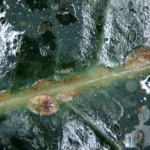 PestBrown Soft ScaleCoccus hesperidum
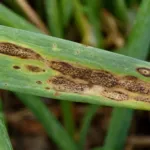 DiseaseStemphylium Leaf BlightStemphylium vesicarium (Wallr.) E.G. Simmons
 DiseaseChestnut blightCryphonectria parasitica (Murrill) M.E. Barr
Toxicity and pollen
Poison-control guidance for Pyracantha indicates that the berries are not considered seriously poisonous, although large quantities may cause stomach upset. The bright fruit should still be treated as ornamental rather than edible, and children should not be encouraged to eat it. Spines can puncture skin and eyes, so wear thick gloves and eye protection when handling.
- Typical season
- May to June
- Pollination / pollen
- Heavy, insect-carried pollen
Pyracantha flowers are insect-pollinated, so pollen is generally heavier and less readily dispersed through the air than pollen from wind-pollinated trees and grasses. This supports a low airborne-allergy classification, not a claim of zero risk. People with known plant allergies should avoid direct contact with flowers and sap if symptoms occur.
Native habitat
The cultivar itself is horticultural rather than a wild native population. Its parental background links it to Pyracantha species from temperate parts of China and cultivated hybrids. In gardens it performs in a broad range of well-drained soils and climates, with best fruiting in open light and adequate summer moisture.
Interesting fact
This cultivar originated in Germany from a deliberate cross involving Pyracantha rogersiana and P. coccinea. Historical references describe two related fruit-color clones, with the orange-fruited clone introduced as 'Orange Charmer'. Its orange berries are small pomes, not true berries, and the plant’s flowers and fruit arise on different seasonal growth structures.
Frequently asked questions (FAQ)
The most relevant questions about this plant, with short and direct answers.
🌱Quick care
What is Pyracantha 'Orange Charmer'?⌄
Pyracantha 'Orange Charmer' is a thorny, evergreen to semi-evergreen firethorn shrub grown for white spring flowers and abundant bright orange berries in fall. It has an upright-to-spreading habit and can reach about 8 feet tall in favorable conditions.
How much sun does Pyracantha 'Orange Charmer' need?⌄
Give Pyracantha 'Orange Charmer' full sun to partial shade, with the heaviest flowering and fruiting usually in brighter locations. Some afternoon shade can help in very hot climates.
How often should I water Pyracantha 'Orange Charmer'?⌄
Water Pyracantha 'Orange Charmer' moderately, allowing the soil to dry somewhat between waterings after the plant is established. It tolerates drought, but prolonged dryness can reduce flowering, fruiting, and foliage quality.
Is Pyracantha 'Orange Charmer' evergreen?⌄
Pyracantha 'Orange Charmer' is generally evergreen in mild climates but may become semi-evergreen or suffer winter leaf loss in colder or exposed locations. Cold, drying winds and severe freezes can increase winter damage.
🌤️Environment and placement
What USDA hardiness zone is Pyracantha 'Orange Charmer'?⌄
The exact USDA hardiness range for Pyracantha 'Orange Charmer' is not consistently documented across sources, so local performance can vary. Treat it as a regionally hardy shrub and check winter temperatures, exposure, and local nursery guidance before planting.
What type of soil does Pyracantha 'Orange Charmer' prefer?⌄
Pyracantha 'Orange Charmer' grows in loam, sand, or clay if the soil is well drained. It tolerates a range of soil pH but performs poorly where water remains soggy around the roots.
Can Pyracantha 'Orange Charmer' grow in clay soil?⌄
Yes, Pyracantha 'Orange Charmer' can grow in clay soil if drainage is adequate. Amend the planting area only when necessary, and avoid placing the shrub where heavy clay stays waterlogged after rain.
Can Pyracantha 'Orange Charmer' grow in partial shade?⌄
Yes, Pyracantha 'Orange Charmer' tolerates partial shade, but it may flower and produce fewer berries than a plant growing in full sun. Morning sun or bright filtered light is preferable to dense shade.
Is Pyracantha 'Orange Charmer' drought tolerant?⌄
Pyracantha 'Orange Charmer' is drought tolerant once established, although it needs regular irrigation during its first growing season. Water deeply during extended hot, dry periods to prevent stress and sparse fruiting.
How large does Pyracantha 'Orange Charmer' get?⌄
Pyracantha 'Orange Charmer' can grow roughly 6 to 8 feet tall and wide, although its mature size depends on climate, pruning, and growing conditions. Its thorny, spreading branches need adequate clearance from paths and entrances.
💧Care and problems
When should I prune Pyracantha 'Orange Charmer'?⌄
Prune Pyracantha 'Orange Charmer' in late winter or immediately after flowering, depending on whether berries or shape are the priority. Avoid heavy late-summer or early-fall pruning because next season's flowers and berries develop on older wood.
How do I prune Pyracantha 'Orange Charmer' without losing berries?⌄
To preserve berries, selectively shorten unwanted shoots while retaining much of the previous year's flowering wood. Remove dead, crossing, or overly long branches rather than shearing away the entire outer layer.
Does Pyracantha 'Orange Charmer' need fertilizer?⌄
Pyracantha 'Orange Charmer' usually needs little fertilizer when planted in reasonably fertile soil. If growth is weak, apply a balanced slow-release fertilizer in spring according to the product label, since excess nitrogen can encourage leafy growth at the expense of berries.
Why is my Pyracantha 'Orange Charmer' not producing berries?⌄
Poor berry production is commonly caused by insufficient light, drought stress, severe pruning, young age, or weather that damages flowers. Because flowers form mainly on older wood, pruning away too much flowering growth can eliminate that season's fruit display.
What pests attack Pyracantha 'Orange Charmer'?⌄
Pyracantha 'Orange Charmer' may be affected by aphids, woolly aphids, scale, caterpillars, and leaf-mining insects. Inspect new growth and leaves regularly, and use the least disruptive treatment appropriate for the pest.
What diseases affect Pyracantha 'Orange Charmer'?⌄
Pyracantha 'Orange Charmer' can be susceptible to pyracantha scab, fire blight, and other problems favored by stress or prolonged moisture. Remove affected material with clean tools and improve air circulation, but cultivar-level disease resistance is not always consistently documented.
Why are the leaves on my Pyracantha 'Orange Charmer' turning brown?⌄
Brown leaves can result from drought, winter burn, salt exposure, root problems, or disease. Check soil moisture and drainage first, then inspect for dark lesions, dieback, or damage concentrated on the side exposed to cold or drying wind.
🪴Planting and repotting
When is the best time to plant Pyracantha 'Orange Charmer'?⌄
Plant Pyracantha 'Orange Charmer' in spring or fall when temperatures are moderate and the soil can be worked. Spring is especially useful in colder regions because it gives the roots a full growing season to establish before winter.
How do I plant Pyracantha 'Orange Charmer'?⌄
Plant it at the same depth as it grew in its nursery container, backfill with native soil, water thoroughly, and apply a light mulch layer without touching the trunk. Choose a well-drained site and allow room for its mature thorny branches.
Can Pyracantha 'Orange Charmer' be grown in a container?⌄
Pyracantha 'Orange Charmer' can be grown in a large container for a time, provided it has drainage, a sturdy pot, and regular watering. Container roots are less cold hardy than roots in the ground, so winter protection may be needed in colder USDA zones.
Does Pyracantha 'Orange Charmer' transplant well?⌄
Pyracantha 'Orange Charmer' may be difficult to transplant once established because it develops a substantial root system and has thorny branches. Choose the site carefully and move only young plants with as much intact root ball as possible.
Can Pyracantha 'Orange Charmer' be trained against a wall or fence?⌄
Yes, Pyracantha 'Orange Charmer' can be trained against a wall, fence, or trellis with regular tying and selective pruning. Keep the plant away from high-traffic areas because its branches are sharply thorny.
✂️Propagation and pruning
How do you propagate Pyracantha 'Orange Charmer' from cuttings?⌄
Propagate Pyracantha 'Orange Charmer' from semi-ripe summer cuttings or hardwood cuttings taken during dormancy. Cuttings are preferred because seed-grown plants may not reproduce the named cultivar reliably.
Can Pyracantha 'Orange Charmer' be grown from seed?⌄
It can be grown from seed, but seedlings may vary and will not reliably reproduce Pyracantha 'Orange Charmer'. Seed typically requires a period of cold, moist stratification before spring sowing.
How fast does Pyracantha 'Orange Charmer' grow?⌄
Pyracantha 'Orange Charmer' is generally a vigorous grower when supplied with adequate light, drainage, and moisture during establishment. The time needed to reach mature size varies widely with climate and pruning.
⚠️Toxicity and safety
Are Pyracantha 'Orange Charmer' berries poisonous?⌄
The orange berries of Pyracantha 'Orange Charmer' are ornamental and are not recommended for eating. Keep children and pets from consuming them, and contact a medical professional or poison-control service if ingestion causes concern.
Does Pyracantha 'Orange Charmer' have thorns?⌄
Yes, Pyracantha 'Orange Charmer' has sharp thorns along its branches. Wear thick gloves and protective clothing when planting, pruning, or handling the shrub.
Is Pyracantha 'Orange Charmer' safe to plant around pets?⌄
Pyracantha 'Orange Charmer' is not an ideal choice where pets regularly contact or chew plants because its thorns can injure them and its berries are not intended for consumption. Use extra caution in pet-accessible areas.
🌸Flowering and special interest
When does Pyracantha 'Orange Charmer' flower?⌄
Pyracantha 'Orange Charmer' usually flowers in late spring, producing clusters of small white blooms. Flowering time can shift with local climate and spring temperatures.
When do Pyracantha 'Orange Charmer' berries appear?⌄
The berries of Pyracantha 'Orange Charmer' develop after flowering and typically color from late summer into fall, often persisting into winter. The display is strongest when the shrub receives good light and is not heavily pruned after flowering.
What color berries does Pyracantha 'Orange Charmer' produce?⌄
Pyracantha 'Orange Charmer' produces bright orange to orange-red berries in dense clusters. Berry color can vary somewhat with maturity, growing conditions, and the accuracy of the plant label.
Do birds eat Pyracantha 'Orange Charmer' berries?⌄
Birds may eat Pyracantha 'Orange Charmer' berries, especially after they soften in cold weather, although feeding behavior varies by region and bird species. The berries are primarily an ornamental wildlife feature rather than a human food crop.
Similar plants
 Saucer Magnolia (Magnolia soulangeana) care guideMagnolia soulangeana
 Magnolia × loebneri ‘Merrill’Magnolia × loebneri 'Merrill'
 Magnolia loebneri care guideMagnolia loebneri
 Sweetbay magnolia (Magnolia virginiana) care guideMagnolia virginiana
 Star magnolia (Magnolia stellata) care guideMagnolia stellata
 Magnolia sprengeri care guideMagnolia sprengeri