
 Source:
 Green Apple Aphid
Aphis pomiGreen Apple Aphid overview
The green apple aphid, Aphis pomi, is a sap-feeding pest of apple and related plants in the rose family. Colonies gather on tender shoot tips, young leaves and water sprouts, causing curling, distortion and slowed growth. Honeydew can coat foliage and fruit, encouraging black sooty mold. Identification deserves care because the closely related spirea aphid, Aphis spiraecola, can look very similar on apple.
Typical conditions
Overview
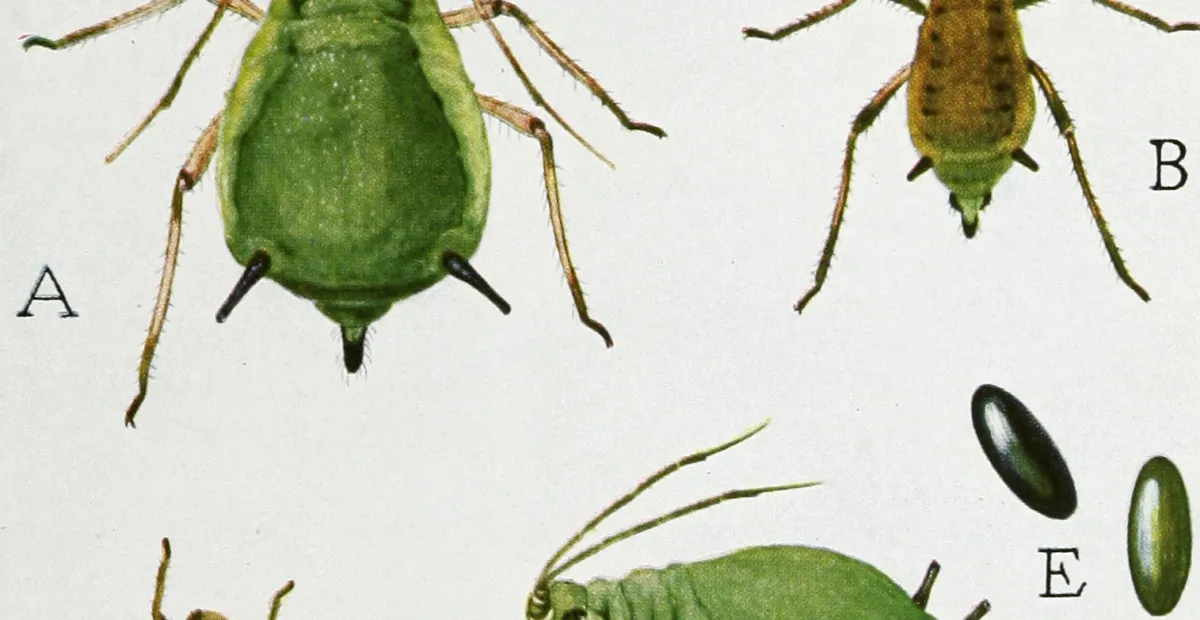
Green apple aphid is a small, soft-bodied sap-feeding insect in the family Aphididae. Adults and nymphs are generally light to yellowish green, with darker legs, antennae, cornicles and cauda. Colonies often form sleeve-like clusters on tender apple growth.
In the United States, identification should be cautious: the closely related spirea aphid, Aphis spiraecola, is also common on apple and may be difficult to distinguish without close examination or specialist confirmation. A. pomi is primarily associated with apple and related Rosaceae rather than being a generalist aphid.
Symptoms and identification
- Clusters of green aphids on shoot tips, young leaves, water sprouts and occasionally fruit.
- Leaf curling, crinkling, yellowing or distortion, especially on rapidly growing terminals.
- Shortened, irregular or weak new shoots; severe infestations can retard growth on young trees.
- Sticky honeydew on leaves and fruit, followed by black sooty mold that lowers fruit appearance and can interfere with leaf function.
- White cast skins may accumulate among colonies.
Symptoms overlap with other aphids and sap-feeding pests. Check the insects themselves, including body shape and cornicle length, rather than diagnosing from leaf damage alone.
Causes and spread
Aphis pomi feeds by inserting piercing-sucking mouthparts into phloem tissue. Populations increase rapidly when tender growth is abundant, especially on young trees, water sprouts and vigorous terminal shoots. Winged females arise when colonies become crowded or host quality declines and can disperse to other shoots or nearby trees.
Ants may collect honeydew and protect aphid colonies from predators, allowing infestations to persist. Excess nitrogen, heavy pruning that stimulates succulent regrowth, and inadequate monitoring can favor damaging outbreaks. Warm growing conditions support reproduction, although extreme summer heat can suppress some aphid populations.
Life cycle and persistence
Green apple aphid is generally monoecious and holocyclic, completing its annual cycle on host plants in the rose family. Shiny black overwintering eggs are laid on twigs, buds or fruit spurs in autumn. Eggs hatch around apple bud break, near the silver-tip stage, producing wingless female stem mothers.
During spring and summer, females reproduce mostly without mating and give birth to live nymphs. Several generations may develop, with winged females dispersing when colonies crowd or plant tissue becomes less suitable. In late summer and autumn, sexual forms develop on apple and related hosts; mating is followed by deposition of overwintering eggs. Timing varies with region, weather and host growth.
Treatment and control
Begin with inspection and threshold-based decisions rather than automatic spraying. On mature trees, natural enemies and plant tolerance often keep green apple aphid below damaging levels. On young trees or where terminals are heavily colonized, use a strong water spray to dislodge aphids when practical, prune only badly infested expendable shoots, and reassess after several days.
For orchard monitoring, UC IPM guidance recommends evaluating predator abundance and considering treatment when infestation is substantial across terminals; its apple guideline cites more than 45% of shoots infested as a point for predator assessment and 60% or more terminals infested as a possible treatment threshold. These figures are site-specific decision aids, not universal home-garden rules. If intervention is needed, target exposed colonies and avoid broad-spectrum applications that destroy natural enemies.
Low-impact and biological control
Useful lower-impact options include water sprays, insecticidal soap and appropriately labeled narrow-range horticultural oil. These materials work mainly by direct contact, so thorough coverage of aphid colonies is essential and repeat applications may be needed. Some organically acceptable programs also use azadirachtin, but efficacy and permitted uses depend on the specific product label.
Conserve lady beetles, lacewings, syrphid fly larvae and aphid parasitoids. Avoid routine pyrethroid or other broad-spectrum applications that can cause secondary aphid outbreaks by removing beneficial insects. Do not apply oils or soaps during heat, drought stress or other conditions prohibited by the product label.
Prevention
- Inspect apple and related trees from bud break through summer, concentrating on terminal growth, water sprouts and the undersides of young leaves.
- Remove unnecessary water sprouts and excessively vigorous shoots, but avoid pruning practices that stimulate lush regrowth.
- Use balanced fertilization; avoid unnecessary high-nitrogen applications.
- Control ants where they are actively tending aphids, using trunk barriers or other methods appropriate for the site and label directions.
- Preserve flowering plants and ground habitat that support lady beetles, lacewings, syrphid flies and aphid parasitoids.
- When purchasing or planting trees, inspect nursery stock and avoid bringing visibly infested material into the orchard or landscape.
Interesting facts
- The species name pomi refers to its close association with apple.
- Green apple aphid usually remains on apple and related Rosaceae hosts throughout the year rather than requiring a completely unrelated summer host.
- Overwintering eggs are shiny black and can resemble eggs of rosy apple aphid and other apple aphids.
- Black sooty mold grows on aphid honeydew; it is generally a secondary surface growth rather than the primary cause of leaf injury.
- In parts of the United States, especially the eastern United States, Aphis spiraecola may be more common on apple than A. pomi, making careful identification important.
Use pesticides only when monitoring shows treatment is justified and only products legally authorized and currently labeled for the crop, site and green apple aphid in the United States. Follow the current label for rate, timing, personal protective equipment, reentry interval, preharvest interval, pollinator protection and spray restrictions. Product registrations and permitted uses vary by state and can change; do not rely on a pesticide list from another state, crop or year. Prefer selective, least-disruptive options where labeled, and rotate modes of action according to resistance-management guidance.