Small Brown Planthopper
Laodelphax striatellus (Fallén, 1826)Small Brown Planthopper overview
The small brown planthopper, Laodelphax striatellus, is a sap-feeding insect of grasses and cereal crops, especially rice, maize, wheat, oats, and barley. Direct feeding can cause yellowing, wilting, browning, and hopperburn during heavy infestations, but its greatest agricultural importance is as a vector of several serious cereal viruses. In the United States, suspected detections should be documented and reported to plant-health authorities.
Typical conditions
Overview
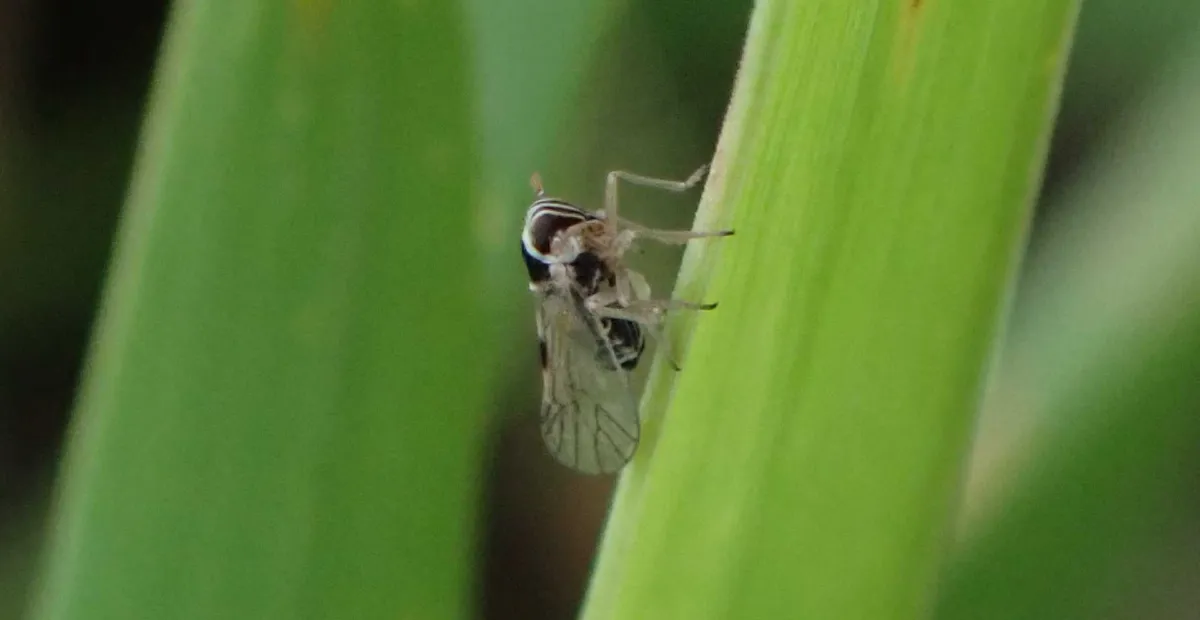
The small brown planthopper is a small, brown, wedge-shaped true bug in the family Delphacidae. Adults and nymphs feed by inserting piercing-sucking mouthparts into grass stems, leaf sheaths, and other tissues. It is polyphagous, but documented economically important hosts are concentrated among Poaceae, particularly rice, maize, wheat, oats, and barley.
Direct feeding is often less damaging than the viruses this insect can acquire and transmit. Because the complete host range and establishment status can vary by region, an apparent specimen should not be identified from plant injury alone.
In the United States, Laodelphax striatellus is included by USDA APHIS among pests of concern. A suspected occurrence should be photographed, preserved if possible, and reported through the state department of agriculture or an appropriate USDA APHIS diagnostic channel.
Symptoms and identification
Feeding symptoms depend on insect density, plant age, weather, and the presence of a transmitted virus. Possible direct symptoms include:
- pale green, yellow, orange-yellow, or reddish discoloration of leaves;
- leaf rolling, wilting, stunting, and reduced vigor;
- browning and drying of foliage during heavy feeding, sometimes described as hopperburn;
- honeydew deposits and occasional dark sooty mold on infested foliage; and
- reduced tillering, poor head development, or yield loss in cereal crops.
Virus-associated symptoms may include pronounced stunting, chlorotic or necrotic striping, leaf discoloration, rosetting, wilting, and uneven patches in a field. These symptoms are not diagnostic by themselves because several cereal viruses and abiotic disorders can look similar.
Causes and spread
Adults and nymphs spread primarily by walking, short flights, and longer wind-assisted movement between grassy hosts. Infested transplants, plant material, volunteer cereals, and unmanaged grass hosts can facilitate movement. Eggs are inserted into plant tissue, commonly in lower leaf sheaths or leaf blades.
Risk increases where susceptible cereal crops are adjacent to volunteer cereals, grassy weeds, fallow areas, or unmanaged field margins. Virus spread occurs when a planthopper acquires a virus while feeding and later inoculates another susceptible plant. The insect can be an efficient vector for some viruses, but vector competence and virus relationships are specific rather than universal.
Life cycle and persistence
Eggs are laid singly or in groups within the tissue of lower stems, leaf sheaths, or leaf blades. Nymphs pass through several immature stages before becoming winged or short-winged adults. Nymphs and adults feed on phloem sap.
In temperate regions, the species may overwinter as later-instar nymphs in grasses, field margins, roadsides, dikes, or fallow vegetation. Survivorship, number of generations, migration, and seasonal timing vary substantially with latitude, temperature, crop sequence, and host availability. In parts of Asia and Europe, spring adults move from overwintering grasses into wheat, barley, rice, maize, and other cereal hosts.
Treatment and control
First confirm the insect and distinguish direct feeding from virus symptoms, nutrient problems, drought, and other planthoppers. Use sweep nets, tap sampling, visual inspection of leaf sheaths, and repeated scouting rather than relying on a single observation.
- Remove heavily infested volunteer grasses or crop residues when this can be done without spreading insects.
- Manage alternate grassy hosts around nurseries and production blocks where they are demonstrably contributing to infestations.
- Protect young cereal plants during periods of local planthopper activity, because early feeding and virus acquisition can have disproportionate effects.
- Coordinate management across neighboring fields when movement from harvested or mature cereals is suspected.
In commercial production, treatment decisions should be based on verified identification, crop-specific monitoring, local recommendations, and an economic threshold where one is available. In the United States, a suspected detection should be reported before attempting to move infested plant material.
Low-impact and biological control
Direct organic suppression options are limited and depend on the crop, location, and legal product registrations. Support naturally occurring predators and parasitoids by reducing unnecessary broad-spectrum insecticide use, maintaining appropriately managed non-crop habitat, and avoiding applications during pollinator activity when possible.
Useful nonchemical measures include removal of volunteer cereals, sanitation of seedling areas, mowing or targeted management of infested grass hosts, crop rotation, and frequent scouting. Insect-killing fungi or botanical products may be considered only where they are legally registered for the specific crop and pest and where local extension guidance supports their use; performance can be inconsistent.
Prevention
Use an integrated prevention program:
- Inspect rice, maize, wheat, oat, and barley plantings, especially young crops and field edges, for small brown planthoppers and nymphs.
- Remove or manage volunteer cereals and grassy weeds that can provide feeding or overwintering habitat, while avoiding unnecessary destruction of beneficial habitat.
- Maintain clean nursery and seedling areas and avoid moving suspect infested plant material between fields.
- Use crop rotation and avoid prolonged, uninterrupted sequences of susceptible cereal hosts where practical.
- Scout field margins, waterways, roadsides, and fallow areas before planting or transplanting.
- Record unusual stunting, striping, or patchy cereal decline and submit insects or plant samples for expert identification.
Because the insect can vector viruses, prevention of early-season colonization is particularly important in susceptible crops.
Interesting facts
The small brown planthopper is important not only as a sap-feeding pest but also as a vector of several cereal viruses, including rice stripe virus, rice black-streaked dwarf virus, barley yellow striate mosaic virus, maize rough dwarf virus, wheat rosette stunt virus, and wheat chlorotic streak virus.
It is associated mainly with grasses, but reported feeding hosts are broader than the plants on which it reliably completes its life cycle. Therefore, host records should be interpreted cautiously: a plant may support feeding without being an important reproductive host.
Adults can occur in different wing forms, which affects dispersal potential. Small brown planthopper records in the United States should be treated as a plant-health matter requiring authoritative confirmation rather than assumed to represent an established local population.
Use only insecticides legally authorized for Laodelphax striatellus or the applicable planthopper group on the specific crop in the United States. Always follow the current product label, including crop restrictions, application timing, rate, re-entry interval, preharvest interval, resistance-management instructions, and pollinator precautions. Do not apply an off-label pesticide program based solely on a visual identification or on virus symptoms.
Affected plants
The plants below are linked to this problem by structured host-plant data. The list updates automatically as new plant profiles are added.