
 Source:
 Polystichum acrostichoides short overview
Polystichum acrostichoides is a durable evergreen fern native to eastern North America, where it grows on shaded forest floors, rocky slopes, ravines, and streamside sites. Its leathery, deep-green fronds remain attractive through winter and form gradually enlarging clumps. In cultivation, it is valued for dry-shade tolerance after establishment, deer resistance, erosion control, woodland borders, and year-round ground-level structure. It reproduces by spores and division rather than flowers or seeds.
Taxonomic classification
Polystichum acrostichoides care guide
Light and placement
Best in bright filtered light, dappled shade, or deep shade beneath deciduous trees. North- and east-facing beds, woodland edges, and sites protected from hot afternoon sun are reliable placements. Too much direct summer sun can bleach or scorch fronds, while extremely dark, dry conditions may produce sparse growth. Morning sun is usually tolerated when soil stays moist.
Watering and humidity
Water deeply and consistently during the first growing season, allowing the surface to begin drying slightly between applications but never letting the root zone become bone-dry. Once established, it tolerates periodic dry shade better than many ferns, though fronds remain fuller with moderate moisture. Reduce irrigation in cool weather and avoid persistent saturation around the crown.
Soil and growing medium
Plant in humus-enriched, well-drained soil that remains evenly moist while the fern establishes. Loam, sandy loam, and shallow rocky soils are suitable if they do not dry excessively. A slightly acidic reaction is typical, but the species is adaptable. Avoid persistently waterlogged clay and improve compacted ground with organic matter without burying the crown.
Feeding
Apply a thin layer of finished compost or leaf mold in spring, or use a balanced, slow-release fertilizer at a conservative rate if growth is pale or soil is poor. Do not overfeed: excessive fertility can produce weak, lush fronds. Keep granular fertilizer away from the crown and water after application. Established plants in rich woodland soil often need little supplemental feeding.
Growth and habit
This fern develops a compact, slowly enlarging crown and arching clump of persistent fronds. New fiddleheads emerge from the crown in spring, while older fronds provide winter structure. It is comparatively tolerant of dry shade once rooted, but establishment is faster and foliage is fuller where soil moisture and organic matter are reliable.
Planting and repotting
Plant in spring or early fall when soil moisture is dependable. Set the crown level with the surrounding soil; do not bury the growing point. Space plants about 18–24 inches apart for a continuous mass, or farther apart for distinct clumps. Water deeply during the first growing season and mulch lightly with shredded leaves or compost, keeping mulch off the crown.
Container-grown plants can be shifted in spring, just as new fronds begin to expand. Use a moisture-retentive but freely draining mix containing compost or leaf mold and coarse material. Choose a pot only modestly larger than the root mass, keep the crown at its original level, and water thoroughly after transplanting.
Propagation and pruning
Propagation
Divide established clumps in early spring before vigorous frond expansion or in early fall. Separate portions with healthy crown tissue and roots, replant immediately, and keep evenly moist. Spore propagation is possible but slow and technically demanding because it requires sterile sowing and management of the gametophyte stage.
Pruning
Remove damaged, brown, or flattened fronds in late winter or early spring before new fiddleheads unfurl. Retain healthy evergreen fronds through winter because they protect the crown and contribute seasonal structure. Cut close to the base without injuring emerging croziers or the crown.
Overwintering
Leave healthy fronds in place through winter. They remain evergreen in much of the range and help protect the crown. In colder or exposed sites, apply a light leaf mulch after the ground begins to freeze, keeping the crown uncovered. Container plants are more vulnerable than in-ground plants and should be sheltered from repeated freeze-thaw cycles.
Uses
Useful as an evergreen groundcover, woodland-border accent, slope stabilizer, and low-maintenance native planting. It provides winter cover near the ground and can contribute nesting material and habitat value for wildlife. Use in containers only where shade, drainage, and regular moisture can be maintained. It has no supported culinary or medicinal use in this profile.
Appearance
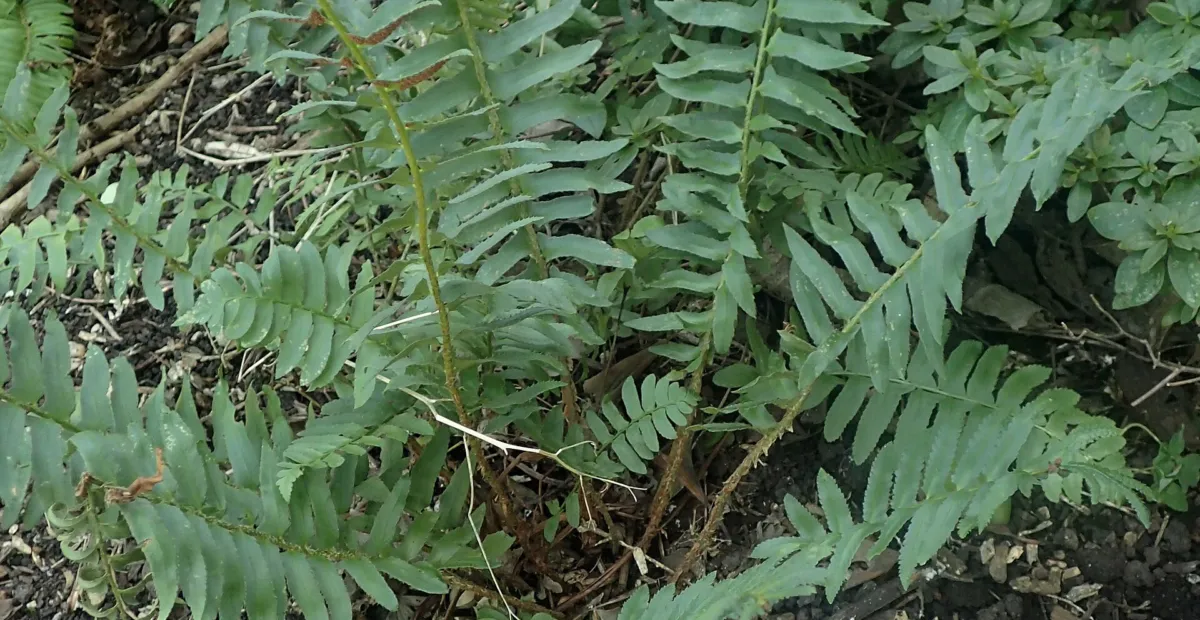
The plant forms an arching to erect clump of leathery, pinnate fronds. Sterile fronds are broader and more spreading, while fertile fronds bear narrower upper pinnae with sori on the undersides. New fiddleheads are often covered with silvery scales. Persistent green foliage and a crown-level growth habit help distinguish it from deciduous woodland ferns.
Pollination and visitors
As a fern, this species does not produce flowers, nectar, or pollen for animal pollinators. Its ecological value is instead associated with evergreen ground cover, shelter, and broader woodland habitat relationships.
Polystichum acrostichoides photos
Click any photo for a larger view. Source, author and license are shown separately.
Diseases and pests
Diseases
Generally trouble-free when grown in suitable shade and well-drained soil. Watch for crown or root problems where drainage is poor, and remove badly affected material rather than keeping crowns wet. Good air circulation, careful watering at soil level, and avoiding mechanical crown injury reduce disease pressure. Brown fronds are often seasonal stress rather than infection.
Pests
Aphids may occasionally suck sap from fronds, but serious infestations are uncommon. Inspect new growth and undersides of pinnae; encourage natural predators and wash small populations away with water. Avoid unnecessary broad-spectrum insecticides, especially in native woodland plantings. Deer may browse occasionally but usually cause limited damage.
Related diseases and pests
Only Plant Doctor profiles whose host data indicate this plant may be affected are shown here.
 Environmental stressPoor drainage stress (waterlogging)
 PestSmall Brown PlanthopperLaodelphax striatellus (Fallén, 1826)
 PestBrown planthopperNilaparvata lugens (Stål)
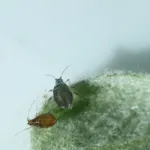 PestRosy Apple AphidDysaphis plantaginea
 Environmental stressSalt stress
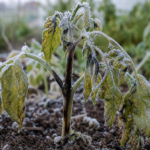 Environmental stressFreeze injury
 Environmental stressFrost injury
 Environmental stressChilling injury
Toxicity and pollen
This species is listed as non-toxic to dogs and cats by a recognized veterinary poison-control resource. No verified human toxicity concern was identified in the reviewed sources, but plant material should not be intentionally consumed, and normal gardening hygiene is appropriate. Avoid confusing this fern with unrelated toxic plants.
- Typical season
- Not applicable
- Pollination / pollen
- No pollen; airborne spores
Polystichum acrostichoides does not produce pollen because it is a fern rather than a seed plant. It releases spores from sori on fertile fronds. Airborne spores may be present locally, but a species-specific human allergy risk was not established in the reviewed sources, so no precise allergy rating is assigned beyond pollen_level=none.
Native habitat
Native populations occur in eastern North America from Canada through much of the eastern and central United States to northeastern Mexico. Typical habitats include deciduous woods, ravines, rocky slopes, stream margins, limestone areas, and forest edges. It commonly grows in shaded sites with leaf litter, humus, and good drainage, including shallow or rocky soils.
Interesting fact
The common horticultural name Christmas fern is associated with the evergreen fronds, which remain present around the winter holiday season. Fertile fronds have narrower upper pinnae than the sterile lower portion, creating a distinctive dimorphic appearance. The species can persist in deep shade and is native across a broad range from eastern Canada through the eastern and south-central United States to northeastern Mexico.
Frequently asked questions (FAQ)
The most relevant questions about this plant, with short and direct answers.
🌱Quick care
What is Polystichum acrostichoides?⌄
Polystichum acrostichoides is a cold-hardy, clump-forming evergreen fern native to eastern North America. It is commonly grown in shaded woodland gardens for its leathery green fronds and winter interest.
Is Polystichum acrostichoides evergreen?⌄
Yes, Polystichum acrostichoides usually keeps its green fronds through winter. Heavy snow may flatten the fronds, but they typically remain green and recover as new fiddleheads emerge in spring.
How big does Polystichum acrostichoides get?⌄
Polystichum acrostichoides commonly grows about 1 to 3 feet tall and wide, although individual fronds may arch outward. Its spread is slow because the plant forms gradually enlarging clumps.
Is Polystichum acrostichoides easy to grow?⌄
Yes, Polystichum acrostichoides is generally a low-maintenance fern once established. It tolerates deep shade, dry woodland conditions, and a range of well-drained soils, but performs best with consistent moisture during establishment.
🌤️Environment and placement
How much light does Polystichum acrostichoides need?⌄
Polystichum acrostichoides grows best in bright filtered light, partial shade, or deep shade. Protect it from hot afternoon sun, especially in warmer climates or dry sites.
Can Polystichum acrostichoides grow in deep shade?⌄
Yes, Polystichum acrostichoides is well suited to deep shade. Growth may be slower there, but established plants can remain healthy where many sun-loving perennials struggle.
Can Polystichum acrostichoides tolerate dry shade?⌄
Yes, established Polystichum acrostichoides can tolerate relatively dry shade, particularly in humus-rich woodland soil. Water it more regularly during the first growing season and during prolonged drought.
What USDA hardiness zones are suitable for Polystichum acrostichoides?⌄
Polystichum acrostichoides is generally hardy in USDA Zones 3 through 9. Local performance can vary with winter exposure, soil drainage, and summer heat.
Where should I plant Polystichum acrostichoides?⌄
Plant Polystichum acrostichoides in a shaded woodland bed, beneath trees, along a shady slope, or beside a north- or east-facing foundation. Choose a site with good drainage and soil containing organic matter.
Is Polystichum acrostichoides native to the United States?⌄
Yes, Polystichum acrostichoides is native to much of eastern North America, including broad areas of the eastern United States. It naturally occurs in rocky woods, stream banks, wooded slopes, and other shaded habitats.
💧Care and problems
How often should I water Polystichum acrostichoides?⌄
Water Polystichum acrostichoides moderately, keeping the soil evenly moist while it establishes. After establishment, allow the soil to become somewhat drier between waterings, but provide supplemental water during extended heat or drought.
What soil does Polystichum acrostichoides prefer?⌄
Polystichum acrostichoides prefers humus-rich, well-drained loam or sandy and rocky woodland soil. It generally handles neutral to acidic conditions, but poorly drained soil increases the risk of crown rot.
Why is my Polystichum acrostichoides turning brown?⌄
Brown fronds on Polystichum acrostichoides may result from drought, winter exposure, heavy snow, or normal aging. Check soil moisture and drainage, and remove only fronds that are completely dead or badly damaged.
Does Polystichum acrostichoides have serious pests or diseases?⌄
Polystichum acrostichoides usually has few serious pest or disease problems. Poor drainage can cause crown rot, while occasional chewing or sap-feeding insects may occur.
Is Polystichum acrostichoides deer resistant?⌄
Polystichum acrostichoides is often relatively resistant to deer browsing, but it is not reliably deer-proof. Deer may eat it when populations are high or other food is scarce.
🪴Planting and repotting
When is the best time to plant Polystichum acrostichoides?⌄
The best planting times for Polystichum acrostichoides are spring or early fall. Planting during cool weather gives the roots time to establish before summer heat or winter dormancy.
How do I plant Polystichum acrostichoides?⌄
Plant Polystichum acrostichoides at the same depth it was growing in its container, with the crown level with the soil surface. Water thoroughly, add a light mulch of leaf mold or compost, and keep mulch away from the crown.
Can Polystichum acrostichoides grow in a container?⌄
Yes, Polystichum acrostichoides can grow in a container if it has a well-drained potting mix, adequate drainage holes, and protection from excessive heat and drying. Container roots are more exposed to winter cold than roots in the ground.
✂️Propagation and pruning
How do you propagate Polystichum acrostichoides?⌄
The easiest way to propagate Polystichum acrostichoides is by dividing established clumps in spring. Propagation from spores is possible but slow and requires sterile, consistently moist conditions.
Can Polystichum acrostichoides be grown from spores?⌄
Yes, Polystichum acrostichoides can be grown from spores, but the process is considerably slower than division. Spores need a sterile, moist growing medium and may take many months to develop into transplantable young ferns.
Does Polystichum acrostichoides spread aggressively?⌄
No, Polystichum acrostichoides spreads slowly and usually forms a restrained clump rather than an aggressive colony. Allow roughly 1 to 3 feet of space for mature growth.
Should I cut back Polystichum acrostichoides in fall?⌄
No, Polystichum acrostichoides usually does not need to be cut back in fall because its fronds provide winter interest and continue photosynthesizing. Remove flattened or damaged older fronds in late winter or spring if a tidier appearance is desired.
When should I divide Polystichum acrostichoides?⌄
Divide Polystichum acrostichoides in spring as new fiddleheads begin to emerge. Separate portions with healthy crowns and roots, then replant them promptly and keep them evenly moist while they recover.
⚠️Toxicity and safety
Is Polystichum acrostichoides toxic to dogs or cats?⌄
Polystichum acrostichoides is listed as non-toxic to dogs and cats. Even non-toxic plants can cause mild digestive upset if a pet eats a large amount.
Is Polystichum acrostichoides poisonous to humans?⌄
No verified human toxicity concern has been identified for Polystichum acrostichoides. Do not consume it, however, because plant identification and preparation errors can create risks and its traditional uses do not establish food safety.
🌸Flowering and special interest
Does Polystichum acrostichoides flower?⌄
No, Polystichum acrostichoides does not produce flowers because it is a fern. It reproduces with spores formed in sori on the undersides of fertile fronds.
What are the black spots on Polystichum acrostichoides fronds?⌄
The black spots on Polystichum acrostichoides fronds are sori, which contain spores used for reproduction. They are a normal feature and usually occur near the tips of fertile fronds.
When do Polystichum acrostichoides fiddleheads appear?⌄
Polystichum acrostichoides fiddleheads appear in spring as tightly curled, often silvery-scaled young fronds. They gradually unfurl into the plant's mature evergreen foliage.
Why is it called Polystichum acrostichoides?⌄
Polystichum acrostichoides is associated with its common name because its evergreen fronds remain green around the Christmas season. The individual leaflets also have a slightly stocking-like shape, while its sori appear on fertile frond tips.
Similar plants
 Azure Monkshood (Aconitum carmichaelii) care guideAconitum carmichaelii
 Monkshood (Aconitum ‘Stainless Steel’)Aconitum 'Stainless Steel'
 Monkshood (Aconitum ‘Bressingham Spire’)Aconitum 'Bressingham Spire'
 Golden full moon maple (Acer shirasawanum ‘Aureum’)Acer shirasawanum 'Aureum'
 Globosum (Acer platanoides ‘Globosum’)Acer platanoides 'Globosum'
 Striped maple (Acer pensylvanicum) care guideAcer pensylvanicum