
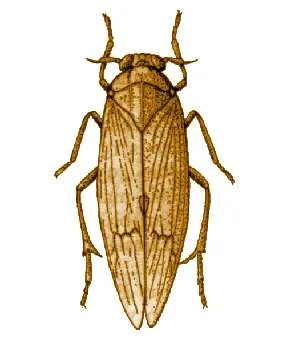
Brown planthopper
Nilaparvata lugens (Stål)Brown planthopper overview
The brown planthopper, Nilaparvata lugens, is a highly specialized phloem-feeding pest of rice. Nymphs and adults gather near the base of rice tillers, removing sap and injecting saliva. Heavy infestations cause yellowing, rapid drying and plant collapse known as hopperburn. The insect can also transmit rice grassy stunt and rice ragged stunt viruses, although its importance varies by region.
Typical conditions
Overview
Brown planthoppers are small, soft-bodied insects in the family Delphacidae. They are usually found in shaded, humid areas at the base of rice plants, where nymphs and adults feed on phloem sap. Adults occur in short-winged forms that favor reproduction within a crop and long-winged forms capable of dispersal.
Rice is the principal economically important host. In the United States, the species is best regarded as a serious rice pest risk rather than a routine landscape or garden pest; identification of planthoppers on rice should be confirmed because several delphacid species look similar.
Symptoms and identification
- Early feeding causes yellowing, reduced vigor and stunting, especially in lower leaves and tillers.
- As populations increase, patches turn orange-yellow, then brown, dry and collapse. This rapid dieback is called hopperburn.
- Planthoppers, cast skins and honeydew may be visible around the lower stems; sooty mold can develop on honeydew-covered tissue.
- Feeding and virus transmission can reduce tillering, delay development, impair grain filling and reduce yield.
- Rice grassy stunt and rice ragged stunt symptoms may include yellowing, severe stunting, excessive tillering or ragged foliage, but these diseases require separate confirmation.
Causes and spread
Damage results from repeated phloem feeding by nymphs and adults. Populations commonly build where rice is grown continuously, nitrogen is excessive, stands are dense, humidity is high and broad-spectrum insecticides have disrupted predators. Long-winged adults can disperse over substantial distances with favorable winds and colonize new rice fields. Rice grassy stunt virus and rice ragged stunt virus are transmitted in a persistent manner by the planthopper; the presence of the insect does not by itself prove that either virus is present.
Life cycle and persistence
Females insert eggs into rice leaf sheaths, midribs or other suitable plant tissue. Eggs generally hatch in about 4–11 days, depending on temperature and host conditions. Nymphs pass through five instars, feeding at the lower plant and developing over roughly 10–15 days under favorable warm conditions. Adults are either short-winged, generally associated with reproduction in the crop, or long-winged and more dispersive. Under warm tropical conditions a generation may be completed in approximately 3–4 weeks, whereas cooler conditions slow development. The species generally cannot survive winter in temperate regions and may arrive seasonally by migration.
Treatment and control
Confirm the pest before acting because brown planthopper can be confused with other rice planthoppers. Concentrate scouting on the lower stems and use field counts or locally established economic thresholds rather than treating solely because adults are present. If infestations are localized, improve water and crop management as appropriate for the production system, reduce excess nitrogen, and protect predator populations. In severe rice-field outbreaks, consult a county Extension specialist or rice IPM adviser for a locally validated treatment decision, particularly where virus symptoms are suspected.
Low-impact and biological control
Conservation biological control is central to management. Spiders, predatory bugs, lady beetles, dragonflies and damselflies can attack planthopper stages, while egg parasitoids and other natural enemies may suppress populations. Avoid calendar spraying and broad-spectrum products that trigger resurgence by killing predators. Use resistant cultivars, balanced fertility, synchronized planting, weed and volunteer-rice management, and careful water management as the foundation of an organic or reduced-input program. Commercial biopesticide or botanical options should be considered only when they are registered for the crop and pest and supported by local trial evidence.
Prevention
- Plant rice cultivars with documented brown-planthopper resistance or tolerance where locally available, while recognizing that resistance can vary among planthopper biotypes.
- Use balanced fertility and split nitrogen applications rather than excessive early nitrogen.
- Avoid unnecessarily dense planting and maintain vigorous, well-managed rice stands.
- Coordinate planting dates with neighboring growers where practical, and avoid overlapping rice crops that provide a continuous host bridge.
- Remove volunteer rice and manage grassy weeds around fields, while avoiding unnecessary disturbance of beneficial arthropods.
- Inspect the base of tillers regularly by gently tapping plants over a white surface; monitor both insects and hopperburn patches.
- After harvest, manage stubble and volunteer rice according to local production guidance to reduce carryover hosts.
Interesting facts
- Brown planthopper is highly specialized: cultivated rice is its principal major host, unlike many generalist sap-feeding insects.
- Short-winged and long-winged adults are produced according to host quality, crowding and environmental conditions; the long-winged form supports migration.
- Hopperburn is not a fungal disease. It is the visible result of intense planthopper feeding and associated physiological stress.
- The insect is an important vector of rice grassy stunt and rice ragged stunt viruses in parts of Asia.
- Some historical reports of planthoppers on Leersia grasses may involve closely related Nilaparvata species or host-associated populations, so broad alternative-host claims require caution.
Use chemical control only when monitoring and local IPM guidance justify it. In the United States, use only products legally authorized and currently labeled for brown planthopper on the specific rice crop and application site in your state; follow the current label exactly, including rate, timing, personal protective equipment, preharvest interval and restrictions protecting aquatic habitats. Do not assume that a product registered elsewhere, or effective against another planthopper, is legal or effective for this pest. Rotate labeled modes of action when treatment is necessary and avoid repeated use of the same mode of action because brown planthopper resistance is well documented in some regions.
Affected plants
The plants below are linked to this problem by structured host-plant data. The list updates automatically as new plant profiles are added.
 Margaritas (Bellis perennis) care guideBellis perennis
 Skirret (Sium sisarum) care guideSium sisarum
 Fairy-slipper Orchid (Calypso bulbosa) care guideCalypso bulbosa
 Variegata (Agave desmettiana ‘Variegata’)Agave desmettiana 'Variegata'
 Twin-flowered Agave (Agave geminiflora) care guideAgave geminiflora
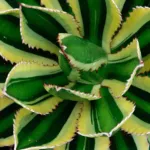 Thorn-crested Agave (Agave lophantha) care guideAgave lophantha
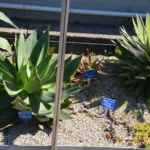 Black-spined agave (Agave macroacantha) care guideAgave macroacantha
 Verschaffeltii (Agave potatorum ‘Verschaffeltii’)Agave potatorum 'Verschaffeltii'
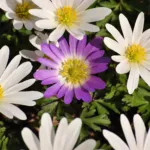 Winter windflower (Anemone blanda) care guideAnemone blanda
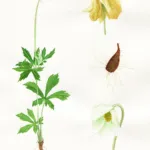 Snowdrop Anemone (Anemone sylvestris) care guideAnemone sylvestris
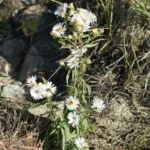 Heath aster (Aster ericoides) care guideAster ericoides
 Yellow Avens (Geum aleppicum) care guideGeum aleppicum