
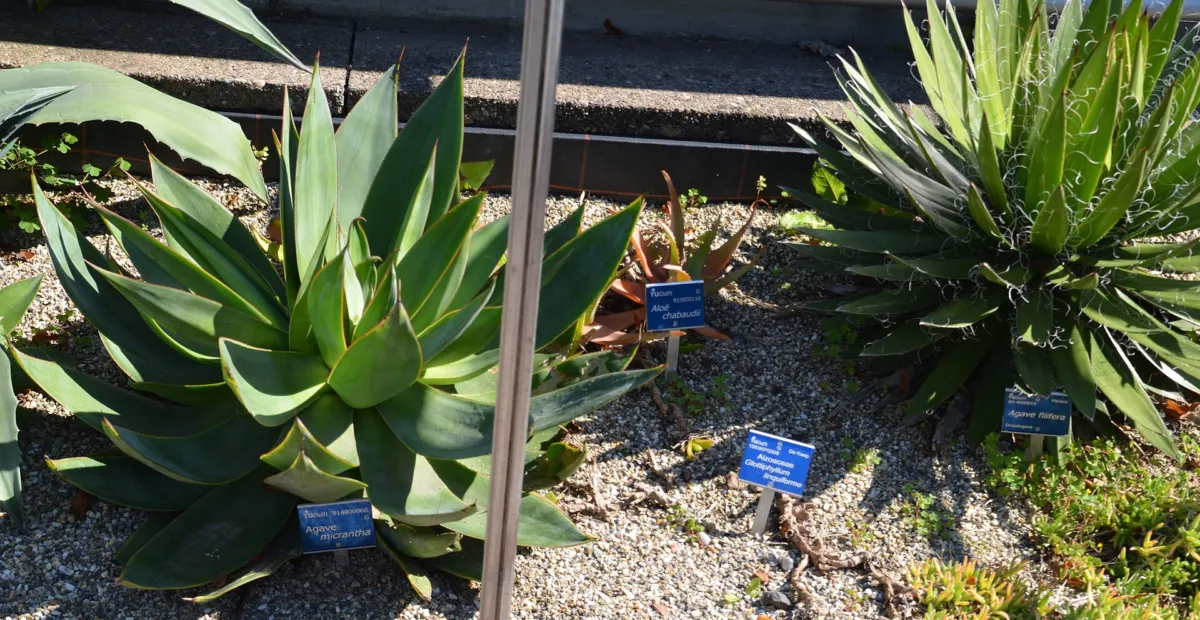
 Source:
 Black-spined agave (Agave macroacantha) short overview
Black-spined agave is a compact, blue-gray succulent from the seasonally dry valleys of Puebla and Oaxaca, Mexico. Its symmetrical rosette carries narrow, rigid leaves edged with small dark teeth and finished with conspicuous black terminal spines. Mature plants produce a tall, branched flower stalk before the flowering rosette dies, while offsets may continue the clump. In the United States, it is best grown in sharply drained soil, full sun, and a protected frost-free setting.
Taxonomic classification
Black-spined agave (Agave macroacantha) care guide
Light and placement
Give black-spined agave full sun for the strongest color, tightest rosette, and shortest, most robust growth. In very hot low-desert locations, light afternoon shade or an east-facing placement can reduce scorch. Indoors, use the brightest unobstructed south- or west-facing window, or a strong grow light. Stretching, wider green leaves and loss of compact form indicate insufficient light; bleached patches or crispy exposed leaf tissue indicate excessive heat combined with abrupt sun exposure.
Watering and humidity
Water deeply only after the potting mix or surrounding soil has dried thoroughly, then let excess water drain completely. During warm active growth, a container may need watering every 2–4 weeks depending on heat, pot size, and airflow; reduce sharply in fall and winter, especially indoors. Never leave the rosette sitting in a saucer of water. Humidity is not a target requirement, and stagnant damp air increases rot risk.
Soil and growing medium
Use a predominantly mineral, gritty substrate with rapid drainage, such as cactus mix amended with pumice, coarse perlite, lava rock, or granite grit. In the ground, plant on a raised mound or slope if native soil is heavy. A mildly acidic through mildly alkaline reaction is generally tolerated, but persistent saturation is more damaging than modest pH variation. Avoid dense compost-rich mixes that stay wet around the crown.
Feeding
Feed only while the plant is actively growing, usually from spring through late summer. Use a dilute, low-nitrogen cactus or succulent fertilizer once or twice during the season, or top-dress sparingly with mature compost in outdoor beds. Do not fertilize newly repotted, drought-stressed, diseased, or overwintering plants. Excess nitrogen can produce softer, greener growth and reduce the compact architectural form.
Growth and habit
This is a slow-growing, long-lived rosette agave that may eventually form offsets and a dense clump. A flowering event is terminal for the individual rosette, so the central plant should not be removed until it has finished flowering and offsets are established. Keep clearance around the plant because the terminal spines and leaf teeth make routine access hazardous.
Planting and repotting
Plant in spring in a sunny, elevated, sharply drained position. Loosen compact ground and incorporate mineral drainage material rather than creating a deep pocket of rich compost. Set the root ball level with the soil surface and keep the crown dry and uncovered. Water once after planting, then allow the soil to dry substantially between subsequent irrigation. Wear thick gloves and eye protection when handling the plant.
Repot in spring only when roots fill the container or drainage has declined. Choose a heavy pot with a drainage hole because the rosette can become top-heavy. Use fresh gritty mix, handle the root ball carefully, and keep the crown dry. Wait several days before watering if roots were disturbed or cut.
Propagation and pruning
Propagation
Propagate mainly from offsets or seed. Separate well-rooted offsets during warm active growth, allow damaged surfaces to dry briefly, and pot them into a gritty mix. Seed propagation is possible but slower and requires fresh, well-drained media, warmth, light, and careful moisture management. Because the species is largely cross-pollinated, seed may show genetic variation.
Pruning
Routine pruning is unnecessary. Remove only fully dead leaves, using long-handled tools and protective clothing. After flowering, allow the spent stalk and parent rosette to dry before cutting them back at the base. Avoid cutting healthy leaves because wounds can invite rot and the sap may irritate skin.
Overwintering
Keep plants completely protected from prolonged freezing and winter wet. In Zones 9–11, use a rain shelter or plant under a dry eave during cold spells. In colder areas, overwinter containers in a bright, cool space above about 40°F, watering only sparingly when the mix is fully dry. Increase light gradually when returning plants outdoors in spring.
Uses
Use as a drought-tolerant architectural accent in rock gardens, gravel beds, desert-style borders, and large containers. It is especially effective where the blue-gray rosette and black spines can be viewed without contact. In colder or wetter parts of the United States, container culture makes seasonal protection practical. The species supports a specialized nocturnal nectar-based pollination system in its native range, but it should not be promoted for food, medicine, or alcohol production without species-specific evidence.
Appearance
The rosette consists of rigid, narrow, blue-gray to gray-green leaves that radiate evenly and curve slightly outward. Small dark marginal teeth line the leaf edges, while each leaf ends in a conspicuous black to dark-brown spine. As flowering begins, the innermost leaves may flush reddish and a dark red, branched inflorescence rises rapidly above the rosette.
Flowering
Flowering generally occurs from late spring into midsummer in the species' native climate, with field observations recording early May through late July. The tall, branched stalk develops quickly after years of vegetative growth. Flowers are protandrous, meaning pollen-bearing structures mature before the stigma, which favors cross-pollination. Nectar production is strongest at night, and the flowering rosette dies after reproduction.
Pollination and visitors
Flowers are visited by bees and wasps, butterflies, hummingbirds, moths, and nectar-feeding bats. Research in the Tehuacán Valley found that nocturnal visitors, especially nectar-feeding bats, were the effective pollinators, while daytime visitors generally contributed little successful pollen transfer. Leptonycteris curasoae was documented as an especially effective pollinator in experimental work; moths also contributed to pollination.
Agave macroacantha photos
Click any photo for a larger view. Source, author and license are shown separately.
Diseases and pests
Diseases
The main risk is crown or root rot caused by wet soil, poor drainage, cold moisture, or water trapped in the rosette. Plant high, use a mineral mix, and avoid overhead irrigation during cool weather. Remove rotted tissue with sterile tools and repot into dry, fresh substrate only if the damage is localized. Improve airflow and quarantine symptomatic container plants.
Pests
Watch for agave snout weevil in outdoor plantings, along with scale, mealybugs, and occasional mites in containers. Check leaf bases and the crown regularly for feeding damage, frass, collapse, or cottony insects. Remove light infestations manually or with a labeled horticultural treatment; correct drought stress, poor airflow, and excessive nitrogen before escalating control.
Related diseases and pests
Only Plant Doctor profiles whose host data indicate this plant may be affected are shown here.
 PestCotton mealybugPhenacoccus solenopsis Tinsley
 PestCottony Cushion ScaleIcerya purchasi
 DiseasePhytophthora root and crown rotPhytophthora nicotianae
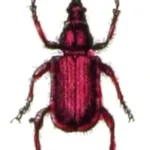 PestPeach weevilRhynchites bacchus
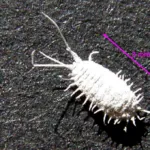 PestObscure mealybugPseudococcus viburni
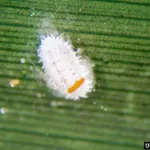 PestCitrus mealybugPlanococcus citri
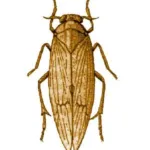 PestBrown planthopperNilaparvata lugens (Stål)
 PestRosy Apple AphidDysaphis plantaginea
Toxicity and pollen
Species-specific toxicology is limited, but Agave sap is widely recognized as a skin and eye irritant, and sharp spines can cause puncture injuries. Treat the plant as hazardous to handle rather than edible. Wear gloves, eye protection, and long sleeves; wash exposed skin promptly and seek medical advice for persistent pain, swelling, eye exposure, or ingestion.
- Typical season
- Typically May–July where it flowers outdoors
- Pollination / pollen
- Pollen is released from exposed stamens during flowering; most effective transfer is associated with nocturnal visitors.
The plant produces pollen only during its infrequent flowering event. Its flowers are strongly associated with nocturnal animal pollination, so pollen is not generally dispersed as a persistent airborne cloud like wind-pollinated plants. Sensitized individuals should still avoid handling flowers and wear protection during flowering because insect- or bat-pollinated does not mean zero allergy risk.
Native habitat
The species is associated with seasonally dry tropical and xerophytic habitats in south-central Mexico, including the Tehuacán-Cuicatlán Valley. Native sites are warm, dry, and often rocky, with summer rainfall followed by a pronounced dry period. It grows in open scrub and exposed terrain where rapid drainage, intense light, and periodic drought shape its compact form.
Interesting fact
The name macroacantha refers to the plant's large spines. Individual rosettes are semelparous: they reproduce once and then die. Flowering can provide a concentrated nighttime nectar resource for bats and moths. The species' reproductive success is unusually dependent on nocturnal visitors, despite receiving many daytime flower visits.
Frequently asked questions (FAQ)
The most relevant questions about this plant, with short and direct answers.
🌱Quick care
What is Agave macroacantha commonly called?⌄
Agave macroacantha is commonly called black-spined agave. It is a compact, blue-gray succulent agave native to seasonally dry regions of Mexico.
How large does Agave macroacantha get?⌄
Agave macroacantha commonly forms a clump about 1 to 2 feet tall and 2 to 4 feet wide, although size varies with age and growing conditions. Its offsets can gradually make the planting wider than a single rosette.
🌤️Environment and placement
How much sunlight does black-spined agave need?⌄
Black-spined agave needs full sun for the strongest color, compact growth, and sturdy leaves. Acclimate container plants gradually when moving them from indoor or shaded conditions into intense outdoor sun.
Can Agave macroacantha grow indoors?⌄
Agave macroacantha can grow indoors only in a very bright, sunny location, ideally near a south- or west-facing window. If light is weak, growth may become stretched and a strong grow light is usually needed.
What USDA hardiness zone is black-spined agave?⌄
Black-spined agave is best treated as a frost-tender succulent in the United States and should be protected from hard frost. In colder USDA zones, grow it in a container that can be moved indoors before freezing weather.
💧Care and problems
How often should I water Agave macroacantha?⌄
Water Agave macroacantha thoroughly, then allow the soil to dry completely before watering again. In winter or cool, low-light conditions, reduce watering substantially because cold, wet soil can cause rot.
Is black-spined agave a slow-growing plant?⌄
Yes, black-spined agave is generally slow growing, especially when kept cool or indoors. Full sun, warm temperatures, and excellent drainage support faster but still measured growth.
Why are the leaves of my Agave macroacantha turning brown?⌄
Brown leaves on Agave macroacantha can result from sun stress, cold damage, physical injury, or excess moisture. Check whether the affected tissue is dry and firm or soft and spreading, since soft tissue is more concerning for rot.
Why is my black-spined agave becoming stretched or open?⌄
A black-spined agave becomes stretched or loses its compact form most often because it lacks sufficient light. Move it gradually toward full sun and avoid increasing exposure abruptly, which can cause sunburn.
How do I prevent root rot in Agave macroacantha?⌄
Prevent root rot by using a fast-draining mineral soil, a pot with drainage holes, and infrequent watering after the soil dries. Do not let the container sit in a saucer of water or remain cold and wet for extended periods.
🪴Planting and repotting
What soil is best for black-spined agave?⌄
The best soil for black-spined agave is a sharply draining mineral mix containing grit, pumice, perlite, or coarse sand. Avoid heavy garden soil and mixes that remain wet around the roots.
Can I plant black-spined agave in the ground?⌄
You can plant black-spined agave in the ground where winters are mild and the soil drains sharply. Choose a sunny raised bed or slope if necessary, and protect the plant from hard frost and prolonged winter moisture.
When should I repot Agave macroacantha?⌄
Repot Agave macroacantha during active growth in spring or early summer, preferably when the weather is warm and dry. Use only a slightly larger container, and allow damaged roots to dry before resuming careful watering.
Does black-spined agave need a large pot?⌄
Black-spined agave does not need a large pot and usually performs better when slightly root-restricted. Select a heavy, stable container with drainage holes that is only modestly wider than the root system.
✂️Propagation and pruning
How do I propagate Agave macroacantha?⌄
Propagate Agave macroacantha mainly by separating offsets that develop around the mother plant. Remove an offset with some roots when possible, let cut surfaces dry briefly, then plant it in dry, sharply draining soil.
Does black-spined agave produce pups?⌄
Yes, black-spined agave commonly produces basal offsets, or pups, and can form a clump over time. Remove pups only when you want to control the spread or create separate plants.
Should I cut damaged leaves off Agave macroacantha?⌄
Remove a leaf only when it is fully dead, badly damaged, or diseased, using clean, sturdy tools and protective gloves. Do not routinely cut healthy leaves, because pruning can expose the plant to additional injury and spoil its natural rosette shape.
⚠️Toxicity and safety
Is black-spined agave poisonous to people or pets?⌄
Black-spined agave has irritating sap, and its rigid marginal and terminal spines can cause painful puncture injuries. Keep it away from children and pets, and wear gloves, eye protection, and long sleeves when handling it.
How should I safely handle Agave macroacantha?⌄
Handle Agave macroacantha with thick gloves, eye protection, and long sleeves, and keep people away from the plant while repotting or removing offsets. Its black-tipped spines are especially hazardous along walkways and other high-traffic areas.
🌸Flowering and special interest
Does Agave macroacantha die after flowering?⌄
Yes, Agave macroacantha is monocarpic, so the flowering rosette normally declines and dies after producing its flower stalk and seeds. A mature clump may continue through offsets that develop at the base.
When does black-spined agave flower?⌄
Black-spined agave usually flowers only after many years of growth, with mature plants reported to produce a tall stalk bearing pinkish-red buds and purplish-green flowers. Exact timing depends on the plant’s age and growing conditions.
Similar plants
 Azure Monkshood (Aconitum carmichaelii) care guideAconitum carmichaelii
 Monkshood (Aconitum ‘Stainless Steel’)Aconitum 'Stainless Steel'
 Monkshood (Aconitum ‘Bressingham Spire’)Aconitum 'Bressingham Spire'
 Golden full moon maple (Acer shirasawanum ‘Aureum’)Acer shirasawanum 'Aureum'
 Globosum (Acer platanoides ‘Globosum’)Acer platanoides 'Globosum'
 Striped maple (Acer pensylvanicum) care guideAcer pensylvanicum