Potato virus Y
Potato virus YPotato virus Y overview
Potato virus Y (PVY) is a virus disease affecting potatoes and other members of the nightshade family. Symptoms range from mild leaf mosaic and crinkling to plant stunting, vein or leaf necrosis, and— with some strains and cultivars—raised necrotic rings on potato tubers. Infection is commonly introduced in seed tubers and spread rapidly by aphids, so prevention is more effective than treatment.
Typical conditions
Overview
Potato virus Y is an RNA virus in the genus Potyvirus. In the United States, PVY occurs as a complex of strains including common and necrotic types such as PVYO, PVYN and PVYNTN. Disease expression is highly variable: some infected plants show conspicuous foliar symptoms, while others remain nearly symptomless and still serve as sources of infection.
PVY is most important in potato production because infection can reduce yield, degrade seed quality and, with suitable virus strains and cultivars, cause potato tuber necrotic ringspot disease. It does not harm people or animals. Visual diagnosis is unreliable in some cultivars; confirmation may require laboratory testing such as ELISA or molecular assays.
Symptoms and identification
Symptoms depend on the PVY strain, potato cultivar, plant age and environmental conditions.
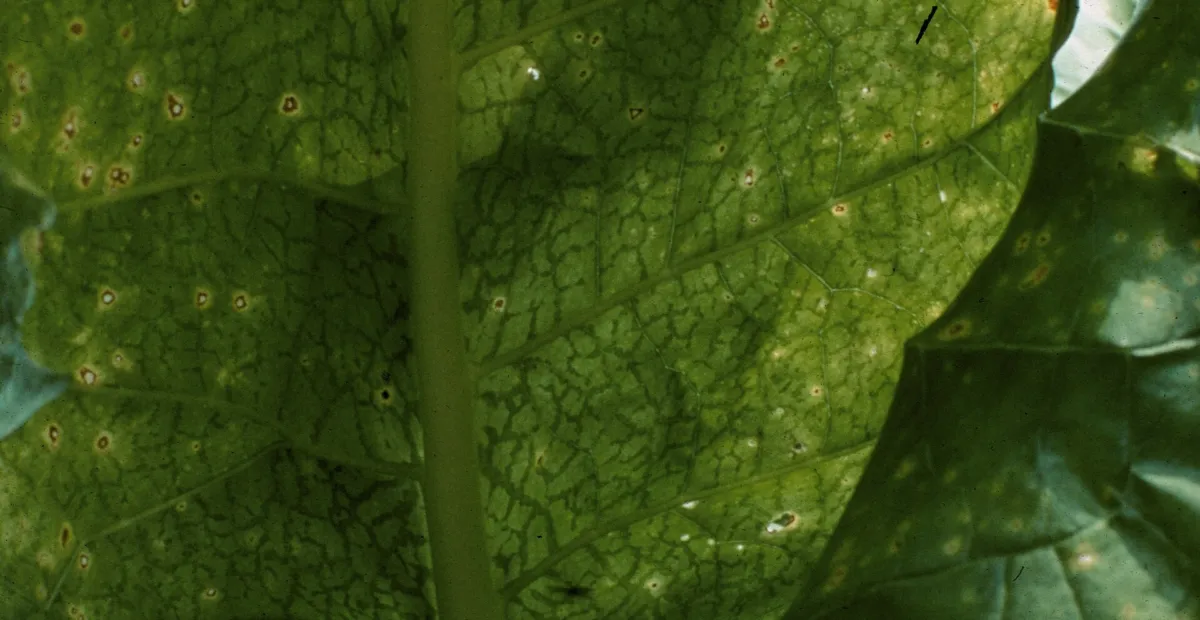
- Potato leaves may develop pale green to yellow mosaic, mottling, crinkling, roughness, deformation or shortened leaflets.
- Plants may be stunted, rigid or poorly developed. Severe infections can cause leaf drop, local necrosis or systemic dieback.
- Plants arising from infected tubers may show symptoms first on lower leaves, including curling, leathery texture and marginal yellowing, pinking, browning or death.
- Necrotic strains may produce vein necrosis or leaf spots and can cause raised brown, reddish or dark rings around potato tuber eyes. Necrosis may extend into the flesh.
- Some infections, particularly late-season infections or infections in tolerant cultivars, may produce little or no visible foliage symptom.
Potato tuber necrotic ringspot can resemble damage from other diseases or physiological problems, so suspicious tubers should be tested rather than identified by appearance alone.
Causes and spread
PVY is commonly introduced through infected seed potatoes or infected seed pieces. The virus moves from a mother plant into daughter tubers, allowing infection to persist between growing seasons.
Many aphid species transmit PVY in a nonpersistent manner. An aphid can acquire virus during a brief probe of an infected plant and transmit it during subsequent probing of healthy plants. Because acquisition and transmission are rapid, aphid insecticides often cannot prevent all primary virus spread.
Mechanical spread can occur through sap on hands, knives, planters, harvest equipment and other tools, especially during seed cutting or crop handling. Volunteer potatoes, cull piles and infected solanaceous weeds can maintain virus inoculum between crops.
Life cycle and persistence
PVY survives from one season to the next mainly in infected seed tubers, volunteer potatoes and infected host plants. Infected seed produces plants that may be symptomatic or symptomless. These plants act as virus sources for aphids during the growing season.
Aphids acquire PVY almost immediately while probing infected tissue and can inoculate healthy plants during later brief probes. The virus then multiplies and moves systemically through the plant. If infection occurs early enough, daughter tubers may become infected and carry the virus into the following season. Strain, cultivar and infection date influence whether foliar symptoms or tuber symptoms develop.
Treatment and control
There is no curative treatment that removes PVY from an infected plant. Once infected, a plant generally remains infected for life, and its daughter tubers may also carry the virus.
For home gardens, promptly remove and discard symptomatic plants and do not compost infected potato vines or save their tubers for planting. In commercial or seed production, rogueing, testing and destruction of infected plants or lots should follow the applicable state certification and production requirements.
Manage the crop as an IPM problem: begin with certified low-virus seed, scout for symptoms, remove sources of inoculum, manage volunteers and weeds, sanitize equipment and monitor aphid activity. Confirm uncertain cases with a diagnostic laboratory because PVY symptoms overlap with other viruses, herbicide injury and nutritional or environmental disorders.
Low-impact and biological control
Organic management relies on exclusion and sanitation rather than curing infection. Use organically produced certified seed potatoes when available and permitted by the applicable certification system; do not plant saved tubers of unknown health status.
- Rogue and remove symptomatic plants promptly, keeping them contained during removal.
- Eliminate volunteer potatoes, cull piles and solanaceous weeds that can harbor PVY.
- Clean cutting and planting tools frequently and avoid unnecessary contact between suspect and healthy plants.
- Use row covers or physical barriers during crop establishment where practical, and monitor aphids with visual scouting or traps.
- Where allowed by the organic standard and crop label, use an approved crop oil or other transmission-reduction product according to the current label. Such products are preventive aids, not cures, and may not stop every nonpersistent aphid transmission event.
Prevention
- Plant certified seed potatoes from a reputable U.S. certification program, preferably lots with low tested PVY levels and appropriate resistance or tolerance for the cultivar and production region.
- Do not save seed from symptomatic or untested plants. Remove volunteer potatoes, cull piles and suspected infected tubers.
- Scout regularly and rogue symptomatic plants early, before foliage from neighboring plants touches. Bag or otherwise contain removed plants and take them out of the field.
- Control nightshade and other known solanaceous weed hosts around production areas, while avoiding unnecessary crop disturbance.
- Clean and disinfect knives, planters, harvest equipment and hands between seed lots or fields. Minimize handling when foliage is wet or when plants are actively growing.
- Choose cultivars with documented PVY resistance or reduced tuber-necrosis risk when suitable for the intended market; verify current regional variety information.
- Use an integrated aphid-monitoring program. Crop oils or other labeled virus-management products may reduce transmission in some production systems, but they do not replace clean seed and sanitation.
Interesting facts
- PVY is a complex rather than a single uniform symptom type; strain names do not always predict identical symptoms across potato cultivars.
- Necrotic strains can cause potato tuber necrotic ringspot disease, with raised brown or reddish rings around the eyes and sometimes necrosis inside the tuber.
- An aphid does not need to colonize potato or remain on the plant for long to transmit PVY; a brief probing visit may be enough.
- Symptomless or mildly symptomatic plants can still spread virus and contaminate seed production.
- PVY is one of the most economically important potato viruses because it affects yield, tuber quality and the health value of seed lots.
No pesticide cures an infected plant or eradicates Potato virus Y. Use only products legally authorized and currently labeled for the specific crop, use site and problem in the United States, and follow the current label, including rate, timing, worker-protection, reentry and preharvest requirements. Because PVY is transmitted rapidly and nonpersistently by aphids, insecticides alone may provide limited protection; prioritize certified seed, rogueing, sanitation, weed control, resistant cultivars and other IPM measures.
Affected plants
The plants below are linked to this problem by structured host-plant data. The list updates automatically as new plant profiles are added.