
 Source:
 Variegata (Agave desmettiana ‘Variegata’) short overview
Agave desmettiana 'Variegata' is a sculptural succulent with an upright, urn-shaped rosette of gracefully arching green leaves edged in luminous yellow. Its mostly smooth margins make it more approachable than many agaves, although the reddish-brown leaf tips are sharp. Use it as a specimen, bedding accent, or container plant in warm, frost-free areas; elsewhere, grow it in a bright pot and protect it from cold, wet winter conditions.
Taxonomic classification
Variegata (Agave desmettiana ‘Variegata’) care guide
Light and placement
Give full sun outdoors where summers are not extremely scorching, with light afternoon protection in very hot desert exposures. A south- or west-facing window with strong filtered light suits indoor culture. Too little light produces stretched, greener growth and weaker variegation; excessive abrupt sun can scorch pale leaf margins, so acclimate gradually.
Watering and humidity
Water thoroughly, then allow the mix to dry well before watering again; empty saucers immediately. In spring and summer, water when the root zone is fully or nearly dry. In fall and winter, reduce sharply, especially indoors or below 60°F. Humidity is not a primary requirement; airflow and dry roots matter more.
Soil and growing medium
Use a gritty, rapidly draining mix designed for cacti and succulents, or amend ordinary potting soil heavily with coarse mineral material. The root zone should dry substantially between waterings. A mildly acidic to mildly alkaline reaction is generally tolerated, but drainage is more important than a narrowly defined pH.
Feeding
Feed in spring and summer with a balanced, dilute succulent fertilizer once or twice during active growth, or use a light application of a controlled-release product. Do not fertilize newly repotted, dormant, cold-stressed, or actively rotting plants. Excess nitrogen can produce weak, overly lush growth and reduce the plant’s compact quality.
Growth and habit
The plant develops slowly to moderately into a durable evergreen rosette and may form offsets with age. Growth is strongest in warm weather and slows sharply in cool, low-light conditions. Variegated tissue can reduce vigor compared with fully green forms, so avoid excessive shade and avoid keeping the root zone wet while growth is paused.
Planting and repotting
Plant outdoors after the danger of frost has passed, setting the crown level with the surrounding soil and never burying the central rosette. Space about 3 to 4 feet apart for specimen development. Water occasionally during establishment, then reduce irrigation once the root system is established.
Repot in spring or early summer only when the container is crowded or the mix has degraded. Handle the rosette with thick gloves or padded protection, keep the crown at its original depth, and use a pot with a drainage hole. Allow disturbed roots to dry briefly before watering lightly.
Propagation and pruning
Propagation
Propagate mainly from offsets or plantlets produced around the base and, sometimes, on the flowering stalk. Separate offsets in warm weather when they have their own roots or a firm basal connection, let cut surfaces callus briefly, and pot into a dry gritty mix. Seed propagation is possible after flowering but is less practical for maintaining a named cultivar.
Pruning
Little pruning is required. Remove dead lower leaves with clean tools, and cut away damaged tissue only after it has dried or healed. After flowering, remove the spent stalk once it becomes structurally unsafe, taking care around offsets and plantlets. Do not trim healthy leaf tips simply to change the silhouette.
Overwintering
Move container plants indoors before nights approach 40°F, placing them in the brightest available window and watering sparingly. In warm outdoor zones, protect from prolonged freezes, cold rain, and saturated soil with overhead cover and excellent drainage. Do not combine cold conditions with frequent irrigation.
Uses
Use as an architectural specimen, warm-climate bedding accent, rock-garden plant, or container feature on patios and balconies. It is especially useful where a colorful, low-water evergreen rosette is wanted. In the United States it is generally a summer container or houseplant outside USDA Zones 9–11.
Appearance
The rosette is upright and urn-shaped, with arching, fleshy green leaves edged in vivid yellow. Leaf margins are generally smooth rather than toothed, but each leaf ends in a sharp reddish-brown spine. The cultivar’s strongest identification feature is the clean golden marginal band, which can make the plant appear backlit in bright conditions.
Flowering
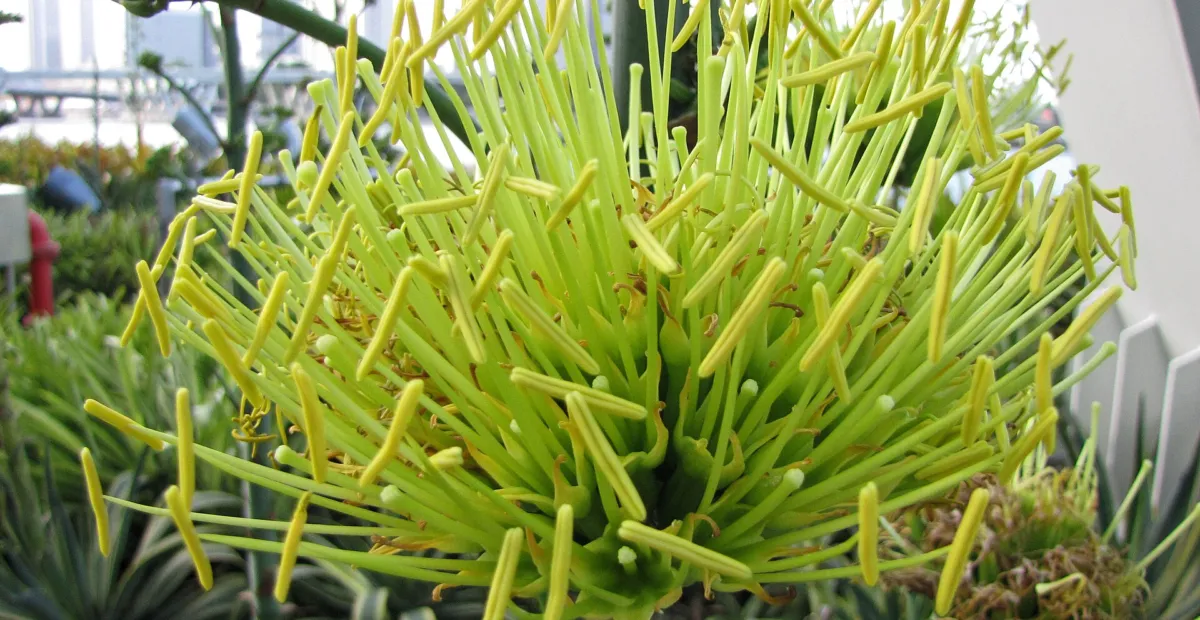
This cultivar flowers only after a long juvenile period, commonly about 10–15 years in cultivated conditions, and then produces a tall branched flower stalk. The yellow flowers are carried high above the rosette; the stalk may flush red as it matures. Like other monocarpic agaves, the flowering rosette dies afterward, often leaving offsets or plantlets.
Pollination and visitors
Flowering agaves provide nectar and pollen for animal visitors. Agave desmettiana is documented in ecological literature with nectar-feeding bats associated with its flowers, while cultivated agave blooms may also receive moths and bees. The named variegated cultivar has limited direct visitor data, so these interactions should be treated as characteristic of the species or genus rather than guaranteed for every plant.
Agave desmettiana 'Variegata' photos
Click any photo for a larger view. Source, author and license are shown separately.
Diseases and pests
Diseases
The principal risks are root and crown rots caused by persistently wet soil, especially in cool weather. Prevent problems with a porous substrate, excellent drainage, and careful watering. Remove collapsed tissue promptly and improve air circulation; discard badly rotted plants rather than repeatedly rewatering them.
Pests
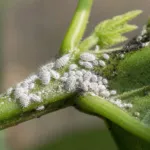
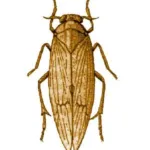
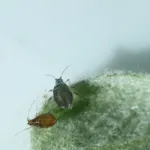
Watch for agave snout weevil in outdoor plantings, scale, mealybugs, and mites under hot, dry stress. Inspect leaf bases and the crown regularly. Isolate affected containers, remove visible pests, and use a labeled horticultural oil or insecticide only as directed; avoid treating drought-stressed plants.
Related diseases and pests
Only Plant Doctor profiles whose host data indicate this plant may be affected are shown here.
Toxicity and pollen
Agave sap and sharp leaf tips can cause mechanical injury and skin irritation; sap exposure may provoke dermatitis in sensitive people. The exact cultivar is not well covered by major poison-control plant lists, so ingestion risk should be treated conservatively rather than assumed harmless. Keep away from children and pets, wear gloves, and avoid contact with eyes or mouth.
- Typical season
- Late summer to fall during flowering; exact timing varies by U.S. climate
- Pollination / pollen
- Exposed floral pollen; limited airborne allergy data
Agaves release pollen from large exposed anthers during flowering, but this cultivar is rarely grown to bloom in much of the United States and direct allergy data are scarce. The large inflorescence may expose pollen locally, especially during dry, windy weather, so sensitive individuals should avoid handling flowering stalks and use ordinary garden protection.
Native habitat
The species is associated with warm Mexican habitats and is cultivated widely in tropical, subtropical, and frost-free landscapes. It favors bright exposures, porous mineral soils, and seasonal dryness rather than cold, waterlogged ground. In the United States, it is most dependable as a landscape plant in the warmest parts of the Southeast, Southwest, California, and Hawaii.
Interesting fact
The cultivar is valued for bright marginal variegation and unusually smooth leaf edges compared with many agaves. The species is monocarpic: one mature rosette flowers once and then dies. Agave desmettiana can produce numerous offsets, helping the planting continue after the original rosette blooms.
Frequently asked questions (FAQ)
The most relevant questions about this plant, with short and direct answers.
🌱Quick care
How do you care for Agave desmettiana 'Variegata'?⌄
Give Agave desmettiana 'Variegata' bright light, sharply draining soil, and infrequent watering. Let the soil dry completely before watering again, and protect it from freezing temperatures.
Is Agave desmettiana 'Variegata' easy to grow?⌄
Yes, it is generally an easy-care, low-water succulent when grown in strong light and fast-draining soil. The main risks are overwatering, inadequate light, and frost damage.
How big does Agave desmettiana 'Variegata' get?⌄
It typically reaches about 2–3 feet tall and 3–4 feet wide in favorable conditions. Container-grown plants may remain smaller, while mature landscape specimens can form broad rosettes.
🌤️Environment and placement
Is Agave desmettiana 'Variegata' an indoor or outdoor plant?⌄
It can be grown outdoors year-round in frost-free areas and indoors near a very bright, sunny window elsewhere. Indoor plants need excellent drainage and should not sit in water.
How much light does Agave desmettiana 'Variegata' need?⌄
Provide full sun to bright filtered light. Introduce it gradually to intense direct sun, especially after growing indoors, because sudden exposure can scorch the leaves.
Can Agave desmettiana 'Variegata' grow in full sun?⌄
Yes, full sun produces the strongest growth and usually helps maintain its yellow-edged variegation. In extremely hot climates, light afternoon shade can reduce scorch.
Can Agave desmettiana 'Variegata' grow in shade?⌄
It tolerates bright filtered light but usually becomes weaker or more open in deep shade. Avoid dim indoor locations, which can cause stretched growth and less attractive rosettes.
What USDA hardiness zone is Agave desmettiana 'Variegata'?⌄
It is best suited to USDA Zones 10–11 and may survive in parts of Zone 9 only with reliable frost protection. Treat it as frost tender rather than as a reliably cold-hardy agave.
What temperature is too cold for Agave desmettiana 'Variegata'?⌄
Protect it when temperatures approach 25°F, because frost and hard freezes can severely damage or kill the plant. Move container plants indoors before freezing weather arrives.
💧Care and problems
How often should you water Agave desmettiana 'Variegata'?⌄
Water thoroughly only after the potting mix has dried completely. During active warm-season growth this may be every few weeks, while winter watering should be reduced substantially.
How do you know when Agave desmettiana 'Variegata' needs water?⌄
Check that the soil is dry several inches down and that the container feels noticeably lighter. Slightly soft or wrinkled leaves can also indicate thirst, but yellowing or mushy leaves more often signal excess moisture.
Why is my Agave desmettiana 'Variegata' turning brown?⌄
Brown areas may result from sun scorch, frost injury, watering problems, or physical damage. Review recent temperature and light changes, then remove only tissue that is clearly dead.
Why is my Agave desmettiana 'Variegata' turning yellow?⌄
Yellow leaves most commonly indicate overwatering or poor drainage, especially when the lower leaves soften. Allow the mix to dry fully and inspect the roots if the discoloration continues.
Why is my Agave desmettiana 'Variegata' getting leggy?⌄
Leggy or widely spaced leaves usually indicate insufficient light. Move it gradually toward a brighter location, because an abrupt change from shade to intense sun can scorch the foliage.
Does Agave desmettiana 'Variegata' need fertilizer?⌄
It usually needs little fertilizer because it is adapted to lean, gritty soil. If growth is weak, apply a diluted balanced or succulent fertilizer once during the growing season, but avoid feeding dry or stressed plants.
🪴Planting and repotting
What soil is best for Agave desmettiana 'Variegata'?⌄
Use a gritty, sharply drained succulent mix containing substantial mineral material such as pumice, perlite, coarse sand, or gravel. The mix should shed water quickly rather than remain damp around the roots.
Can Agave desmettiana 'Variegata' grow in a pot?⌄
Yes, it performs well in containers with drainage holes. Choose a stable pot only slightly larger than the root ball and use a porous succulent mix to reduce the chance of rot.
When should you repot Agave desmettiana 'Variegata'?⌄
Repot in spring or early summer when the plant is actively growing, preferably when roots fill the container or drainage has become poor. Let damaged roots dry briefly before returning the plant to dry mix.
How do you plant Agave desmettiana 'Variegata' outdoors?⌄
Plant it in a sunny, elevated, well-drained site with the crown at or slightly above soil level. Avoid low areas where rainwater collects, because persistent moisture can cause crown and root rot.
✂️Propagation and pruning
Does Agave desmettiana 'Variegata' spread or form pups?⌄
Yes, it commonly produces offsets, or pups, around the base and can form a clump over time. These offsets are the most practical way to maintain additional plants.
How do you propagate Agave desmettiana 'Variegata' from pups?⌄
Separate a healthy pup with some attached roots, allow any cuts to dry for a few days, and plant it in dry, gritty mix. Begin light watering only after the wound has callused.
Can Agave desmettiana 'Variegata' be propagated from bulbils?⌄
Yes, this agave may produce bulbils, or small aerial plantlets, on its flower stalk. Remove mature bulbils, let wounds dry, and root them in a well-drained medium.
Should you remove pups from Agave desmettiana 'Variegata'?⌄
Remove pups if you want a solitary specimen, more space around the parent, or individual plants for propagation. Leave them attached if you prefer a fuller clump and the planting area has room.
Can you cut the sharp tip off Agave desmettiana 'Variegata'?⌄
The terminal spine can be carefully trimmed when the plant grows near walkways or play areas. Wear gloves and eye protection, and remember that trimming does not eliminate the plant’s irritating sap.
⚠️Toxicity and safety
Is Agave desmettiana 'Variegata' poisonous to dogs and cats?⌄
Its sap can irritate the mouth, skin, and digestive tract if chewed, and the leaf tips can cause puncture injuries. Keep pets and children from chewing or handling the plant, and contact a veterinarian or poison service if ingestion occurs.
Is Agave desmettiana 'Variegata' safe to touch?⌄
The leaf margins are relatively smooth, but the tips still end in sharp spines and the sap may irritate skin. Handle it with gloves, long sleeves, and eye protection when planting or pruning.
🌸Flowering and special interest
Does Agave desmettiana 'Variegata' bloom?⌄
Yes, it usually flowers only once after many years, often around 10–15 years old, producing yellow flowers on a tall stalk. The rosette dies after flowering but commonly leaves offsets or bulbils.
What should you do after Agave desmettiana 'Variegata' flowers?⌄
Allow offsets or bulbils to develop, then remove the spent flowering stalk and dead parent rosette once they have dried. Use protective clothing because the plant remains sharp and its sap can irritate skin.
Does Agave desmettiana 'Variegata' die after flowering?⌄
Yes, it is monocarpic, so the flowering rosette dies after producing its bloom. The plant may still continue through pups or bulbils formed before or during flowering.
Similar plants
 Azure Monkshood (Aconitum carmichaelii) care guideAconitum carmichaelii
 Monkshood (Aconitum ‘Stainless Steel’)Aconitum 'Stainless Steel'
 Monkshood (Aconitum ‘Bressingham Spire’)Aconitum 'Bressingham Spire'
 Golden full moon maple (Acer shirasawanum ‘Aureum’)Acer shirasawanum 'Aureum'
 Globosum (Acer platanoides ‘Globosum’)Acer platanoides 'Globosum'
 Striped maple (Acer pensylvanicum) care guideAcer pensylvanicum