
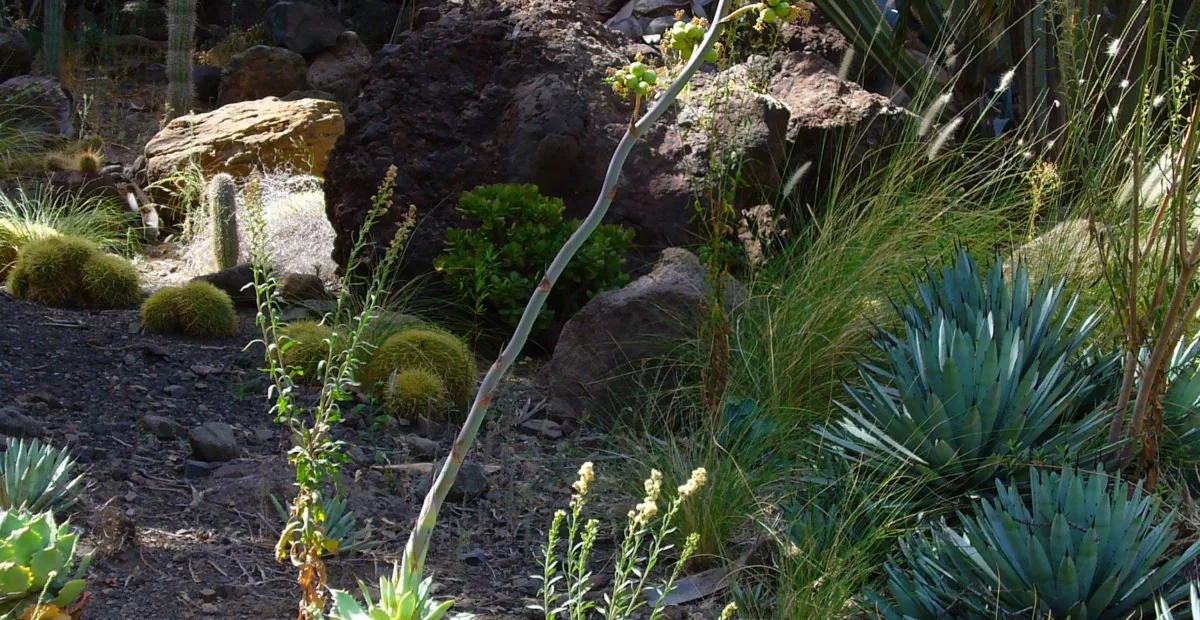
 Source:
 Verschaffeltii (Agave potatorum ‘Verschaffeltii’) short overview
Agave potatorum 'Verschaffeltii' is a distinctive cultivated form of the Mexican Agave potatorum, forming a compact rosette of blue-gray, glaucous leaves with undulating margins, raised tooth bases, and dark twisted terminal spines. It is best grown in sharply drained mineral soil with abundant light and restrained watering. Tender to hard freezes, this slow-growing succulent is especially useful in containers, rock gardens, and protected Southwestern landscapes.
Taxonomic classification
Verschaffeltii (Agave potatorum ‘Verschaffeltii’) care guide
Light and placement
Give at least 6 hours of direct sun, ideally from a south- or west-facing exposure. In hot desert locations, provide light afternoon shade to limit scorch. Too little light produces stretched leaves and weaker spines; excessive abrupt sun after indoor culture can bleach or scorch foliage, so acclimate gradually.
Watering and humidity
Water deeply only after the mix has dried completely, then let excess drain away. During warm active growth, this may mean every 2–4 weeks depending on pot size, heat, and airflow; in winter, water sparingly, just enough to prevent severe shriveling. Never leave the pot standing in water, and do not increase humidity to compensate for dry soil.
Soil and growing medium
Use a predominantly mineral, sharply draining mix such as cactus soil amended with pumice, perlite, coarse grit, or lava rock. Avoid dense organic soil and containers without drainage holes. The species is associated with sandy, often limestone-derived soils in dry Mexican habitats; a near-neutral to slightly alkaline reaction is generally suitable, although it tolerates mildly acidic, well-drained mixes.
Feeding
Feed during active spring and summer growth with a diluted, low-nitrogen cactus or succulent fertilizer once or twice. Alternatively, top-dress lightly with mature compost, but avoid rich feeding that produces weak, overly soft growth. Do not fertilize in winter, after repotting, or when the plant is stressed or waterlogged.
Growth and habit
This form generally develops a solitary or slowly clumping rosette and remains useful as a long-term container specimen. Growth is most active in warm, bright weather. Mature plants may produce basal offsets, but offsetting is inconsistent; after the terminal bloom, retain healthy offsets as replacements where available.
Planting and repotting
Plant after the danger of frost has passed, when soil is warm and drainage is excellent. Set the root ball at the same depth as before; do not bury the crown. Space individual plants about 18–30 inches apart for display, allowing extra room where a larger specimen is expected. Establish with occasional deep watering, then reduce irrigation as roots settle.
Repot in spring or early summer when active growth resumes. Move the plant only one container size larger, protect hands and arms from the spines, and allow any disturbed roots to dry before watering. Replace compacted mix rather than burying the rosette deeper.
Propagation and pruning
Propagation
Propagate from seed or basal offsets when available. Remove offsets in spring or early summer with a clean knife, let cut surfaces callus for several days, then root in a dry, gritty mix. Seed-grown plants may vary because Agave potatorum is variable and cross-pollination can occur.
Pruning
No routine pruning is needed. Remove only dead or badly damaged leaves with clean tools, working from the outside inward. Cut spent flowering stalks after seed capsules mature or after the stalk has fully dried, using protective clothing and avoiding damage to offsets.
Overwintering
Move container plants indoors before temperatures approach 32°F. Keep them in the brightest available window or under a strong grow light, cool to moderately warm, and nearly dry through winter. In Zones 9b–10, outdoor plants need a rain-sheltered position and protection from prolonged freezes; hard frost can cause severe injury or death.
Uses
Use as a sculptural container specimen, accent in a dry rock garden, or protected xeric landscape plant in warm parts of the United States. Its spines require clearance from paths and play areas. The species is culturally important in Mexico for tobala mezcal, but household plants should not be harvested for food or alcohol production without expert identification and safe processing.
Appearance
The rosette is compact to open and usually symmetrical, with broad, thick, blue-gray leaves that show conspicuous bud imprints. Margins are undulating, with short teeth set on raised, tubercle-like bases. Each leaf ends in a larger reddish, yellowish, or brown twisted spine, giving the plant a strongly sculptural profile.
Flowering
A mature rosette produces one tall, branched flowering stalk and then declines after flowering and seed production. The flowers are pale green to yellow-green, often flushed with reddish tones, and are borne in clusters along a several-yard-tall inflorescence. Flowering is a rare terminal event rather than an annual display.
Pollination and visitors
Wild Agave potatorum flowers are documented as important nectar and pollen resources for nectar-feeding bats, with moths and bees also visiting agave flowers. The exact pollinator assemblage of this cultivated form has not been separately established, so species-level pollinator identification is left blank.
Agave potatorum 'Verschaffeltii' photos
Click any photo for a larger view. Source, author and license are shown separately.
Diseases and pests
Diseases
The principal risk is rot caused by persistently wet soil, especially in cool weather. Use porous soil, drainage holes, and careful winter watering. Remove collapsed tissue promptly and isolate affected plants. Good airflow and avoiding overhead irrigation help reduce fungal problems.
Pests
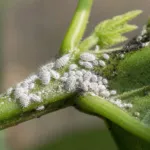
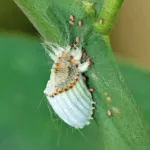
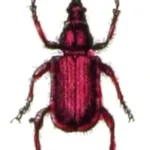
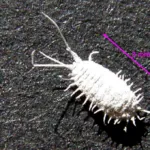
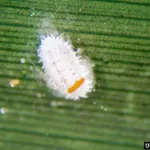
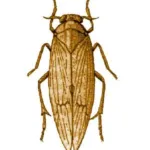
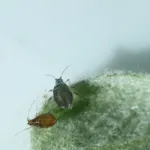
Watch for agave snout weevil in outdoor plantings, along with scale insects and mealybugs in containers. Inspect leaf bases and the crown regularly. Remove isolated scale or mealybugs with a cotton swab and alcohol, improve airflow, and use labeled treatments only when necessary. Avoid chronically wet conditions, which increase susceptibility to crown and root problems.
Related diseases and pests
Only Plant Doctor profiles whose host data indicate this plant may be affected are shown here.
Toxicity and pollen
Agave sap and tissues contain irritating compounds and calcium oxalate-type crystals that can cause skin, eye, and mouth irritation; the sharp spines also create puncture hazards. Wear gloves and eye protection when handling, keep plant material away from children and pets, and rinse exposed skin promptly. Evidence for this exact cultivar is limited, so exposure precautions are appropriate.
- Typical season
- Late summer through fall when flowering occurs; exact US exposure timing varies by climate.
- Pollination / pollen
- Exposed floral pollen; primarily animal-transferred, with some airborne dispersal possible
Agaves release pollen from exposed anthers during flowering, but this plant flowers rarely and only at maturity. Airborne allergy risk for this exact cultivar is not well studied; avoid assuming zero risk. People with pollen sensitivity should limit contact with the flowering stalk and use gloves and eye protection during maintenance.
Native habitat
The species occurs in dry and semiarid parts of Puebla and Oaxaca, Mexico, including the Tehuacán–Cuicatlán region and the Sierra Madre del Sur. It grows in open xeric scrub, low deciduous vegetation, and related dry plant communities, often on sandy or rocky soils derived from limestone at roughly 4,300–7,900 feet elevation.
Interesting fact
The epithet Verschaffeltii commemorates the historic horticultural name associated with this form. The plant is highly variable across the Agave potatorum complex. Mature plants flower only once, and the flowering stalk can be many times taller than the rosette. Wild Agave potatorum is important in traditional tobala mezcal production.
Similar plants
 Azure Monkshood (Aconitum carmichaelii) care guideAconitum carmichaelii
 Monkshood (Aconitum ‘Stainless Steel’)Aconitum 'Stainless Steel'
 Monkshood (Aconitum ‘Bressingham Spire’)Aconitum 'Bressingham Spire'
 Golden full moon maple (Acer shirasawanum ‘Aureum’)Acer shirasawanum 'Aureum'
 Globosum (Acer platanoides ‘Globosum’)Acer platanoides 'Globosum'
 Striped maple (Acer pensylvanicum) care guideAcer pensylvanicum