
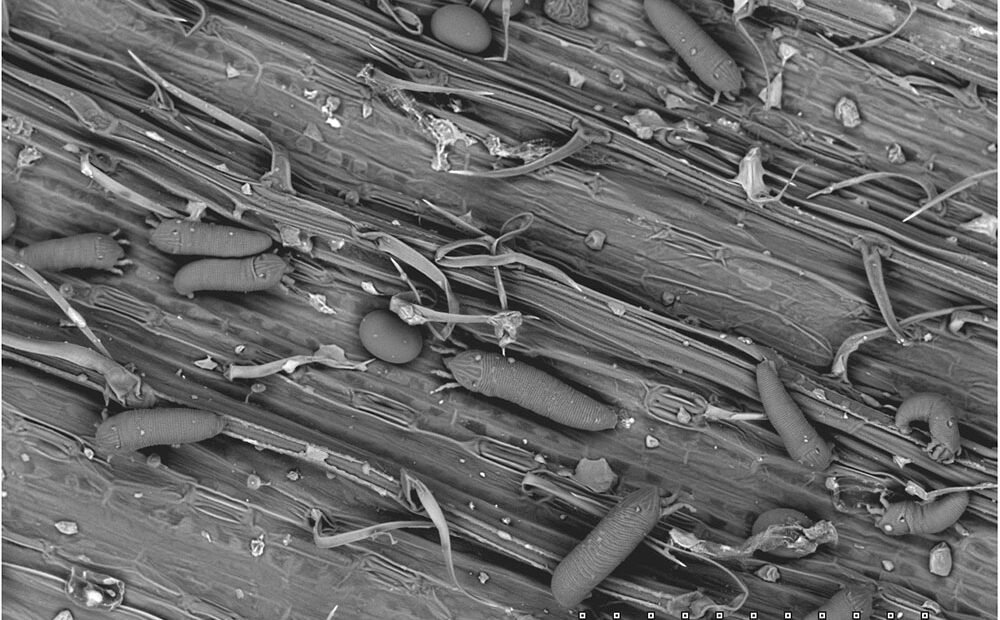
Wheat curl mite
Aceria tosichella KeiferWheat curl mite overview
The wheat curl mite, Aceria tosichella, is a microscopic eriophyid mite that feeds in the protected folds of wheat and other grasses. Its direct feeding can curl young leaves and reduce photosynthesis, but its greatest importance in the United States is as a vector of wheat streak mosaic virus, High Plains wheat mosaic virus, Triticum mosaic virus and brome streak mosaic virus. Effective management relies mainly on resistant varieties, green-bridge removal and planting-date planning.
Typical conditions
Overview
Aceria tosichella, commonly called the wheat curl mite, is an obligate plant-feeding mite in the family Eriophyidae. Adults and immature stages are wormlike and generally too small to see without magnification. On wheat, they shelter and reproduce within the folds of developing leaves, especially near the leaf whorl.
Direct feeding may cause leaf curling, pale streaking, distorted emergence and reduced photosynthetic area. The more serious threat is indirect: wheat curl mites can acquire and transmit wheat streak mosaic virus, High Plains wheat mosaic virus, Triticum mosaic virus and brome streak mosaic virus. A field with mosaic, yellowing or severe stunting should therefore be tested for viruses rather than diagnosed from mite feeding alone.
Symptoms and identification
Direct mite injury is often subtle and may be confused with virus infection, drought, heat injury or herbicide damage.
- Young leaves may fail to unfurl normally, forming tight curls or twisted bands.
- Feeding can produce pale green to yellow streaking, reduced leaf expansion and localized loss of vigor.
- Mites are most likely to be found inside leaf folds, the whorl, leaf sheaths or along protected veins rather than on exposed leaf surfaces.
- When virus transmission occurs, symptoms may include yellow-green mosaic or streaking, chlorosis, reddening, necrosis, severe stunting and poor grain set. These are virus symptoms associated with the mite, not unique visual symptoms of A. tosichella.
Confirmation is best made by examining protected leaf tissue with suitable magnification and by submitting symptomatic plants for laboratory virus testing.
Causes and spread
The mite survives and reproduces on susceptible grasses, including volunteer wheat, some cultivated cereals and numerous wild or pasture grasses. The most important field pathway in the United States is the “green bridge”: volunteer wheat or grassy hosts remain green between harvest and establishment of the next wheat crop.
As mature wheat senesces, adult mites move to leaf tips, awns or leaf edges and become airborne. Wind can carry them to nearby emerging wheat; movement may also occur on infested plant material, machinery and, less importantly, other insects. Hot, dry weather tends to increase activity and dispersal, while rainfall and cooler conditions generally suppress movement. Virus risk is greatest when viruliferous mites move directly from infected volunteer wheat or grassy hosts into young wheat.
Life cycle and persistence
Wheat curl mites have a rapid life cycle under favorable conditions. Eggs are laid in protected leaf folds, and immature stages develop through successive molts before becoming adults. Reproduction can include arrhenotokous parthenogenesis, allowing populations to increase from fertilized and unfertilized eggs.
Development rate is strongly temperature dependent, but the exact timing varies with mite lineage, host and weather. Populations build on green wheat and alternate grass hosts, then disperse as hosts mature or dry. Mites can overwinter or oversummer on living volunteer wheat and grasses, providing a bridge to the next crop. Because A. tosichella is a complex of cryptic genetic lineages, host range, thermal performance, virulence and virus-vectoring ability are not uniform across all populations.
Treatment and control
Once wheat streak mosaic or another mite-transmitted virus is established, there is no curative treatment that restores infected plants. Remove or terminate severely affected volunteer wheat and grassy bridge hosts when agronomically and legally appropriate, and manage the remaining crop to reduce spread and protect yield.
For an active mite problem, prioritize resistant varieties, elimination of nearby green hosts and future planting-date adjustments. Foliar pesticide treatments are often unreliable because mites occupy tightly folded leaves and leaf sheaths, and timing is difficult. In home gardens or small plantings, remove heavily infested grass plants and dispose of them rather than composting material that could remain viable. Diagnosis should distinguish mite injury from virus infection, nutrient stress, drought and herbicide injury.
Low-impact and biological control
- Terminate volunteer wheat and grassy weeds by mowing, grazing, cultivation or an organically acceptable weed-control method before the next susceptible crop emerges.
- Use certified organic or otherwise suitable wheat cultivars with documented resistance when available for the region and production system.
- Use crop rotation and planting schedules that interrupt continuous green cereal hosts.
- Reduce movement of infested plant debris by cleaning equipment and avoiding transport of green wheat between fields.
- Conserve natural enemies where present, although biological control is not currently a dependable stand-alone strategy for wheat curl mite management. Some thrips species can prey on mite eggs, but their contribution under field conditions is limited and inconsistent.
Prevention
- Destroy volunteer wheat and susceptible grassy weeds well before planting the next wheat crop; a practical target is at least 2 weeks before winter wheat emergence or planting where local recommendations permit.
- Break the green bridge by terminating volunteer wheat after harvest and controlling grassy weeds in field borders, waterways and fallow ground.
- Use wheat cultivars with documented resistance to the local wheat curl mite population and, where appropriate, resistance or tolerance to the viruses of concern. Resistance is not universal and can vary by mite lineage or temperature.
- Plan planting dates to reduce overlap between newly emerged wheat and dispersing mites from mature wheat, while balancing soil moisture, winter survival and local agronomic recommendations.
- Clean soil, plant debris and volunteer wheat from combines, drills, trucks and other equipment before moving between fields.
- Scout field edges and young wheat near harvested wheat, volunteer stands or grass hosts. Submit suspicious samples for mite identification and virus testing.
Interesting facts
- The wheat curl mite is not a conventional insect: it is an eriophyid mite with only two pairs of legs.
- It is a vector of at least four important cereal viruses, making a very small arthropod capable of causing large field-scale losses.
- Wheat curl mite populations contain cryptic genetic lineages with different host preferences, temperature responses and virus-vectoring abilities.
- Nearly 90 grass species have been reported as hosts worldwide, but documented host suitability is not identical for every mite lineage.
- Plant resistance genes such as Cmc sources can be highly valuable, yet resistance effectiveness may differ among cultivars, mite populations and environmental conditions.
No pesticide program should be assumed effective for this pest or its associated viruses. Use only miticides or other products legally authorized for the specific crop, site and problem in the United States, and follow the current EPA-approved label, state requirements, preharvest interval, worker-protection rules and resistance-management directions. Chemical applications cannot cure virus-infected plants and may provide inconsistent control because mites are protected inside leaf folds and sheaths.
Affected plants
The plants below are linked to this problem by structured host-plant data. The list updates automatically as new plant profiles are added.
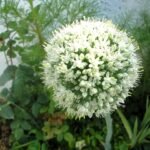 Onion (Allium cepa) care guideAllium cepa
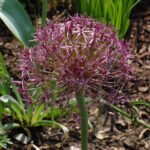 Allium christophii care guideAllium christophii
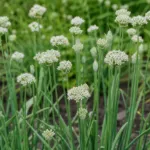 Bunching onion (Allium fistulosum) care guideAllium fistulosum
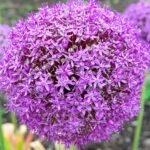 Giant Allium (Allium giganteum) care guideAllium giganteum
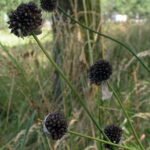 Ornamental onion (Allium) care guideAllium
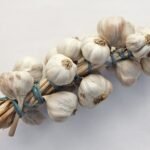 Garlic (Allium sativum) care guideAllium sativum
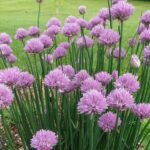 Chives (Allium schoenoprasum) care guideAllium schoenoprasum
 Ransoms (Allium ursinum) care guideAllium ursinum
 Wild leek or broadleaf wild leek (Allium ampeloprasum) care guideAllium ampeloprasum
 Shallot (Allium cepa Aggregatum Group)Allium cepa Aggregatum Group
 Cepa Group (Allium cepa Group)Allium cepa Cepa Group
 Rakkyo (Allium chinense) care guideAllium chinense