
 Source:
Musa acuminata short overview
Musa acuminata is a tropical and subtropical giant herb from Southeast Asia that forms a pseudostem from tightly overlapping leaf sheaths. It is the principal wild ancestor of cultivated bananas and is valued for its large, glossy leaves, rapid growth, ornamental tropical appearance, and edible fruit in suitable climates. In the United States, it is usually grown outdoors only in warm regions or in containers that can be protected from cold.
Taxonomic classification
Musa acuminata care guide
Light and placement
Give outdoor plants full sun with protection from strong afternoon heat where summers are intense. A south- or southeast-facing position is suitable indoors, ideally with several hours of direct sun supplemented by bright filtered light. Weak light produces stretched growth, smaller leaves and poor flowering; harsh wind and sudden intense sun can scorch or shred the foliage.
Watering and humidity
Water deeply whenever the upper inch of soil begins to dry, then allow excess water to drain completely. During hot weather and active growth, watering may be needed several times weekly; reduce frequency in cool weather or indoors, but do not let the root ball become persistently dry. High humidity supports cleaner, larger leaves, although stagnant wet foliage should be avoided.
Soil and growing medium
Use a fertile, moisture-retentive but freely draining medium containing compost or other organic matter with loam, coco coir or similar structure. Outdoor soil may be sandy, loamy or clay-based if drainage is improved. A slightly acidic to neutral reaction is suitable; avoid compacted soil that remains waterlogged around the rhizome and roots.
Feeding
Feed actively growing plants every 2–4 weeks with a balanced, complete fertilizer at the label rate, or use a controlled-release product supplemented with compost. Plants producing fruit need reliable nutrition and moisture. Do not fertilize drought-stressed, chilled or recently transplanted plants until active growth resumes.
Growth and habit
Growth is rapid in warmth. Each shoot forms a pseudostem and normally flowers only once; after fruiting, that pseudostem declines while new suckers arise from the underground rhizome. For fruit production, retain one strong fruiting shoot and one younger successor, removing excess suckers when they compete for light, water or nutrients.
Planting and repotting
Plant only after the danger of frost has passed and soil has warmed. Choose a sheltered site with rich, moist, well-drained soil and protection from strong winds. Water thoroughly after planting and mulch around, but not against, the pseudostem. Establishment is fastest in warm weather with consistent moisture and regular feeding.
Move container plants into a larger pot when roots fill the medium or new suckers become crowded. Use a heavy, stable container with drainage holes and a fertile, airy potting mix. Repot during active growth, keep the plant at its original depth, and water thoroughly afterward while protecting it from stress for several days.
Propagation and pruning
Propagation
Propagate vegetatively by separating well-rooted suckers from the parent clump during warm, active growth. Seed propagation is possible for wild, fertile plants but is slower and produces variable offspring. Use clean, sharp tools and replant divisions promptly in moist, well-drained medium.
Pruning
Remove torn, dead or severely diseased leaves at the base with clean tools. After a pseudostem has flowered and fruit has been harvested, cut it down close to the ground and remove the material. Thin unwanted suckers when they crowd the clump, but retain selected replacements for future growth.
Overwintering
In USDA Zones 10–11, protect plants from unusual cold and wind with mulch and temporary covering. In colder regions, bring containers indoors before frost and provide the brightest available light, warmth and reduced but regular watering. Large plants may be difficult to move; severe cutting back can reduce the chance of flowering the following season.
Uses
Used as a tropical foliage accent, container plant, houseplant and fruiting plant in frost-free climates. Musa acuminata is the wild ancestor of many dessert bananas and contributes to numerous cultivated banana groups. Fruits from correctly identified edible cultivars are food crops; wild plants may contain substantial seeds and are not equivalent to supermarket bananas.
Appearance
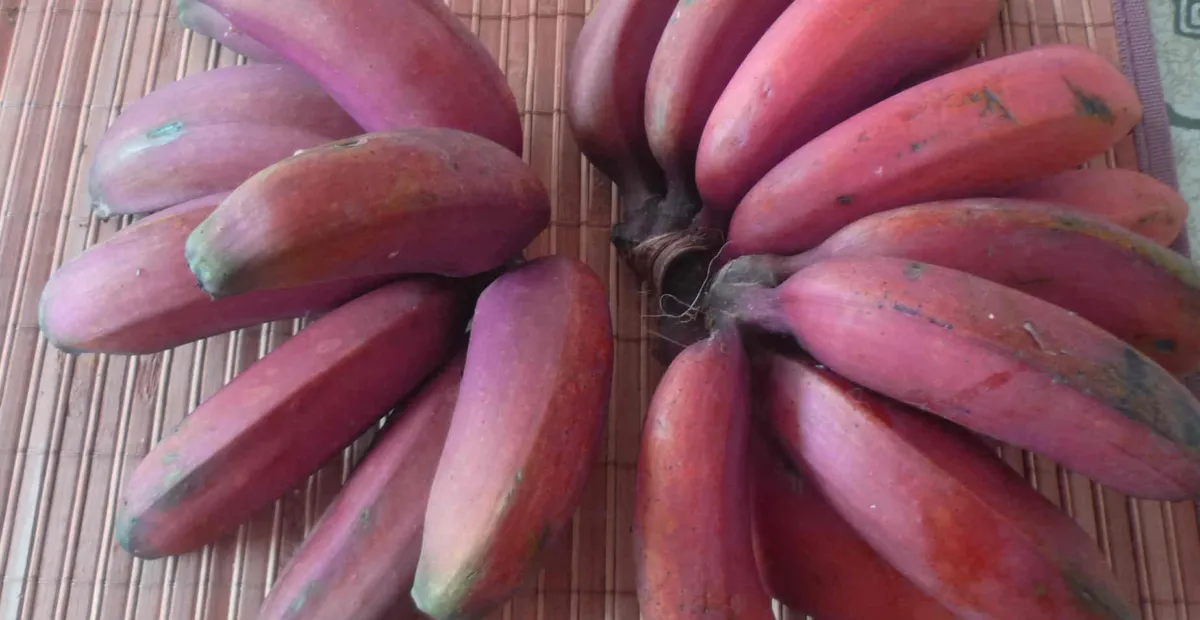
The plant has a trunk-like pseudostem made of tightly overlapping leaf sheaths rather than woody tissue. Its spirally arranged, paddle-shaped leaves can become very large, with a prominent midrib and easily torn blades. A drooping or horizontal inflorescence carries female flowers above male flowers, followed by clustered banana fruits.
Flowering
Mature plants produce a large inflorescence from the pseudostem. Female flowers occur first and develop into fruit, while male flowers are borne toward the distal end beneath or beyond the developing fruit cluster. In wild plants, fruits generally contain seeds; many cultivated banana forms derived from this species are seedless because of sterility and parthenocarpy.
Pollination and visitors
Wild Musa acuminata flowers are reported to receive visits from bats and sunbirds, which can transfer pollen among flowers. Pollination biology differs among wild plants and cultivated clones; many commercial banana cultivars are sterile, parthenocarpic or otherwise produce fruit without normal seed development.
Musa acuminata photos
Click any photo for a larger view. Source, author and license are shown separately.
Diseases and pests
Diseases
Good drainage, airflow and clean tools reduce problems. Watch for leaf spots, fungal or bacterial rots, and rhizome decline when plants stay cold or waterlogged. Remove badly affected leaves, avoid overhead irrigation, discard rotting tissue, and isolate troubled container plants. Use only products labeled for bananas and the specific disease.
Pests
Indoor plants may develop spider mites, aphids, mealybugs or scale, especially in dry air. Inspect leaf undersides and pseudostem joints regularly. Improve humidity without keeping foliage constantly wet, wash pests off with water, and use horticultural oil or insecticidal soap according to the label. Avoid treating heat-stressed plants.
Related diseases and pests
Only Plant Doctor profiles whose host data indicate this plant may be affected are shown here.
 PestCitrus mealybugPlanococcus citri
 DiseaseFusarium wiltFusarium oxysporum species complex
 Environmental stressChilling injury
 PestBrown Soft ScaleCoccus hesperidum
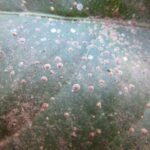 PestCalifornia red scaleAonidiella aurantii
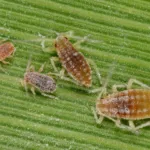 PestMealy Plum AphidHyalopterus pruni (Geoffroy, 1762)
 DiseaseRhizoctonia DiseasesRhizoctonia solani Kühn
 Environmental stressWaterlogging
Toxicity and pollen
Authoritative pet-safety listings identify Musa acuminata as non-toxic to dogs and cats. Normal handling is not considered hazardous, but any plant material can cause mild digestive upset if eaten in quantity, and individual food allergies to banana fruit are possible. Seek medical or veterinary advice for significant symptoms.
- Typical season
- Species-level US exposure season not established
- Pollination / pollen
- Pollen is released from male flowers; cultivated edible forms may be sterile or produce little usable seed.
Musa acuminata produces pollen from male flowers, but reliable evidence defining airborne concentrations or a typical United States allergy season is limited. Banana fruit allergens are documented, which is separate from airborne pollen exposure. People with known banana or latex-fruit syndrome should follow clinical advice.
Native habitat
The species is associated with warm, humid tropical and subtropical environments, especially wet forest margins and rainforest settings. It grows in fertile soils that retain moisture while draining excess water. Its native distribution extends across tropical Asia, where populations show substantial geographic and morphological variation.
Interesting fact
Musa acuminata is a giant herb, not a woody tree. Its pseudostem is built from leaf sheaths. It is one of the principal wild ancestors of cultivated bananas. Wild fruits usually contain seeds, unlike many sterile cultivated dessert bananas. A fruiting shoot normally dies after completing its reproductive cycle.
Frequently asked questions (FAQ)
The most relevant questions about this plant, with short and direct answers.
🌱Quick care
How do you care for Musa acuminata indoors?⌄
Give Musa acuminata bright light, evenly moist well-drained soil, warm temperatures, and moderate to high humidity. Protect it from cold drafts and allow excess water to drain fully.
How much light does Musa acuminata need?⌄
Musa acuminata grows best in full sun outdoors or very bright filtered light indoors. Acclimate it gradually when moving it into stronger direct sun to reduce leaf scorch.
How often should you water Musa acuminata?⌄
Water Musa acuminata whenever the surface of the soil begins to dry, keeping the root zone evenly moist. Do not leave the pot standing in water, because consistently soggy soil can damage the roots.
Is Musa acuminata an indoor or outdoor plant?⌄
Musa acuminata can be grown outdoors in warm climates and indoors in a bright, spacious location. In much of the United States, it must be container-grown or protected from winter cold.
🌤️Environment and placement
What USDA hardiness zones can grow Musa acuminata outdoors?⌄
Musa acuminata is generally suited to USDA Hardiness Zones 10–11 for year-round outdoor growth. In colder zones, grow it in a container or overwinter the plant in a protected indoor location.
Can Musa acuminata grow in full sun?⌄
Yes, Musa acuminata can grow in full sun when gradually acclimated and adequately watered. In very hot conditions, bright filtered light or afternoon protection may help prevent leaf damage.
What temperature is too cold for Musa acuminata?⌄
Musa acuminata is sensitive to frost and cold temperatures, so protect it before freezing weather arrives. Cold can blacken the leaves and damage the pseudostem even when the underground rhizome survives.
Can Musa acuminata survive winter outdoors in the United States?⌄
It can survive winter outdoors year-round mainly in frost-free parts of the southern United States. Elsewhere, bring container plants indoors or protect and store the rhizome before hard freezes.
Does Musa acuminata need high humidity?⌄
Musa acuminata grows best with moderate to high humidity, especially indoors. Dry air may cause brown leaf edges, so grouping plants or using a humidifier can help.
What type of soil is best for Musa acuminata?⌄
Use moist, fertile, well-drained soil enriched with organic matter. The soil should retain moisture without becoming waterlogged around the roots.
💧Care and problems
Why are the leaves of my Musa acuminata turning brown?⌄
Brown edges usually result from dry soil, low humidity, salt buildup, wind, or leaf scorch. Check moisture and humidity first, then flush container soil occasionally and protect the plant from harsh conditions.
Why are Musa acuminata leaves splitting or tearing?⌄
Leaf splitting is normal for banana plants and is often worsened by wind, low humidity, or mechanical damage. It is usually cosmetic and does not mean the plant is dying.
Why is my Musa acuminata not growing?⌄
Slow growth is commonly caused by insufficient light, cool temperatures, poor nutrition, root problems, or inconsistent watering. Move it to a warmer bright location and maintain evenly moist, fertile soil during active growth.
What pests attack Musa acuminata?⌄
Indoor Musa acuminata may develop aphids, spider mites, mealybugs, or scale. Inspect leaf undersides and treat small infestations promptly with water, hand removal, or a product labeled for the pest and plant.
Should I fertilize Musa acuminata?⌄
Yes, fertilize Musa acuminata regularly during active growth with a balanced fertilizer used according to the label. Reduce feeding when growth slows in cool or low-light conditions.
🪴Planting and repotting
How do you plant Musa acuminata in the ground?⌄
Plant Musa acuminata in fertile, well-drained soil at the same depth as it was growing in its container. Choose a sunny, wind-protected site and provide consistent moisture while it establishes.
Can Musa acuminata be grown in a pot?⌄
Yes, Musa acuminata grows well in a large container with drainage holes and fertile potting mix. Choose a heavy pot for stability and repot when roots fill the container or growth becomes restricted.
When should you repot Musa acuminata?⌄
Repot Musa acuminata in spring or early summer when active growth begins. Move it into a container only one or two sizes larger to avoid excess wet soil around the roots.
✂️Propagation and pruning
How do you propagate Musa acuminata?⌄
The most reliable method is separating rooted suckers from the parent plant. Divide a vigorous sucker with some roots attached, pot it in fertile moist mix, and keep it warm and lightly shaded until established.
Can you grow Musa acuminata from a leaf cutting?⌄
No, a detached Musa acuminata leaf cannot normally produce a new plant. Propagation is usually done by dividing rhizome-connected suckers, while seed is mainly relevant to certain seeded forms and breeding material.
Should you remove Musa acuminata suckers?⌄
Remove excess suckers if you want one stronger pseudostem, better airflow, or a less crowded container. Keep a healthy sucker when replacing a stem that has flowered or fruited, because the original pseudostem eventually dies.
How do you prune Musa acuminata?⌄
Remove only dead, badly damaged, or diseased leaves with clean tools. After flowering and fruiting, the spent pseudostem can be cut down near the ground so a healthy sucker can develop.
⚠️Toxicity and safety
Is Musa acuminata toxic to cats and dogs?⌄
Musa acuminata is generally considered non-toxic to cats and dogs. Pets may still experience stomach upset if they eat large amounts of plant material, so avoid allowing excessive chewing.
Is Musa acuminata safe for humans?⌄
Musa acuminata is generally considered safe for people, and some forms produce edible bananas. However, not every ornamental plant sold under this species name will produce useful fruit, and unripe or unsuitable fruit may not be palatable.
🌸Flowering and special interest
How long does Musa acuminata take to produce fruit?⌄
Musa acuminata may take two or more years to flower and fruit, depending on cultivar, warmth, light, nutrition, and growing conditions. Plants repeatedly cut to the ground or kept cool may not reach flowering size.
Why is my Musa acuminata not flowering?⌄
The plant may be too young, too cool, underfed, root-restricted, or lacking sufficient light. Consistent warmth, strong light, regular feeding, and undisturbed mature growth improve the chance of flowering.
Does Musa acuminata die after flowering?⌄
Yes, the pseudostem that produces a flower generally dies after flowering and fruiting. The rhizome remains alive and produces new suckers that become replacement stems.
Does Musa acuminata produce edible bananas?⌄
Some Musa acuminata forms produce edible bananas, but fruit quality varies widely among wild types, cultivars, and ornamental selections. Many plants sold for landscaping are grown primarily for foliage and may not fruit reliably in the United States.
How do you protect Musa acuminata from frost?⌄
Move container plants indoors before frost and place them in the brightest warm location available. For in-ground plants, protect the crown and rhizome with deep mulch and cover the pseudostem, understanding that severe freezes can still cause damage.
Similar plants
 Foxtail Palm (Wodyetia bifurcata) care guideWodyetia bifurcata
 He Mexican fan palm (Washingtonia robusta) care guideWashingtonia robusta
 He California fan palm (Washingtonia filifera) care guideWashingtonia filifera
 Veitchia arecina care guideVeitchia arecina
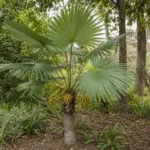 Trachycarpus latisectus care guideTrachycarpus latisectus
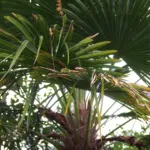 He Chusan palm (Trachycarpus fortunei) care guideTrachycarpus fortunei