
Sycamore Anthracnose
Apiognomonia venetaSycamore Anthracnose overview
Sycamore anthracnose is a fungal disease of sycamores and plane trees caused by Apiognomonia veneta. It is most damaging during cool, wet springs, when newly expanding leaves, shoots and buds are infected. Symptoms range from rapid spring shoot blight and vein-associated leaf lesions to premature defoliation, twig cankers and branch dieback. Established trees often recover as weather becomes warmer and drier.
Typical conditions
Overview
Sycamore anthracnose, caused by Apiognomonia veneta, is one of the most important foliar and twig diseases of sycamores and plane trees in the United States. The pathogen is also associated with the older name Discula platani for its asexual state.
Disease severity varies with host susceptibility, spring weather, tree age and the amount of infected material carried through winter. American sycamore (Platanus occidentalis) is generally more susceptible than Oriental planetree, while some London planetree cultivars show useful resistance.
Symptoms and identification
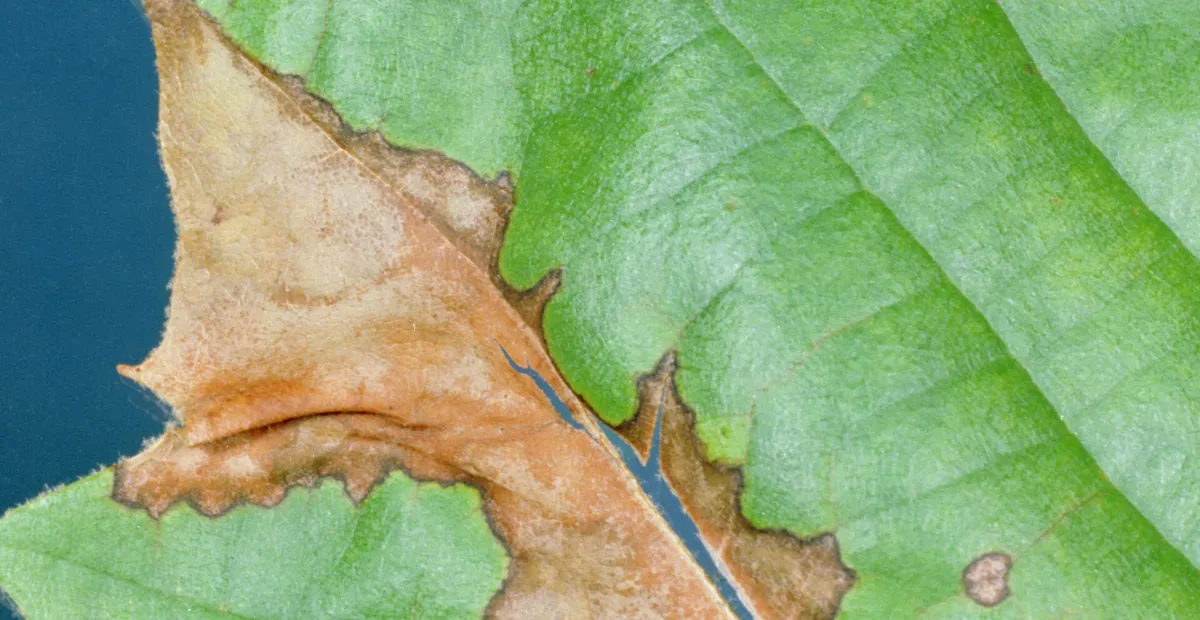
Symptoms commonly develop as buds open in early spring and can resemble late frost injury. Newly expanding shoots and leaves may wilt, turn brown or black, and die back. Larger leaves often develop tan, brown or dark necrotic areas concentrated along the midrib and major veins, with irregular marginal or interveinal blighting.
- Premature leaf drop, sometimes followed by replacement leaves later in the season
- Sunken cankers at the bases of killed twigs and shoots
- Black fungal fruiting structures visible on dead twigs with magnification
- Progressive twig and branch dieback after repeated infections
- Witches’-broom-like branching from repeated bud and shoot death
Causes and spread
The fungus survives in infected buds, twigs, cankers, petioles and fallen leaves. During wet weather it produces spores that are dispersed mainly by rain splash and wind-driven rain. Infection is favored when susceptible young tissue remains wet during cool spring conditions.
Spread is greatest within a tree and between nearby trees during repeated rain events. Pruning during wet weather, moving contaminated debris, and planting highly susceptible trees in poorly ventilated sites can increase disease pressure. The exact host range should not be generalized from other anthracnose fungi because many are relatively host-specific.
Life cycle and persistence
Apiognomonia veneta overwinters in infected woody tissues and plant debris. In late winter and spring, fruiting structures release spores during wet periods. Spores infect expanding buds, shoots and leaves, with the earliest infections often killing buds and shoot tips.
As leaves expand, additional infections produce vein-associated lesions and blight. Repeated wetting allows secondary spread within the canopy. Disease activity usually slows as temperatures rise, shoots mature and foliage dries more quickly. Cankered twigs and fallen infected leaves can maintain inoculum for subsequent seasons.
Treatment and control
There is no curative treatment that restores tissue already killed by anthracnose. In established trees, prioritize dormant pruning, sanitation, canopy drying and stress reduction. Remove dead twigs and branches with clean cuts, disinfecting tools between trees when practical, and dispose of infected debris.
Light to moderate annual defoliation is often tolerated by healthy trees. Repeated severe defoliation, large branch cankers, extensive dieback or uncertainty about tree stability warrants evaluation by a qualified arborist or local Extension plant clinic. Fungicide decisions are most useful for high-value trees with a history of severe disease and must be preventive or very early-season rather than aimed at reversing existing lesions.
Low-impact and biological control
Use an integrated, nonchemical approach: plant less susceptible Platanus selections, prune during dry dormant conditions, remove infected debris, improve airflow, avoid prolonged leaf wetness and maintain consistent tree vigor. These measures reduce inoculum and infection opportunities but may not eliminate disease during unusually cool, rainy springs.
No reliably curative organic treatment should be assumed from a product’s general fungicidal or “natural” marketing claim. Any biological or organically acceptable product should be considered only when it is specifically registered or legally permitted for the intended use and supported by current local recommendations.
Prevention
- Select resistant or less susceptible planting material when appropriate. ‘Bloodgood,’ ‘Columbia’ and ‘Liberty’ London planetree selections are commonly cited as having useful resistance, although performance can vary by site and cultivar source.
- Improve canopy airflow through correct structural pruning, especially where branches are crowded. Do not remove large limbs without an arboricultural plan.
- Prune dead or clearly cankered twigs and branches during dormancy, cutting several inches below visible diseased tissue into healthy wood.
- Remove fallen leaves and pruned disease debris from beneath affected trees where practical; do not leave infected material in landscape piles.
- Keep trees vigorous with appropriate watering during drought, mulch that does not contact the trunk, and avoidance of trunk or root injury.
- Avoid overhead irrigation and unnecessary handling of wet foliage.
Interesting facts
- Early spring shoot blight can look like frost injury because both problems kill newly emerging tissue.
- American sycamore is generally more vulnerable than Oriental planetree, and some London planetree cultivars inherit useful resistance from their parentage.
- Anthracnose fungi are often host-associated; the presence of anthracnose on another hardwood does not prove that A. veneta is responsible.
- Repeated bud and twig killing can create crooked branch ends or witches’-broom-like growth.
- A tree may lose much of its early foliage and still refoliate later if woody damage is limited and growing conditions improve.
Chemical control is not usually necessary for healthy, established trees and is most effective as a preventive program before bud break and during early spring infection periods. Use only products legally authorized for sycamore or plane-tree anthracnose on the specific crop or landscape use in the United States, and follow the current product label exactly, including site, timing, rate, protective equipment, reentry and environmental restrictions. Label availability and legality can change; consult a state Extension service, licensed applicator or arborist before treatment. Do not apply pesticides to a tree or site unless the label specifically allows that use.