
 Source:
 Melon or true melo (Cucumis melo) short overview
Cucumis melo is a warm-season annual vine encompassing cantaloupes, muskmelons, honeydews, casabas, Armenian cucumbers, and other cultivated melon types. Plants produce rough, hairy leaves, tendrils, yellow flowers, and highly variable fruits that may be smooth, netted, striped, ribbed, round, elongated, sweet, or suitable for pickling. In U.S. gardens, reliable production depends on full sun, warm soil, steady moisture, and good drainage.
Taxonomic classification
Melon or true melo (Cucumis melo) care guide
Light and placement
Give the vines an unobstructed south- or southwest-facing position with at least 6–8 hours of direct sun. Full sun supports flowering, fruit set, and sugar accumulation. Pale, stretched growth and sparse flowers suggest insufficient light; scorched leaves or persistent midday wilt suggest root or water stress rather than a need for shade. In hot regions, temporary afternoon protection may help newly transplanted plants, but mature vines still need strong light.
Watering and humidity
Water deeply when the upper inch of soil begins to dry, keeping moisture even through flowering, fruit set, and fruit enlargement. Drip irrigation or a soaker hose is preferable to frequent overhead watering. Reduce fluctuations rather than sharply reducing water: drought followed by heavy irrigation can stress vines and contribute to poor fruit quality or cracking. Water early in the day and keep leaves as dry as practical.
Soil and growing medium
Use fertile, friable soil that drains quickly but holds enough moisture for vigorous vines. Sandy loam is especially suitable; heavy clay should be amended with organic matter and grown on raised beds or broad mounds. A soil pH near 6.0–6.5 is a practical target. Avoid compacted, poorly drained ground, which can cause weak roots and increase crown and root disease.
Feeding
Incorporate mature compost before planting and base additional fertilizer on a soil test. A balanced vegetable fertilizer can be applied at planting, with a modest side-dressing when vines begin active running if growth is weak. Avoid heavy late nitrogen applications: they can produce excessive foliage, delay flowering, and reduce fruiting. Do not apply fresh manure around the crop.
Growth and habit
This species is a scrambling or climbing vine with tendrils and long flexible stems. It can trail across a bed or climb a sturdy trellis; support is most practical for small-fruited cultivars, while heavy fruits need slings or another form of support. Strong weed control during establishment improves growth, and mulch should be applied only after the soil has warmed.
Planting and repotting
Sow directly after frost danger has passed and soil has warmed, or transplant young plants carefully because melon roots dislike disturbance. Sow 2–3 seeds per station, then retain the strongest seedling. Raised beds or low mounds improve drainage and soil warming. Set plants at the same depth as in their containers, water thoroughly, and use row cover only while flowers are absent or remove it promptly when flowering begins.
Container-grown plants should be moved only while young and before roots become crowded. Use a large container with drainage holes and fertile potting mix, and transplant with the root ball intact. Because vines become extensive and fruit-bearing plants are heavy feeders, small containers usually limit performance. Refresh the growing medium between crops and avoid reusing diseased soil.
Propagation and pruning
Propagation
Propagate from seed. Sow indoors in biodegradable pots 2–4 weeks before the last frost where an early start is useful, or direct-sow into warm soil. Transplant young seedlings with minimal root disturbance. Seed saving is reliable only when cultivar identity and cross-pollination are controlled, because different C. melo types can intercross.
Pruning
Pruning is optional in home gardens. Remove damaged or diseased leaves promptly and guide vigorous runners onto supports. For large-fruited cultivars, limiting excessive side shoots may improve manageability, but hard pruning can reduce fruiting potential. Do not cut into the main crown or remove healthy foliage needed for fruit development.
Overwintering
Treat the plant as an annual in the United States. Harvest remaining fruit, remove vines after frost or crop completion, and compost only disease-free debris. In frost-free regions, plants may continue growing seasonally, but ordinary garden melons are not normally maintained as long-lived perennials or overwintered indoors.
Uses
The species is primarily grown for fresh eating, desserts, salads, preserves, seed saving, and regional pickling or immature-fruit uses. Cultivar groups differ greatly in flavor, rind texture, flesh color, maturity, and whether fruit separates from the vine when ripe. Fruit should be washed before cutting, and cut melon should be refrigerated promptly. Avoid eating intensely bitter fruit because bitterness can indicate elevated cucurbitacins.
Appearance
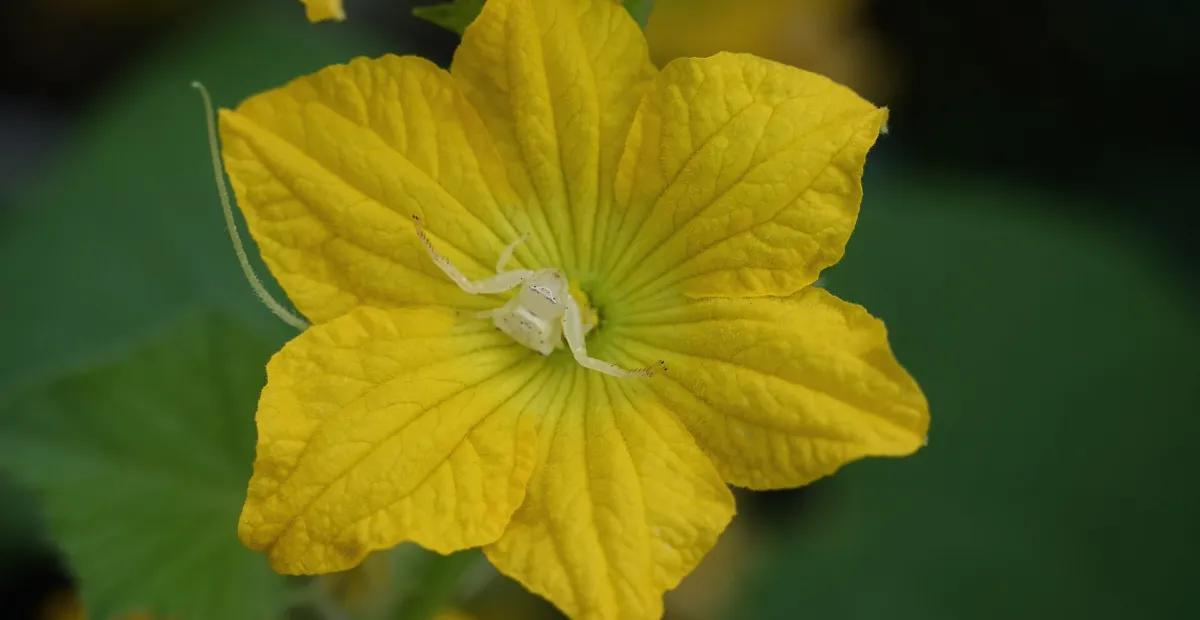
Stems and leaves are softly to coarsely hairy. Leaves are alternate, long-petioled, rounded to broadly ovate, often shallowly lobed, and rough to the touch. Unbranched tendrils arise near the leaf bases. The species is visually variable because it includes many cultivated groups, but the combination of a pubescent vine, tendrils, yellow axillary flowers, and fleshy variable fruit is characteristic.
Flowering
Plants may bear separate male and female flowers or male and perfect flowers, depending on cultivar and growing conditions. The small yellow flowers arise from leaf axils, with male flowers commonly appearing in clusters and female or perfect flowers more often solitary. Flowers are receptive for a short period, typically one day, so pollination timing is important for fruit set.
Pollination and visitors
Melon flowers provide nectar and pollen for bees. Honey bees and native solitary bees, including squash bees where present, are documented visitors and effective pollinators. Fruit set and fruit shape generally improve when female flowers receive adequate bee visitation. Avoid insecticide applications during bloom, especially during daytime bee activity.
Cucumis melo photos
Click any photo for a larger view. Source, author and license are shown separately.
Diseases and pests
Diseases
Common problems include powdery mildew, downy mildew, gummy stem blight, Fusarium wilt, Verticillium wilt, damping-off, and root or crown rots. Use resistant cultivars when available, rotate cucurbits, provide good air circulation, avoid overhead irrigation, and remove infected debris. Do not work among wet plants. Wilted vines with damaged roots or vascular browning require removal rather than repeated fertilizer or irrigation.
Pests
Cucumber beetles, aphids, spider mites, squash bugs, whiteflies, and melon aphids may attack foliage or transmit disease. Inspect leaf undersides and young growth regularly, use row cover before flowering, hand-remove larger pests, and encourage beneficial insects. Use targeted, label-compliant controls only when needed, and avoid spraying open flowers when bees are active.
Toxicity and pollen
Ripe cultivated melon flesh is widely eaten, but cucurbitacin compounds occur in parts of Cucurbitaceae and can be concentrated in unusually bitter fruit or certain seedling and wild forms. Do not taste-test strongly bitter melon flesh, leaves, or volunteer fruit. Normal food use of properly identified, non-bitter cultivated fruit presents low risk. Wash fruit, use clean utensils, and refrigerate cut portions.
- Typical season
- Summer bloom, commonly July–August in much of the United States
- Pollination / pollen
- Heavy, insect-carried pollen released within flowers
Melon pollen is primarily transferred by insects rather than dispersed widely by wind, so airborne exposure is usually limited compared with wind-pollinated plants. Nevertheless, insect-pollinated does not mean zero allergy risk: documented melon allergy is mainly a food allergy or pollen-food cross-reaction rather than a typical airborne pollen problem. Sensitive people should avoid direct exposure to flowers and seek medical advice for reactions.
Native habitat
The species is associated with seasonally dry tropical and subtropical environments across parts of Africa, Southwest Asia, the Indian subcontinent, New Guinea, and Australia. It favors warm conditions, open light, and soils that drain readily after rain. Cultivated melons have been selected into many forms, and the wild-to-cultivated variation within the species makes habitat descriptions less uniform than for a narrowly defined wild plant.
Interesting fact
Cucumis melo is one accepted species containing a remarkably broad range of cultivated melon forms. Its informal groups include reticulated muskmelons, cantaloupes, honeydews, casabas, Armenian cucumbers, and pickling melons. Sex expression varies among cultivars: plants may be monoecious or andromonoecious. The fruit is botanically a modified berry called a pepo.
Frequently asked questions (FAQ)
The most relevant questions about this plant, with short and direct answers.
🌱Quick care
What is melon or true melo (Cucumis melo)?⌄
Melon or true melo is a frost-tender, warm-season annual vine in the cucumber family, Cucurbitaceae. Cucumis melo includes cantaloupe, muskmelon, honeydew, casaba, and several other melon groups.
🌤️Environment and placement
How much sunlight does Cucumis melo need?⌄
Cucumis melo needs full sun, ideally at least 6 to 8 hours of direct sunlight daily. Strong sunlight and warm conditions support flowering, fruit development, and better flavor.
What soil is best for melon or true melo?⌄
Use fertile, well-drained sandy loam or loam enriched with organic matter. Avoid waterlogged soil because cool, wet conditions can slow growth and increase root and soil-borne disease problems.
Is Cucumis melo frost tolerant?⌄
No, Cucumis melo is frost tender and can be injured or killed by freezing temperatures. Plant after the final spring frost and protect the vines from unexpected cold with appropriate covers.
💧Care and problems
How often should I water melon or true melo?⌄
Provide about 1 to 2 inches of water per week, adjusting for rainfall, heat, soil, and plant size. Water deeply at the soil line and keep moisture consistent, especially during flowering and fruit enlargement.
Should I reduce watering before harvesting Cucumis melo?⌄
Yes, gradually reducing irrigation as the fruit ripens can improve flavor in many melon types. Avoid severe drought stress, and do not overwater during the final ripening period because some fruits may split.
Can Cucumis melo grow on a trellis?⌄
Yes, Cucumis melo can be trained vertically on a sturdy trellis, especially when growing small-fruited cultivars. Support developing heavy fruits with slings or another secure support system.
Does melon or true melo need fertilizer?⌄
Melon or true melo benefits from fertile soil and fertilizer guided by a soil test. Avoid excessive nitrogen because it can produce vigorous vines and leaves while delaying flowering and fruit production.
How do I know when Cucumis melo fruit is ripe?⌄
Ripe Cucumis melo fruit usually shows cultivar-specific color changes, stronger aroma, a duller surface, and a dry tendril near the fruit stem. Netted cantaloupe types often slip easily from the vine when gently twisted, while honeydew and other types may require several ripeness indicators.
Why are my Cucumis melo leaves turning yellow or developing spots?⌄
Yellowing or spotted leaves can result from watering stress, nutrient problems, cucumber beetles, powdery mildew, downy mildew, anthracnose, gummy stem blight, or wilt diseases. Improve air circulation, water at the soil line, remove severely diseased plants, and identify the specific problem before treating.
How can I prevent cucumber beetles on melon or true melo?⌄
Protect young melon or true melo plants with floating row covers, inspect plants frequently, and remove beetles when practical. Cucumber beetles can damage foliage and flowers and may transmit bacterial wilt, so uncover plants when flowering begins so pollinators can reach them.
Why are my Cucumis melo fruits small or misshapen?⌄
Small or misshapen Cucumis melo fruits commonly result from incomplete pollination, plant stress, inadequate nutrition, or excessive fruit load. Maintain steady moisture, avoid excess nitrogen, encourage pollinators, and hand-pollinate if few insects are visiting.
🪴Planting and repotting
When should I plant Cucumis melo outdoors?⌄
Plant Cucumis melo outdoors after the last spring frost, when the soil has warmed to about 65°F or higher. Melons are highly sensitive to cold soil and should not be planted early just because the air feels warm.
Can I grow melon or true melo in a container?⌄
Yes, compact Cucumis melo cultivars can grow in a large container, but most vines need substantial space. Use a container of at least 5 gallons per plant, fertile potting mix, strong support, and frequent monitoring of moisture.
How much space does Cucumis melo need?⌄
Allow about 3 to 5 feet between standard melon plants and 5 to 7 feet between rows. Compact or bush cultivars can be planted closer, but good air circulation is still important.
How can I grow melon or true melo in a short-season area?⌄
In a short-season area, choose an early-maturing cultivar, warm the soil with raised beds or dark mulch, and start seeds indoors for only a few weeks before transplanting. Transplant with minimal root disturbance and wait until cold soil and frost are no longer risks.
✂️Propagation and pruning
How do I start Cucumis melo from seed?⌄
Sow Cucumis melo seeds about 1/2 to 1 inch deep after the soil has warmed, or start them indoors roughly 2 to 4 weeks before the last frost. Use biodegradable or minimally disturbed containers because melon roots dislike transplant damage.
Can I transplant melon or true melo seedlings?⌄
Yes, but transplant melon or true melo seedlings carefully because their roots are sensitive to disturbance. Harden seedlings before planting and move them outdoors only after frost danger has passed and the soil is warm.
How do I save Cucumis melo seeds?⌄
Save seeds from a fully mature, healthy fruit, clean away the pulp, rinse and dry the seeds thoroughly, then store them in a cool, dry place. Because Cucumis melo is insect-pollinated, separate different varieties by roughly 800 feet to one-half mile if you want reliable seed purity.
Should I prune melon or true melo vines?⌄
Routine pruning is usually unnecessary for melon or true melo grown in a spacious garden. Remove only damaged or diseased growth, or selectively train vines when space is limited, because excessive pruning can reduce the plant’s ability to produce and ripen fruit.
Can melon or true melo and cucumbers cross-pollinate?⌄
Melon or true melo does not normally cross-pollinate with cucumbers because they are different species. Different Cucumis melo cultivars can cross, however, which matters when saving seed but does not change the current season’s fruit.
⚠️Toxicity and safety
Is Cucumis melo poisonous to people or pets?⌄
Ripe, non-bitter fruit from cultivated Cucumis melo varieties is generally edible, but intensely bitter fruit should not be eaten. Bitter taste can signal unusually high cucurbitacin levels, so discard fruit that tastes strongly or abnormally bitter.
Can you eat Cucumis melo seeds?⌄
Mature seeds from some Cucumis melo varieties are used as food, but ordinary garden fruit is generally eaten after removing the seed cavity. Do not eat sprouted melon seeds, because the sprouting embryo may contain toxic compounds.
Is melon or true melo safe for dogs and cats?⌄
The ripe flesh of common edible melons is generally considered a small occasional treat for dogs and cats, but remove the rind and seeds and offer only modest portions. Avoid any bitter, spoiled, fermented, or chemically treated fruit, and ask a veterinarian about pets with medical conditions.
🌸Flowering and special interest
Why is my Cucumis melo flowering but not producing fruit?⌄
Poor pollination is a common reason Cucumis melo flowers without developing fruit. The plant produces separate male and female flowers, so inadequate bee activity, wet weather, or other conditions that limit pollen transfer can prevent fruit set.
How can I hand-pollinate melon or true melo?⌄
To hand-pollinate melon or true melo, transfer pollen from a newly opened male flower to the center of a newly opened female flower using a small brush or the male flower itself. Female flowers have a small swollen ovary directly behind the bloom.
Does Cucumis melo need more than one plant for pollination?⌄
Usually, one Cucumis melo plant can produce both male and female flowers and can set fruit with pollen from the same plant. Successful fruit set still depends on insect activity or effective hand-pollination.
How long does melon or true melo take to mature?⌄
Many cantaloupe and muskmelon cultivars mature about 35 to 45 days after flowering, although the exact time varies with cultivar and weather. Check the seed packet for the best days-to-maturity estimate.
Similar plants
 Dudaim melon (Cucumis melo Dudaim Group) care guideCucumis melo Dudaim Group
  Cucumis melo Cantalupensis Group care guideCucumis melo Cantalupensis Group
  Cucumis melo Inodorus Group care guideCucumis melo Inodorus Group
  Cucumis melo Flexuosus Group care guideCucumis melo Flexuosus Group
 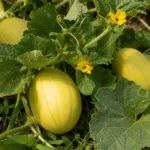 Cucumis melo Makuwa Group care guideCucumis melo Makuwa Group
 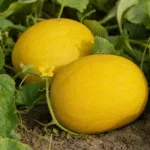 Mango melon (Cucumis melo Chito Group) care guideCucumis melo Chito Group