
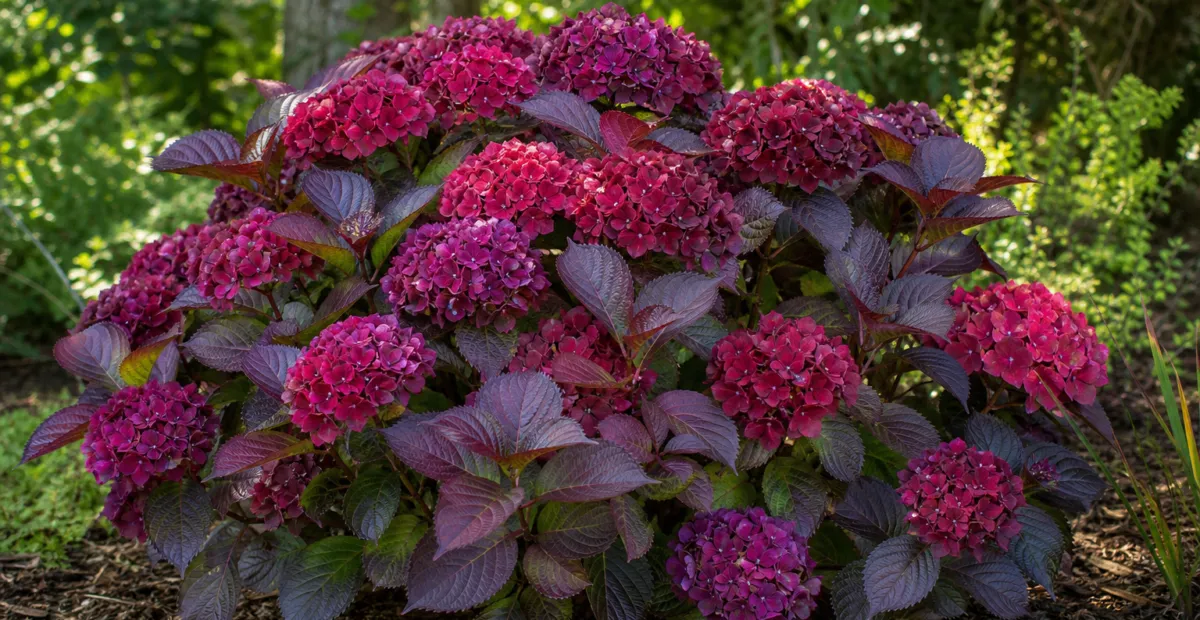
 AI-generated illustration
Merveille Sanguine (Hydrangea macrophylla ‘Merveille Sanguine’) short overview
Hydrangea macrophylla 'Merveille Sanguine' is a distinctive deciduous mophead hydrangea with thick, upright stems, dark bronze-purple foliage, and rounded flower heads that range from deep pink to purple-red. The leaves often intensify in color as the season progresses, while the blooms may shift with soil conditions. Give it morning sun or bright partial shade, consistent moisture, and protection from harsh afternoon heat and drying wind.
Taxonomic classification
Merveille Sanguine (Hydrangea macrophylla ‘Merveille Sanguine’) care guide
Light and placement
Give morning sun, bright open shade, or partial shade. East-facing or lightly sheltered west-facing positions are usually suitable; protect from intense afternoon sun, hot walls, and drying wind. Too little light can produce weak, sparse growth and fewer flower heads. Too much sun or heat may scorch leaves, wilt the plant, and inhibit growth.
Watering and humidity
Water deeply when the upper inch of soil begins to dry, aiming for steady moisture rather than repeated saturation. Check containers frequently during summer heat. Mulch the root zone to slow evaporation, but keep mulch off the stems. Reduce watering after leaf fall while ensuring the root ball does not dry completely.
Soil and growing medium
Use fertile, moisture-retentive soil that still drains freely. Loam enriched with compost is suitable, as are clay or sandy soils improved with organic matter. Soil reaction can influence flower color: more acidic conditions may encourage purple tones, while neutral to alkaline conditions commonly favor pink or red-pink tones. Avoid chronically waterlogged ground.
Feeding
Apply a slow-release balanced fertilizer or a layer of compost in early spring as growth begins. A second light feeding may be useful in poor soil, but avoid heavy nitrogen, which can produce lush leaves with fewer flowers. Do not fertilize drought-stressed, newly transplanted, or late-season growth.
Growth and habit
This is a relatively short, slow-growing cultivar with a strongly upright framework. It can become sparse or twiggy when light is too low, while excessive heat and drought may suppress growth and spoil the flower heads. Stable moisture, sheltered light, and restrained pruning help maintain a fuller appearance.
Planting and repotting
Plant in spring or fall when the soil is workable. Set the root ball level with the surrounding soil rather than burying the crown. Space plants about 3–5 feet apart for air circulation and mature spread. Water deeply during establishment and mulch lightly, keeping mulch away from the stems.
Repot container plants in early spring before strong growth begins, moving up only one pot size. Refresh part of the growing medium while protecting the shallow root system. A large container with drainage holes is important because the plant dislikes both drought and stagnant water.
Propagation and pruning
Propagation
Propagate mainly from softwood or semi-ripe cuttings in late spring through summer. Use healthy non-flowering shoots, keep the medium evenly moist, and provide bright shade and high humidity until rooted. Seed is not reliable for preserving cultivar characteristics.
Pruning
Prune lightly immediately after flowering if needed, removing weak, damaged, or badly placed stems and shortening only the oldest flowering shoots. This cultivar flowers primarily on older wood, so hard spring cutting can remove the season’s flower buds. Leave healthy faded heads over winter if frost protection is useful.
Overwintering
In cold regions, mulch the root zone after the ground cools and shelter plants from drying winter wind. Leave old flower heads in place until spring because they can help protect developing buds. Container plants are more exposed to freezing and may need a sheltered location or insulation.
Uses
Use as a specimen shrub, in mixed shade borders, woodland-style plantings, patio containers, and seasonal cut-flower displays. Its dark foliage gives contrast to green-leaved shrubs and pale flowers. Do not use it as an edible or medicinal plant, and keep cut stems and fallen leaves away from pets and children.
Appearance
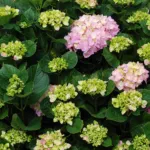
Large oval leaves emerge bronze-green and often deepen to dark purple-red, with stronger red coloration possible in autumn. Thick stems are notably erect, giving the plant a more upright outline than many soft, arching hydrangeas. Rounded mophead clusters contrast with the dark foliage and may age through purple-red tones.
Flowering
This cultivar produces rounded mophead flower heads on older stems, usually in summer. The showy parts are mainly sterile sepals surrounding smaller fertile flowers. Flower color may range from deep pink to purple-pink or red-pink and can vary with soil chemistry and growing conditions.
Pollination and visitors
The rounded mophead heads contain relatively few exposed fertile flowers compared with open lacecap types, so documented animal-pollinator attraction is generally limited. Small insects may visit the fertile flowers, but reliable cultivar-specific visitor records are lacking.
Diseases and pests
Diseases
Good air circulation, moderate spacing, careful watering, and removal of fallen diseased leaves help reduce leaf spot, powdery mildew, and gray mold. Avoid wetting foliage late in the day. Remove badly affected leaves and improve airflow; use a labeled fungicide only when disease is persistent and the product is appropriate for hydrangeas.
Pests
Check new growth and leaf undersides for aphids, spider mites, scale, and thrips. Drought-stressed plants are more vulnerable. Start with hand removal or a strong water spray, preserve beneficial insects, and use horticultural soap or oil only according to the product label and weather restrictions.
Related diseases and pests
Only Plant Doctor profiles whose host data indicate this plant may be affected are shown here.
 DiseaseGray MoldBotrytis cinerea
 PestChilli thripsScirtothrips dorsalis Hood
 PestCyclamen mitePhytonemus pallidus
 DiseaseAster yellows‘Candidatus Phytoplasma asteris’
 PestStrawberry foliar nematodeAphelenchoides fragariae
 DiseaseMaple powdery mildewSawadaea bicornis
 DiseaseCucurbit Powdery MildewPodosphaera xanthii (Castagne) U. Braun & Shishkoff
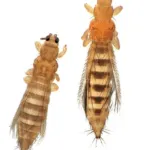 PestOnion thripsThrips tabaci Lindeman
Toxicity and pollen
Hydrangeas contain cyanogenic compounds and can cause gastrointestinal upset if plant material is eaten. Serious poisoning is uncommon but possible after larger ingestions. Keep leaves, buds, flowers, and pruned material away from children and pets, and contact a medical or veterinary professional after ingestion.
- Typical season
- Summer flowering period
- Pollination / pollen
- Insect-associated, relatively low-dispersal pollen
The plant produces pollen during summer flowering, but the dense mophead display is not generally treated as a major airborne-pollen source. Individual sensitivity is still possible, especially around dried flower heads or during close handling. Avoid shaking dried heads indoors.
Native habitat
The species is associated with moist, mild habitats in Japan and surrounding East Asian regions, including woodland margins and coastal areas. It prefers organic, moisture-retentive soils with good drainage and performs best where summer heat and drying exposure are moderated.
Interesting fact
Introduced in France in the 1930s as a sport of 'Merveille'.
The cultivar is also associated with the name 'Color Fantasy'.
Young leaves can appear bronze-green before turning dark purple-red.
Its flower color may vary between pink, purple-pink, and red-pink.
The cultivar is noted for thick, strongly upright stems.
It is valued as much for foliage as for its summer flower heads.
Frequently asked questions (FAQ)
The most relevant questions about this plant, with short and direct answers.
🌱Quick care
What is Hydrangea macrophylla 'Merveille Sanguine'?⌄
Hydrangea macrophylla 'Merveille Sanguine' is a deciduous mophead hydrangea valued for dark foliage and deep pink to red-purple flower heads. It is also documented under the names 'Folis Purpureus', 'Brunette', and 'Colour Fantasy'.
How much sun does Hydrangea macrophylla 'Merveille Sanguine' need?⌄
Give it morning sun or partial shade, especially in hot climates. Some direct sun is acceptable when the soil stays consistently moist, but intense afternoon sun can scorch its leaves and flowers.
How often should I water 'Merveille Sanguine' hydrangea?⌄
Water whenever the surface of the soil begins to dry, keeping the root zone evenly moist but not waterlogged. During hot, dry weather, container plants and newly planted shrubs may need watering several times per week.
What soil is best for Hydrangea macrophylla 'Merveille Sanguine'?⌄
Plant it in fertile, moisture-retentive, well-drained loam enriched with organic matter. The plant tolerates acidic, neutral, or alkaline soil, provided drainage and moisture are reliable.
🌤️Environment and placement
Can 'Merveille Sanguine' hydrangea grow in full sun?⌄
It can grow in full sun only where the soil remains reliably moist and summer heat is moderate. In most U.S. gardens, morning sun with afternoon shade is safer and helps protect the dark foliage from scorch.
Where should I plant Hydrangea macrophylla 'Merveille Sanguine'?⌄
Choose a sheltered spot with morning light, afternoon protection, and rich soil that does not dry out. A location protected from strong wind also helps preserve the foliage and flower heads.
What USDA hardiness zone is 'Merveille Sanguine' hydrangea?⌄
Its exact U.S. hardiness range is not consistently documented for this older cultivar, so treat it as protected hardy rather than universally winter-hardy. Cold protection is especially important because Hydrangea macrophylla flower buds can be damaged by winter cold and late spring freezes.
Does 'Merveille Sanguine' hydrangea tolerate heat?⌄
It can tolerate warm conditions if given afternoon shade, mulch, and dependable moisture. Heat, drought, and reflected light from pavement increase the risk of leaf scorch and wilting.
💧Care and problems
Why are the leaves of my 'Merveille Sanguine' hydrangea turning dark purple or red?⌄
Dark purple, bronze, or red tones are characteristic features of this cultivar and may intensify with seasonal changes and strong light. Sudden browning or crispy margins, however, usually indicate drought, heat, or sun scorch.
Why is my Hydrangea macrophylla 'Merveille Sanguine' wilting?⌄
Wilting is most often caused by dry soil, excessive heat, root damage, or inadequate watering after planting. Check soil moisture several inches below the surface and water deeply if it is dry, while avoiding constantly saturated soil.
Why is my 'Merveille Sanguine' hydrangea not blooming?⌄
The most common causes are winter-killed flower buds, pruning at the wrong time, insufficient light, drought stress, or excessive nitrogen. This cultivar flowers on older wood, so hard pruning in fall, winter, or spring can remove the next season's buds.
How do I fertilize Hydrangea macrophylla 'Merveille Sanguine'?⌄
Apply a balanced, slow-release fertilizer in spring only if growth is weak or the soil is nutrient-poor. Avoid heavy nitrogen feeding, which can produce lush foliage while reducing flowering.
What pests affect 'Merveille Sanguine' hydrangea?⌄
Common pests include aphids, scale insects, vine weevils, and capsid bugs. Inspect new growth and the undersides of leaves regularly, and use the least disruptive treatment appropriate for the infestation.
What diseases can affect Hydrangea macrophylla 'Merveille Sanguine'?⌄
It may develop leaf spot, powdery mildew, gray mold, or, less commonly, honey fungus. Improve air circulation, water the soil rather than the foliage, remove badly affected leaves, and avoid keeping the plant constantly wet.
🪴Planting and repotting
When is the best time to plant 'Merveille Sanguine' hydrangea?⌄
Plant it in spring or fall when temperatures are moderate and the soil is workable. Spring planting is preferable in colder areas so the shrub has time to establish before winter.
Can Hydrangea macrophylla 'Merveille Sanguine' grow in a container?⌄
Yes, it can grow in a large container with drainage holes and moisture-retentive potting mix. Choose a pot at least 18 to 24 inches wide for a mature shrub, and protect the roots from severe winter cold.
How large does 'Merveille Sanguine' hydrangea get?⌄
It is generally described as a medium-sized shrub reaching about 3 to 5 feet tall and wide under suitable conditions. Final size varies with climate, pruning, soil moisture, and winter damage.
✂️Propagation and pruning
How do I propagate Hydrangea macrophylla 'Merveille Sanguine'?⌄
Propagate it from softwood cuttings taken during the active growing season. Use healthy nonflowering shoots, keep the cuttings evenly moist in a sterile rooting medium, and provide bright indirect light.
When should I prune 'Merveille Sanguine' hydrangea?⌄
Prune lightly just after flowering, removing spent flower heads and weak or damaged stems. Avoid hard pruning from fall through spring because this cultivar sets flower buds on older stems.
Should I deadhead Hydrangea macrophylla 'Merveille Sanguine'?⌄
Deadhead after flowering by cutting just above a healthy pair of leaves, or leave the flower heads in place for winter interest. If you prune, finish before late summer so new growth has time to mature.
⚠️Toxicity and safety
Is Hydrangea macrophylla 'Merveille Sanguine' toxic to pets?⌄
Yes, it is moderately toxic if eaten and may harm dogs, cats, and other animals. Keep pets from chewing the leaves, stems, or flowers, and contact a veterinarian promptly if ingestion causes symptoms.
Is 'Merveille Sanguine' hydrangea poisonous to people?⌄
It should not be eaten, because hydrangeas can cause gastrointestinal upset and other adverse symptoms if plant material is swallowed. Wear gloves when handling it if you have sensitive skin, as contact may cause irritation.
🌸Flowering and special interest
What color are the flowers of 'Merveille Sanguine' hydrangea?⌄
The mophead flowers are typically deep pink, red, or pinkish purple, with the exact shade influenced by soil chemistry and growing conditions. Acidic soil may shift the color toward purple, while less acidic soil generally supports pinker or redder tones.
Does 'Merveille Sanguine' hydrangea change color with soil pH?⌄
Yes, its flowers can shift between deep pink, red-purple, and purple depending on soil pH and available aluminum. The change is not perfectly predictable, and the cultivar generally retains a strong red or purple character rather than becoming reliably blue.
When does Hydrangea macrophylla 'Merveille Sanguine' bloom?⌄
It usually blooms in summer, with flower heads often lasting into early fall. The timing can vary with climate, winter survival of old wood, spring temperatures, and the plant's maturity.
Can 'Merveille Sanguine' hydrangea flower after a harsh winter?⌄
It may flower poorly or not at all after a harsh winter if its older stems and flower buds are damaged. Protect the base and stems in cold areas, and delay pruning until new growth shows which wood survived.
Similar plants
 Blaumeise (Hydrangea macrophylla ‘Blaumeise’)Hydrangea macrophylla 'Blaumeise'
 Smooth hydrangea or sevenbark (Hydrangea arborescens) care guideHydrangea arborescens
 Hydrangea ‘Aspera Villosa’Hydrangea 'Aspera Villosa'
 Altona (Hydrangea macrophylla ‘Altona’)Hydrangea macrophylla 'Altona'
 Annabelle Hydrangea (Hydrangea arborescens ‘Annabelle’)Hydrangea arborescens 'Annabelle'
 Bigleaf Hydrangea (Hydrangea macrophylla) care guideHydrangea macrophylla