
 Source:
 Hosta ‘Allan P Mcconnell’ short overview
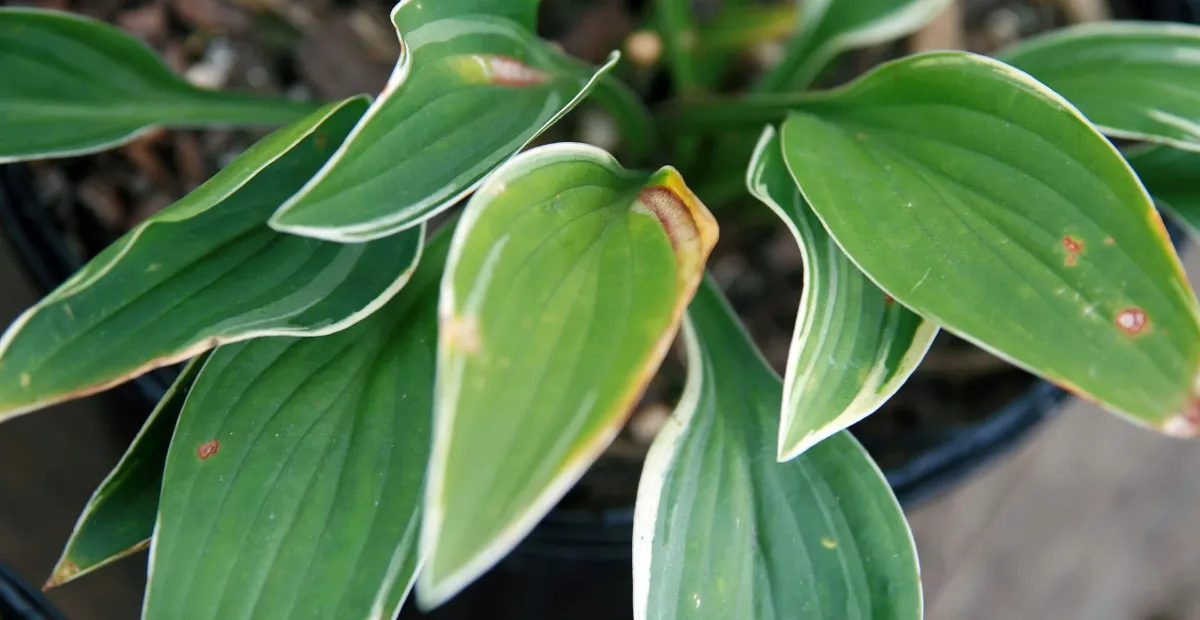
Hosta 'Allan P Mcconnell' is a compact, vigorous hosta valued for its narrow dark green leaves edged with a fine white margin. The dense, symmetrical mound works especially well along paths, at the front of a border, or in a container. Lavender, bell-shaped flowers appear on upright scapes in mid to late summer. Give it evenly moist, humus-rich soil and filtered light or gentle morning sun, while protecting the white margins from harsh afternoon heat.
Taxonomic classification
Hosta ‘Allan P Mcconnell’ care guide
Light and placement
Grow in bright filtered light, partial shade, or gentle morning sun. An east-facing or north-facing position is usually dependable; a site with dappled overhead shade also works. Too much hot afternoon sun may bleach or scorch the narrow white margins, while excessively deep shade can reduce vigor and flowering.
Watering and humidity
Water deeply when the upper inch of soil begins to dry, keeping the root zone consistently moist rather than alternating between drought and saturation. Check containers more often in summer and reduce watering after dormancy begins, while preventing complete winter desiccation. Water the soil, not the foliage, when possible.
Soil and growing medium
Use fertile, humus-rich soil that holds steady moisture but drains freely after watering. A loam amended with compost is suitable. Slightly acidic to neutral soil is generally appropriate; avoid compacted ground and prolonged winter saturation, especially in containers.
Feeding
Spread compost around the plant in spring without covering the crown. If growth is weak, apply a balanced, slow-release fertilizer at label rate as shoots expand. Stop routine feeding by late summer so the plant can enter dormancy naturally. Avoid heavy nitrogen, which can produce soft foliage and encourage pest damage.
Growth and habit
This cultivar forms a dense, symmetrical clump of basal leaves and is regarded as a vigorous grower for its small size. Its compact habit makes it effective in edging and containers. Maintain steady moisture and divide crowded clumps when the center begins to weaken or the plant outgrows its position.
Planting and repotting
Plant in spring or early fall when soil is workable. Set the crown at soil level, with the buds just covered rather than deeply buried. Water thoroughly after planting and maintain consistent moisture during establishment. Allow enough room for a compact but widening clump.
Repot container-grown plants in early spring as growth begins, moving them into a slightly wider pot with fresh moisture-retentive but well-drained mix. Divide only when necessary; excessive disturbance can delay the season’s display.
Propagation and pruning
Propagation
Divide established clumps in early spring as shoots emerge or in early fall. Separate fans with healthy roots using a clean knife or spade, then replant promptly. Seed does not reliably reproduce the named cultivar.
Pruning
Cut flower scapes after blooming if seed production is not desired. Remove yellowing foliage after a hard freeze or once dormancy is complete. Do not remove healthy leaves prematurely during the growing season, because they continue feeding the crown.
Overwintering
Leave the plant outdoors in its hardiness range. After a hard freeze, remove collapsed foliage and apply a light mulch over the root zone, keeping the crown uncovered. Container plants are more exposed to cold than in-ground plants; group pots in a sheltered location and prevent repeated freeze-thaw drying.
Uses
Best used as an ornamental foliage perennial for edging, front-of-border planting, woodland-style beds, and containers. Its small scale and fine white margin make it useful where a narrow, high-contrast foliage accent is wanted. It is not recommended for edible use, and pets should not be allowed to consume it.
Appearance
The plant makes a neat, dense mound of narrow, dark green leaves edged by a thin white margin. Leaves are generally about 3–5 inches long, with an upright to gently arching presentation. The fine margin and compact symmetrical habit are useful identification features, though size and margin width can vary with age and conditions.
Flowering
Slender scapes rise above the foliage in mid to late summer and carry small, bell-shaped lavender flowers. The cultivar is primarily grown for its foliage; flowering is generally secondary but adds seasonal vertical interest. Remove spent scapes if a tidier appearance is preferred.
Pollination and visitors
Lavender hosta flowers can be visited by bees and bumblebees, but documentation for this particular cultivar is limited. Treat its pollinator value as modest rather than a primary wildlife feature.
Hosta 'Allan P Mcconnell' photos
Click any photo for a larger view. Source, author and license are shown separately.
Diseases and pests
Diseases
Good sanitation and adequate spacing help reduce crown and leaf problems. Watch for hosta viruses, especially irregular mottling or streaking that differs from the cultivar’s normal margin; remove and destroy suspect plants rather than propagating them. Avoid planting into persistently waterlogged soil, which favors crown rot.
Pests
Slugs and snails are the main routine pests, leaving ragged holes in leaves. Reduce hiding places, keep mulch from touching crowns, water at soil level, and inspect after dusk or during damp weather. Deer and rabbits may also browse hosta foliage; use physical protection or a locally appropriate repellent where pressure is high.
Related diseases and pests
Only Plant Doctor profiles whose host data indicate this plant may be affected are shown here.
 DiseaseImpatiens necrotic spot virus diseaseImpatiens necrotic spot orthotospovirus
 DiseaseSouthern blightAthelia rolfsii
 PestStrawberry foliar nematodeAphelenchoides fragariae
 Environmental stressExcess light stress
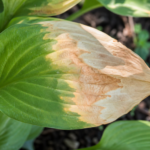 Environmental stressLeaf sunburn
 DiseasePhytophthora root and crown rotPhytophthora nicotianae
 Environmental stressWaterlogging
 DiseaseOnion downy mildewPeronospora destructor
Toxicity and pollen
Hosta foliage is listed by ASPCA as toxic to dogs and cats because of saponins, with gastrointestinal upset such as vomiting or diarrhea possible after ingestion. Evidence for this exact cultivar is not usually separated from the genus-level listing. Prevent pets from eating leaves or flowers and contact a veterinarian if symptoms occur.
- Typical season
- Flowering season, generally July–August
- Pollination / pollen
- Insect-borne pollen
Hosta flowers are insect-pollinated, so pollen is not typically released in large airborne clouds. Individual sensitivity is still possible, and the cultivar’s low airborne-pollen rating should not be interpreted as a guarantee of zero allergy risk.
Native habitat
Hostas are temperate East Asian woodland perennials adapted to cool, moist, humus-rich soils and filtered light. In American gardens they perform best where soil remains evenly moist but not stagnant, with protection from intense afternoon heat and drying winds.
Interesting fact
Introduced by Mildred Seaver around 1980.
Frequently asked questions (FAQ)
The most relevant questions about this plant, with short and direct answers.
🌱Quick care
What is Hosta 'Allan P Mcconnell'?⌄
Hosta 'Allan P Mcconnell' is a small, vigorous hosta with dark green, lance-shaped leaves edged in narrow white margins. It forms a compact mound and is useful along paths, bed edges, or in containers.
How big does Hosta 'Allan P Mcconnell' get?⌄
Hosta 'Allan P Mcconnell' is usually about 8 inches tall and 18 inches wide, although established clumps may spread farther in favorable conditions. Nursery references also list mature widths from about 12 to 38 inches, so spacing can vary.
Is Hosta 'Allan P Mcconnell' a miniature hosta?⌄
Hosta 'Allan P Mcconnell' is generally classified as a small hosta rather than a true miniature. Its compact size and narrow leaves make it suitable for edging and container planting.
🌤️Environment and placement
What light does Hosta 'Allan P Mcconnell' need?⌄
Grow Hosta 'Allan P Mcconnell' in part shade to shade, preferably with morning light or filtered sun. It can tolerate more sun than many hostas when soil stays evenly moist, but hot afternoon sun may scorch the white margins.
Can Hosta 'Allan P Mcconnell' grow in full shade?⌄
Yes, Hosta 'Allan P Mcconnell' can grow in full shade, although filtered light usually produces stronger growth and clearer leaf contrast. Avoid areas that are both deeply shaded and poorly drained.
Can Hosta 'Allan P Mcconnell' tolerate morning sun?⌄
Yes, Hosta 'Allan P Mcconnell' generally tolerates morning sun, especially when supplied with consistent moisture. Protect it from intense late-afternoon sun in hot U.S. climates.
Is Hosta 'Allan P Mcconnell' hardy in the United States?⌄
Yes, Hosta 'Allan P Mcconnell' is a frost-hardy perennial that can overwinter outdoors in suitable U.S. climates. Its exact performance depends on local winter temperatures, drainage, and exposure.
What soil is best for Hosta 'Allan P Mcconnell'?⌄
Use humus-rich, moisture-retentive but well-drained loam for Hosta 'Allan P Mcconnell'. Improve poor soil with compost, but avoid locations that remain waterlogged after rain.
💧Care and problems
How often should I water Hosta 'Allan P Mcconnell'?⌄
Water Hosta 'Allan P Mcconnell' whenever the soil surface begins to dry, keeping moisture even through the growing season. Newly planted divisions and plants in containers usually need more frequent watering than established garden clumps.
Why are there holes in my Hosta 'Allan P Mcconnell' leaves?⌄
Irregular holes in Hosta 'Allan P Mcconnell' leaves are most often caused by slugs or snails, especially in cool, damp shade. Check plants after dark and reduce hiding places such as dense debris, boards, and overly wet mulch.
How do I protect Hosta 'Allan P Mcconnell' from slugs?⌄
Reduce slug damage by improving air circulation, avoiding persistently wet conditions, removing hiding places, and checking plants at night. Slug controls may be used when cultural measures are insufficient, following the product label.
Is Hosta 'Allan P Mcconnell' deer resistant?⌄
No, Hosta 'Allan P Mcconnell' should not be considered deer resistant. Deer may browse the foliage, particularly where natural food is limited.
Why is my Hosta 'Allan P Mcconnell' turning green or losing its white edge?⌄
Reduced white edging can result from immature growth, seasonal variation, excessive shade, or stress. Avoid excessive nitrogen and provide bright filtered light with steady moisture, while recognizing that the exact amount of variegation can vary.
🪴Planting and repotting
When should I plant Hosta 'Allan P Mcconnell'?⌄
Plant Hosta 'Allan P Mcconnell' in spring or early fall while temperatures are moderate and the soil is workable. Water thoroughly after planting and maintain even moisture while roots establish.
How far apart should I plant Hosta 'Allan P Mcconnell'?⌄
Space Hosta 'Allan P Mcconnell' about 18 to 24 inches apart for individual clumps, adjusting for the mature width you want. Closer spacing creates a faster-edging effect but may require earlier division.
Can Hosta 'Allan P Mcconnell' grow in a container?⌄
Yes, Hosta 'Allan P Mcconnell' performs well in a container because of its small size and compact habit. Use a pot with drainage holes, moisture-retentive potting mix, and protection from excessive summer heat.
How do I plant bare-root Hosta 'Allan P Mcconnell'?⌄
Plant the bare root with the crown at soil level and spread the roots outward rather than bending them sharply. Water deeply after planting and keep the soil evenly moist until new growth is established.
✂️Propagation and pruning
How do I propagate Hosta 'Allan P Mcconnell'?⌄
Propagate Hosta 'Allan P Mcconnell' by dividing the established crown. In spring, lift the plant, separate sections with roots and shoots using a sharp knife or garden fork, and replant the divisions promptly.
When should I divide Hosta 'Allan P Mcconnell'?⌄
Divide Hosta 'Allan P Mcconnell' in spring as new shoots emerge and before the clump becomes difficult to handle. Division is especially useful when the plant is overcrowded, has a thinning center, or needs size control.
Can Hosta 'Allan P Mcconnell' be grown from seed?⌄
It can produce seed, but seed-grown plants may not reproduce the exact white-edged appearance of Hosta 'Allan P Mcconnell'. Division is the preferred method for maintaining the named cultivar.
Should I cut back Hosta 'Allan P Mcconnell' in fall?⌄
Remove yellowing or frost-damaged leaves in late fall or early spring, after the foliage has declined naturally. Avoid cutting healthy leaves early because they continue supplying energy to the crown.
⚠️Toxicity and safety
Is Hosta 'Allan P Mcconnell' toxic to dogs and cats?⌄
Yes, Hosta 'Allan P Mcconnell' should be treated as toxic to dogs and cats if eaten because hostas contain saponins. Ingestion may cause vomiting, diarrhea, or depression; contact a veterinarian or animal poison-control service if exposure occurs.
Is Hosta 'Allan P Mcconnell' safe for children to touch?⌄
Touching Hosta 'Allan P Mcconnell' is not generally considered hazardous, but children should not eat any part of the plant. Wash hands after handling and keep fallen leaves away from pets that may chew them.
🌸Flowering and special interest
What color flowers does Hosta 'Allan P Mcconnell' have?⌄
Hosta 'Allan P Mcconnell' produces bell-shaped lavender to purple flowers on upright stalks. The flowers are a secondary feature compared with its narrow, white-edged foliage.
When does Hosta 'Allan P Mcconnell' bloom?⌄
Hosta 'Allan P Mcconnell' typically blooms in midsummer, often around July in temperate U.S. gardens. Bloom timing may shift earlier or later depending on climate and spring temperatures.
Are the flowers of Hosta 'Allan P Mcconnell' fragrant?⌄
The flowers of Hosta 'Allan P Mcconnell' are generally not considered fragrant. Grow this cultivar primarily for its compact mound and contrasting green-and-white foliage.
Similar plants
 Saucer Magnolia (Magnolia soulangeana) care guideMagnolia soulangeana
 Magnolia × loebneri ‘Merrill’Magnolia × loebneri 'Merrill'
 Magnolia loebneri care guideMagnolia loebneri
 Sweetbay magnolia (Magnolia virginiana) care guideMagnolia virginiana
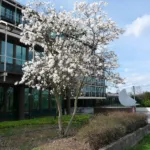 Star magnolia (Magnolia stellata) care guideMagnolia stellata
 Magnolia sprengeri care guideMagnolia sprengeri