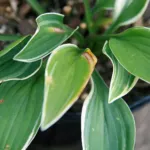
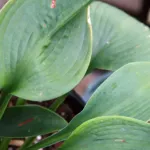
Source:
Hosta ‘Big Daddy’ short overview
Hosta 'Big Daddy' is a substantial, clump-forming perennial selected for its thick, rounded, heavily corrugated blue-green leaves. The broad foliage forms an impressive mound in partial to full shade, while tall summer scapes carry near-white, bell-shaped flowers. It performs best in fertile, humus-rich soil that stays evenly moist but drains freely, and its heavy leaf texture offers useful resistance to slug damage.
Taxonomic classification
Hosta ‘Big Daddy’ care guide
Light and placement
Grow in partial shade to full shade, ideally with morning light and protection from hot afternoon sun. East- or north-facing borders and sheltered woodland edges are suitable. Excessive sun can bleach or scorch the blue foliage; too much shade may produce looser growth and weaker scapes. Blue wax on the leaves is best preserved away from harsh midday exposure.
Watering and humidity
Water deeply and consistently, especially during the first growing season and during summer heat. Keep the root zone evenly moist but never saturated; a 2–3 inch organic mulch layer helps moderate moisture and temperature while staying clear of the crown. Container plants dry faster and need more frequent checks.
Soil and growing medium
Use fertile, humus-rich loam that holds steady moisture without becoming waterlogged. Clay or sandy soil can be improved with compost and other organic matter. A slightly acidic to neutral or mildly alkaline reaction is tolerated; avoid compacted soil and sites that remain stagnant in winter.
Feeding
Apply a balanced slow-release perennial fertilizer in spring as growth begins, following the product label. A yearly layer of compost is usually sufficient in fertile soil. Avoid heavy nitrogen late in the season, which can produce soft growth and delay dormancy. Do not fertilize drought-stressed or newly divided plants until they re-establish.
Growth and habit
This cultivar forms a dense, mound-shaped clump and gradually enlarges over several seasons. Allow room for the crown and foliage to expand before dividing. Its substantial leaves hold visual impact without frequent trimming, while regular watering during establishment supports larger, better-formed foliage.
Planting and repotting
Plant in spring after the soil can be worked, or in early fall at least several weeks before hard frost. Set the crown at soil level, spread the roots outward, water thoroughly, and mulch lightly without covering the crown. Allow about 30–48 inches between plants for a mature specimen, depending on desired overlap.
Container-grown plants can be divided and repotted in early spring as shoots emerge, or in early fall. Use a heavy, well-drained potting mix and a container with generous drainage holes. Shift only when the root mass is crowded, and avoid burying the crown more deeply than it was previously growing.
Propagation and pruning
Propagation
Divide established clumps in early spring as shoots emerge or in late summer to early fall. Separate crowns with a sharp, clean knife or spade, ensuring each division has roots and viable buds. Seed is possible but will not reliably reproduce the named cultivar.
Pruning
Remove flower scapes after bloom if a tidier appearance is preferred. Allow foliage to yellow naturally after frost, then cut dead leaves to the ground in late fall or before spring growth resumes. Clean away fallen foliage to reduce overwintering pest and disease habitat.
Overwintering
The plant is deciduous and naturally dies back after frost. Leave foliage in place until it collapses, then remove it before spring growth. In containers, protect the pot from repeated freeze-thaw cycles by placing it in a sheltered location or insulating the container; outdoor-grounded plants generally need no special winter covering in their hardy range.
Uses
Use as a specimen, mass planting, woodland-edge accent, shaded bed, border plant, or large container specimen. The broad leaves help cover fading spring bulbs and provide strong textural contrast with ferns, astilbes, heucheras, and fine-textured grasses. Do not use as an edible plant because hostas can be toxic if consumed by pets.
Appearance
The hallmark is a broad mound of thick, rounded to broadly ovate leaves with a heart-shaped base, deep cupping, and pronounced corrugation. New foliage is blue-green to chalky blue and may become greener later in the season. Tall scapes rise above the foliage and carry pale flowers.
Flowering
Tall, leafless scapes rise above the foliage and carry racemes of near-white, bell-shaped flowers in midsummer. Flowering is ornamental but secondary to the foliage. Remove spent scapes if seed production is not desired, or leave them briefly for seasonal structure.
Pollination and visitors
The tubular flowers are visited by insect pollinators, including bees, bumblebees, and butterflies. The cultivar is also listed in horticultural references as attracting hummingbirds, although visitor activity varies with garden conditions and local fauna.
Hosta 'Big Daddy' photos
Click any photo for a larger view. Source, author and license are shown separately.
Diseases and pests
Diseases
Avoid overhead watering and crowded, poorly ventilated planting. Watch for crown or root rot in persistently wet soil and for hosta virus symptoms such as mottling, streaking, or abnormal tissue; isolate and remove suspicious plants rather than propagating them. Good sanitation reduces disease spread.
Pests
Slugs and snails are the principal garden pests; thick leaves provide some resistance but do not prevent damage. Deer may browse the foliage heavily. Inspect new growth, remove hiding places, use barriers or traps, and protect plants with appropriate deer fencing where pressure is high.
Related diseases and pests
Only Plant Doctor profiles whose host data indicate this plant may be affected are shown here.
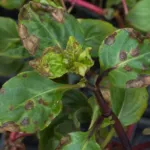 DiseaseImpatiens necrotic spot virus diseaseImpatiens necrotic spot orthotospovirus
 DiseaseSouthern blightAthelia rolfsii
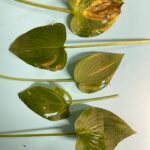 PestStrawberry foliar nematodeAphelenchoides fragariae
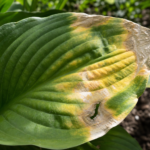 Environmental stressExcess light stress
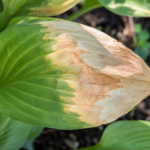 Environmental stressLeaf sunburn
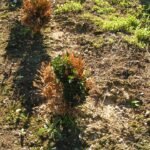 DiseasePhytophthora root and crown rotPhytophthora nicotianae
Toxicity and pollen
Hostas contain saponins and are recognized by ASPCA as toxic to dogs and cats if eaten. Ingestion may cause vomiting, diarrhea, drooling, or depression. Keep plants away from pets that chew foliage and contact a veterinarian or poison service if significant ingestion occurs. Evidence for serious human poisoning is limited, but the plant should not be eaten.
- Typical season
- During flowering, generally July–August in the United States
- Pollination / pollen
- Heavy, insect-carried pollen
Hosta flowers are insect-pollinated rather than adapted for abundant wind dispersal. Their pollen is generally not considered a major airborne seasonal allergen, although individual sensitivity is always possible and cut flowers may still bring pollen into close contact.
Native habitat
Hostas are herbaceous woodland-edge perennials associated with moist, fertile soils and filtered light. In cultivation, 'Big Daddy' performs best where soil remains evenly moist, summer heat is moderated, and foliage is sheltered from drying wind and intense afternoon sun.
Interesting fact
Registered in 1978 and associated with F. Shaw and Paul Aden in horticultural records. The cultivar is classified by the American Hosta Society as I-2. Its thick, heavily corrugated leaves are comparatively resistant to slug feeding. Mature leaves can reach roughly 15 inches long in favorable conditions.
Frequently asked questions (FAQ)
The most relevant questions about this plant, with short and direct answers.
🌱Quick care
What is Hosta 'Big Daddy' best known for?⌄
Hosta 'Big Daddy' is best known for its large, blue, heavily puckered leaves that mature into a broad, rounded clump. It is primarily grown as a foliage plant for shady gardens.
Is Hosta 'Big Daddy' easy to grow?⌄
Yes, Hosta 'Big Daddy' is generally easy to grow when planted in shade or partial shade with consistently moist, fertile soil. It is a low-maintenance, cold-hardy perennial once established.
How big does Hosta 'Big Daddy' get?⌄
Hosta 'Big Daddy' typically grows about 18–25 inches tall and 3–4 feet wide, with flower stalks rising higher. Mature size varies with climate, soil moisture, and growing conditions.
How fast does Hosta 'Big Daddy' grow?⌄
Hosta 'Big Daddy' grows at a moderate rate and may take several years to develop its full-size leaves and mature clump. Avoid dividing it too early if you want the largest foliage.
🌤️Environment and placement
Does Hosta 'Big Daddy' need full shade or partial shade?⌄
Hosta 'Big Daddy' grows best in partial shade to shade, with protection from intense afternoon sun. A little gentle morning sun may be tolerated, but too much direct light can fade or scorch the blue foliage.
How much sun can Hosta 'Big Daddy' tolerate?⌄
Hosta 'Big Daddy' can tolerate limited morning sun, especially in cooler climates, but it performs best with filtered light or afternoon shade. Hot, direct afternoon sun may cause leaf scorch and reduce its blue color.
What soil is best for Hosta 'Big Daddy'?⌄
The best soil is fertile, humus-rich, moist but well-drained soil that retains moisture without staying waterlogged. Incorporating compost or other organic matter can improve poor or compacted soil.
How much water does Hosta 'Big Daddy' need?⌄
Hosta 'Big Daddy' needs evenly moist soil during active growth and should not be allowed to dry out for long periods. Water deeply during dry weather, preferably in the morning, while avoiding constantly saturated soil.
Can Hosta 'Big Daddy' grow under trees?⌄
Yes, Hosta 'Big Daddy' can grow beneath trees if it receives adequate indirect light and regular moisture. Avoid planting it where tree roots make the soil excessively dry or where falling branches may damage its leaves.
Is Hosta 'Big Daddy' cold hardy?⌄
Yes, Hosta 'Big Daddy' is a cold-hardy perennial that dies back in fall and regrows from its crown in spring. Its exact winter performance depends on local conditions, drainage, and the hardiness zone of the planting site.
💧Care and problems
Why are my Hosta 'Big Daddy' leaves turning green?⌄
Blue hosta foliage can appear greener when its waxy coating is reduced by strong sun, heavy rain, handling, or natural aging. More shade generally helps preserve the blue color, although mature leaves may still change during the season.
Why are the leaves of Hosta 'Big Daddy' turning brown?⌄
Brown leaf edges usually indicate heat, drought, sunscald, or inconsistent watering. Move plants exposed to harsh afternoon sun into deeper shade and keep the soil evenly moist without overwatering.
How do I protect Hosta 'Big Daddy' from slugs?⌄
Reduce slug damage by removing hiding places, watering in the morning, keeping debris away from the crown, and using a labeled slug control if needed. The thick leaves of 'Big Daddy' may be somewhat more resistant than thinner-leaved hostas, but they are not slug-proof.
Do deer eat Hosta 'Big Daddy'?⌄
Yes, deer may eat Hosta 'Big Daddy', especially when other food is scarce. The cultivar may be somewhat less palatable because of its thick leaves, but deer protection is still needed in areas with browsing pressure.
Should I fertilize Hosta 'Big Daddy'?⌄
Apply a balanced slow-release fertilizer in early spring if the soil is poor or growth is weak. Avoid excessive fertilizer and stop feeding late in the growing season so the plant can prepare for dormancy.
🪴Planting and repotting
When is the best time to plant Hosta 'Big Daddy'?⌄
Spring or early fall is generally the best time to plant Hosta 'Big Daddy' in the United States. Planting during cooler weather gives the roots time to establish before summer heat or winter dormancy.
How deep should Hosta 'Big Daddy' be planted?⌄
Plant Hosta 'Big Daddy' with the crown and growing points at or just below the soil surface, spreading the roots outward. Planting the crown too deeply can encourage rot or delay spring growth.
How far apart should Hosta 'Big Daddy' plants be spaced?⌄
Space Hosta 'Big Daddy' about 30–48 inches apart, depending on whether you want individual specimens or a fuller mass. Allow additional room where the site has rich soil and consistent moisture that encourage larger growth.
Can Hosta 'Big Daddy' grow in a container?⌄
Yes, Hosta 'Big Daddy' can grow in a large container with drainage holes, fertile potting mix, and protection from hot afternoon sun. Containers dry out faster than garden soil, so check moisture regularly.
Should I mulch around Hosta 'Big Daddy'?⌄
Yes, apply a thin layer of organic mulch to conserve moisture and keep the root zone cool. Keep mulch away from direct contact with the crown to reduce the risk of rot and pest problems.
✂️Propagation and pruning
How do you divide Hosta 'Big Daddy'?⌄
Divide Hosta 'Big Daddy' in early spring as shoots emerge or in early fall. Dig up the clump, separate sections containing roots and growing points, and replant them at the original depth with consistent moisture.
Can Hosta 'Big Daddy' be grown from seed?⌄
It can produce seed, but plants grown from seed may not reproduce the exact characteristics of the named cultivar. Division is the preferred method for cloning a true-to-type 'Big Daddy' plant.
Should I cut back Hosta 'Big Daddy' in fall?⌄
Remove the foliage after it has yellowed and died back, or leave it until late fall cleanup. Do not cut healthy green leaves prematurely because they are still supplying energy to the crown.
Should I remove the flower stalks from Hosta 'Big Daddy'?⌄
Remove flower stalks after blooming if you prefer a tidier appearance or want the plant’s energy directed toward foliage. Leaving them in place does not normally harm an established plant.
⚠️Toxicity and safety
Is Hosta 'Big Daddy' toxic to dogs?⌄
Yes, Hosta 'Big Daddy' should be considered toxic to dogs if eaten. Ingestion can cause gastrointestinal signs such as vomiting, diarrhea, reduced appetite, or lethargy, so contact a veterinarian or pet poison service if consumption occurs.
Is Hosta 'Big Daddy' toxic to cats?⌄
Yes, Hosta 'Big Daddy' should be considered toxic to cats if eaten. Keep pets from chewing the leaves or flowers and seek veterinary advice promptly if ingestion is suspected.
Is Hosta 'Big Daddy' poisonous to humans?⌄
Hostas are generally grown as ornamental plants and should not be eaten casually, especially because plant identity, preparation, and individual sensitivity can vary. Keep children and pets from consuming the plant, and contact poison-control or medical professionals after a significant ingestion.
🌸Flowering and special interest
Does Hosta 'Big Daddy' produce flowers?⌄
Yes, Hosta 'Big Daddy' produces bell-shaped flowers on tall stalks in summer, usually in pale lavender, near-white, or white shades depending on the plant and source. The foliage remains its main ornamental feature.
When does Hosta 'Big Daddy' bloom?⌄
Hosta 'Big Daddy' generally blooms in mid to late summer, although timing varies by climate and growing conditions. Flower stalks typically rise above the foliage.
Why is my Hosta 'Big Daddy' not flowering?⌄
A young or recently divided Hosta 'Big Daddy' may need several seasons to flower well. Excessive shade, drought, transplant stress, or removal of developing stalks can also reduce blooming.