
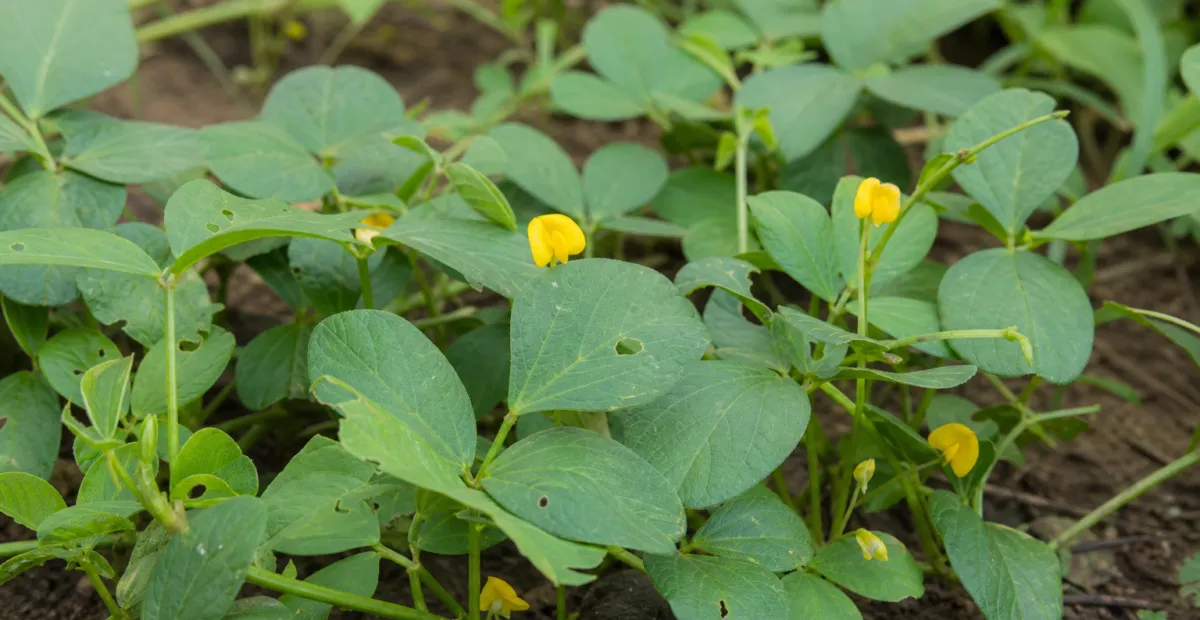
 AI-generated illustration
Vigna subterranea short overview
Vigna subterranea is a warm-season annual legume native to northeastern Nigeria through South Sudan. Its short, leafy stems spread across the soil, while small yellow flowers produce pods that mature underground—a process known as geocarpy. The edible seeds are valued as a nutritious food crop in tropical Africa. In the United States, it needs full sun, warm soil, reliable summer heat, and protection from frost, making it most practical in long-season gardens or containers.
Taxonomic classification
Vigna subterranea care guide
Light and placement
Provide unobstructed full sun, ideally with at least 8 hours of direct light and a warm south-facing exposure. Light shade may produce foliage but can delay flowering and underground pod development. Pale, elongated growth or sparse flowering suggests insufficient light; scorched leaf margins and severe midday wilt suggest excessive heat combined with inadequate water rather than too much sunlight alone.
Watering and humidity
Water deeply enough to moisten the root zone, then allow the surface to dry slightly before watering again. Keep moisture consistent during germination, flowering, and pod filling, but never leave the soil saturated. Reduce irrigation as the pods mature and foliage begins to yellow. Containers may need frequent checking during hot weather. Humidity is not a special requirement if air circulation is good.
Soil and growing medium
Use a loose, sandy or sandy-loam substrate that drains rapidly but retains enough moisture for pod formation. A mildly acidic to neutral reaction is suitable, with a practical target around pH 5.0–6.5. Avoid compacted clay, standing water, and strongly calcareous soils. In containers, combine quality potting mix with coarse mineral material and provide generous drainage holes.
Feeding
This legume generally performs best in soil amended with mature compost rather than heavy nitrogen fertilizer. Excess nitrogen can encourage leafy growth at the expense of seed production. If growth is weak, use a balanced fertilizer at half strength once after establishment, but do not feed drought-stressed, waterlogged, or diseased plants. Adequate phosphorus and potassium support reproductive development where soil tests show deficiencies.
Growth and habit
This annual forms a compact to loosely spreading canopy close to the ground. Flower stalks bend downward after anthesis, placing developing pods beneath the soil surface. Keep the planting area weed-free during establishment and avoid deep cultivation later, because underground pods can be damaged during harvest.
Planting and repotting
Sow outdoors only after the last expected frost, when soil is consistently at least 65°F; in much of the United States this may be about 30 days after the average last frost. Plant seeds 1–2 inches deep in loose soil. Space plants about 6–8 inches apart, with rows roughly 12 inches apart where hand cultivation is used. Keep the seedbed evenly moist until emergence, then maintain steady moisture without saturation.
Direct sowing is preferable because the crop develops pods underground and dislikes prolonged root disturbance. If container-grown seedlings must be moved, transplant very young plants with the root ball intact. Choose a final container at least 12 inches deep and wide enough for the spreading canopy.
Propagation and pruning
Propagation
Propagate by seed. Direct sow when the soil is warm, or start in individual biodegradable containers only a short time before planting out. Use mature, undamaged seed and avoid unnecessary root disturbance. Seed inoculation practices vary by region and bacterial strain, so use a locally appropriate legume inoculant only when its compatibility is known.
Pruning
No routine pruning is needed. Remove dead or diseased foliage and control encroaching weeds by shallow hand cultivation early in the season. Avoid cutting the low stems once flowering and pod formation begin, since the reproductive stalks need to reach the soil.
Overwintering
This species is not frost tolerant and is normally finished by the first freeze. Harvest mature pods before frost, remove plant debris, and store dry seed in a cool, dry place. In a container, it can be moved indoors only as a short-term seed-production experiment under strong supplemental light; it is not a practical perennial houseplant.
Uses
The mature seeds are boiled, roasted, or milled into flour and used as a pulse food. Crop residues may be used as forage, and the plant can contribute nitrogen through legume symbiosis. Treat the seeds as a food crop requiring appropriate cooking and storage; this profile does not support medicinal claims.
Appearance
The plant has short, sparsely hairy, creeping stems with dense foliage and erect petioles. Each leaf is trifoliate, with elliptic to obovate leaflets that may have rounded or slightly notched tips. Short flower stalks arise from the canopy; after flowering they bend downward, a key identification feature associated with underground pod development.
Flowering
Small yellow pea-type flowers are borne in short racemes on low, leafy stems. After flowering, the reproductive stalk bends downward and carries the developing pod into the soil, where the seed matures. Flowering and pod set are strongly influenced by heat, day length, moisture, and genotype, so timing varies considerably by region and landrace.
Pollination and visitors
The species is commonly described as predominantly self-pollinating, although studies report some insect-associated visitation and differing levels of cross-pollination. The yellow papilionoid flowers may be visited by bees and other insects, but strong pollinator dependence is not established.
Vigna subterranea photos
Click any photo for a larger view. Source, author and license are shown separately.
Diseases and pests
Diseases
Possible problems include Cercospora leaf spot, powdery mildew, Fusarium wilt, southern blight, charcoal rot, blight, and virus diseases. Improve air movement, avoid overhead irrigation, rotate away from legumes, remove badly affected debris, and use clean seed. Water stress followed by excessive moisture can increase disease pressure. Local pesticide labels and extension recommendations should guide any chemical treatment.
Pests
Aphids, termites, ants, cutworms, nematodes, leafhoppers, beetles, pod or foliage-feeding larvae, rodents, and storage bruchid beetles may occur. Use clean seed, crop rotation, prompt weed control, row covers for early establishment where practical, and regular inspection. Harvest and dry pods thoroughly, then store seed cool and dry in pest-resistant containers. Avoid routine broad-spectrum insecticide use unless damage is confirmed.
Related diseases and pests
Only Plant Doctor profiles whose host data indicate this plant may be affected are shown here.
 DiseaseCharcoal rotMacrophomina phaseolina (Tassi) Goid.
 PestChilli thripsScirtothrips dorsalis Hood
 DiseaseBacterial blight and cankerPseudomonas syringae pv. syringae
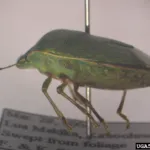 PestSouthern Green Stink BugNezara viridula
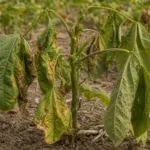 DiseaseBacterial Wilt of Dry BeanCurtobacterium flaccumfaciens pv. flaccumfaciens
 DiseaseCucumber mosaic virusCucumber mosaic virus
 PestMelon aphid (cotton aphid)Aphis gossypii Glover
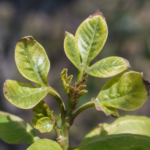 Environmental stressNickel deficiency
Toxicity and pollen
The mature seeds are a traditional edible food when properly prepared. No authoritative evidence located in this review supports classifying the living plant as poisonous to people or pets. As with other legumes, food allergy remains possible for susceptible individuals, and raw or poorly prepared seeds should not be treated as ready-to-eat.
- Typical season
- During flowering, typically mid to late summer in the United States.
- Pollination / pollen
- Flower-bound, insect-associated pollen
The flowers do not appear to be adapted for abundant wind dispersal; pollen is associated mainly with the flower's reproductive structures and self-pollination. Airborne allergy importance is therefore expected to be low, but individual sensitivity to any flowering plant cannot be ruled out.
Native habitat
The species is native from northeastern Nigeria to South Sudan and is associated with seasonally dry tropical environments. It is adapted to hot conditions, periodic drought, and light, well-drained soils, while remaining sensitive to frost and prolonged waterlogging. Cultivation is concentrated mainly in tropical and subtropical regions.
Interesting fact
Unlike most beans, its pods mature underground after the flower stalk bends into the soil. The crop is valued for edible seeds and can contribute biologically fixed nitrogen. Seed colors vary among landraces, including cream, yellow, red, dark, and mottled forms.
Frequently asked questions (FAQ)
The most relevant questions about this plant, with short and direct answers.
🌱Quick care
Is Vigna subterranea an annual or perennial plant?⌄
Vigna subterranea is a warm-season annual legume. It completes its life cycle in one growing season and produces underground pods before the foliage dies back.
🌤️Environment and placement
How much sunlight does Vigna subterranea need?⌄
Vigna subterranea grows best in full sun, with at least 6–8 hours of direct light daily. Strong sunlight supports compact growth, flowering, and seed production.
What USDA hardiness zones can grow Vigna subterranea?⌄
Vigna subterranea is best grown as a summer crop in frost-free parts of USDA Zones 9–11. In cooler zones, start it indoors and transplant only after the soil and nights are consistently warm.
What soil is best for Vigna subterranea?⌄
Use loose, well-drained sandy or sandy-loam soil for Vigna subterranea. Heavy clay or compacted soil can restrict pod development and make harvesting difficult.
Does Vigna subterranea need acidic or alkaline soil?⌄
Vigna subterranea generally performs best in slightly acidic to neutral soil, approximately pH 5.5–7.0. A soil test is useful because extremely acidic or alkaline conditions can reduce nutrient availability.
Does Vigna subterranea tolerate frost?⌄
Vigna subterranea is frost tender and should be protected from cold temperatures. Even a light frost can injure or kill the plant, so harvest before the first expected frost in cooler regions.
💧Care and problems
How often should Vigna subterranea be watered?⌄
Water Vigna subterranea to maintain moderate, even moisture, especially during germination, flowering, and pod formation. Allow excess water to drain, because persistently soggy soil can damage roots.
Is Vigna subterranea drought tolerant?⌄
Vigna subterranea has useful drought tolerance once established, but it produces better yields with regular moisture. Avoid severe water stress during flowering and underground pod development.
Does Vigna subterranea need fertilizer?⌄
Vigna subterranea usually needs little nitrogen fertilizer because it is a legume that can associate with nitrogen-fixing bacteria. Improve poor soil with compost and use a balanced fertilizer only if a soil test indicates a deficiency.
Does Vigna subterranea need pruning?⌄
Vigna subterranea normally does not require pruning. Remove only damaged or diseased growth, since excessive trimming can reduce the leaves needed for flowering and underground seed production.
Can Vigna subterranea fix nitrogen in the soil?⌄
Vigna subterranea is a legume capable of forming nitrogen-fixing root nodules with compatible bacteria. The benefit depends on successful nodulation, soil conditions, and whether the plant residues remain in the soil after harvest.
What pests commonly affect Vigna subterranea?⌄
Vigna subterranea may be affected by general legume pests such as aphids, leaf-feeding insects, pod pests, and soil-dwelling organisms. Inspect leaves and stems regularly, and use regionally appropriate integrated pest-management practices rather than routine spraying.
What problems are caused by overwatering Vigna subterranea?⌄
Overwatering Vigna subterranea can cause poor germination, root problems, and weak growth. Grow it in well-drained soil and water only when the upper layer begins to dry while maintaining moisture during reproductive growth.
Can Vigna subterranea improve soil fertility?⌄
Vigna subterranea can contribute to soil fertility through nitrogen fixation and organic matter from its roots and residues. For the greatest benefit, leave healthy plant material in the soil after harvesting instead of removing everything.
🪴Planting and repotting
Can Vigna subterranea grow in containers?⌄
Vigna subterranea can grow in a large container if it has loose soil, excellent drainage, and enough depth for underground pods. Choose a container at least 12 inches deep and wide enough to support its spreading habit.
When should Vigna subterranea be planted in the United States?⌄
Plant Vigna subterranea outdoors after the last frost when soil temperatures are consistently at least 65°F. It needs a long, warm growing season, so gardeners in cooler regions should start seeds indoors several weeks early.
How deep should Vigna subterranea seeds be planted?⌄
Sow Vigna subterranea seeds about 1–2 inches deep in prepared soil. Planting too shallow can leave seeds vulnerable to drying, while overly deep planting may delay emergence in cool or heavy soil.
How far apart should Vigna subterranea plants be spaced?⌄
Space Vigna subterranea plants about 8–12 inches apart, with roughly 18–24 inches between rows. Allow additional room if you want the stems to spread freely across the soil surface.
How do you harvest Vigna subterranea?⌄
Harvest Vigna subterranea by lifting or pulling the plant from loose soil once the foliage begins to yellow and the pods are mature. Dig carefully around the root zone so underground pods are not left behind or damaged.
✂️Propagation and pruning
How long do Vigna subterranea seeds take to germinate?⌄
Vigna subterranea seeds commonly germinate in about 7–14 days under warm, evenly moist conditions. Germination may be slower or less reliable when seeds are old, chilled, or overwatered.
How is Vigna subterranea propagated?⌄
Vigna subterranea is propagated primarily from seed. Sow viable, undamaged seeds directly or start them in individual containers, because the seedlings can be sensitive to root disturbance during transplanting.
Can Vigna subterranea be propagated from cuttings?⌄
Cuttings are not the standard propagation method for Vigna subterranea. Because it is an annual crop grown for seed, using fresh, properly stored seed is more practical and reliable.
⚠️Toxicity and safety
Can you eat Vigna subterranea seeds?⌄
Vigna subterranea seeds are edible when properly prepared and are eaten fresh, boiled, roasted, or ground into flour. Do not rely on raw or inadequately cooked seeds, especially when serving people with legume allergies.
Are Vigna subterranea seeds toxic?⌄
No established plant toxicity is recognized for Vigna subterranea, but the edible seeds require proper preparation. As with peanuts and soybeans, the seeds may cause allergic reactions in susceptible people.
Can people with peanut allergies eat Vigna subterranea?⌄
People with peanut or other legume allergies should avoid Vigna subterranea unless an allergist confirms it is safe. Cross-reactions are possible, and the seeds should not be treated as automatically allergy-free.
Is Vigna subterranea safe for pets?⌄
Specific pet-safety data for Vigna subterranea are limited. Keep seeds and plant material away from pets, particularly because raw or improperly prepared legumes can cause digestive problems and individual animals may have allergies.
🌸Flowering and special interest
Why are the pods of Vigna subterranea underground?⌄
After flowering, Vigna subterranea develops specialized flower stalks that bend toward the soil, allowing the pods to mature underground. This growth habit is called geocarpy and resembles peanut pod development.
What do Vigna subterranea flowers look like?⌄
Vigna subterranea produces small, pea-like, yellowish to yellow flowers close to the ground. Flowering is followed by stalks bending into the soil, where the pods develop.
How long does Vigna subterranea take to mature?⌄
Vigna subterranea commonly needs about 90–150 warm, frost-free days to mature, depending on the variety and growing conditions. Harvest timing is best judged by plant yellowing and pod development rather than calendar days alone.
Similar plants
 Azure Monkshood (Aconitum carmichaelii) care guideAconitum carmichaelii
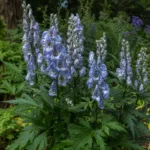 Monkshood (Aconitum ‘Stainless Steel’)Aconitum 'Stainless Steel'
 Monkshood (Aconitum ‘Bressingham Spire’)Aconitum 'Bressingham Spire'
 Golden full moon maple (Acer shirasawanum ‘Aureum’)Acer shirasawanum 'Aureum'
 Globosum (Acer platanoides ‘Globosum’)Acer platanoides 'Globosum'
 Striped maple (Acer pensylvanicum) care guideAcer pensylvanicum