

Cercospora leaf spot
Cercospora beticola Sacc.Cercospora leaf spot overview
Cercospora leaf spot is a fungal disease of beet, Swiss chard and spinach caused by Cercospora beticola. It begins as small, circular gray, tan or brown lesions, often with reddish-purple margins on red beet cultivars. In warm, humid weather, spots enlarge and merge, causing yellowing, premature leaf collapse, defoliation and reduced root yield or market quality.
Typical conditions
Overview
Cercospora beticola primarily attacks leaves and petioles of table beet, sugar beet, Swiss chard and spinach. Early infections may appear as isolated spots in field foci, but epidemics can spread rapidly when foliage remains wet during warm, humid weather.
On red beet cultivars, lesions commonly have gray to brown centers with reddish-purple margins. Yellow or white beet cultivars may show tan margins, while sugar beet and spinach lesions may lack a strongly colored border. Severe disease causes premature leaf yellowing, necrosis and defoliation.
Symptoms and identification
- Small, circular gray, tan or light-brown spots, commonly about 1/8 to 3/16 inch across early in development.
- Gray lesion centers with reddish-purple margins on many red beet cultivars; tan margins may occur on yellow or white cultivars.
- Older, lower leaves are often affected first and most severely.
- Black dots or gray, fuzzy-looking sporulation may be visible with a hand lens during humid weather.
- Lesions enlarge and merge, producing yellow leaves, blighting, premature collapse and defoliation.
- Severe defoliation can reduce beet root yield and sugar content and may make top-pulling harvest difficult.
Distinguish the disease from bacterial leaf spot, which often produces darker marginal lesions and leaf distortion, and from Phoma leaf spot, which may show concentric rings of pycnidia.
Causes and spread
The causal fungus survives primarily in infected beet residue and may persist in soil associated with diseased debris. Alternative or reservoir hosts can include lambsquarters and pigweed, although the importance of a particular weed host depends on local conditions and pathogen population.
Conidia are produced on infected tissue and spread mainly by splashing rain, irrigation water and contaminated plant material; short-range wind movement may also contribute. Dense canopies, volunteer beets, unmanaged host weeds, repeated beet production and nearby infected fields increase the risk of carryover and spread.
Life cycle and persistence
Cercospora beticola colonizes infected foliage and forms pseudostromata within lesions. Under suitable moisture and temperature conditions, conidiophores produce asexual conidia that infect new leaves. Disease cycles repeat as long as susceptible foliage remains wet and the weather remains favorable.
Development is favored by warm days, warm nights, very high relative humidity and consecutive hours of leaf wetness. UC IPM identifies particularly favorable conditions around 77–95°F days, nights above 61°F and relative humidity of approximately 90–95%. In some production systems, infected residue can remain an important source for several seasons.
Treatment and control
Begin with accurate diagnosis and regular scouting, especially from early to midsummer onward in regions where warm, humid conditions favor epidemics. Protecting new foliage is more effective than attempting to restore leaves that are already heavily blighted.
For commercial production, fungicide decisions should consider local disease forecasts, cultivar susceptibility, crop value, harvest interval and confirmed or suspected fungicide resistance. Rotate active ingredients among different FRAC groups, avoid repeated use of single-site products, and apply only when the crop and disease are specifically covered by the current US label. Good canopy coverage is essential.
In home gardens, sanitation, rotation, weed control, wider spacing and avoiding overhead irrigation are usually the most practical measures. Remove severely infected foliage and dispose of it away from the compost pile if disease is active.
Low-impact and biological control
No cultural measure reliably cures established infections, but organic and low-input management can reduce disease pressure. Use resistant or tolerant varieties when available, maintain a long rotation, remove or incorporate infected residue, control host weeds and improve air movement around plants.
Fixed-copper products may be permitted in some certified-organic systems, but legality, formulation, crop coverage and organic certification status vary. Use copper only when the product is currently registered for the crop and disease in the United States, complies with the applicable organic standard, and is used according to its label. Repeated copper use can injure foliage and contribute to environmental copper accumulation.
Prevention
- Rotate beet and other susceptible hosts with nonhost crops for about three years where practical.
- Remove or deeply incorporate beet residue after harvest; avoid leaving diseased tops on the soil surface.
- Control lambsquarters, pigweed, volunteer beets and other documented host weeds in and around the planting.
- Use resistant or partially resistant cultivars when suitable varieties are available for the region and market.
- Use adequate row spacing and avoid excessive plant density so foliage dries more quickly.
- Orient rows and manage irrigation to improve airflow and reduce prolonged leaf wetness; use drip irrigation where practical.
- Scout older leaves regularly during warm, humid periods and remove heavily diseased leaves from small plantings without spreading wet debris.
- Avoid planting a new beet crop next to heavily infected beet residue or an infested field when other sites are available.
Interesting facts
- Cercospora leaf spot is among the most destructive foliar diseases of beet crops wherever susceptible beets are grown.
- Lesion margins can help with diagnosis: reddish-purple margins are often conspicuous on red beet cultivars but may be tan or absent on other hosts or cultivars.
- The fungus produces pseudostromata inside lesions, which can be visible with magnification and help distinguish the disease from some bacterial and Phoma leaf spots.
- Severe loss of beet foliage can affect not only yield but also the mechanical harvestability of top-pulled table beets.
- Fungicide resistance, particularly to some single-site modes of action, makes rotation, sanitation and other integrated measures important for long-term control.
Use only pesticide products currently legally authorized and labeled for Cercospora leaf spot on the specific crop in your US state. Follow the current label for rate, timing, personal protective equipment, re-entry interval, preharvest interval, resistance-management requirements and permitted application sites. Product registrations and labels change; consult your state Extension service and the EPA-approved label before application. Do not assume that a fungicide labeled for sugar beet is labeled for table beet, Swiss chard or spinach.
Affected plants
The plants below are linked to this problem by structured host-plant data. The list updates automatically as new plant profiles are added.
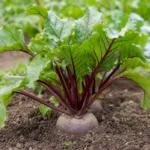 Beet (Beta vulgaris) care guideBeta vulgaris
 Ethiopian Rape (Brassica carinata) care guideBrassica carinata
 Brown Mustard (Brassica juncea) care guideBrassica juncea
 Rapeseed (Brassica napus) care guideBrassica napus
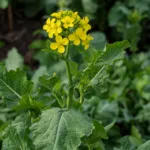 Urnip rape (Brassica rapa) care guideBrassica rapa
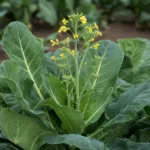 Collard greens (Brassica oleracea) care guideBrassica oleracea
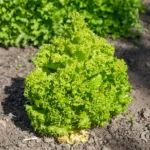 Lettuce (Lactuca sativa) care guideLactuca sativa
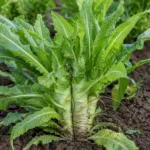 Celtuce (Lactuca sativa Angustana Group)Lactuca sativa Angustana Group
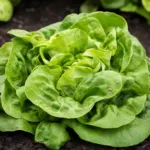 Capitata Group (Lactuca sativa Capitata Group)Lactuca sativa Capitata Group
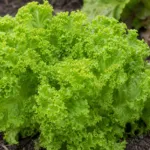 Leaf lettuce (Lactuca sativa Crispa Group)Lactuca sativa Crispa Group
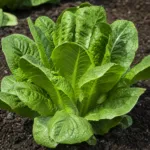 Romaine lettuce (Lactuca sativa Longifolia Group)Lactuca sativa Longifolia Group
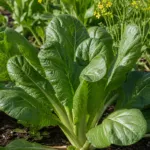 Integrifolia Group (Brassica juncea Integrifolia Group)Brassica juncea Integrifolia Group