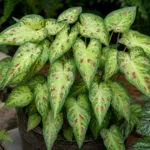
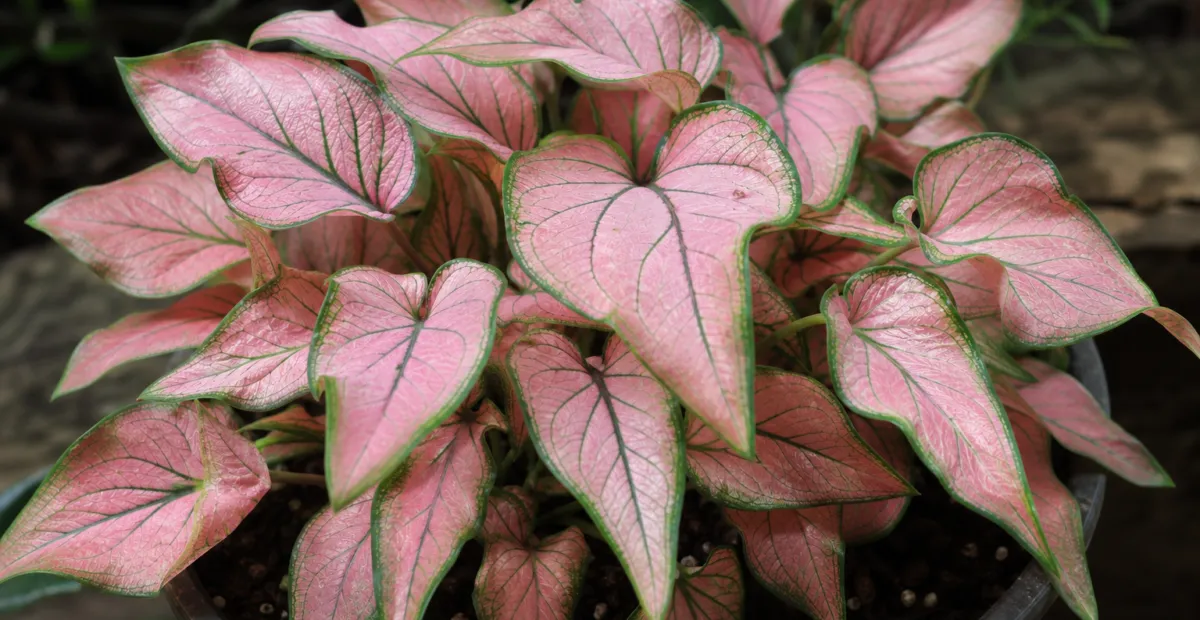
 AI-generated illustration
 Caladium ‘Pink Symphony’ short overview
Caladium 'Pink Symphony' is a compact strap-leaved caladium grown for its small, vivid pink leaves and contrasting green veins. It performs best in warm temperatures, bright filtered light or partial shade, and consistently moist but well-drained soil. Use it in shaded beds, porch containers, patio planters, or as a seasonal indoor accent. The plant is a tender tuberous perennial and should be protected from frost.
Taxonomic classification
Caladium ‘Pink Symphony’ care guide
Light and placement
Place in bright filtered light, morning sun, or open shade with protection from intense afternoon rays. Too much direct sun can scorch or bleach the leaves, especially in hot climates; too little light may produce weaker petioles and less vivid color. Indoors, an east-facing window or bright spot set back from a south- or west-facing window is usually suitable.
Watering and humidity
Water thoroughly when the upper surface begins to dry, then allow excess water to drain fully. During warm active growth, do not let the mix dry completely; containers may need frequent checks in summer. Reduce watering as leaves yellow and dormancy approaches, and keep dormant tubers only slightly dry rather than continuously wet. Humidity helps indoors, but stagnant air and wet foliage encourage disease.
Soil and growing medium
Use a loose, moisture-retentive but well-drained mix rich in organic matter. A quality peat- or coir-based potting mix amended with compost and perlite works well in containers. Slightly acidic to neutral conditions are suitable; avoid compacted, waterlogged soil, which can rot the tuber.
Feeding
Feed during active growth with a balanced, water-soluble fertilizer diluted to half strength every 3–4 weeks, or use a controlled-release product according to its label. Incorporate compost before planting if soil is poor. Do not fertilize dormant, cold, or recently rotted tubers, and avoid heavy nitrogen that can produce soft, weak growth.
Growth and habit
Growth begins from a tuber once warmth and moisture return. The plant forms a compact clump of upright, long-petioled leaves and usually grows most vigorously through the warm season. In cooler climates, foliage declines naturally in autumn; reducing water as dormancy begins helps prevent tuber loss.
Planting and repotting
Plant outdoors after the danger of frost has passed and soil temperatures are reliably warm, typically in late spring. Set tubers with the eyes facing upward, about 1.5–2 inches deep, and space plants 6–12 inches apart. Water after planting and keep the bed evenly moist while shoots establish.
Repot or transplant only when active growth is beginning and temperatures are warm. Handle the tuber and emerging shoots gently, and use a container with drainage holes. Move up only one pot size at a time to avoid excess wet mix around the roots.
Propagation and pruning
Propagation
Propagate commercially and practically by division of dormant tubers or by separating tuber sections that contain viable eyes. Plant divisions in warm, lightly moist medium in spring. Seed propagation is possible for caladiums but will not reliably reproduce a named cultivar.
Pruning
Remove yellowing, damaged, or diseased leaves at the base with clean scissors. If an inflorescence appears, it may be removed to keep the plant focused on foliage and tuber development, although leaving it is not usually harmful.
Overwintering
In USDA Zones 9 and colder, lift tubers after foliage declines or before freezing weather. Dry them briefly, remove loose soil, and store around 60–70°F in a dry, ventilated medium such as dry peat, vermiculite, or paper. Alternatively, move container plants indoors and keep them warm; dormancy may still occur.
Uses
Use 'Pink Symphony' in shaded summer borders, porch pots, patio containers, window boxes, and warm indoor displays. Its compact strap-leaved habit suits small spaces and mixed shade plantings. It is ornamental only; do not use it as food or medicine. Handle with gloves if sap sensitivity is a concern.
Appearance
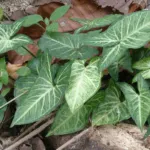
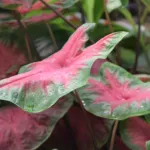
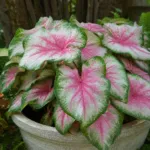
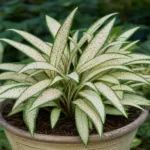
The cultivar has small, strap- or lance-shaped leaves carried on slender petioles. Leaves are predominantly pink, with clearly contrasting green veins and typically a green margin. The narrow foliage distinguishes it from broad fancy-leaved caladiums. Color intensity can vary with light, temperature, plant age, and growing conditions.
Flowering
Caladiums may produce a small arum-type inflorescence consisting of a spadix enclosed by a spathe, but they are cultivated primarily for foliage and flowering is occasional and inconspicuous. Cultivar-specific flowering behavior is not well documented.
Pollination and visitors
No reliable cultivar-specific documentation was found for regular animal visitors or pollinator attraction. The inconspicuous inflorescence is not a dependable wildlife feature, so no visitor group is assigned.
Diseases and pests
Diseases
Tuber rot and root rot are promoted by cold, saturated soil and poor drainage. Plant in warm, porous media, avoid overwatering during dormancy, and remove visibly rotting tissue. Leaf spots and blights are more likely when foliage stays wet and air circulation is poor; water at the soil line and discard badly affected leaves.
Pests
Common problems include aphids, mealybugs, spider mites, thrips, caterpillars, and slugs. Inspect leaf undersides and new growth regularly. Remove pests by hand or with a water spray when practical; use insecticidal soap or horticultural oil according to the label, avoiding treatment in hot sun. Slugs and snails are best managed with sanitation, hand-picking, and suitable barriers.
Related diseases and pests
Only Plant Doctor profiles whose host data indicate this plant may be affected are shown here.
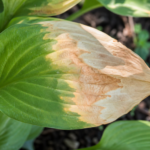 Environmental stressLeaf sunburn
 Environmental stressOverwatering
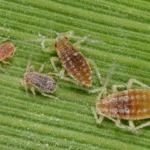 PestMealy Plum AphidHyalopterus pruni (Geoffroy, 1762)
 DiseaseAlternaria leaf spot and fruit rotAlternaria alternata
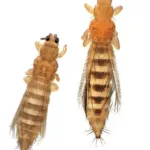 PestOnion thripsThrips tabaci Lindeman
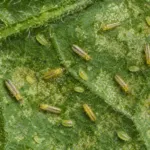 PestMelon thripsThrips palmi Karny
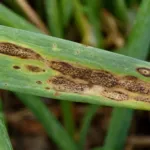 DiseaseStemphylium Leaf BlightStemphylium vesicarium (Wallr.) E.G. Simmons
 PestChilli thripsScirtothrips dorsalis Hood
Toxicity and pollen
Caladiums contain insoluble calcium oxalate crystals. Chewing or swallowing plant tissue can cause immediate burning, pain, swelling, drooling, nausea, vomiting, or difficulty swallowing; sap may irritate skin and eyes. Keep tubers, leaves, and sap away from children and pets, and seek poison-control or veterinary advice after ingestion.
- Typical season
- Not meaningfully documented for airborne exposure
- Pollination / pollen
- Limited release from occasional enclosed inflorescences
Caladium produces pollen only when it flowers, and its small, enclosed arum-type inflorescences are not generally regarded as a major airborne pollen source. Cultivar-specific allergen studies were not found, so low airborne relevance is a cautious horticultural classification rather than proof of zero allergy risk.
Native habitat
The species complex is associated with warm, humid tropical American environments and grows best in organically enriched, evenly moist soils with protection from cold. Cultivated caladiums are adapted to filtered light and warm-season conditions rather than prolonged frost or winter saturation.
Interesting fact
This cultivar is classified among strap- or lance-leaved caladiums rather than broad fancy-leaved types. Its small pink leaves are crossed by green veins, giving the plant a delicate but high-contrast appearance. Caladiums grow from tubers and enter dormancy when conditions become cool or dry. The cultivar is recorded in commercial caladium production and extension recommendations.
Frequently asked questions (FAQ)
The most relevant questions about this plant, with short and direct answers.
🌱Quick care
How do you care for Caladium 'Pink Symphony'?⌄
Grow Caladium 'Pink Symphony' in bright filtered light or shade, keep the soil evenly moist, and use a loose, organic mix that drains well. Protect it from frost, cold drafts, and harsh afternoon sun.
Is Caladium 'Pink Symphony' an indoor or outdoor plant?⌄
Caladium 'Pink Symphony' can grow indoors or outdoors during warm weather. In the United States, it is commonly grown outdoors as a seasonal plant and brought inside or stored as a tuber before frost.
Is Caladium 'Pink Symphony' a bulb or a tuber?⌄
Caladium 'Pink Symphony' grows from a tuber, although it is often sold as a bulb. The tuber produces new foliage during warm conditions and can be stored dormant for the next growing season.
🌤️Environment and placement
How much light does Caladium 'Pink Symphony' need?⌄
Provide bright filtered light to shade. Gentle morning sun may be tolerated, but strong midday or afternoon sun can scorch the thin leaves and may reduce the intensity of the pink coloring.
Can Caladium 'Pink Symphony' grow in full shade?⌄
Yes, Caladium 'Pink Symphony' can grow in full shade, although growth may be slower and foliage color may be less vivid. Bright ambient or filtered light usually gives the best balance of color and leaf quality.
Can Caladium 'Pink Symphony' tolerate direct sun?⌄
It may tolerate limited gentle morning sun, but direct afternoon sun is risky. Strap-leaf caladiums are generally more sun-tolerant than broad-leaf types, yet this cultivar usually shows stronger color in filtered shade.
What temperature does Caladium 'Pink Symphony' need?⌄
Keep Caladium 'Pink Symphony' warm, ideally above about 60°F when actively growing. It is frost tender, and cold soil or temperatures near freezing can damage the foliage and tuber.
Can Caladium 'Pink Symphony' survive winter outdoors?⌄
It can remain outdoors year-round only in reliably frost-free climates. In colder USDA zones, allow the foliage to die back, lift the tubers before frost, and store them dry in a warm location until spring.
Where should I place Caladium 'Pink Symphony' indoors?⌄
Place it near a bright window with filtered light, such as an east-facing window or a spot set back from a stronger south- or west-facing window. Keep it away from cold glass, heating vents, and hot direct sun.
💧Care and problems
How often should I water Caladium 'Pink Symphony'?⌄
Water when the surface of the mix begins to dry, keeping the root zone evenly moist but not waterlogged. Containers may need more frequent watering in hot weather, while dormant tubers should be kept dry.
Why are the leaves of Caladium 'Pink Symphony' turning brown?⌄
Brown leaves usually result from dry soil, low humidity, scorching sun, cold exposure, or wind damage. Check moisture and placement first, and remove badly damaged leaves once the cause is corrected.
Why is my Caladium 'Pink Symphony' drooping?⌄
Drooping commonly indicates dry soil, heat stress, cold damage, or the beginning of dormancy. Check the soil before watering, and remember that leaves may naturally decline as the plant enters its winter rest.
Why is Caladium 'Pink Symphony' not growing?⌄
Slow growth is often caused by cool soil, insufficient warmth, dormancy, or a tuber that is naturally slow to emerge. Keep it warm and lightly moist during the growing season, but avoid repeatedly digging up the tuber.
Why are the leaves of Caladium 'Pink Symphony' green instead of pink?⌄
Pink intensity can vary with leaf age, light, temperature, and fertilizer. New leaves may emerge greener and develop pink as they mature, while excessive fertilizer or overly strong light may produce less desirable coloration.
Should I fertilize Caladium 'Pink Symphony'?⌄
Use fertilizer sparingly, because heavy feeding can encourage greener foliage and weaker color. If growth is active, a diluted balanced houseplant fertilizer applied occasionally is safer than frequent or concentrated feeding.
What pests affect Caladium 'Pink Symphony'?⌄
Aphids, spider mites, thrips, and slugs or snails may attack Caladium 'Pink Symphony'. Inspect leaf undersides regularly, improve airflow, and manage pests with a treatment appropriate for indoor plants or edible-free ornamental areas.
Can Caladium 'Pink Symphony' get leaf spots?⌄
Yes, leaf spots can develop when foliage stays wet, airflow is poor, or the plant is stressed. Water at the soil line, remove severely affected leaves, and avoid crowding the plant.
Should I mist Caladium 'Pink Symphony'?⌄
Misting is not necessary and can leave foliage wet for too long. If indoor air is very dry, use a humidifier or place the plant near other plants while maintaining good airflow.
🪴Planting and repotting
What soil is best for Caladium 'Pink Symphony'?⌄
Use a loose, organic, moisture-retentive but well-drained mix. A quality potting mix amended with compost and an aerating material such as perlite or fine bark provides suitable moisture balance.
How deep should I plant Caladium 'Pink Symphony' tubers?⌄
Plant the tubers shallowly, generally with about 1 inch of mix covering them. Use a container with drainage holes and avoid keeping the newly planted tuber saturated before active growth begins.
When should I plant Caladium 'Pink Symphony' outdoors?⌄
Plant outdoors after the danger of frost has passed and the soil is warm, preferably when temperatures remain above about 60°F. Starting tubers indoors several weeks earlier can provide a longer growing season.
Can Caladium 'Pink Symphony' grow in a container?⌄
Yes, it grows well in containers with drainage holes. Choose a pot large enough for the tuber and mature clump, use a moisture-retentive mix, and monitor watering because containers dry faster than garden soil.
When should I repot Caladium 'Pink Symphony'?⌄
Repot it at the start of active growth or when the container is crowded or drains poorly. Handle emerging shoots carefully, since caladium leaves and stems can be easily damaged.
✂️Propagation and pruning
How do you propagate Caladium 'Pink Symphony'?⌄
Propagation is usually done by dividing mature tubers into sections that each contain a viable bud or eye. Allow cut surfaces to dry briefly before planting, and keep the medium only lightly moist until growth begins.
Can Caladium 'Pink Symphony' be propagated from leaves?⌄
No, a detached leaf will not normally produce a complete new Caladium 'Pink Symphony' plant. Propagation is generally by tuber division, tissue culture, or seed rather than leaf cuttings.
Should I cut off damaged leaves from Caladium 'Pink Symphony'?⌄
Yes, remove leaves that are badly damaged, diseased, or completely yellowed with clean scissors. Leave healthy green foliage in place because it continues supplying energy to the tuber.
How do I overwinter Caladium 'Pink Symphony' tubers?⌄
Dig the tubers before frost, let them dry, and store them in a dry, dark place around 70–75°F. Do not store them in wet soil, and replant them only after spring temperatures and soil warmth return.
⚠️Toxicity and safety
Is Caladium 'Pink Symphony' toxic to cats and dogs?⌄
Yes, Caladium 'Pink Symphony' is toxic to cats and dogs if chewed or swallowed because caladiums contain insoluble calcium oxalates. Possible signs include mouth irritation, drooling, vomiting, and difficulty swallowing; contact a veterinarian or animal poison service if ingestion occurs.
Is Caladium 'Pink Symphony' poisonous to people?⌄
Yes, chewing or swallowing Caladium 'Pink Symphony' can cause oral irritation, pain, swelling, drooling, nausea, or difficulty swallowing. Keep tubers and foliage away from children, and seek medical advice after suspected ingestion.
Is Caladium 'Pink Symphony' safe to touch?⌄
Briefly touching the plant is generally not a problem, but its sap may irritate sensitive skin. Wear gloves when dividing tubers or handling damaged tissue, and wash your hands afterward.
🌸Flowering and special interest
Does Caladium 'Pink Symphony' produce flowers?⌄
It may produce a small arum-type inflorescence, but Caladium 'Pink Symphony' is grown primarily for its foliage and flowering is uncommon. The flower is usually less ornamental than the colorful leaves.
Should I remove a flower from Caladium 'Pink Symphony'?⌄
Removing a flower is optional, but cutting it at the base can direct more energy toward foliage and the tuber. Use clean scissors and avoid damaging nearby emerging leaves.