
 AI-generated illustration
 Caladium ‘Miss Muffet’ short overview
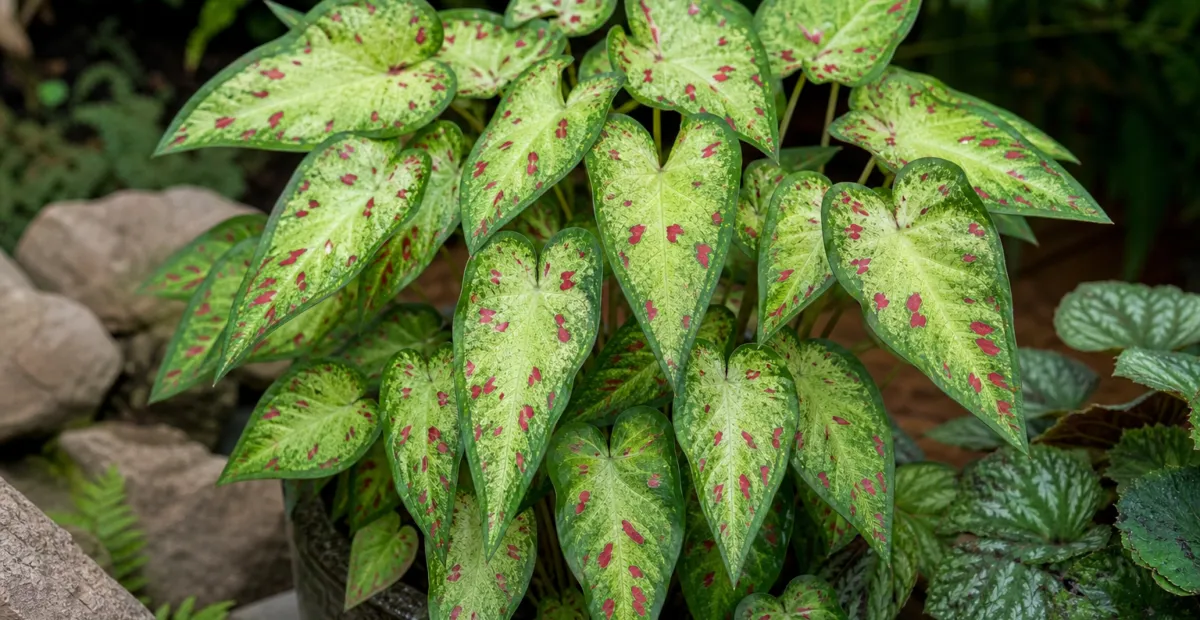
Caladium 'Miss Muffet' is a compact, frost-tender caladium prized for chartreuse, lance-shaped leaves marked with burgundy-red spots. This colorful foliage cultivar performs well in containers, hanging baskets, shaded borders, and selected sunny sites when moisture is consistent. Grow it in warm, well-drained soil, then lift and store the tubers before freezing weather in most of the United States.
Taxonomic classification
Caladium ‘Miss Muffet’ care guide
Light and placement
Provide bright filtered light or partial shade, with gentle morning sun acceptable after gradual acclimation. An east-facing exposure, dappled shade beneath open trees, or a bright indoor location works well. Too much intense afternoon sun can bleach or scorch the leaves; too little light produces weak, stretched growth and less vivid spotting. Keep plants protected from reflected heat and cold drafts.
Watering and humidity
Water thoroughly when the upper surface of the mix begins to dry, then let excess drain completely. Keep the root zone evenly moist during warm active growth, but never saturated. Increase attention during hot weather and container culture; reduce watering as leaves yellow and dormancy approaches. Resume gradual watering when new shoots emerge. Moderate to high humidity supports better foliage indoors, but air circulation remains important.
Soil and growing medium
Use a loose, fertile, well-drained mix that still holds moderate moisture. A quality potting mix amended with compost and coarse material works well in containers; in beds, improve compacted soil before planting. Slightly acidic to neutral conditions are suitable. Avoid waterlogged sites, which encourage tuber rot, and avoid very dry, sharply draining soil that causes leaf-edge scorch.
Feeding
Feed during active growth with a complete, balanced fertilizer at half strength every 3 to 4 weeks, or use a controlled-release product according to its label. Water before applying soluble fertilizer to reduce root stress. Stop feeding as growth slows and leaves begin to yellow for dormancy. Do not fertilize dry, dormant, or recently lifted tubers.
Growth and habit
This cultivar emerges from a tuber in warm conditions and forms a compact clump of upright leaves. Growth is fastest with warmth, steady moisture, and adequate nutrition. Foliage naturally declines as the plant enters dormancy; reducing irrigation at that stage helps the tuber mature and reduces rot risk.
Planting and repotting
Plant outdoors after soil has warmed and the danger of frost has passed. Set tubers with the eyes facing upward, roughly 1 to 2 inches deep, and space plants about 8 to 12 inches apart for a fuller display. Water after planting and keep the bed evenly moist while shoots establish. Harden greenhouse-grown plants gradually before exposing them to stronger sun.
Repot container-grown plants when roots fill the pot or fresh seasonal growth begins. Use a container with drainage holes and move the tuber into fresh, porous mix without burying it excessively. Handle the dormant tuber gently because damaged tissue can rot. Repot only after temperatures are reliably warm.
Propagation and pruning
Propagation
Propagate mainly by dividing tubers or separating offsets when dormant or before active growth begins. Each division should retain at least one healthy eye. Let freshly cut surfaces dry briefly before planting, and keep the medium only lightly moist until new growth appears. Seed propagation is possible for caladiums but will not reliably reproduce this named cultivar.
Pruning
Little pruning is required. Remove yellowing, damaged, or collapsed leaves at the base with clean shears. Do not strip healthy foliage during active growth because the leaves replenish the tuber. Cut back remaining foliage only after it has naturally declined before lifting or storing the plant.
Overwintering
In zones colder than 9, allow foliage to yellow naturally, reduce watering, then lift the tubers before frost. Dry them in a shaded, ventilated place for about a week and store at roughly 50–60°F in dry peat moss or vermiculite. Check periodically for rot. In warm zones, tubers may remain in the ground, but protection from cold, saturated winter soil improves reliability.
Uses
Use as a colorful foliage accent in shaded beds, mixed containers, hanging baskets, patio planters, and protected indoor displays. Its compact habit suits the front of borders and small containers. It is ornamental only and should not be eaten; keep it away from children and animals because the plant contains irritating calcium oxalate crystals.
Appearance
A compact clumping caladium with narrow, lance-shaped leaves rather than broad heart-shaped blades. The foliage has a bright chartreuse background, contrasting burgundy-red spots, and green edging. Its distinctive spotted pattern is the primary identification feature. Stems arise from an underground tuber, and the plant typically becomes dormant after the growing season.
Flowering
Small arum-type inflorescences may appear among the leaves, consisting of a spadix enclosed by a spathe. Flowering is secondary to the ornamental foliage and is not usually the main reason this cultivar is grown. Blooms are more likely on established, actively growing plants in warm conditions; cultivar-specific timing is not reliably documented.
Pollination and visitors
Reliable cultivar-specific records of animal pollinators or flower visitors were not found. Caladium inflorescences are structurally specialized arum-type flowers, but the small blooms are not generally documented as a significant pollinator resource in garden references.
Diseases and pests
Diseases
The main risk is tuber or root rot caused by excessive moisture, poor drainage, or cool wet storage. Plant in porous soil, avoid standing water, and allow foliage to mature before lifting tubers. Remove and discard soft, discolored, or foul-smelling tubers. Sanitize tools and avoid storing damaged material with healthy tubers.
Pests
Watch for slugs, snails, caterpillars, mites, mealybugs, and grasshoppers. Inspect new growth and leaf undersides regularly, remove larger pests by hand, and keep surrounding debris managed. Use the least-toxic control appropriate for the pest and follow the product label. Avoid chronic overwatering, which weakens plants and increases disease problems.
Related diseases and pests
Only Plant Doctor profiles whose host data indicate this plant may be affected are shown here.

Toxicity and pollen
Caladiums contain insoluble calcium oxalate crystals. Chewing or swallowing plant material can cause immediate mouth and throat irritation, pain, drooling, swelling, vomiting, and difficulty swallowing. Keep tubers and foliage away from children and pets, wear gloves when handling damaged tissue, and seek medical or veterinary advice after ingestion.
- Pollination / pollen
- Pollen produced inside small enclosed inflorescences
The plant produces pollen within its small enclosed arum-type inflorescences, but its large ornamental leaves do not release pollen. Cultivar-specific airborne pollen and allergy studies were not located, so a precise allergy rating cannot be established; avoid presenting it as completely allergy-free.
Native habitat
The cultivated caladium group derives from tropical and subtropical American plants adapted to warm, humid conditions and seasonal moisture. Garden plants prefer porous, fertile soils with reliable moisture and protection from cold. They do not tolerate freezing ground, and dormant tubers are vulnerable to prolonged cold and wet storage.
Interesting fact
‘Miss Muffet’ is a dwarf caladium with lance-shaped rather than broad fancy leaves. Its chartreuse background and burgundy spotting create strong contrast in shade. University horticultural trials list it among cultivars suitable for both shade and selected sunny landscape sites. Caladiums grow from tubers and enter dormancy as conditions cool or become dry.
Frequently asked questions (FAQ)
The most relevant questions about this plant, with short and direct answers.
🌱Quick care
What is Caladium 'Miss Muffet'?⌄
Caladium 'Miss Muffet' is a compact, dwarf caladium grown for its chartreuse to lime-green, heart-shaped leaves marked with pink, red, burgundy, or wine-colored spots. It typically reaches about 8–14 inches tall, although size varies with tuber size and growing conditions.
Is Caladium 'Miss Muffet' an indoor or outdoor plant?⌄
Caladium 'Miss Muffet' can grow indoors or outdoors during warm weather. It is frost-tender, so bring container plants inside or lift and store the tubers before freezing temperatures.
How much light does Caladium 'Miss Muffet' need?⌄
Give Caladium 'Miss Muffet' bright filtered light to partial shade. It may tolerate gentle morning sun or additional light after gradual acclimation, but harsh afternoon sun can scorch the leaves and fade their color.
How often should I water Caladium 'Miss Muffet'?⌄
Water Caladium 'Miss Muffet' whenever the surface of the potting mix begins to dry, keeping the mix evenly moist but never waterlogged. Plants in bright, warm conditions may need water more often than those in shade.
What soil is best for Caladium 'Miss Muffet'?⌄
Use fertile, porous, well-drained soil or potting mix that holds some moisture without staying soggy. A quality indoor potting mix amended with compost and a drainage component is suitable for containers.
🌤️Environment and placement
Can Caladium 'Miss Muffet' grow in full shade?⌄
Caladium 'Miss Muffet' can grow in full shade if the area still receives bright ambient light. Very deep shade may produce slower growth and less vivid leaf markings.
Can Caladium 'Miss Muffet' tolerate full sun?⌄
Caladium 'Miss Muffet' may tolerate some full sun in humid climates when gradually acclimated and kept well watered, but partial shade is the safer choice. Protect it from intense afternoon sun, especially in hot, dry areas.
What temperature is best for Caladium 'Miss Muffet'?⌄
Caladium 'Miss Muffet' grows best in warm conditions above about 60°F. Growth slows in cool weather, and frost or prolonged temperatures near freezing can damage or kill the foliage and tubers.
Can Caladium 'Miss Muffet' grow in a container?⌄
Yes, Caladium 'Miss Muffet' is well suited to containers because of its compact, dwarf habit. Choose a pot with drainage holes and use a moisture-retentive but porous mix.
Is Caladium 'Miss Muffet' suitable for USDA Zones 8 through 11?⌄
Caladium 'Miss Muffet' is generally grown outdoors year-round in USDA Zones 8 through 11 when protected from frost. In colder zones, grow it as a seasonal plant or lift the tubers for winter storage.
💧Care and problems
Why are the leaves of my Caladium 'Miss Muffet' turning green?⌄
Leaves may turn greener when Caladium 'Miss Muffet' receives too little light, although color also varies naturally with leaf age, heat, and growing conditions. Move it to brighter filtered light while avoiding sudden exposure to strong direct sun.
Why is my Caladium 'Miss Muffet' wilting?⌄
Wilting usually results from dry soil, excessive heat, root damage, or natural seasonal dormancy. Check the moisture level and drainage first, then keep the plant evenly moist without allowing the roots to sit in water.
Why does Caladium 'Miss Muffet' have brown leaf edges?⌄
Brown edges can result from dry soil, low humidity, hot direct sun, fertilizer buildup, or cold injury. Keep the soil consistently moist, protect the plant from harsh sun and cold drafts, and flush excess fertilizer from the potting mix.
Why are there brown spots on my Caladium 'Miss Muffet' leaves?⌄
Brown spots can be caused by sunscorch, cold damage, wet foliage, inconsistent watering, or fungal and bacterial problems. Remove badly damaged leaves, improve air circulation, and water the soil rather than repeatedly wetting the foliage.
How can I make Caladium 'Miss Muffet' grow fuller?⌄
For a fuller display, provide warm temperatures, bright filtered light, steady moisture, and fertile soil. Planting several tubers in one container can create a denser group, provided the pot is large enough and drains freely.
Should I fertilize Caladium 'Miss Muffet'?⌄
Yes, feed actively growing Caladium 'Miss Muffet' lightly with a balanced, diluted fertilizer according to the product label. Avoid heavy feeding, because excess salts can burn the roots and leaf margins.
Does Caladium 'Miss Muffet' go dormant?⌄
Yes, Caladium 'Miss Muffet' may naturally go dormant as temperatures cool or daylight decreases. Reduce watering when the foliage dies back, keep dormant tubers mostly dry, and resume warmth and moisture in spring.
How do I overwinter Caladium 'Miss Muffet' outdoors?⌄
In frost-prone areas, dig and store Caladium 'Miss Muffet' tubers before freezing weather or move container plants indoors. Keep the dormant tubers dry in a warm, well-ventilated place and replant them in spring.
What pests commonly affect Caladium 'Miss Muffet'?⌄
Aphids, thrips, spider mites, mealybugs, and whiteflies may attack Caladium 'Miss Muffet', especially indoors or in dry conditions. Inspect new growth and leaf undersides regularly, isolate affected plants, and use an appropriate labeled treatment if needed.
🪴Planting and repotting
When should I plant Caladium 'Miss Muffet' tubers?⌄
Plant Caladium 'Miss Muffet' tubers in spring after the danger of frost has passed and the soil has warmed. In colder regions, start them indoors several weeks earlier and move them outside only after warm conditions return.
How deep should I plant Caladium 'Miss Muffet' tubers?⌄
Plant Caladium 'Miss Muffet' tubers about 1½–2 inches deep, with the growing points facing upward when they are visible. Cover them gently and keep the soil evenly moist while shoots develop.
How far apart should I plant Caladium 'Miss Muffet'?⌄
Space Caladium 'Miss Muffet' tubers about 6 inches apart for a relatively full planting. Use closer spacing only in a container or display where crowded growth is intentional and drainage remains good.
How long does Caladium 'Miss Muffet' take to sprout?⌄
Caladium 'Miss Muffet' commonly sprouts within a few weeks when planted in warm, moist soil. Cool soil, excessive moisture, or dormant and undersized tubers can delay emergence.
When should I repot Caladium 'Miss Muffet'?⌄
Repot Caladium 'Miss Muffet' in spring when new growth begins or when roots fill the container. Move it into a pot only slightly larger than the current one and avoid burying the tuber deeper than it was previously planted.
✂️Propagation and pruning
How do you propagate Caladium 'Miss Muffet'?⌄
Propagate Caladium 'Miss Muffet' primarily by dividing its tubers during dormancy or before spring growth begins. Each division should contain a viable bud or growing point, and cut surfaces should be allowed to dry briefly before planting.
Can Caladium 'Miss Muffet' be propagated from leaf cuttings?⌄
No, ordinary leaf cuttings do not reliably produce new Caladium 'Miss Muffet' plants. Division of the underground tuber is the practical home-propagation method.
Should I cut off damaged leaves from Caladium 'Miss Muffet'?⌄
Yes, remove badly damaged, yellow, or diseased leaves with clean scissors. Pruning improves appearance and reduces the chance of problems spreading, but healthy leaves should remain until they naturally decline.
⚠️Toxicity and safety
Is Caladium 'Miss Muffet' toxic to cats and dogs?⌄
Yes, Caladium 'Miss Muffet' is toxic to cats and dogs because it contains insoluble calcium oxalates. Chewing can cause intense mouth irritation, drooling, vomiting, and difficulty swallowing, so keep it away from pets and seek veterinary advice after ingestion.
Is Caladium 'Miss Muffet' poisonous to people?⌄
Yes, Caladium 'Miss Muffet' can irritate the mouth, throat, skin, and digestive system if eaten or handled and then touched to the mouth. Keep it away from children, wear gloves when handling damaged plant material, and contact Poison Control or a medical professional after ingestion.
🌸Flowering and special interest
Does Caladium 'Miss Muffet' flower?⌄
Caladium 'Miss Muffet' can produce a small, hooded spathe and spadix, but it is grown primarily for its ornamental foliage. The flowers are usually less noticeable than the colorful leaves and may be removed without harming the plant.
Similar plants
 Sweetheart (Caladium florida ‘Sweetheart’)Caladium florida 'Sweetheart'
 Caladium ‘Moonlight’Caladium 'Moonlight'
 Caladium ‘Carolyn Whorton’Caladium 'Carolyn Whorton'
 Caladium ‘Summer Breeze’Caladium 'Summer Breeze'
 Caladium ‘Thai Beauty’Caladium 'Thai Beauty'
 Caladium ‘Postman Joyner’Caladium 'Postman Joyner'