 Source:
 Sweetheart (Caladium florida ‘Sweetheart’) short overview
Caladium florida 'Sweetheart' is a compact, frost-tender caladium cultivar grown primarily for its vivid foliage rather than its small, occasional flowers. Its wide lance-shaped leaves combine bright rose-pink centers and principal veins with green margins, creating strong color in shaded beds, porch containers, and indoor displays. Plant tubers only after warm weather arrives, keep the medium evenly moist but well drained, and lift them before frost in most U.S. gardens.
Taxonomic classification
Sweetheart (Caladium florida ‘Sweetheart’) care guide
Light and placement
Provide bright filtered light or partial shade, ideally with morning sun and protection from intense afternoon rays. In outdoor beds, light shade beneath open trees or on an east-facing side of a building usually preserves the pink coloration. Too much direct midday sun can bleach or scorch leaves; too little light can produce weaker, less colorful growth and elongated petioles.
Watering and humidity
Water thoroughly when the surface begins to dry, then allow excess water to drain completely. Keep the root zone evenly moist during active summer growth, but never leave the pot standing in water. Reduce watering as leaves yellow and dormancy begins; dormant tubers need only enough protection from shriveling, not wet soil. Moderate to high humidity helps indoors, especially away from heating and cooling vents.
Soil and growing medium
Use a loose, fertile, moisture-retentive but well-drained medium. A high-quality potting mix amended with compost and coarse material suits containers; outdoor beds should be improved if they are compacted or heavy clay. Slightly acidic to neutral conditions are appropriate. Avoid saturated soil, which can encourage tuber rot.
Feeding
Feed during active growth with a balanced, water-soluble fertilizer diluted to about half the label strength every 2–4 weeks, or use a controlled-release product according to its label. Apply to already moist soil and stop feeding as foliage declines toward dormancy. Avoid heavy nitrogen applications and fresh manure, which can produce soft growth and increase rot risk.
Growth and habit
Warmth triggers rapid emergence from the tuber, followed by a compact clump of colorful leaves. Growth slows in cool conditions and naturally declines into dormancy as temperatures and light fall. Avoid disturbing the plant while new shoots are unfolding, and remove yellowing leaves only after they have fully declined.
Planting and repotting
Plant outdoors in spring after frost danger has passed and soil temperatures are at least about 65°F. Set tubers with the buds upward and cover with roughly 1–2 inches of soil; avoid deep planting. Space about 8–12 inches apart for a fuller display, allowing extra room where airflow is poor. Water after planting and keep the bed consistently but not excessively moist while shoots establish.
Repot dormant or actively growing plants only when necessary, using a container with drainage holes and a fresh, airy mix. Set the tuber shallowly enough that the growing points are just below the surface, and avoid disturbing emerging roots. Container plants can remain in the same pot through dormancy if the medium is kept dry while resting.
Propagation and pruning
Propagation
Propagate vegetatively by dividing or chipping dormant tubers so each piece retains at least one viable bud or eye. Allow cut surfaces to dry briefly before planting into a clean, free-draining medium. Start tubers warm in late winter or spring; sexual seed propagation is not reliable for preserving this named cultivar's characteristics.
Pruning
Pruning is limited to removing yellow, damaged, or fully collapsed leaves at the base with clean shears. Do not cut healthy foliage during the growing season because the leaves replenish the tuber. At dormancy, remove dried stems and leaves before storing the tuber or moving the pot to a warm, dry resting location.
Overwintering
Dig tubers before frost or when foliage begins to decline in fall. Dry them in a warm, shaded, well-ventilated place for several days, remove loose soil and dead foliage, and store them in a dry medium such as peat, vermiculite, or shredded paper at about 60–70°F. Container plants may remain dormant in their pots if kept warm and mostly dry.
Uses
Use for shaded summer borders, mass plantings, porch pots, patio containers, hanging displays, and indoor seasonal color. Its foliage provides color where flowering annuals may perform poorly. It is an ornamental plant only; do not use it as food or for medicinal purposes because the plant contains insoluble calcium oxalates.
Appearance
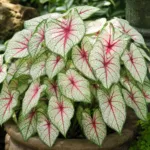
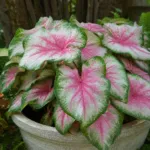
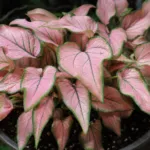
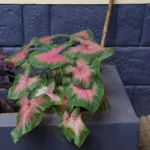
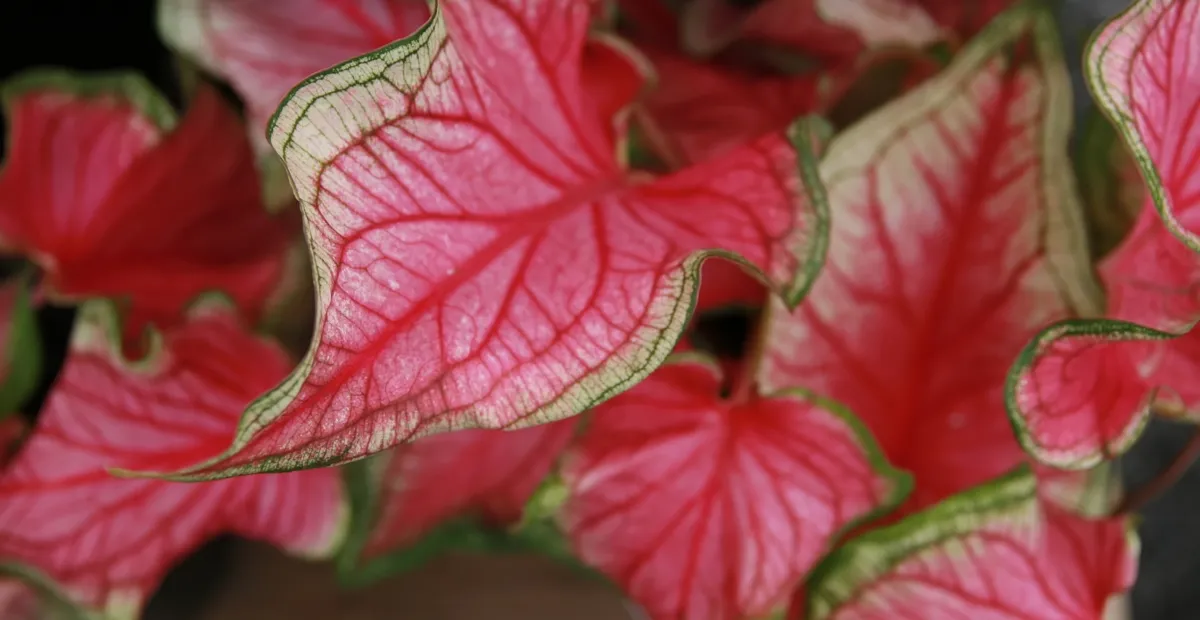
This lance-leaved caladium forms a compact clump of broad, pointed leaves carried on upright green petioles. The leaves are dominated by bright rose-pink coloration through the center and along the principal veins, with contrasting green margins. Compared with heart-leaved types, its blades are more elongated and pointed, making the cultivar easy to recognize in mixed caladium plantings.
Flowering
The cultivar may produce the small arum-type inflorescences typical of caladiums, consisting of a pale spathe surrounding a spadix. Flowering is secondary to the ornamental foliage and is often sparse or inconspicuous in cultivation. Remove inflorescences if desired to keep attention on the leaves, but flowering is not normally the reason this cultivar is grown.
Pollination and visitors
No dependable pollinator attraction is documented for this named ornamental cultivar. Caladium inflorescences are small and inconspicuous, and the plant is grown primarily for foliage rather than nectar or pollen display.
Caladium florida 'Sweetheart' photos
Click any photo for a larger view. Source, author and license are shown separately.
Diseases and pests
Diseases
The main risks are tuber and crown rots, especially in cold, wet media, along with leaf-spot problems under prolonged wet foliage. Start with firm, healthy tubers; use sterile, well-drained media; water at the soil line; and provide air movement. Remove badly affected leaves and discard rotted tubers rather than replanting them.
Pests
Watch for aphids, thrips, spider mites, mealybugs, and caterpillars, especially on stressed container plants. Inspect leaf undersides and new growth regularly. Improve watering and airflow first; remove small infestations by hand or with a water spray, and use a labeled insecticidal soap or horticultural oil according to its instructions when needed.
Related diseases and pests
Only Plant Doctor profiles whose host data indicate this plant may be affected are shown here.
 Environmental stressLeaf sunburn
 PestMealy Plum AphidHyalopterus pruni (Geoffroy, 1762)
 Environmental stressUnderwatering
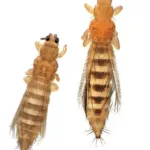 PestOnion thripsThrips tabaci Lindeman
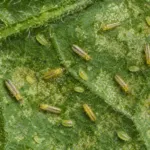 PestMelon thripsThrips palmi Karny
 PestChilli thripsScirtothrips dorsalis Hood
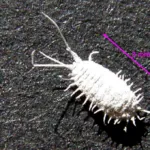 PestObscure mealybugPseudococcus viburni
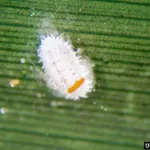 PestCitrus mealybugPlanococcus citri
Toxicity and pollen
Caladiums contain insoluble calcium oxalates. Chewing or swallowing plant material can cause immediate irritation and swelling of the mouth, lips, tongue, and throat, with drooling, vomiting, or difficulty swallowing. Keep tubers, leaves, and sap away from children and pets; wear gloves if handling causes skin irritation and seek professional advice after ingestion.
- Pollination / pollen
- Limited pollen release from occasional inflorescences
Caladium pollen is not generally treated as a major airborne seasonal allergen in household or garden guidance. The plant's inflorescences are small and usually sparse, so airborne exposure is expected to be low. This does not remove the need for normal caution around plant sap and tissue, which relates to toxicity rather than pollen.
Native habitat
The cultivar is a cultivated hybrid rather than a wild habitat plant. Its Caladium ancestry comes from warm, humid New World tropical environments where tuberous plants grow in organically enriched, seasonally moist soils with filtered or partial light. Garden performance is best when those warm, humid, well-drained conditions are approximated.
Interesting fact
‘Florida Sweetheart’ was introduced through the University of Florida caladium breeding program in 1991. It was developed from a cross involving ‘Candidum Jr.’ and ‘Red Frill’. Unlike many lance-leaved caladiums, it is noted for producing relatively large tubers. Its wide, rose-colored lance leaves helped make it one of the most widely accepted lance-leaved cultivars.
Frequently asked questions (FAQ)
The most relevant questions about this plant, with short and direct answers.
🌱Quick care
How do you care for Caladium florida 'Sweetheart'?⌄
Give Caladium florida 'Sweetheart' bright filtered light or partial shade, evenly moist well-drained soil, warmth, and moderate humidity. Protect it from frost and cold temperatures below about 55°F.
Is Caladium florida 'Sweetheart' an indoor or outdoor plant?⌄
Caladium florida 'Sweetheart' can grow indoors or outdoors during warm weather. Outdoors, use it in shaded or partially shaded beds, containers, or hanging baskets; indoors, place it near bright filtered light.
How big does Caladium florida 'Sweetheart' get?⌄
Caladium florida 'Sweetheart' is a compact lance-leaved caladium that commonly reaches about 6 to 12 inches tall, with a similar or slightly wider spread. Its cascading habit also suits hanging baskets.
🌤️Environment and placement
How much light does Caladium florida 'Sweetheart' need?⌄
Provide bright filtered light to partial shade, preferably with gentle morning sun or dappled light. It can tolerate more sun than many caladiums when adequately watered, but intense afternoon sun may scorch or fade the leaves.
Can Caladium florida 'Sweetheart' grow in full sun?⌄
Caladium florida 'Sweetheart' can tolerate some full sun in suitable climates, especially with consistent irrigation, but partial shade usually produces safer, fuller foliage. Increase sun exposure gradually to reduce leaf scorch.
What temperature is too cold for Caladium florida 'Sweetheart'?⌄
Protect Caladium florida 'Sweetheart' when temperatures approach 55°F, because it is frost tender and tropical. Bring container plants indoors before cold nights and never expose the plant to freezing temperatures.
Is Caladium florida 'Sweetheart' suitable for a bathroom?⌄
A bright bathroom can suit Caladium florida 'Sweetheart' if it receives enough filtered light and has good airflow. Humidity helps, but consistently wet soil and poor ventilation can encourage tuber or root problems.
💧Care and problems
How often should you water Caladium florida 'Sweetheart'?⌄
Water when the surface of the potting mix begins to dry, keeping the soil evenly moist during active growth. Adjust the interval for light, temperature, and pot size, and never leave the plant standing in water.
Why are the leaves of my Caladium florida 'Sweetheart' drooping?⌄
Drooping leaves usually indicate dry soil, cold stress, excessive heat, or the beginning of seasonal dormancy. Check soil moisture and temperature first, then reduce watering if the plant is naturally dying back for winter.
Why are Caladium florida 'Sweetheart' leaves turning brown?⌄
Brown edges or patches commonly result from dry soil, low humidity, fertilizer buildup, cold drafts, or excessive direct sun. Keep the mix evenly moist, flush accumulated salts, and move the plant away from harsh sunlight or cold air.
Why is my Caladium florida 'Sweetheart' losing leaves?⌄
Leaf loss is normal when Caladium florida 'Sweetheart' enters dormancy, especially as temperatures and light decrease in fall. Sudden loss during active growth can instead indicate cold exposure, overwatering, underwatering, or tuber damage.
What soil is best for Caladium florida 'Sweetheart'?⌄
Use a fertile, loose, well-drained potting mix that retains some moisture without becoming saturated. A quality indoor potting mix amended with compost and a drainage material such as perlite is suitable for containers.
Does Caladium florida 'Sweetheart' need fertilizer?⌄
Feed Caladium florida 'Sweetheart' lightly during active growth with a balanced fertilizer diluted according to the product label. Stop feeding as growth slows or the plant enters dormancy, and avoid heavy applications that can damage roots.
How do you overwinter Caladium florida 'Sweetheart'?⌄
In regions with cold winters, stop fertilizing as foliage declines, allow the plant to enter dormancy, and protect the tuber from freezing. Store dormant tubers in a dry, frost-free place, or keep a container indoors with minimal watering until spring.
🪴Planting and repotting
When should you plant Caladium florida 'Sweetheart' tubers?⌄
Plant Caladium florida 'Sweetheart' tubers outdoors after the soil has warmed and frost has passed. In much of the United States, late spring is safest; colder regions should wait until nighttime temperatures remain reliably warm.
How deep should Caladium florida 'Sweetheart' tubers be planted?⌄
Plant the tubers about 1 to 2 inches deep with the growing points facing upward, then water thoroughly. Avoid planting into cold, waterlogged soil, which can delay sprouting or promote rot.
Can Caladium florida 'Sweetheart' grow in a container?⌄
Yes, Caladium florida 'Sweetheart' performs well in containers, including hanging baskets, because of its compact and cascading growth. Choose a pot with drainage holes and avoid using a container much larger than the root system.
How long does Caladium florida 'Sweetheart' take to sprout?⌄
Caladium florida 'Sweetheart' sprouts after the tuber receives steady warmth and moisture, often within several weeks. Cold soil, excessive watering, or a dormant or damaged tuber can significantly delay emergence.
✂️Propagation and pruning
How do you propagate Caladium florida 'Sweetheart'?⌄
Propagate Caladium florida 'Sweetheart' by dividing healthy tubers so each section has at least one viable growing point. Let cut surfaces dry briefly before planting the divisions in warm, lightly moist, well-drained mix.
Should you remove flowers from Caladium florida 'Sweetheart'?⌄
Remove any small caladium flowers if they appear, because they are not ornamental and may divert some energy from foliage production. The plant is grown primarily for its colorful leaves rather than for flowers.
Should you prune Caladium florida 'Sweetheart' leaves?⌄
Prune only yellow, brown, damaged, or fully spent leaves using clean scissors. Do not remove healthy leaves unnecessarily, because they provide energy for the tuber during active growth.
⚠️Toxicity and safety
Is Caladium florida 'Sweetheart' toxic to pets?⌄
Yes, Caladium florida 'Sweetheart' is toxic if ingested and can cause irritation, pain, and swelling of the mouth and digestive tract. Keep it away from dogs, cats, and other animals that may chew plant material.
Is Caladium florida 'Sweetheart' poisonous to people?⌄
Yes, all parts of Caladium florida 'Sweetheart' should be treated as toxic if eaten. Keep it away from children, avoid contact between sap and eyes or mouth, and seek medical advice or poison-control guidance after ingestion.
🌸Flowering and special interest
Does Caladium florida 'Sweetheart' produce flowers?⌄
Caladium florida 'Sweetheart' may produce small, inconspicuous aroid flowers, but it is grown for its pink foliage rather than blooms. Flowering is uncommon indoors and is not usually considered a desirable ornamental feature.