 Source:
 Caladium ‘Thai Beauty’ short overview
Caladium ‘Thai Beauty’ is a tender, tuberous foliage plant grown for its delicate, translucent pink leaves marked by green veins and margins. This Thai-origin cultivar performs best in warm conditions, bright filtered light or partial shade, and consistently moist but well-drained soil. In most of the United States, grow it as a seasonal bedding or container plant, or lift and store the tubers indoors before cold weather.
Taxonomic classification
Caladium ‘Thai Beauty’ care guide
Light and placement
Give bright filtered light, dappled shade, or gentle morning sun. A north- or east-facing window is suitable indoors; outdoors, place the plant beneath open tree canopy or on a shaded porch. Too much direct midday sun can bleach or scorch the thin leaves, while deep darkness causes weak petioles, slower growth, and less vivid coloration.
Watering and humidity
Keep the mix consistently moist during active growth, watering thoroughly when the surface just begins to dry and allowing excess water to drain. Increase attention during hot weather and reduce watering gradually as leaves yellow in fall. Never leave the tuber in standing water, and avoid cold, saturated soil because it can trigger rot.
Soil and growing medium
Use a loose, organic-rich mix that holds moisture without becoming saturated. A peat-free houseplant mix amended with fine bark and perlite works well in containers. Caladiums generally prefer acidic to slightly acidic conditions, good drainage, and steady moisture; compacted or waterlogged soil encourages tuber rot.
Feeding
Feed during active growth with a balanced liquid fertilizer diluted to half strength every 3–4 weeks, or use a controlled-release product according to its label. Water the soil first if it is dry. Stop feeding as growth slows and leaves begin to yellow for dormancy; do not fertilize dormant, leafless tubers.
Growth and habit
Growth is rapid once tubers receive warmth, moisture, and adequate light. Plants form a low clump of upright petioles emerging from one or more tubers and typically complete their seasonal display in one growing cycle. Keep mulch away from the tuber crown, rotate containers for even growth, and remove yellowing leaves as dormancy begins.
Planting and repotting
Plant outdoors only after frost has passed and soil temperatures remain at least 60–70°F. Set dormant tubers about 2 inches deep with the growing eyes upward; potted plants should be planted at their existing soil level. Space plants 8–12 inches apart for a fuller display, while allowing extra room for air circulation in humid sites.
Repot in spring when growth begins, using a container only modestly larger than the tuber or root mass. Handle the tuber carefully and replant with the puckered, budded side facing upward. Avoid repotting into cold, wet mix.
Propagation and pruning
Propagation
Propagate mainly by dividing dormant tubers in spring, ensuring each section retains at least one healthy bud or eye. Allow cut surfaces to dry briefly before planting into warm, lightly moist medium. Seed propagation is possible for breeding but does not preserve the cultivar reliably; ordinary stem or leaf cuttings should not be treated as the standard method.
Pruning
Pruning is minimal. Remove yellow, damaged, or collapsed leaves at the base with clean shears. Do not cut healthy foliage merely to shape the plant, since leaves are needed to replenish the tuber. At dormancy, allow foliage to decline naturally before removing it.
Overwintering
In zones colder than the warmest caladium climates, reduce watering as foliage yellows, lift the tubers after dieback, and dry them in a shaded, ventilated place for about 7–10 days. Store them in dry peat, vermiculite, or similar material at roughly 60–70°F, protected from freezing and excessive dampness. Resume growth in warm spring conditions.
Uses
Valued as an ornamental foliage plant for shaded borders, mass plantings, patio containers, porch displays, and bright indoor spaces. Its colorful leaves provide seasonal contrast where flowering plants perform poorly. It is not an edible caladium; keep all parts away from children and animals because of calcium oxalates.
Appearance
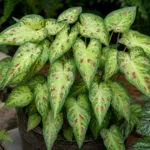
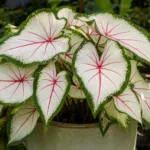
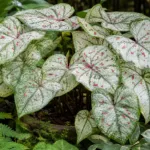
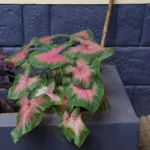
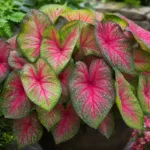
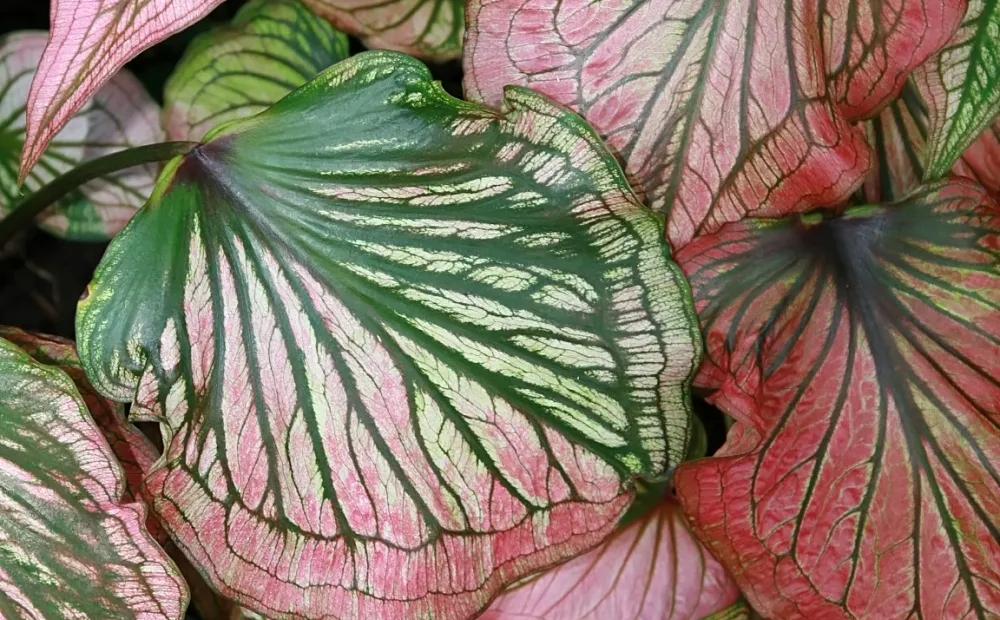
This cultivar is recognized by narrow, lance-shaped leaves with a translucent pink blade, contrasting green veins, and green margins. Long petioles rise from a tuberous crown, producing a light, airy clump rather than a woody stem. New leaves may emerge greener and develop stronger pink coloration as they expand.
Flowering
This cultivar is grown primarily for foliage and may flower sporadically. Like other caladiums, it can produce a small arum-type inflorescence consisting of a spathe surrounding a short spadix. Flowering is usually inconspicuous and may be reduced when plants are maintained as compact container specimens.
Pollination and visitors
No dependable source located documenting a specific animal pollinator or visitor for this exact cultivar. Caladium inflorescences are small and inconspicuous, so pollinator value should not be assumed from the plant’s foliage or occasional flowering.
Caladium 'Thai Beauty' photos
Click any photo for a larger view. Source, author and license are shown separately.
Diseases and pests
Diseases
The main risk is tuber rot caused by cold, saturated soil or damaged planting material. Plant only into warm, well-drained media, avoid standing water, and remove soft or diseased tubers. Good air circulation helps limit foliar fungal problems; discard badly affected tissue rather than repeatedly wetting the leaves.
Pests
Watch for aphids, mealybugs, mites, thrips, caterpillars, slugs, and snails. Inspect new growth and leaf undersides, rinse light infestations, and improve airflow. Use targeted controls only when necessary and follow the product label; avoid routinely wetting foliage late in the day.
Related diseases and pests
Only Plant Doctor profiles whose host data indicate this plant may be affected are shown here.
 Environmental stressLeaf sunburn
 DiseaseRhizopus soft rotRhizopus stolonifer
 DiseaseBacterial soft rotPectobacterium carotovorum
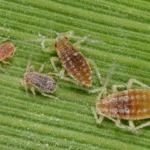 PestMealy Plum AphidHyalopterus pruni (Geoffroy, 1762)
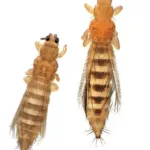 PestOnion thripsThrips tabaci Lindeman
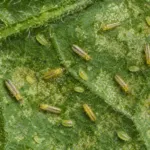 PestMelon thripsThrips palmi Karny
 PestChilli thripsScirtothrips dorsalis Hood
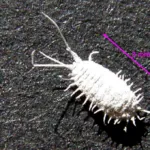 PestObscure mealybugPseudococcus viburni
Toxicity and pollen
Caladiums contain insoluble calcium oxalate crystals. Chewing or ingesting any part can cause immediate oral irritation, burning, swelling, drooling, vomiting, and difficulty swallowing; sap may irritate skin. Keep tubers and foliage away from children and pets, and wear gloves when handling damaged tissue.
- Pollination / pollen
- Limited airborne dispersal expected from enclosed arum-type inflorescences
Caladium pollen and allergy behavior are not well characterized for ‘Thai Beauty’. Its small arum-type inflorescence encloses the reproductive structures within a spathe, so it is not generally treated as a major airborne-pollen garden allergen; this is a cautious genus-level assessment rather than cultivar-specific testing.
Native habitat
The cultivated caladium complex derives from tropical and subtropical American aroid lineages, while ‘Thai Beauty’ is associated with Thai horticultural selection or breeding. It is adapted to warm, humid conditions, filtered light, organic soils, and a pronounced seasonal dormancy triggered by cool temperatures or reduced moisture.
Interesting fact
The plant grows from a tuber rather than a true bulb. Leaves can intensify in color as they expand and mature. Caladium tubers contain several buds, and removing the dominant central bud can encourage a fuller display of smaller leaves. The cultivar is associated with Thai horticultural material, although its formal breeding history is not well documented.
Frequently asked questions (FAQ)
The most relevant questions about this plant, with short and direct answers.
🌱Quick care
How do you care for Caladium 'Thai Beauty' indoors?⌄
Give Caladium 'Thai Beauty' bright filtered light, evenly moist soil, warmth, and good drainage. Protect it from harsh midday sun, cold drafts, and waterlogged conditions.
Is Caladium 'Thai Beauty' easy to grow?⌄
Caladium 'Thai Beauty' is moderately easy to grow when kept warm and evenly moist during active growth. Its main challenges are preventing cold damage, overwatering, and seasonal dormancy.
How often should you water Caladium 'Thai Beauty'?⌄
Water when the soil surface begins to dry, keeping the mix consistently moist but never saturated. Watering frequency varies with pot size, light, temperature, and indoor humidity.
What kind of soil does Caladium 'Thai Beauty' need?⌄
Use a rich, loose, slightly acidic potting mix that holds moisture while draining freely. A quality houseplant mix amended with perlite or fine bark can help prevent soggy roots.
🌤️Environment and placement
How much light does Caladium 'Thai Beauty' need?⌄
Provide bright filtered light to partial shade for strong growth and attractive coloring. Gentle morning sun may be tolerated, but intense direct afternoon sunlight can scorch its thin leaves.
Can Caladium 'Thai Beauty' grow in low light?⌄
It can survive in lower light, but growth may become sparse and leaf colors less vivid. Move it closer to a bright east- or north-facing window, or diffuse stronger exposure with a sheer curtain.
Can Caladium 'Thai Beauty' grow outdoors in the United States?⌄
Yes, it can grow outdoors during warm weather in a sheltered, bright-shade location. In areas that experience freezing temperatures, bring it indoors or lift and store the tuber before frost.
What temperature is best for Caladium 'Thai Beauty'?⌄
Keep Caladium 'Thai Beauty' warm, ideally above 65°F during active growth. Cold soil and temperatures near freezing can damage the foliage and tuber.
Does Caladium 'Thai Beauty' need high humidity?⌄
Moderate to high humidity can support fuller foliage, especially indoors, but consistently moist soil and warm temperatures are more important. Improve very dry conditions with a humidifier rather than leaving the pot in standing water.
💧Care and problems
Why are Caladium 'Thai Beauty' leaves turning brown?⌄
Brown edges or patches usually result from intense direct sun, dry soil, low humidity, cold exposure, or inconsistent watering. Check the roots and growing conditions before assuming the plant has a disease.
Why is my Caladium 'Thai Beauty' losing leaves?⌄
Leaf loss can follow transplant shock, cold exposure, drought, overwatering, or normal seasonal dormancy. If the tuber is firm and healthy, resume warm, lightly moist conditions in spring and wait for new growth.
Why is Caladium 'Thai Beauty' turning yellow?⌄
Yellow leaves may indicate overwatering, poor drainage, nutrient stress, cold conditions, or the beginning of dormancy. Inspect the soil and roots, and reduce watering if the plant is naturally entering its resting period.
Why is my Caladium 'Thai Beauty' not pink or white?⌄
Leaf color varies with genetics, maturity, light, and growing conditions, so not every leaf will show the same pattern. Brighter filtered light may improve coloration, but excessive sun can bleach or scorch the leaves.
Why are the new leaves on Caladium 'Thai Beauty' mostly green?⌄
New leaves may emerge greener and develop more color as they mature. Insufficient light, stress, or natural variation can also reduce pink and white patterning, so increase light gradually rather than exposing the plant suddenly to harsh sun.
How do you fertilize Caladium 'Thai Beauty'?⌄
Feed during active growth with a balanced, diluted houseplant fertilizer according to the product label. Apply fertilizer only to moist soil and stop or reduce feeding when the plant enters dormancy.
How do you prevent root rot in Caladium 'Thai Beauty'?⌄
Prevent root rot by using a drainage hole, a loose potting mix, and watering only when the surface begins to dry. Never allow the container to stand in runoff or remain continuously saturated.
Should you mist Caladium 'Thai Beauty' leaves?⌄
Misting is not necessary and does little to raise humidity for long. If the air is very dry, use a room humidifier while keeping leaves and soil from remaining constantly wet.
Does Caladium 'Thai Beauty' go dormant in winter?⌄
Yes, it may naturally become dormant as temperatures and light decline, especially when grown outdoors or in a seasonal indoor environment. Yellowing and collapsing leaves can be normal if the tuber remains firm and disease-free.
How do you overwinter Caladium 'Thai Beauty' in the United States?⌄
Before freezing weather, stop watering as the foliage declines, then store the dry tuber in a breathable paper bag or box with dry packing material at about 60–70°F. Replant in spring when warmth and light return.
Should you cut back Caladium 'Thai Beauty' when it goes dormant?⌄
Allow the leaves to yellow and die back naturally, then remove the spent foliage with clean scissors. Do not keep watering heavily after dormancy begins, because wet dormant tubers are prone to rot.
🪴Planting and repotting
How do you plant a Caladium 'Thai Beauty' tuber?⌄
Plant the tuber with the knobby side or visible eyes facing upward and cover it with only a shallow layer of mix. Keep it warm, provide bright light, and maintain light moisture until shoots emerge.
When should you plant Caladium 'Thai Beauty' outdoors?⌄
Plant it outdoors after the danger of frost has passed and the soil is consistently warm. In much of the United States, this means waiting until late spring, with timing adjusted for local climate.
When should you repot Caladium 'Thai Beauty'?⌄
Repot in spring or during active growth when the plant is root-bound, the mix has broken down, or the tuber needs fresh medium. Choose a container only slightly larger than the current one and ensure it drains freely.
Can Caladium 'Thai Beauty' be grown in a container?⌄
Yes, Caladium 'Thai Beauty' grows well in containers with drainage holes. Containers also make it easier to move the plant indoors before cold weather and to manage seasonal dormancy.
✂️Propagation and pruning
How do you propagate Caladium 'Thai Beauty'?⌄
The practical propagation method is dividing mature tubers so each section retains at least one healthy growth eye. Propagation is best done in spring, using clean tools and warm, lightly moist potting mix.
Can you propagate Caladium 'Thai Beauty' from a leaf cutting?⌄
A leaf by itself will not reliably produce a new Caladium 'Thai Beauty' because new growth develops from the tuber or a section containing a growth eye. Division is more dependable for home propagation.
Can Caladium 'Thai Beauty' be propagated from seeds?⌄
It can produce seed, but seed-grown plants may not reproduce the exact ornamental pattern of the parent cultivar. Tuber division is preferred when you want plants that remain true to Caladium 'Thai Beauty'.
How do you divide a Caladium 'Thai Beauty' tuber?⌄
Use a sterile sharp knife to separate firm tuber sections, making sure each division includes a visible bud or eye. Allow cut surfaces to dry briefly, then plant the sections in warm, well-drained mix.
⚠️Toxicity and safety
Is Caladium 'Thai Beauty' toxic to cats and dogs?⌄
Yes, Caladium 'Thai Beauty' is toxic if ingested by cats, dogs, or people. Keep it out of reach and contact a veterinarian or Poison Control if an animal or person chews or swallows any part.
Is Caladium 'Thai Beauty' poisonous to children?⌄
Yes, ingestion can cause painful irritation of the mouth and digestive tract. Keep the plant, fallen leaves, and tubers away from children, and seek medical advice after suspected ingestion.
Can handling Caladium 'Thai Beauty' irritate skin?⌄
The sap may irritate sensitive skin, although the main hazard is ingestion. Wear gloves when cutting or dividing the tuber, and wash your hands after handling the plant.
🌸Flowering and special interest
Does Caladium 'Thai Beauty' produce flowers?⌄
It can produce the small, hooded flowers typical of caladiums, but it is grown primarily for its colorful foliage. Flowers are usually less showy than the leaves and may be removed if you want to direct energy toward foliage.