
 Source:
 Caladium ‘Postman Joyner’ short overview
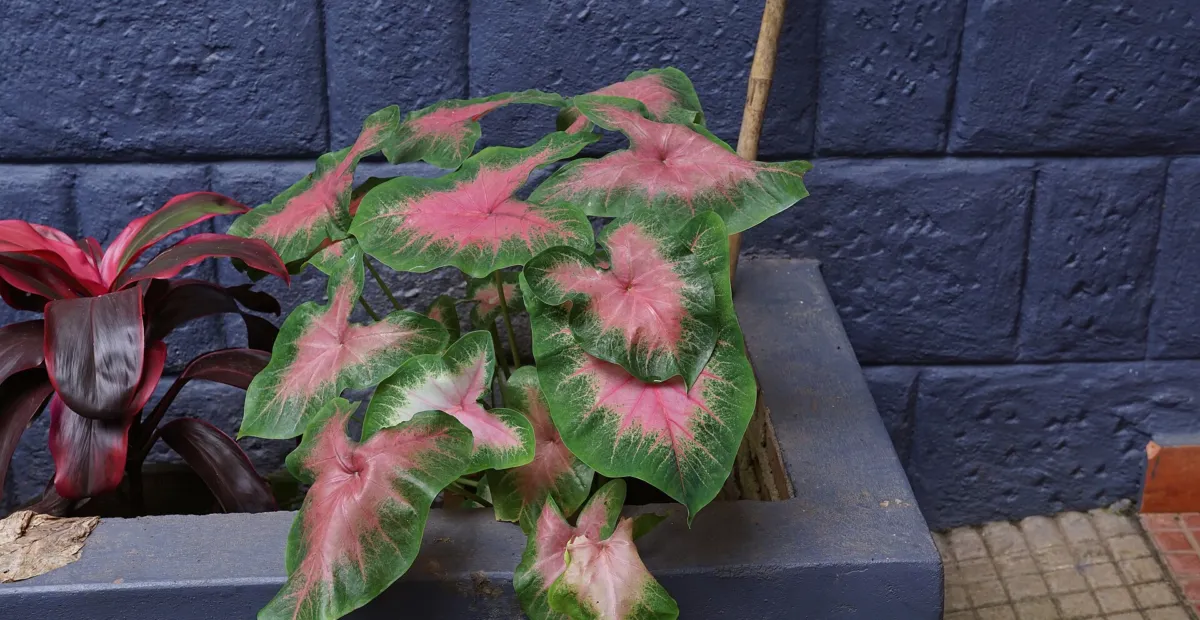
Caladium 'Postman Joyner' is a striking strap-leaved selection with vivid red foliage framed by broad, medium-green margins. It performs best in warm, humid conditions, bright filtered light or partial shade, and consistently moist but well-drained, organic soil. Use it for shaded beds, tropical-style containers, patios, or indoor displays. As a tender tuberous perennial, it must be protected from frost and overwintered indoors in colder parts of the United States. All parts are toxic if chewed.
Taxonomic classification
Caladium ‘Postman Joyner’ care guide
Light and placement
Give bright filtered light, dappled shade, or partial shade. A site with morning sun and afternoon protection is usually safer than hot western exposure, although this cultivar has good sun tolerance when moisture is ample. Bleached patches, crispy margins, or curling leaves indicate excessive sun or drought; weak, elongated growth and dull coloration suggest insufficient light.
Watering and humidity
Keep the root zone evenly moist during active growth, watering thoroughly when the surface begins to dry rather than giving frequent sips. Increase monitoring during hot weather and reduce watering as foliage naturally declines in fall. Never leave containers standing in water, and keep stored dormant tubers dry enough to prevent rot.
Soil and growing medium
Use a loose, fertile, organic-rich mix that drains freely while holding steady moisture. A peat-free potting mix amended with compost and coarse material works well in containers. Slightly acidic soil is suitable; avoid compacted or chronically waterlogged media, which can cause tuber rot.
Feeding
Feed during active growth with a balanced, water-soluble fertilizer at half strength every 3 to 4 weeks, or use a modest slow-release formulation according to its label. Water before feeding. Stop fertilizing as foliage declines and the plant enters dormancy; excess fertilizer can damage roots and encourage weak growth.
Growth and habit
This cultivar forms a clump from underground tubers, producing upright, elongated petioles and successive leaves during warm active growth. Growth slows or stops in cool conditions, and the foliage commonly declines into dormancy when temperatures fall or watering is reduced. Wind can tear the leaves.
Planting and repotting
Plant outdoors only after soil has warmed and frost danger has passed. Set the tuber with its eyes upward, approximately 1 to 2 inches deep, then water lightly until shoots emerge. Allow enough room for the clump to develop without crowding neighboring plants.
Repot or divide container-grown plants when growth resumes in spring and roots or tubers fill the container. Handle the tubers gently and use a clean, free-draining mix. Choose a pot with drainage holes and avoid burying the tuber excessively.
Propagation and pruning
Propagation
Propagate commercially and practically by dividing healthy tubers in spring. Each division should retain at least one viable bud or eye and a sound piece of tuber. Allow cut surfaces to dry briefly before planting; seed is not a reliable way to reproduce a named cultivar.
Pruning
Remove yellowing, torn, or diseased leaves at the base with clean scissors. Do not routinely shear healthy foliage; allow leaves to photosynthesize while the plant is actively growing. Cut back remaining stems when preparing dormant tubers for storage.
Overwintering
Before frost, allow foliage to decline, lift the tubers carefully, and cure them for about 1 to 3 days in a shaded, ventilated place. Store dry tubers in a warm, frost-free location, commonly around 60 to 70°F, in a breathable medium. In mild climates they may remain in the ground only where winters are reliably warm and frost-free.
Uses
Valued as an ornamental foliage plant for shaded borders, mass plantings, tropical-style beds, containers, patios, and indoor displays. It is not an edible plant, and no medicinal use should be assumed. Keep it out of reach of children and pets because of calcium oxalate crystals.
Appearance
The plant is acaulescent, with leaves emerging on long, upright petioles from an underground tuber. 'Postman Joyner' is identified by strap-shaped, medium-to-large leaves with vivid red blades and broad medium-green margins. The flexible foliage is easily marked by hail, wind, rough handling, drought, or intense direct sun.
Flowering
The foliage is the main ornamental feature. Mature plants may occasionally produce a small arum-type inflorescence consisting of a spathe surrounding a short spadix. Flowering is sparse and inconspicuous compared with the leaves, and the exact behavior of this cultivar is not well documented.
Pollination and visitors
No reliable cultivar-specific documentation was found identifying characteristic animal visitors or pollinators. The small, infrequent inflorescences are not considered a major pollinator resource.
Diseases and pests
Diseases
Prevent tuber and root rot with porous soil, drainage holes, careful watering, and clean storage conditions. Remove damaged tissue and isolate rotting material. Leaf spots can worsen in crowded, wet conditions; improve air movement and avoid wetting foliage late in the day.
Pests
Slugs and snails may chew the tender leaves, especially in damp beds. Spider mites and aphids can appear in hot, dry indoor conditions. Inspect new growth, remove pests by hand or with a water spray, and use proportionate controls only when necessary.
Related diseases and pests
Only Plant Doctor profiles whose host data indicate this plant may be affected are shown here.

Toxicity and pollen
Caladium tissue contains insoluble calcium oxalates. Chewing or ingesting leaves, petioles, tubers, flowers, or sap can cause immediate mouth irritation, burning, swelling, drooling, vomiting, or difficulty swallowing. Sap may irritate skin. Keep plant material away from children and animals and wear gloves when handling damaged tissue.
- Pollination / pollen
- Limited pollen exposure from occasional inflorescences
Caladiums are not generally grown for abundant airborne pollen. Their occasional arum-type inflorescences are small and inconspicuous, but cultivar-specific allergy data are unavailable; sensitive people should still avoid contact with sap and plant debris.
Native habitat
Caladiums are associated with warm, humid tropical and subtropical environments and organic, moisture-retentive but draining soils. Named garden cultivars are horticultural selections rather than wild populations and are cultivated widely outside their native range.
Interesting fact
The cultivar is classified as a strap-leaved caladium with red leaves and broad green margins.
Frequently asked questions (FAQ)
The most relevant questions about this plant, with short and direct answers.
🌱Quick care
What is Caladium 'Postman Joyner'?⌄
Caladium 'Postman Joyner' is a red-and-green caladium cultivar in the Araceae family, grown mainly for its colorful foliage. It is typically treated as a warm-season bedding or container plant in the United States.
How much light does Caladium 'Postman Joyner' need?⌄
Give Caladium 'Postman Joyner' bright filtered light to partial shade. Although this cultivar is reported to tolerate some sun, strong midday or afternoon sun can scorch its leaves.
How often should I water Caladium 'Postman Joyner'?⌄
Water Caladium 'Postman Joyner' whenever the soil surface begins to dry, keeping the mix evenly moist. Avoid constantly saturated soil because wet, cool conditions can cause tuber or root rot.
Is Caladium 'Postman Joyner' an indoor or outdoor plant?⌄
Caladium 'Postman Joyner' can grow indoors or outdoors during warm weather. Indoors, place it near bright indirect light; outdoors, protect it from harsh afternoon sun, wind, and cold.
🌤️Environment and placement
Where should I place Caladium 'Postman Joyner' outdoors?⌄
Place it in a sheltered bed, patio container, or shaded border receiving filtered light or partial shade. Morning sun with afternoon shade is generally safer than exposed full-day sun.
Can Caladium 'Postman Joyner' grow in full sun?⌄
Caladium 'Postman Joyner' may tolerate more sun than some caladiums, but full sun is not automatically ideal. Introduce it gradually and provide afternoon protection if the leaves develop scorch, fading, or curling.
What temperature is best for Caladium 'Postman Joyner'?⌄
Caladium 'Postman Joyner' grows best in warm conditions, with soil temperatures around 68°F or higher for active establishment. Growth slows in cool soil, and cold exposure can damage or kill the tubers.
Can Caladium 'Postman Joyner' survive winter outdoors?⌄
Caladium 'Postman Joyner' is frost-tender and usually cannot survive freezing weather outdoors. In USDA Zones 8 and colder, lift the tubers before frost or grow the plant in a container that can be protected.
What USDA hardiness zone is suitable for Caladium 'Postman Joyner'?⌄
Caladium 'Postman Joyner' is best suited to warm USDA climates, generally Zones 9–10 for outdoor overwintering. In colder zones, it can still be grown as a summer annual or overwintered as a dormant tuber.
💧Care and problems
Why are the leaves of my Caladium 'Postman Joyner' turning brown?⌄
Brown leaves on Caladium 'Postman Joyner' are commonly caused by excessive sun, dry soil, cold stress, or fertilizer residue. Move it to gentler light, keep moisture even, and avoid letting fertilizer sit on the foliage.
Why is my Caladium 'Postman Joyner' drooping?⌄
Caladium 'Postman Joyner' may droop because the soil is too dry, the plant is exposed to heat or wind, or it is entering dormancy. Check the soil first, then correct moisture and protect the plant from stressful exposure.
Why is my Caladium 'Postman Joyner' not growing?⌄
Slow growth usually means the tuber is too cold, planted too early, receiving insufficient warmth, or affected by excess moisture. Wait for consistently warm soil and use a loose, well-drained mix kept evenly moist.
How do I prevent root rot in Caladium 'Postman Joyner'?⌄
Prevent rot by planting Caladium 'Postman Joyner' in loose, organic-rich, well-drained soil and watering only to maintain even moisture. Do not leave the container standing in water, especially while the tuber is dormant or just emerging.
Does Caladium 'Postman Joyner' need fertilizer?⌄
Caladium 'Postman Joyner' benefits from a balanced slow-release fertilizer or a diluted liquid fertilizer during active growth. Avoid heavy nitrogen feeding, which can encourage greener foliage and weaker growth.
What pests commonly affect Caladium 'Postman Joyner'?⌄
Aphids, spider mites, slugs, and snails can affect Caladium 'Postman Joyner', especially when the plant is stressed. Inspect new growth and leaf undersides regularly, and reduce stress by maintaining suitable moisture, warmth, and shade.
Why is my Caladium 'Postman Joyner' losing leaves?⌄
Leaf loss is normal when Caladium 'Postman Joyner' enters dormancy, especially as temperatures fall and daylight decreases. If leaf loss occurs during warm active growth, check for cold exposure, dry soil, overwatering, or tuber rot.
How do I overwinter Caladium 'Postman Joyner' indoors?⌄
Before frost, bring a container-grown Caladium 'Postman Joyner' into a warm, protected location and reduce watering as the foliage declines. For lifted tubers, allow them to dry, remove excess soil, and store them in a dry place around 60–75°F until spring.
🪴Planting and repotting
When should I plant Caladium 'Postman Joyner' tubers?⌄
Plant Caladium 'Postman Joyner' tubers after the danger of frost has passed and the soil is consistently warm, ideally at least 60–68°F. Planting into cold, wet soil can delay emergence or encourage rot.
How deep should I plant Caladium 'Postman Joyner' tubers?⌄
Plant Caladium 'Postman Joyner' tubers about 1–2 inches deep, with the growing eyes oriented upward when they are identifiable. Space them according to the mature size of the planting, commonly about 8–12 inches apart.
Can I grow Caladium 'Postman Joyner' in a container?⌄
Yes, Caladium 'Postman Joyner' grows well in containers with drainage holes and a loose, moisture-retentive potting mix. Containers also make it easier to move the plant indoors or into shelter before cold weather.
Should I repot Caladium 'Postman Joyner' every year?⌄
Repot Caladium 'Postman Joyner' when the tuber is being restarted or when the container is crowded, rather than on a fixed annual schedule. Use fresh, well-drained mix and choose a pot only modestly larger than the tuber or root mass.
How long does Caladium 'Postman Joyner' take to sprout?⌄
Caladium 'Postman Joyner' usually sprouts after the tuber receives consistently warm soil and moisture, but the timing varies with tuber size and conditions. Cold soil, excessive water, or planting the tuber upside down can substantially delay emergence.
✂️Propagation and pruning
How do I propagate Caladium 'Postman Joyner'?⌄
Propagate Caladium 'Postman Joyner' by dividing its tuber in spring before active growth begins. Each division must contain at least one viable eye, and cut pieces should be allowed to dry and callus briefly before planting.
Can Caladium 'Postman Joyner' be grown from leaf cuttings?⌄
No, ordinary leaf cuttings are not the practical way to propagate Caladium 'Postman Joyner'. Propagation is normally done by dividing tubers, while seed is mainly used for breeding and may not reproduce the named cultivar.
Should I prune Caladium 'Postman Joyner'?⌄
Routine pruning is not necessary for Caladium 'Postman Joyner'; remove damaged or yellow leaves at the base with clean scissors. Removing spent foliage improves appearance and reduces decaying material around the plant.
⚠️Toxicity and safety
Is Caladium 'Postman Joyner' toxic to cats and dogs?⌄
Yes, Caladium 'Postman Joyner' is toxic if chewed or ingested by cats and dogs because caladium tissues contain insoluble calcium oxalate crystals. Keep pets from chewing the leaves, stems, and tubers, and contact a veterinarian if ingestion occurs.
Is Caladium 'Postman Joyner' poisonous to people?⌄
Yes, Caladium 'Postman Joyner' is moderately toxic if chewed or swallowed and may cause burning, pain, swelling, drooling, nausea, or vomiting. Wear gloves if your skin is sensitive, keep it away from children, and seek medical advice after significant ingestion.
Can handling Caladium 'Postman Joyner' irritate skin?⌄
Handling Caladium 'Postman Joyner' can irritate the skin of sensitive people because its sap contains irritating compounds. Wear gloves when dividing tubers or removing damaged leaves, and wash exposed skin afterward.
🌸Flowering and special interest
Does Caladium 'Postman Joyner' produce flowers?⌄
Caladium 'Postman Joyner' may produce a small arum-type inflorescence, but it is grown primarily for its leaves and flowers are uncommon. The structure may resemble a pale spathe surrounding a spadix rather than a typical showy flower.
Should I remove flowers from Caladium 'Postman Joyner'?⌄
You may remove flowers from Caladium 'Postman Joyner' if you want to direct more energy toward foliage. Flower removal is optional, since occasional flowering is not usually harmful to a healthy plant.
Similar plants
 Yellow lantern chili (Capsicum chinense) care guideCapsicum chinense
 Capsicum baccatum care guideCapsicum baccatum
 Serrano (Capsicum annuum ‘Serrano’)Capsicum annuum 'Serrano'
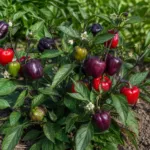 Purple Beauty (Capsicum annuum ‘Purple Beauty’)Capsicum annuum 'Purple Beauty'
 Numex Twilight (Capsicum annuum ‘Numex Twilight’)Capsicum annuum 'Numex Twilight'
 Explosive Ember Chili Pepper (Capsicum annuum ‘Explosive Ember’)Capsicum annuum 'Explosive Ember'