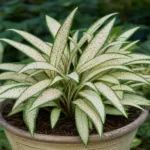
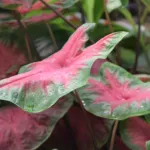
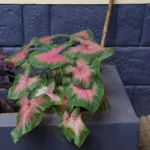
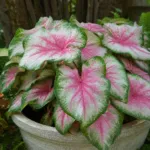
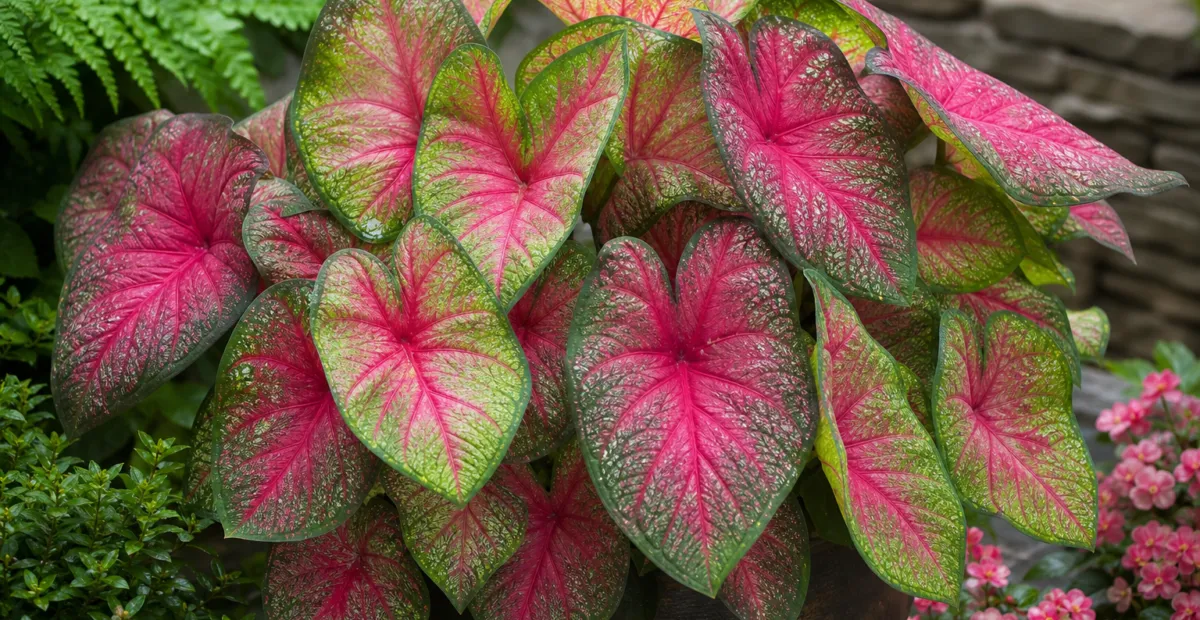
 AI-generated illustration
 Caladium ‘Raspberry Moon’ short overview
Caladium ‘Raspberry Moon’ is a vigorous, tuberous tropical foliage plant prized for tall growth and richly patterned leaves marked with raspberry-red, dark-green, chartreuse, and light-green areas. This patented Heart to Heart® cultivar performs well in containers, shaded borders, and sheltered patios across the United States. Keep it warm, evenly moist, and well drained during active growth, then protect or lift the tubers before cold weather.
Taxonomic classification
Caladium ‘Raspberry Moon’ care guide
Light and placement
Provide bright filtered light, partial shade, or shade with some gentle morning sun. In hot climates, protect the leaves from harsh afternoon sun, which can scorch or fade tender foliage. Too little light may produce elongated petioles and a thin display; excessive direct sun can cause bleaching, scorch, and loss of pattern. Rotate indoor containers periodically for even growth.
Watering and humidity
Water thoroughly when the surface begins to dry, then let excess drain completely. Keep the root zone evenly moist during warm active growth, increasing frequency in containers, heat, or bright locations. Reduce watering as leaves yellow in fall, and keep dormant tubers nearly dry enough to prevent rot. Do not allow the pot to stand in a saucer of water.
Soil and growing medium
Use a loose, fertile, moisture-retentive but well-drained mix. A peat-free container mix amended with compost and coarse material works well. Caladiums generally perform best in acidic to slightly acidic media; avoid compacted soil and standing water. A practical target is about pH 5.5–6.5, although the exact optimum can vary with the growing system.
Feeding
Feed during active growth after shoots emerge, using a balanced controlled-release fertilizer or a dilute liquid fertilizer according to the product label. Caladiums benefit from modest, regular nutrition rather than heavy applications. Do not fertilize dormant tubers, freshly divided pieces, or plants growing in cold, waterlogged soil.
Growth and habit
Growth is rapid when tubers receive warm soil, steady moisture, and adequate light. The plant forms a dense display of upright petioles from a central tuber. Avoid repeated drought because wilting can interrupt growth and encourage dormancy; avoid dense, wet conditions that favor tuber decay.
Planting and repotting
Plant dormant tubers outdoors only after frost danger has passed and the soil is consistently about 60–70°F. Set the puckered, knobby growing side upward, about 2 inches deep, and space plants roughly 8–12 inches apart for a fuller display. Water after planting and mulch lightly once foliage emerges.
Repot or transplant only when temperatures are warm and active growth is beginning. Move the tuber or rooted plant with minimal disturbance, keeping the growing point oriented upward. Choose a container with drainage holes and avoid excessive empty soil around a dormant tuber, which can stay wet and rot.
Propagation and pruning
Propagation
Propagate by division of healthy tubers. Separate tuber sections only when each piece has at least one viable eye, allow fresh cuts to dry briefly, and plant in warm media. Commercial production relies on asexual propagation to maintain the cultivar’s traits; seed is not a reliable way to reproduce it true to type.
Pruning
No routine pruning is needed. Remove yellowing, damaged, or diseased leaves at the base with clean shears. Allow foliage to decline naturally at the end of the season so the tuber can recover reserves; cut back only after leaves have yellowed or died.
Overwintering
Dig tubers after foliage declines and before frost in climates colder than Zone 9. Let them dry for 1–3 days in a shaded, ventilated place, then store them in a dry medium such as vermiculite at roughly 60–70°F. Keep dormant tubers above cold, damp conditions and replant only after warm spring soil returns.
Uses
Use ‘Raspberry Moon’ as a foliage accent in shaded beds, mixed containers, hanging displays, patios, and sheltered entry areas. It is especially useful where flowers are less dependable than colorful leaves. It is not an edible plant, and all parts should be kept away from children and pets because of calcium oxalates.
Appearance
This fancy-leaf cultivar produces broad, heart-shaped to ovate leaves on upright petioles. Its foliage combines raspberry-red blotches and speckles with chartreuse or light-green areas and darker green markings. Pattern intensity can change with light, temperature, and plant maturity, so individual leaves may vary while retaining the cultivar’s characteristic multicolored appearance.
Flowering
Caladiums can produce small arum-family inflorescences consisting of a spathe and spadix, but flowering is inconspicuous and not the reason this cultivar is grown. ‘Raspberry Moon’ is selected primarily for its foliage, and reliable cultivar-specific flowering dates are not documented.
Pollination and visitors
No reliable cultivar-specific record was found documenting a characteristic animal pollinator or visitor for ‘Raspberry Moon’. The small arum-type inflorescences are secondary to the ornamental foliage, so no pollinator group is assigned.
Diseases and pests
Diseases
The main risks are tuber rot and fungal or bacterial problems encouraged by cold, saturated soil, damaged tubers, or poor sanitation. Plant only firm, healthy tubers in warm, well-drained media; avoid overwatering and remove collapsing or diseased material promptly. Good air movement and clean tools reduce spread.
Pests
Watch for aphids, thrips, spider mites, mealybugs, and caterpillars, particularly on stressed container plants. Inspect leaf undersides and new growth, isolate affected plants, and use a strong water spray or an appropriately labeled insecticidal soap or horticultural oil when needed. Avoid treating drought-stressed or heat-stressed foliage.
Related diseases and pests
Only Plant Doctor profiles whose host data indicate this plant may be affected are shown here.
 Environmental stressLeaf sunburn
 Environmental stressOverwatering
 DiseaseBacterial soft rotPectobacterium carotovorum
 PestMealy Plum AphidHyalopterus pruni (Geoffroy, 1762)
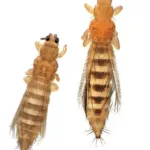 PestOnion thripsThrips tabaci Lindeman
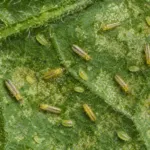 PestMelon thripsThrips palmi Karny
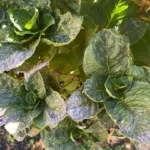 PestChilli thripsScirtothrips dorsalis Hood
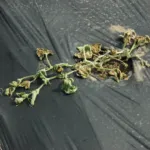 DiseaseBacterial WiltRalstonia solanacearum species complex
Toxicity and pollen
Caladium contains insoluble calcium oxalate crystals. Chewing or ingesting leaves, stems, or tubers can cause immediate burning and irritation of the mouth, drooling, swelling, vomiting, and difficulty swallowing. Keep the plant away from children and pets, wash hands after handling damaged tissue, and seek professional poison-control or veterinary advice after ingestion.
- Typical season
- No specific exposure season is documented for this cultivar.
- Pollination / pollen
- Limited, locally released pollen from inconspicuous inflorescences
This cultivar is grown for foliage and has inconspicuous inflorescences. No cultivar-specific airborne-pollen measurements or allergy studies were located. Because the flowers are not prominent and pollen exposure is not documented as a major issue, a low concern label is used rather than claiming zero risk.
Native habitat
The cultivated hybrid derives from tropical Caladium lineages associated with warm, humid habitats of the Amazon Basin. In cultivation it prefers warm soils, filtered or partial light, organic-rich moisture-retentive media, and protection from cold. It does not tolerate frost and commonly becomes dormant as temperatures decline.
Interesting fact
‘Raspberry Moon’ was selected from a controlled cross involving ‘Miss Muffet’ and ‘Fire Chief’. It is a patented fancy-leaf cultivar with stable traits maintained by tuber division. The cultivar was promoted under the Heart to Heart® brand and was named a Proven Winners caladium of the year for 2022.
Frequently asked questions (FAQ)
The most relevant questions about this plant, with short and direct answers.
🌱Quick care
What is Caladium 'Raspberry Moon'?⌄
Caladium 'Raspberry Moon' is a fancy-leaf caladium grown for its light green to yellow-green leaves marked with raspberry-pink, red, and darker green blotches. It is commonly sold under the Heart to Heart® series and is valued primarily for colorful foliage.
How much light does Caladium 'Raspberry Moon' need?⌄
Give Caladium 'Raspberry Moon' bright filtered light to partial shade. It can tolerate gentle morning sun, but strong afternoon sun may scorch or fade the leaves, especially after a sudden change in exposure.
How often should I water Caladium 'Raspberry Moon'?⌄
Water Caladium 'Raspberry Moon' whenever the soil surface begins to dry, keeping the mix evenly moist but never soggy. Containers may need water more often during hot weather because they dry faster.
Is Caladium 'Raspberry Moon' an annual or perennial?⌄
Caladium 'Raspberry Moon' is frost-tender and is often grown as a warm-season annual outdoors in much of the United States. In USDA Zones 9–11, its tubers may overwinter outdoors if protected from cold and excessive winter moisture.
How big does Caladium 'Raspberry Moon' get?⌄
Caladium 'Raspberry Moon' typically grows about 15 to 20 inches tall, with a spread that commonly ranges from 10 to 18 inches. Size varies with tuber size, warmth, light, and growing conditions.
🌤️Environment and placement
Can Caladium 'Raspberry Moon' grow indoors?⌄
Yes, Caladium 'Raspberry Moon' can grow indoors in bright indirect light near a warm window. Keep it away from cold drafts, heating vents, and harsh direct afternoon sun.
Can Caladium 'Raspberry Moon' tolerate full sun?⌄
Caladium 'Raspberry Moon' may tolerate several hours of gentle morning sun once acclimated, but partial shade is safer for consistent foliage quality. Sudden exposure to intense full sun can cause leaf scorch or bleaching.
What temperature is best for Caladium 'Raspberry Moon'?⌄
Caladium 'Raspberry Moon' grows best in warm conditions, generally above 65°F. Protect it from frost and prolonged temperatures below about 60°F, which can trigger dormancy or damage.
What USDA zone is Caladium 'Raspberry Moon' hardy in?⌄
Caladium 'Raspberry Moon' is best treated as an outdoor warm-season plant in USDA Zones 9–11. Gardeners in colder zones should grow it in containers or lift and store the tubers before frost.
Can Caladium 'Raspberry Moon' grow in a container?⌄
Yes, Caladium 'Raspberry Moon' performs well in containers, mixed planters, and hanging baskets. Use a container with drainage holes and a moisture-retentive but well-drained potting mix.
💧Care and problems
What soil does Caladium 'Raspberry Moon' need?⌄
Plant Caladium 'Raspberry Moon' in humus-rich, moisture-retentive, well-drained soil or container mix. Avoid heavy, waterlogged soil because saturated conditions can encourage tuber rot.
Should I fertilize Caladium 'Raspberry Moon'?⌄
Yes, feed Caladium 'Raspberry Moon' lightly during active growth with a balanced slow-release fertilizer or diluted liquid fertilizer. Avoid excessive fertilizer, which can cause salt buildup and damage the roots or leaf margins.
Why are the leaves of my Caladium 'Raspberry Moon' turning brown?⌄
Brown leaves on Caladium 'Raspberry Moon' are commonly caused by dry soil, low humidity, fertilizer salt buildup, sunburn, or cold exposure. Check moisture and light first, then flush container soil if fertilizer salts may have accumulated.
Why is my Caladium 'Raspberry Moon' losing leaves?⌄
Caladium 'Raspberry Moon' may lose leaves because of cold temperatures, drought stress, overwatering, or its natural seasonal dormancy. If the tuber remains firm, reduce watering during dormancy and resume care when warm conditions return.
How do I prevent root or tuber rot in Caladium 'Raspberry Moon'?⌄
Prevent rot by using well-drained soil, a container with drainage holes, and moderate watering that keeps the mix moist rather than saturated. Let excess water drain fully and do not leave the pot standing in a saucer of water.
🪴Planting and repotting
When should I plant Caladium 'Raspberry Moon' bulbs?⌄
Plant Caladium 'Raspberry Moon' tubers outdoors in spring after the soil has warmed and the threat of frost has passed. Cold, wet soil can delay sprouting or cause tuber decay.
How deep should I plant Caladium 'Raspberry Moon' tubers?⌄
Plant Caladium 'Raspberry Moon' tubers about 1½ to 2½ inches deep, with the growing points facing upward. Leave roughly 12 to 18 inches between plants, depending on the desired density and mature size.
How long does Caladium 'Raspberry Moon' take to sprout?⌄
Caladium 'Raspberry Moon' usually sprouts after the soil is consistently warm, but emergence may take several weeks. Cool temperatures, deep planting, and overly wet soil can delay growth.
✂️Propagation and pruning
Can I propagate Caladium 'Raspberry Moon' from leaf cuttings?⌄
No, a leaf cutting will not reliably produce a new Caladium 'Raspberry Moon' plant. Propagation is normally done by dividing healthy tubers, and division should be performed carefully so each section has at least one viable bud or eye.
Should I prune Caladium 'Raspberry Moon'?⌄
Caladium 'Raspberry Moon' needs very little pruning. Remove yellow, damaged, or declining leaves at the base with clean scissors, but avoid removing healthy foliage because the leaves supply energy to the tuber.
How do I overwinter Caladium 'Raspberry Moon' tubers?⌄
Before frost, stop watering as the foliage declines, lift the tubers, and let them dry in a warm, shaded place before storing them in a dry medium at about 60–70°F. Discard any soft or rotting pieces and replant in spring after the soil warms.
⚠️Toxicity and safety
Is Caladium 'Raspberry Moon' toxic to pets?⌄
Yes, Caladium 'Raspberry Moon' is toxic to dogs and cats if chewed or swallowed. Its tissues contain irritating calcium oxalate crystals that can cause mouth pain, drooling, vomiting, and difficulty swallowing, so keep it away from pets.
Is Caladium 'Raspberry Moon' poisonous to people?⌄
Yes, Caladium 'Raspberry Moon' is toxic if chewed or swallowed. Keep the plant and tubers away from children, and seek medical or poison-control advice if ingestion causes mouth irritation, swelling, vomiting, or trouble swallowing.
🌸Flowering and special interest
Does Caladium 'Raspberry Moon' produce flowers?⌄
Caladium 'Raspberry Moon' can produce small arum-like flowers, but it is grown mainly for its patterned foliage. The flowers are usually not considered ornamental and do not require deadheading.