
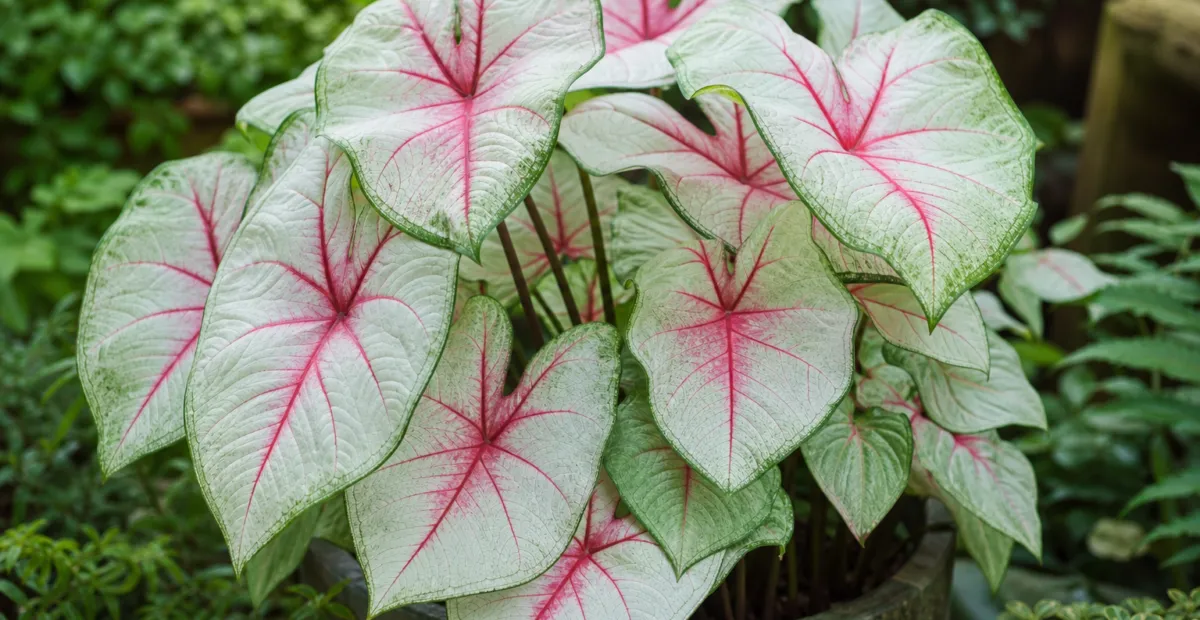
 AI-generated illustration
Caladium ‘Summer Breeze’ short overview
Caladium 'Summer Breeze' is a striking fancy-leaf cultivar grown for its large, luminous foliage rather than showy flowers. Its broad white leaves are marked with rosy pink centers and vivid red-pink veins, creating strong contrast in shaded beds, containers and indoor displays. Keep it warm, evenly moist and protected from harsh afternoon sun. The tubers are frost-tender and contain irritating calcium oxalate crystals, so handle and place the plant with household pets and children in mind.
Taxonomic classification
Caladium ‘Summer Breeze’ care guide
Light and placement
Provide bright filtered light, partial shade or deep shade. Outdoors, gentle morning sun is usually acceptable, but protect the thin leaves from strong midday and afternoon rays, which can scorch or bleach them. Indoors, place near an east-facing window or several feet from a bright south- or west-facing window behind a sheer curtain. Too little light may produce weak, stretched petioles and slower leaf production; too much direct sun causes pale patches, crisp margins and scorch.
Watering and humidity
Water when the upper ½–1 inch of mix begins to feel slightly dry, soaking thoroughly until excess drains from the container. Keep the root zone consistently moist during active growth, but never leave the pot standing in water. Reduce watering as leaves yellow and the plant enters dormancy. Warm indoor air may justify a humidity tray or humidifier, but airflow is more important than wet foliage.
Soil and growing medium
Use a loose, organically enriched potting mix or garden soil that drains freely but retains consistent moisture. A slightly acidic medium is suitable. Avoid compacted clay, standing water and very dry, sharply draining mixes, because tubers can rot in saturation while leaves lose quality during drought.
Feeding
Feed during active spring and summer growth with a balanced, water-soluble fertilizer diluted to about half strength every 3–4 weeks, or use a modest slow-release formulation according to its label. Water the plant first if the mix is dry. Stop feeding as foliage declines in fall and do not fertilize dormant tubers.
Growth and habit
Growth is rapid once tubers receive warm soil, moisture and suitable light. Plants form a clump of long-petioled leaves from underground tubers and naturally slow or go dormant as temperatures and light decline. Remove fading leaves to keep containers tidy, but avoid disturbing active tubers unnecessarily.
Planting and repotting
Plant outdoors only after the soil has warmed and the danger of frost has passed. Set tubers about 1½–2 inches deep with the buds facing upward, then water gently. Allow roughly 12–18 inches between plants for a full display, with closer spacing possible in containers. Protect young shoots from cold, wind and intense afternoon sun.
Repot in spring when new growth is beginning, using a container with drainage holes and fresh, moisture-retentive but porous mix. Move the tuber only as deeply as necessary to cover it lightly; overly deep planting in cool or wet soil encourages rot. Container-grown plants can remain in the same pot if the tuber has adequate room and the mix is refreshed.
Propagation and pruning
Propagation
Propagate commercially by dividing or chipping mature tubers in spring. Each section must retain a viable bud or eye. Allow cut surfaces to dry briefly, then plant in warm, sterile, lightly moist medium. Chipping is more technical than simple division and requires careful sanitation to limit rot.
Pruning
Pruning is limited to removing yellow, damaged or diseased leaves at the base with clean shears. Do not cut healthy foliage merely to shape the plant. Wear gloves if skin is sensitive, because sap can irritate skin and eyes.
Overwintering
In regions colder than USDA Zone 10, lift or bring containers indoors before temperatures fall below about 60°F. Allow foliage to decline naturally, then store clean, dry tubers in a ventilated medium such as dry peat or vermiculite at roughly 60–70°F. Keep them dry but do not freeze them; restart in warm conditions in spring.
Uses
Use ‘Summer Breeze’ as a focal foliage plant in shaded borders, patio containers, window boxes and protected indoor displays. Its white foliage helps brighten low-light compositions and combines well with ferns, begonias, impatiens and other shade plants. It is ornamental only and should not be eaten.
Appearance
A fancy-leaf caladium with large, broad, heart- to arrow-shaped leaves carried on upright, elongated petioles. The cultivar is recognized by its predominantly white blade, rosy pink central area and strong red-pink primary veins, sometimes accompanied by pale green tones. It forms a clumping display from underground tubers and has no woody stem or persistent trunk.
Flowering
This cultivar is grown primarily for foliage. Caladiums may produce a small, inconspicuous arum-type inflorescence consisting of a spadix enclosed by a spathe, usually during warm active growth. Flowering is sporadic and ornamental value is minor compared with the leaves.
Pollination and visitors
The small arum-type inflorescences are not well documented as important nectar or pollen resources, and reliable cultivar-specific visitor records were not found. Do not market this cultivar as a pollinator plant.
Diseases and pests
Diseases
The main risks are tuber and root rots, especially in cold, saturated soil, along with leaf spot and occasional fungal problems. Use clean containers, fresh or well-drained medium, good air circulation and careful watering. Remove badly damaged tissue and avoid storing tubers while wet. Do not reuse contaminated potting mix.
Pests
Watch for aphids, mealybugs, thrips, spider mites, slugs and snails. Inspect leaf undersides and new growth, remove pests with water or an appropriate labeled treatment, and reduce slug or snail hiding places. Avoid chronic overwatering, which weakens tubers and increases disease risk.
Related diseases and pests
Only Plant Doctor profiles whose host data indicate this plant may be affected are shown here.
 Environmental stressLeaf sunburn
 PestMealy Plum AphidHyalopterus pruni (Geoffroy, 1762)
 PestOnion thripsThrips tabaci Lindeman
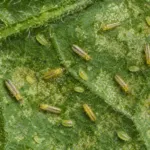 PestMelon thripsThrips palmi Karny
 PestChilli thripsScirtothrips dorsalis Hood
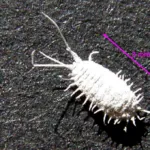 PestObscure mealybugPseudococcus viburni
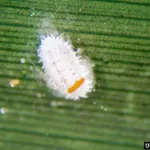 PestCitrus mealybugPlanococcus citri
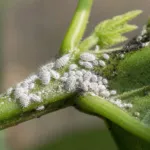 PestCotton mealybugPhenacoccus solenopsis Tinsley
Toxicity and pollen
Caladium tissues contain insoluble calcium oxalate crystals. Chewing or swallowing leaves, stems, tubers or sap can cause immediate mouth and throat irritation, burning, swelling, drooling, nausea or vomiting. Sap may irritate skin and eyes. Keep plant material away from children and pets and seek medical or veterinary advice after ingestion.
- Typical season
- Not specifically documented; exposure is likely limited to the flowering period
- Pollination / pollen
- Limited, poorly documented pollen release from small inflorescences
Caladium pollen and airborne-allergy relevance are poorly documented for this exact cultivar. Because the inflorescences are small and usually inconspicuous, substantial airborne exposure is not expected, but a zero-risk claim is not justified. Handle sap and plant debris carefully because irritation is primarily associated with calcium oxalate crystals, not pollen.
Native habitat
The genus is associated with warm, humid tropical and subtropical habitats of Central and South America, where plants grow in shaded or seasonally moist sites. Garden cultivars retain the preference for warmth, organic soils and filtered light but are selected primarily for ornamental foliage rather than naturalized ecological performance.
Interesting fact
‘Summer Breeze’ was introduced in 2013 and received Plant of Distinction recognition in University of Georgia trial gardens. The cultivar is protected by U.S. Plant Patent PP25,420. Its foliage performed well from deep shade to only limited early-morning sun in trials. Commercial descriptions classify it as a tall, fancy-leaf, shade-oriented type.
Frequently asked questions (FAQ)
The most relevant questions about this plant, with short and direct answers.
🌱Quick care
How do you care for Caladium 'Summer Breeze'?⌄
Grow Caladium 'Summer Breeze' in bright shade or partial shade, rich well-drained soil, and evenly moist conditions. Protect it from frost, cold drafts, harsh afternoon sun, and waterlogged soil.
Is Caladium 'Summer Breeze' an indoor or outdoor plant?⌄
Caladium 'Summer Breeze' can grow indoors or outdoors during warm weather. Indoors, provide bright filtered light and warmth; outdoors, place it in a sheltered, partially shaded location after the danger of frost has passed.
🌤️Environment and placement
How much light does Caladium 'Summer Breeze' need?⌄
Caladium 'Summer Breeze' prefers bright shade to partial shade, with filtered or gentle morning light. Strong midday or afternoon sun can scorch its leaves and fade or damage the foliage.
Can Caladium 'Summer Breeze' grow in full shade?⌄
Caladium 'Summer Breeze' can tolerate fairly deep shade, but brighter filtered light usually produces stronger growth and better leaf color. Avoid placing it where the foliage receives intense direct sun.
Can Caladium 'Summer Breeze' tolerate direct sunlight?⌄
It may tolerate limited gentle morning sun, but it is not reliably suited to strong direct sunlight. Afternoon sun is particularly likely to cause leaf scorch, curling, or faded color.
What temperature is best for Caladium 'Summer Breeze'?⌄
Caladium 'Summer Breeze' grows best in warm conditions and should be protected when temperatures begin to approach 60°F. Frost and prolonged cold can damage the foliage and tuber.
Can Caladium 'Summer Breeze' survive winter outdoors?⌄
It can remain outdoors year-round only in reliably warm climates, generally USDA Zones 9–11 with suitable winter conditions. In colder areas, lift and store the tuber before frost or grow the plant in a container that can be moved indoors.
💧Care and problems
How often should you water Caladium 'Summer Breeze'?⌄
Water when the surface of the mix begins to dry, keeping the soil evenly moist but never saturated. Reduce watering as the foliage naturally yellows and the plant enters dormancy.
Why are the leaves on my Caladium 'Summer Breeze' drooping?⌄
Drooping leaves usually indicate underwatering, cold stress, excessive heat, or the beginning of seasonal dormancy. Check the soil moisture, move the plant away from harsh sun or drafts, and avoid keeping the roots constantly wet.
Why are Caladium 'Summer Breeze' leaves turning yellow?⌄
Yellow leaves may result from natural dormancy, overwatering, cold temperatures, or insufficient light. If the whole plant is declining in fall, gradually reduce watering; otherwise inspect the roots and growing conditions.
Why does Caladium 'Summer Breeze' have brown leaf edges?⌄
Brown edges are commonly caused by dry soil, low humidity, hot direct sun, or cold exposure. Keep the mix evenly moist, provide filtered light, and protect the plant from temperature extremes.
How do you prevent root rot in Caladium 'Summer Breeze'?⌄
Prevent root rot by using a rich but well-drained mix, a container with drainage holes, and careful watering. Do not allow the pot to stand in water or keep the soil continuously soggy.
Should you fertilize Caladium 'Summer Breeze'?⌄
Yes, fertilize during active growth with a balanced, diluted houseplant fertilizer according to the product label. Stop or greatly reduce feeding when the foliage declines and the plant becomes dormant.
What pests commonly affect Caladium 'Summer Breeze'?⌄
Caladiums may be bothered by aphids, mealybugs, mites, caterpillars, slugs, or snails. Check new growth and the undersides of leaves regularly, and remove pests promptly with water or an appropriate labeled treatment.
🪴Planting and repotting
What soil is best for Caladium 'Summer Breeze'?⌄
Use a rich, organic, moisture-retentive mix that drains freely. A quality potting mix amended with compost and a drainage material such as perlite is suitable, but heavy compacted soil should be avoided.
When should you plant Caladium 'Summer Breeze' outdoors?⌄
Plant it outdoors after the last frost when the soil has warmed and nighttime temperatures are consistently mild. In much of the United States, this means late spring, although the timing varies by USDA Zone and local frost date.
How deep should you plant a Caladium 'Summer Breeze' tuber?⌄
Plant the tuber about 1 to 2 inches deep with the knobby or budded side facing upward. Avoid planting into cold, waterlogged soil because this can delay growth or cause rot.
Can Caladium 'Summer Breeze' grow in a container?⌄
Yes, Caladium 'Summer Breeze' grows well in a container with drainage holes and a rich, moisture-retentive potting mix. Containers also make it easier to move the plant indoors before cold weather.
✂️Propagation and pruning
How do you propagate Caladium 'Summer Breeze'?⌄
Propagate Caladium 'Summer Breeze' primarily by dividing its tuber when it is dormant or before active growth begins. Each division should retain at least one healthy growing point, and cut surfaces should be allowed to dry before planting.
Should you cut off Caladium 'Summer Breeze' leaves?⌄
Remove yellow, damaged, or fully collapsed leaves with clean scissors, but do not routinely remove healthy foliage. Healthy leaves supply energy to the tuber until the plant naturally enters dormancy.
How do you overwinter Caladium 'Summer Breeze' tubers?⌄
Before frost, allow the foliage to decline, lift the tuber, and let it dry in a warm, shaded place. Store it in a dry medium such as vermiculite or peat at about 60°F or warmer, then replant after cold weather has passed.
⚠️Toxicity and safety
Is Caladium 'Summer Breeze' toxic to cats and dogs?⌄
Yes, Caladium 'Summer Breeze' should be considered toxic to cats and dogs if chewed or swallowed because caladiums contain insoluble calcium oxalates. Keep it away from pets and contact a veterinarian promptly if ingestion occurs.
Is Caladium 'Summer Breeze' poisonous to people?⌄
Yes, chewing or swallowing Caladium 'Summer Breeze' can cause burning, pain, swelling, drooling, and difficulty swallowing. Keep the plant away from children, and seek medical or poison-control advice after ingestion.
Can Caladium 'Summer Breeze' irritate your skin?⌄
Yes, the sap may cause minor skin irritation in sensitive people. Wear gloves when handling damaged leaves or tubers, and wash exposed skin with soap and water.
🌸Flowering and special interest
Does Caladium 'Summer Breeze' produce flowers?⌄
Caladium 'Summer Breeze' may produce a small, inconspicuous arum-type flower, but it is grown primarily for its foliage. Flowering is uncommon and usually less ornamental than the leaves.
Should you remove flowers from Caladium 'Summer Breeze'?⌄
You may remove flower stems as they appear if your priority is maintaining a foliage display. Removing them can direct the plant's energy toward leaves, although occasional flowering is not usually harmful.
Similar plants
 Yellow lantern chili (Capsicum chinense) care guideCapsicum chinense
 Capsicum baccatum care guideCapsicum baccatum
 Serrano (Capsicum annuum ‘Serrano’)Capsicum annuum 'Serrano'
 Purple Beauty (Capsicum annuum ‘Purple Beauty’)Capsicum annuum 'Purple Beauty'
 Numex Twilight (Capsicum annuum ‘Numex Twilight’)Capsicum annuum 'Numex Twilight'
 Explosive Ember Chili Pepper (Capsicum annuum ‘Explosive Ember’)Capsicum annuum 'Explosive Ember'