
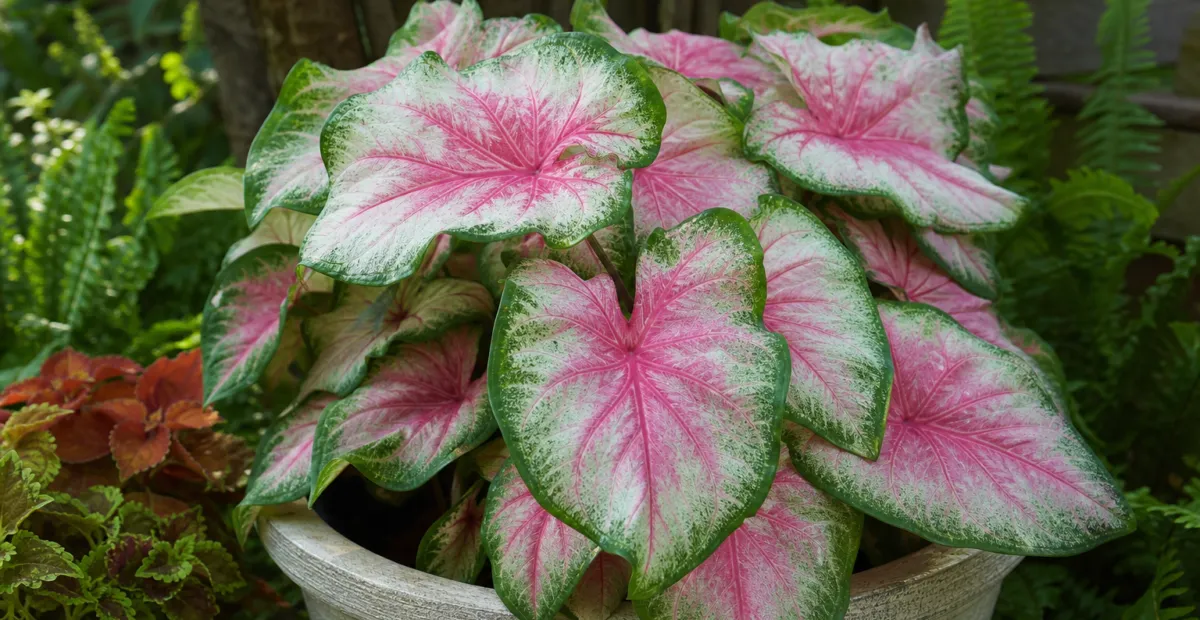
 AI-generated illustration
Caladium ‘Rosebud’ short overview
Caladium 'Rosebud' is a tender, fancy-leaved caladium grown primarily for its colorful foliage rather than its inconspicuous inflorescences. Its medium to large leaves combine pink centers and veins with pale white-green areas and broad green margins. In the United States, it performs best in warm summer beds, shaded borders, and containers. Plant tubers only after the soil has warmed, keep the mix evenly moist, and protect or store them before frost.
Taxonomic classification
Caladium ‘Rosebud’ care guide
Light and placement
Give bright filtered light or partial shade, such as morning sun with afternoon shade, a north or east-facing exposure, or dappled light beneath open trees. Rosebud is more sun tolerant than some caladiums, but intense hot afternoon sun can scorch pale areas and dry the plant quickly. Too little light may produce weaker petioles and less vivid color.
Watering and humidity
Water when the top ½–1 inch of mix begins to feel dry, then soak thoroughly and allow excess water to drain. Keep the root zone evenly moist during warm active growth, but never leave the pot standing in water. Reduce watering as leaves yellow and dormancy approaches. Moderate to high humidity helps, especially indoors, but air circulation is important.
Soil and growing medium
Use a loose, humus-rich potting mix or fertile garden soil that drains freely yet holds moderate moisture. A slightly acidic to neutral reaction is suitable. Avoid compacted clay, stagnant wet soil, and very dry sandy mixes unless amended with organic matter. Containers should have generous drainage holes and should not sit in a saucer of standing water.
Feeding
Feed only during active growth, after shoots and leaves have emerged. Apply a balanced water-soluble fertilizer at half strength every 3–4 weeks, or use a controlled-release product according to its label. Stop feeding as foliage declines in fall or before dormancy. Excess fertilizer can scorch leaves and promote weak, soft growth.
Growth and habit
This cultivar forms a seasonal clump from underground corms. Growth is fastest in warm soil with consistent moisture and slows sharply in cool or dry conditions. Remove declining leaves as the plant enters dormancy, and lift or containerize corms where winter temperatures can freeze the soil.
Planting and repotting
Plant outdoors after danger of frost has passed and soil temperatures are consistently warm, generally when nighttime temperatures remain above 60°F. Set tubers with the eyes upward, about 1½–2 inches deep, and space plants roughly 8–12 inches apart depending on desired density. Water gently after planting and maintain steady moisture while roots establish.
Repot or divide container-grown tubers in spring, when new growth is beginning or before planting outdoors. Handle the corms carefully and use a fresh, airy mix. Move up only one pot size; oversized containers stay wet longer and can increase the risk of rot.
Propagation and pruning
Propagation
Propagate by dividing dormant or actively growing tubers, ensuring each section has a viable eye. Divide in spring before outdoor planting or as growth resumes indoors. Allow cut surfaces to dry briefly before planting, and use clean tools to reduce disease transmission. Seed is possible for breeding but does not reproduce the named cultivar reliably.
Pruning
Pruning is limited to removing yellowing, damaged, or diseased leaves at the base with clean scissors. Do not cut healthy foliage merely to shape the plant; leaves supply energy to the corm. Wear gloves because the sap can irritate skin and wash tools after use.
Overwintering
Treat as frost tender outside USDA Zones 10–11. Before temperatures approach 55°F, move containers indoors or lift corms after foliage declines. Store dormant corms dry and frost-free, around 60–70°F, in a ventilated medium such as dry peat or vermiculite. Replant in spring after warmth returns.
Uses
Use Rosebud in shaded summer bedding displays, mixed borders, patio containers, window boxes, and sheltered indoor plantings. Its patterned foliage works well as a seasonal focal point or mass planting. It is ornamental only and should not be eaten; all parts should be kept away from children and pets.
Appearance
Rosebud is a fancy-leaved caladium with broad, heart-shaped to sagittate leaves. Reliable US references describe pink-centered foliage surrounded by pale white or white-green areas and broad green margins; other horticultural descriptions emphasize dark rose or pink veins. Long petioles rise from the corm, creating a colorful, upright-to-spreading clump.
Flowering
Caladiums may produce small, short-lived aroid inflorescences, but flowering is secondary to the foliage and is not consistently reported for this cultivar. The inflorescence consists of a spadix enclosed by a spathe and is usually hidden beneath the leaves. Cultivar-specific flowering timing and color are not reliably documented.
Pollination and visitors
No reliable cultivar-specific documentation was found for animal visitors to Rosebud's inconspicuous inflorescences. Do not assume strong pollinator attraction from the presence of an aroid spadix alone.
Diseases and pests
Diseases
Corm and root rots are favored by cold, saturated soil and poor drainage. Use clean planting material, avoid overwatering, and discard soft or foul-smelling corms. Leaf spots can develop in crowded, wet foliage; improve air movement, water at the soil surface, and remove badly affected leaves.
Pests
Watch for aphids, mealybugs, spider mites, thrips, caterpillars, and snails or slugs. Inspect leaf undersides and new growth, remove pests manually when practical, and use insecticidal soap or horticultural oil according to the label. Avoid persistent leaf wetness and do not treat heat-stressed plants.
Related diseases and pests
Only Plant Doctor profiles whose host data indicate this plant may be affected are shown here.
 Environmental stressLeaf sunburn
 Environmental stressOverwatering
 PestMealy Plum AphidHyalopterus pruni (Geoffroy, 1762)
 PestOnion thripsThrips tabaci Lindeman
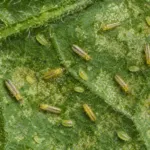 PestMelon thripsThrips palmi Karny
 PestChilli thripsScirtothrips dorsalis Hood
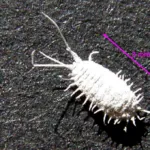 PestObscure mealybugPseudococcus viburni
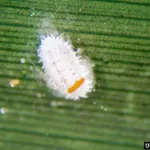 PestCitrus mealybugPlanococcus citri
Toxicity and pollen
Caladiums contain insoluble calcium oxalate crystals. Chewing or swallowing tissue can cause immediate mouth and throat irritation, burning, swelling, drooling, nausea, or vomiting; sap may irritate skin and eyes. Keep tubers and foliage away from children and pets, wear gloves when handling damaged tissue, and contact Poison Control or a veterinarian after ingestion.
- Pollination / pollen
- Internally released floral pollen; airborne exposure appears limited
Caladium pollen is produced inside the small inflorescence rather than released from conspicuous wind-pollinated cones or catkins. Specific airborne-allergen data for 'Rosebud' are unavailable, so a low airborne relevance is a cautious horticultural classification rather than a guarantee of no allergy risk.
Native habitat
The cultivated caladium group derives from tropical and subtropical American Araceae adapted to warm, humid conditions and seasonally moist soils. Garden performance depends on warm soil, filtered light, organic matter, and reliable drainage rather than on frost tolerance.
Interesting fact
Rosebud is listed as a fancy-leaved cultivar in US caladium production and extension references. Its ornamental value comes from patterned leaves rather than showy flowers. The cultivar has been used for both shaded landscape displays and container production. Caladiums grow from corms and commonly become dormant when temperatures or moisture levels decline.
Frequently asked questions (FAQ)
The most relevant questions about this plant, with short and direct answers.
🌱Quick care
How do you care for Caladium 'Rosebud'?⌄
Give Caladium 'Rosebud' bright filtered light or partial shade, evenly moist well-drained soil, warmth, and protection from frost. Avoid waterlogged soil and strong afternoon sun.
Is Caladium 'Rosebud' an indoor or outdoor plant?⌄
Caladium 'Rosebud' can grow indoors or outdoors during warm weather. In most of the United States, grow it outdoors seasonally and bring it inside or store its tubers before temperatures approach freezing.
How much light does Caladium 'Rosebud' need?⌄
Caladium 'Rosebud' grows best in bright filtered light to partial shade. Gentle morning sun may be tolerated, but intense midday or afternoon sun can scorch its foliage.
How often should I water Caladium 'Rosebud'?⌄
Water Caladium 'Rosebud' whenever the soil surface begins to dry, keeping the mix evenly moist but never saturated. Containers may need more frequent watering during hot, dry weather.
What type of soil is best for Caladium 'Rosebud'?⌄
Use humus-rich, well-drained soil or potting mix that retains moisture without becoming soggy. Compost, fine bark, or another organic amendment can improve garden soil that drains poorly or dries too quickly.
How big does Caladium 'Rosebud' get?⌄
Caladium 'Rosebud' is generally a compact caladium reaching about 12 to 18 inches tall, with small pink-patterned leaves. Actual size varies with tuber size, warmth, light, and growing conditions.
🌤️Environment and placement
Can Caladium 'Rosebud' grow in full shade?⌄
Caladium 'Rosebud' can grow in full shade if the location still receives bright ambient or filtered light. Extremely dark conditions may produce weaker growth and less colorful foliage.
Can Caladium 'Rosebud' tolerate full sun?⌄
Caladium 'Rosebud' may tolerate limited gentle sun, but full sun is not reliably suitable. Protect it from intense afternoon sunlight, which can fade colors and burn or tear the leaves.
What temperature does Caladium 'Rosebud' need?⌄
Caladium 'Rosebud' needs consistently warm conditions and should not be exposed to freezing temperatures. Wait until the soil is warm in spring before planting tubers outdoors.
Can Caladium 'Rosebud' survive winter outdoors?⌄
Caladium 'Rosebud' can usually remain outdoors year-round only in frost-free parts of USDA Zones 9 and warmer, with local conditions still determining success. Elsewhere, lift the tubers or grow the plant indoors before frost.
Is Caladium 'Rosebud' suitable for containers?⌄
Yes, Caladium 'Rosebud' grows well in containers with drainage holes and a moisture-retentive potting mix. Containers also make it easier to move the plant away from cold or excessive sun.
Does Caladium 'Rosebud' need high humidity?⌄
Caladium 'Rosebud' appreciates moderate to high humidity, especially indoors or during dry weather. Good air circulation is still important, and the soil should not remain constantly soggy.
💧Care and problems
Why are the leaves of my Caladium 'Rosebud' turning brown?⌄
Brown leaves on Caladium 'Rosebud' are commonly caused by dry soil, low humidity, excessive sun, cold exposure, or fertilizer touching the foliage. Correct the environmental stress and remove severely damaged leaves.
Why is my Caladium 'Rosebud' drooping?⌄
Caladium 'Rosebud' may droop when the soil becomes too dry, temperatures are too cold, or the tuber is entering dormancy. Check the soil and roots before watering, because drooping in soggy soil can indicate rot rather than thirst.
Why are my Caladium 'Rosebud' leaves fading?⌄
Caladium 'Rosebud' foliage may fade in excessive direct sunlight or when the plant is stressed by cold, drought, or poor nutrition. Move it to brighter filtered light and maintain steady moisture.
Why is my Caladium 'Rosebud' not growing?⌄
Slow or absent growth usually results from cool soil, insufficient warmth, dormancy, a damaged tuber, or excessive moisture. Caladium tubers need warm conditions before they reliably sprout.
Should I fertilize Caladium 'Rosebud'?⌄
Fertilize Caladium 'Rosebud' lightly during active growth with a balanced fertilizer used according to the label. Avoid excessive nitrogen, which can encourage greener foliage and weak growth.
How do I prevent Caladium 'Rosebud' tubers from rotting?⌄
Prevent tuber rot by using a well-drained mix, planting only in warm soil, and watering carefully so the medium stays moist rather than saturated. Poor drainage and cool, wet conditions are especially risky during sprouting.
What pests commonly affect Caladium 'Rosebud'?⌄
Caladium 'Rosebud' may be affected by aphids, spider mites, slugs, or snails. Reduce stress with steady moisture and suitable shade, then address pests early with hand removal or a treatment labeled for the plant and pest.
🪴Planting and repotting
When should I plant Caladium 'Rosebud' outdoors?⌄
Plant Caladium 'Rosebud' outdoors after the last expected frost, once the soil has warmed to at least about 68°F. Planting too early can delay sprouting or cause tuber rot.
How deep should I plant Caladium 'Rosebud' tubers?⌄
Plant Caladium 'Rosebud' tubers about 1 to 2 inches deep with the knobby eyes facing upward. Cover them lightly and keep the soil evenly moist while they establish.
Which way up do Caladium 'Rosebud' tubers go?⌄
Place Caladium 'Rosebud' tubers with the knobby side or visible eyes facing upward. If the orientation is unclear, plant the tuber on its side rather than forcing an uncertain position.
How far apart should I plant Caladium 'Rosebud'?⌄
Space Caladium 'Rosebud' tubers about 8 to 12 inches apart for a fuller planting with adequate airflow. Use closer spacing only where a dense seasonal display is desired and moisture can be managed carefully.
Can I start Caladium 'Rosebud' tubers indoors?⌄
Yes, start Caladium 'Rosebud' tubers indoors about 4 to 6 weeks before your area's average last frost date. Keep them warm, lightly moist, and transplant them outdoors only after frost danger has passed.
When should I repot Caladium 'Rosebud'?⌄
Repot Caladium 'Rosebud' when roots or tubers fill the container, preferably as new growth begins in spring. Choose a pot with drainage holes and avoid burying the tuber excessively.
✂️Propagation and pruning
How do you propagate Caladium 'Rosebud'?⌄
Propagate Caladium 'Rosebud' by dividing its tuber before active spring growth. Each section should contain at least one healthy eye, and cut pieces should be allowed to dry and callus briefly before planting.
Can Caladium 'Rosebud' be propagated from leaf cuttings?⌄
No, a leaf cutting will not normally produce a new Caladium 'Rosebud' plant. Propagation is generally done by dividing the tuber, while seed is mainly useful for breeding and may not reproduce the named cultivar.
Should I remove flowers from Caladium 'Rosebud'?⌄
You may remove the small flowers of Caladium 'Rosebud' if they appear, especially when the plant is grown for foliage. Caladiums are valued primarily for their leaves, and removing the inflorescences keeps attention on the foliage display.
⚠️Toxicity and safety
Is Caladium 'Rosebud' poisonous to cats and dogs?⌄
Yes, Caladium 'Rosebud' is toxic if chewed or swallowed by cats, dogs, and other pets. Its calcium oxalate crystals can cause intense mouth irritation, drooling, swelling, vomiting, or difficulty swallowing; contact a veterinarian if ingestion occurs.
Is Caladium 'Rosebud' toxic to people?⌄
Yes, Caladium 'Rosebud' is toxic if chewed or swallowed. It can cause burning and swelling of the mouth, lips, and tongue, so keep it away from children and seek medical or poison-control advice after ingestion.
Can handling Caladium 'Rosebud' irritate skin?⌄
The sap of Caladium 'Rosebud' may irritate sensitive skin. Wear gloves when dividing tubers or handling damaged foliage, and wash exposed skin with soap and water.
🌸Flowering and special interest
Does Caladium 'Rosebud' produce flowers?⌄
Caladium 'Rosebud' may occasionally produce a small arum-like inflorescence, but it is grown mainly for its pink, cream, and green foliage. Flowering is uncommon and usually less ornamental than the leaves.
What colors are the leaves of Caladium 'Rosebud'?⌄
Caladium 'Rosebud' typically has pink or rose coloring concentrated around the veins or center, with lighter areas and green margins. Color intensity changes with light, temperature, nutrition, and plant age.
Similar plants
 Yellow lantern chili (Capsicum chinense) care guideCapsicum chinense
 Capsicum baccatum care guideCapsicum baccatum
 Serrano (Capsicum annuum ‘Serrano’)Capsicum annuum 'Serrano'
 Purple Beauty (Capsicum annuum ‘Purple Beauty’)Capsicum annuum 'Purple Beauty'
 Numex Twilight (Capsicum annuum ‘Numex Twilight’)Capsicum annuum 'Numex Twilight'
 Explosive Ember Chili Pepper (Capsicum annuum ‘Explosive Ember’)Capsicum annuum 'Explosive Ember'