
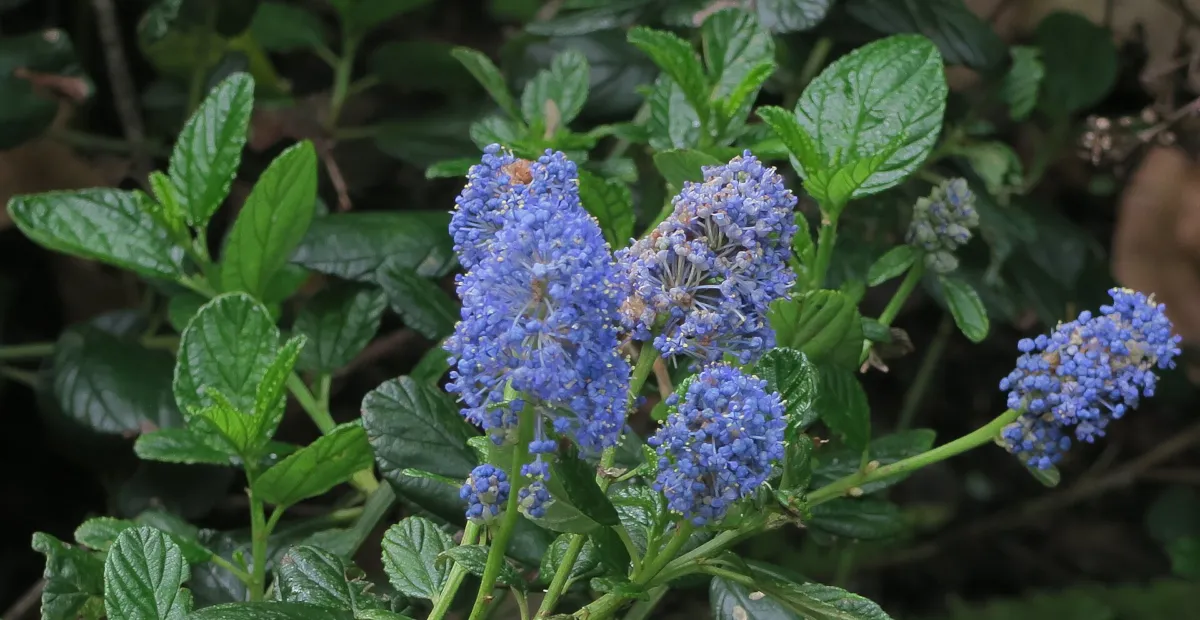
 Source:
 Blue Blossom Ceanothus (Ceanothus thyrsiflorus) short overview
Blue Blossom Ceanothus is a fast-growing evergreen shrub native to coastal Oregon and California. Its glossy leaves, spreading to upright habit, and spring clusters of fragrant blue flowers make it a distinctive choice for sunny slopes, screens, habitat gardens, and erosion control. Once established, it prefers lean, sharply drained soil and summer-dry conditions, but it dislikes heavy, wet ground and severe root disturbance.
Taxonomic classification
Blue Blossom Ceanothus (Ceanothus thyrsiflorus) care guide
Light and placement
Choose full sun for the strongest flowering and densest growth, ideally with at least 6 hours of direct light and good air movement. Partial afternoon shade can work in hot inland areas, but heavy shade produces weaker, more open growth and fewer flowers. Pale, stretched shoots suggest insufficient light; scorched foliage usually indicates root stress, reflected heat, or drought rather than excessive sun alone.
Watering and humidity
Water deeply and slowly during the first growing season whenever the upper soil begins to dry, then extend the interval as roots establish. Mature plants generally prefer infrequent summer irrigation and can decline in constantly wet soil. In rainy climates, drainage matters more than supplemental water; in hot inland regions, occasional deep watering may be needed during prolonged drought.
Soil and growing medium
Use sandy, loamy, rocky, sharply drained soil. The species tolerates a broad pH range, but several horticultural references report especially good performance in neutral to alkaline ground. Avoid compacted clay, standing water, and rich, constantly moist beds. A mineral, low-organic-matter soil helps limit lush growth and root problems.
Feeding
Established plants generally need little fertilizer, particularly in native or reasonably fertile soil. If growth is weak, apply a light, slow-release, low-nitrogen fertilizer in early spring or top-dress sparingly with finished compost. Do not feed heavily or fertilize drought-stressed, newly transplanted, or poorly drained plants.
Growth and habit
Growth is rapid when plants receive strong light, excellent drainage, and appropriate summer dryness. The species may develop a dense, rounded, upright, or spreading structure. Avoid cutting deeply into old wood or repeatedly irrigating during summer, as stress and root problems can shorten the life of an otherwise long-lived planting.
Planting and repotting
Plant in fall or early spring in regions with seasonal rain, allowing the root ball to settle at the same level as in its nursery container. Do not bury the crown. Space plants according to their mature form and provide several feet of clear, well-drained soil around the root zone. Water regularly during the first growing season, then taper as roots establish.
Best grown in the ground rather than kept long-term in a container. If container-grown, use a deep pot with a very free-draining mineral mix and transplant while young, before the root system becomes congested. Handle the root ball carefully because established ceanothus roots resent disturbance.
Propagation and pruning
Propagation
Seed is reliable when properly treated but can be slow and irregular. Collect mature capsules before they open, use hot-water scarification, and follow with appropriate stratification when required by the seed lot. Softwood or semi-hardwood cuttings can be attempted in active growth under high humidity with rooting hormone, but success may be variable. Seedlings do not preserve cultivar characteristics.
Pruning
Prune lightly after flowering to shape or remove crossing, damaged, or weak branches. Avoid hard renovation cuts into old, leafless wood because mature ceanothus may not regenerate reliably. Do not shear routinely; retain the natural branching framework and prune young plants conservatively.
Overwintering
In USDA Zones 7–9, outdoor wintering is normally appropriate when drainage is excellent. Protect young plants from severe cold, drying winds, and saturated winter soil with shelter and a temporary mulch layer kept away from the crown. Container plants are more vulnerable than plants in the ground and should be protected from hard freezes without being kept warm and wet.
Uses
Useful as an evergreen screen, background shrub, slope planting, erosion-control plant, and wildlife-garden species. Its flowers support bees, bumblebees, butterflies, and hummingbirds, while seeds are used by birds and small mammals. Some Native American traditions used ceanothus material to make soap or ceremonial wreaths; this is cultural context, not a recommendation for home medicinal use.
Appearance
This evergreen shrub has alternate, simple, glossy green leaves, often with three prominent veins visible on the underside. Branches may be stiff and upright or broadly spreading, and the plant can become dense with age. The small blue flowers occur in conspicuous clustered sprays, followed by tiny sticky, slightly lobed capsules.
Flowering
Small five-petaled flowers are produced in dense, spike-like to thyrse-shaped clusters on the season’s growth. Wild plants may show blue, purple-blue, or nearly white flowers. The main display generally occurs from mid-spring into early summer, with timing varying by latitude, elevation, and coastal climate.
Pollination and visitors
The flowers are documented as attractive to bees, bumblebees, butterflies, and hummingbirds. Ceanothus thyrsiflorus also supports larvae of multiple butterfly and moth species, making it valuable beyond adult nectar visitation.
Ceanothus thyrsiflorus photos
Click any photo for a larger view. Source, author and license are shown separately.
Diseases and pests
Diseases
The principal risk is root decline from persistently wet soil or poor drainage. Improve drainage before planting, avoid frequent summer irrigation, and remove badly affected material. Good air circulation and clean pruning tools help reduce occasional foliar disease, though the species is generally low maintenance in suitable conditions.
Pests
Watch for scale insects, aphids, and occasional leaf or shoot problems, especially on stressed plants. Favor deep but infrequent irrigation during establishment, avoid excess nitrogen, and inspect new growth. Treat only when pests are persistent or damaging; preserve beneficial insects attracted to the flowers.
Related diseases and pests
Only Plant Doctor profiles whose host data indicate this plant may be affected are shown here.

Toxicity and pollen
No well-established major human or companion-animal poisoning syndrome was identified for this exact species in the reviewed sources. The small fruits and plant material should nevertheless not be intentionally eaten, and children and pets should be discouraged from chewing ornamental plants. Seek professional advice after a suspected ingestion.
- Typical season
- Spring, typically April–June in much of its US growing range
- Pollination / pollen
- Insect-carried pollen; limited airborne release
This is an insect-pollinated shrub, so pollen is not typically released in the same abundant airborne manner as wind-pollinated trees and grasses. Sensitive people may still react to flowering plants, and local exposure can vary with bloom density, weather, and individual sensitivity.
Native habitat
Native populations occur in coastal Oregon and California, especially in maritime slopes, bluffs, coastal scrub, canyons, mixed evergreen woodland, and other open habitats. Plants commonly encounter rocky or sandy soils, seasonal winter moisture, and dry summers. Coastal exposure and local ecotype strongly influence mature size and hardiness.
Interesting fact
The species forms symbiotic root associations that help it use nutrient-poor soils. Its sticky, slightly lobed capsules mature in late summer or fall. Ceanothus thyrsiflorus can vary from low and spreading to large and tree-like depending on form and site. Several butterfly and moth larvae use ceanothus as a host plant.
Frequently asked questions (FAQ)
The most relevant questions about this plant, with short and direct answers.
🌱Quick care
What is Blue Blossom Ceanothus?⌄
Blue Blossom Ceanothus is the evergreen shrub Ceanothus thyrsiflorus, a California and Oregon native in the buckthorn family, Rhamnaceae. It is grown for glossy foliage, vivid blue flower clusters, and low water needs after establishment.
How much sun does Blue Blossom Ceanothus need?⌄
Blue Blossom Ceanothus grows best in full sun, with at least 6 hours of direct light daily. It can tolerate partial shade, especially afternoon shade in hot inland climates.
How often should I water Blue Blossom Ceanothus?⌄
Water Blue Blossom Ceanothus regularly while it establishes, then reduce irrigation substantially once the roots are established. In suitable climates and sharply drained soil, mature plants usually need only occasional deep watering during prolonged drought.
Is Blue Blossom Ceanothus evergreen?⌄
Yes, Blue Blossom Ceanothus is a broadleaf evergreen shrub in mild climates. Severe winter cold, drought stress, or unsuitable conditions can cause foliage damage or dieback.
🌤️Environment and placement
What USDA hardiness zone is Blue Blossom Ceanothus?⌄
Blue Blossom Ceanothus is generally suited to USDA Zones 7 through 9, although hardiness varies by plant source, cultivar, exposure, and winter conditions. Some references list a broader range, so local performance should be checked before planting.
Where should I plant Blue Blossom Ceanothus?⌄
Plant Blue Blossom Ceanothus in a sunny, open location with excellent drainage and enough room for a large shrub. Slopes, raised beds, rock gardens, and backgrounds are often better than compacted or regularly irrigated lawn areas.
What type of soil does Blue Blossom Ceanothus prefer?⌄
Blue Blossom Ceanothus prefers sandy, loamy, rocky, or otherwise sharply drained soil. It can tolerate a range of pH conditions, but persistent wetness and heavy, poorly drained clay create a high risk of root problems.
Can Blue Blossom Ceanothus grow in clay soil?⌄
Blue Blossom Ceanothus can sometimes grow in clay soil only if drainage is improved substantially. Planting on a slope or raised mound is safer than placing the shrub in a low, waterlogged site, and excessive soil amendment in the planting hole should be avoided.
Can Blue Blossom Ceanothus tolerate drought?⌄
Yes, established Blue Blossom Ceanothus is drought tolerant and needs relatively little summer water. Young plants still require deep, appropriately spaced irrigation until their root systems develop.
Is Blue Blossom Ceanothus good for pollinators?⌄
Yes, its spring flowers attract bees, butterflies, hummingbirds, and other beneficial wildlife. The dense evergreen foliage also provides cover for birds.
Is Blue Blossom Ceanothus deer resistant?⌄
Blue Blossom Ceanothus is often described as deer tolerant, but it is not reliably deer proof. Deer may browse new growth, particularly when other food is scarce, so protection may be needed in heavily browsed landscapes.
💧Care and problems
How big does Blue Blossom Ceanothus get?⌄
Blue Blossom Ceanothus commonly reaches about 4 to 14 feet tall and wide, depending on climate, cultivar, and growing conditions. Some plants can become tree-like if allowed to grow without size control.
Does Blue Blossom Ceanothus need fertilizer?⌄
Blue Blossom Ceanothus usually needs little or no fertilizer when planted in suitable soil. Overfertilizing can encourage weak growth and is generally less helpful than providing good drainage and careful establishment watering.
Why is my Blue Blossom Ceanothus turning brown?⌄
Brown foliage or dieback commonly results from excess irrigation, poor drainage, root disease, drought stress, or winter injury. Check soil moisture and drainage first, and avoid keeping the root zone continuously wet.
What pests and diseases affect Blue Blossom Ceanothus?⌄
Blue Blossom Ceanothus is generally low maintenance, but aphids, scales, caterpillars, borers, and root or crown rots can occur. Poor drainage and excessive summer watering are especially important contributors to plant decline.
🪴Planting and repotting
When is the best time to plant Blue Blossom Ceanothus?⌄
Plant Blue Blossom Ceanothus in fall or during the cooler part of the growing season when the soil can be watered without remaining saturated. In colder regions, spring planting may reduce the risk of newly planted roots suffering winter damage.
How do I plant Blue Blossom Ceanothus?⌄
Set the plant at the same depth it grew in its nursery container, backfill with the native soil, and water deeply to settle the roots. Choose the permanent site carefully because Blue Blossom Ceanothus dislikes root disturbance and transplanting.
Can Blue Blossom Ceanothus be grown in a container?⌄
Blue Blossom Ceanothus is usually better planted in the ground because it develops a large root system and dislikes disturbance. A large container with excellent drainage may work temporarily or for a compact cultivar, but long-term container culture is not ideal.
✂️Propagation and pruning
How do I propagate Blue Blossom Ceanothus from seed?⌄
Blue Blossom Ceanothus can be propagated from seed, but the seeds may require scarification or heat treatment to break dormancy. Germination methods vary, so use a reputable native-seed source’s instructions rather than assuming untreated seed will sprout quickly.
Can Blue Blossom Ceanothus be propagated from cuttings?⌄
Yes, Blue Blossom Ceanothus can be propagated from stem cuttings, although success is variable. Take healthy semi-ripe or actively growing material, use a sterile, well-drained rooting medium, and maintain even moisture without waterlogging.
Can I transplant a mature Blue Blossom Ceanothus?⌄
Transplanting a mature Blue Blossom Ceanothus is risky because the species dislikes root disturbance. It is usually better to plant a young specimen directly in its permanent location.
When should I prune Blue Blossom Ceanothus?⌄
Prune Blue Blossom Ceanothus immediately after flowering because it flowers on the previous year’s growth. Limit pruning to light shaping and removal of dead or damaged branches whenever possible.
How do I prune Blue Blossom Ceanothus without killing it?⌄
Use light tip pruning and avoid cutting deeply into old, thick wood. Repeated hard pruning to keep the shrub much smaller than its natural size can shorten its lifespan and may prevent reliable regrowth.
⚠️Toxicity and safety
Is Blue Blossom Ceanothus toxic to dogs and cats?⌄
No established major toxicity classification is widely recognized for Blue Blossom Ceanothus, but ingestion should still be discouraged. Contact a veterinarian or animal poison service if a pet eats a significant amount or develops symptoms.
Are Blue Blossom Ceanothus berries edible?⌄
The small fruits are described botanically as capsules and have been reported as edible in some plant references, but they are not a standard food crop. Do not allow children or pets to consume unidentified plant parts, and avoid eating them unless expert identification and safety guidance are available.
🌸Flowering and special interest
When does Blue Blossom Ceanothus bloom?⌄
Blue Blossom Ceanothus usually blooms in spring, often from mid-May to mid-June in regions where it is well adapted. Exact timing varies with climate, exposure, winter temperatures, and cultivar.
What color are Blue Blossom Ceanothus flowers?⌄
The flowers are typically vivid blue to deep blue and appear in dense, spike-like clusters. Individual plants or cultivars may produce paler blue, lavender, or occasionally white flowers.
Why is my Blue Blossom Ceanothus not flowering?⌄
Poor flowering is often caused by insufficient sunlight, excessive nitrogen, winter damage, drought stress, or pruning at the wrong time. Because the shrub flowers on older growth, heavy pruning before bloom can remove the developing flower wood.
Does Blue Blossom Ceanothus flower when young?⌄
Yes, Blue Blossom Ceanothus can flower while relatively young when it receives adequate light and has well-drained soil. Stress, transplant shock, excessive shade, or overwatering can delay or reduce flowering.
Similar plants
 Yellow lantern chili (Capsicum chinense) care guideCapsicum chinense
 Capsicum baccatum care guideCapsicum baccatum
 Serrano (Capsicum annuum ‘Serrano’)Capsicum annuum 'Serrano'
 Purple Beauty (Capsicum annuum ‘Purple Beauty’)Capsicum annuum 'Purple Beauty'
 Numex Twilight (Capsicum annuum ‘Numex Twilight’)Capsicum annuum 'Numex Twilight'
 Explosive Ember Chili Pepper (Capsicum annuum ‘Explosive Ember’)Capsicum annuum 'Explosive Ember'