
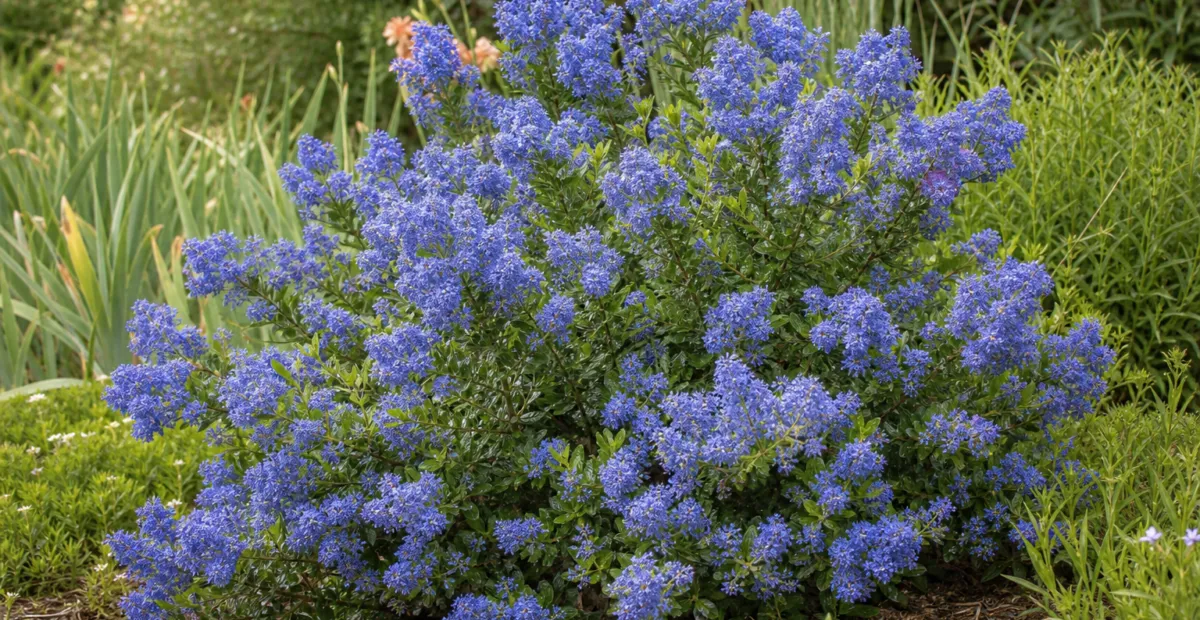
 AI-generated illustration
 California lilac (Ceanothus × delileanus ‘Gloire de Versailles’) short overview
Ceanothus × delileanus 'Gloire de Versailles' is a deciduous French hybrid shrub prized for its rounded habit and generous display of powder-blue flower panicles from summer into early fall. Give it full sun, protection from strong cold winds, and fertile, well-drained soil that does not remain wet in winter. It works well as a specimen, informal hedge, wall-side shrub, or pollinator-friendly border plant.
Taxonomic classification
California lilac (Ceanothus × delileanus ‘Gloire de Versailles’) care guide
Light and placement
Choose full sun for the best flowering, ideally against a south- or southwest-facing wall or in another sheltered position. Partial afternoon shade can help in very hot climates, but deep shade causes lank growth and fewer flowers. Pale, stretched shoots suggest inadequate light; scorched foliage or repeated wilting suggests excessive heat, reflected exposure, or insufficient establishment watering rather than a need for shade alone.
Watering and humidity
Water deeply and infrequently once established, allowing the upper soil to dry somewhat between applications without letting a new plant wilt repeatedly. Maintain more regular moisture during the first two growing seasons and during prolonged summer drought. Reduce irrigation in cool or wet periods, and never leave the root zone saturated. Average outdoor humidity is adequate; good air circulation helps limit foliar disease.
Soil and growing medium
Use fertile, well-drained soil with a sandy-loam or lightly rocky structure. Avoid heavy, waterlogged clay, especially in winter. The plant tolerates neutral to slightly alkaline conditions, although shallow chalky soils may cause chlorosis. In compact ground, improve drainage with a raised planting area rather than adding large amounts of rich amendment to the hole.
Feeding
Apply a modest spring dressing of compost or a balanced slow-release shrub fertilizer once new growth begins. Avoid heavy nitrogen feeding, which can produce weak, leafy growth and reduce flowering. Do not fertilize drought-stressed, newly transplanted, or late-season plants; water the soil first when conditions are dry.
Growth and habit
A vigorous, rounded shrub that can become open or rangy without regular formative pruning. Because it flowers on current-season growth, it can be renewed more heavily than evergreen ceanothus, although severe pruning may delay the display. Strong establishment watering is important, but mature plants perform best when roots are not kept continuously wet.
Planting and repotting
Plant in spring or early fall when soil is workable and the shrub is not under heat or drought stress. Set the root ball level with the surrounding soil, water deeply, and mulch lightly without covering the crown. Allow about 4–6 feet of space for a mature specimen, with extra room where a loose hedge or wall-trained form is desired. Water consistently during the first two growing seasons while roots establish.
Grow in a large, stable container only temporarily or where regular watering can be carefully controlled. Repot in early spring before vigorous growth, moving the plant with as much root ball intact as possible. Ceanothus develops substantial woody roots and dislikes disturbance, so avoid frequent repotting and plant into the landscape when practical.
Propagation and pruning
Propagation
Propagate from softwood cuttings taken in mid to late summer. Use a free-draining propagation medium, maintain even moisture and high humidity without saturation, and protect rooted cuttings through their first winter. Cultivar identity is maintained through vegetative propagation rather than seed.
Pruning
Prune in late winter or early spring before active growth, shortening flowered stems and removing weak or congested shoots. Established deciduous plants can be cut back by about one-half, and older plants may tolerate harder renovation pruning when necessary. Avoid pruning after new flower buds have developed if maximum summer flowering is desired.
Overwintering
Plant in a sheltered location protected from strong, cold, drying winds. Apply a light organic mulch over the root zone after the ground cools, keeping it away from the stems. In colder or exposed areas, expect some winter dieback and delay pruning until new growth shows in spring. Container plants need insulation around the pot and protection from repeated hard freezing.
Uses
Use as a flowering specimen, informal hedge, shrub-border accent, wall-side planting, or pollinator-garden shrub. Its deciduous habit allows more light into borders in winter, while the long blue flowering period provides summer color. It is ornamental rather than culinary; do not promote ingestion or medicinal use.
Appearance
This shrub has broad oval leaves with fine marginal teeth and a light green summer appearance. The stems become woody and support a rounded, sometimes loosely branched framework. Its most distinctive feature is the succession of large powder-blue panicles held toward the branch tips. Leaves are shed in fall, unlike the evergreen foliage of many better-known coastal California lilacs.
Flowering
Large panicles of powder-blue flowers are produced on new wood during the summer and may continue into early fall. Individual flowers are small, but the clustered inflorescences create a conspicuous display. Flowering is strongest in a warm, sunny, sheltered position; severe winter damage or poorly timed hard pruning can reduce the season's bloom.
Pollination and visitors
The flowers are documented as attractive to butterflies, honeybees and bumblebees. The long flowering period can provide a useful summer nectar resource, especially when planted with other sequentially blooming shrubs and perennials. No single pollinator species is sufficiently documented here to justify a species-level entry.
Diseases and pests
Diseases
Generally trouble-free, but leaf spot and powdery mildew can occur, especially where foliage stays crowded or damp. Improve air circulation, water at the soil surface, remove badly affected leaves, and avoid unnecessary overhead irrigation. Honey fungus has also been reported for Ceanothus, though it is not a routine problem in well-drained garden soil.
Pests
Scale insects may occur. Inspect stems and leaf undersides, particularly on stressed plants. Encourage natural predators and improve plant vigor before using control measures. Remove heavily infested shoots if practical; use a labeled horticultural oil only when temperatures and plant condition allow, following the product label.
Related diseases and pests
Only Plant Doctor profiles whose host data indicate this plant may be affected are shown here.
 DiseaseMaple powdery mildewSawadaea bicornis
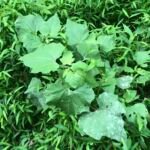 DiseaseCucurbit Powdery MildewPodosphaera xanthii (Castagne) U. Braun & Shishkoff
 DiseaseRose powdery mildewPodosphaera pannosa
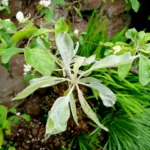 DiseaseApple Powdery MildewPodosphaera leucotricha
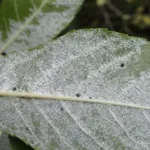 DiseaseAsh Powdery MildewPhyllactinia fraxini (DC.) Fuss
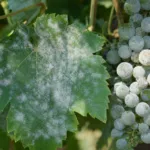 DiseaseGrape Powdery MildewErysiphe necator Schwein. (synonym: Uncinula necator)
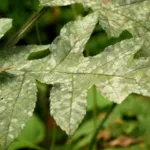 DiseaseApiaceae Powdery MildewErysiphe heraclei
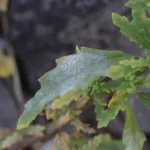 DiseaseBeet powdery mildewErysiphe betae (synonym commonly used in U.S. literature: Erysiphe polygoni)
Toxicity and pollen
No authoritative source located in this review identifies this exact cultivar as poisonous to people or pets. That absence is not proof of complete safety: plant material can still cause choking, stomach upset, or individual irritation if eaten. Do not use it as food, and seek veterinary or medical advice after significant ingestion or concerning symptoms.
- Typical season
- Primarily June–September in the United States
- Pollination / pollen
- Heavy, sticky insect-carried pollen
Ceanothus pollen is associated with insect-pollinated flowers and is generally heavy and sticky rather than widely wind-dispersed. Reliable cultivar-specific U.S. allergy data were not located, so the airborne pollen rating is provisional rather than a guarantee of no symptoms. People with strong pollen sensitivity should avoid prolonged direct contact during bloom and monitor local reactions.
Native habitat
The cultivar is a garden hybrid rather than a naturally occurring wild population. Its parentage combines an eastern North American deciduous species with a Mexican evergreen species, explaining its combination of summer flowering, deciduous foliage and improved cold tolerance compared with many evergreen ceanothus. It performs best in sunny, well-drained soils with seasonal moisture rather than winter saturation.
Interesting fact
This cultivar belongs to the French hybrids, derived from a cross involving the eastern North American Ceanothus americanus and the Mexican C. caeruleus. Unlike many evergreen California lilacs, it is deciduous and flowers on new wood, making it more tolerant of pruning and generally more adaptable in colder gardens. It has received the Royal Horticultural Society Award of Garden Merit.
Frequently asked questions (FAQ)
The most relevant questions about this plant, with short and direct answers.
🌱Quick care
What is Ceanothus × delileanus 'Gloire de Versailles'?⌄
Ceanothus × delileanus 'Gloire de Versailles' is a deciduous French hybrid shrub commonly called California lilac. It produces fragrant, powder-blue flower clusters and usually grows about 3–5 feet tall and wide.
How much sun does Ceanothus × delileanus 'Gloire de Versailles' need?⌄
Plant it in full sun for the strongest growth and heaviest flowering. In hot climates, it can tolerate partial shade, especially afternoon shade, but too much shade may reduce blooms.
How often should I water 'Gloire de Versailles' ceanothus?⌄
Water regularly while the shrub is establishing, then provide moderate, occasional irrigation during dry periods. Keep the soil well drained and avoid frequent watering that leaves the roots constantly wet.
How big does Ceanothus × delileanus 'Gloire de Versailles' get?⌄
It typically reaches about 3–5 feet tall and 3–5 feet wide in cultivation. Growth and final size vary with climate, soil, pruning, and available moisture.
🌤️Environment and placement
What USDA hardiness zones are suitable for 'Gloire de Versailles' ceanothus?⌄
Ceanothus × delileanus 'Gloire de Versailles' is generally listed for USDA Zones 6–10, although winter protection is useful in colder parts of its range. Sheltered placement and protection from drying winter winds improve survival.
Can 'Gloire de Versailles' ceanothus grow in partial shade?⌄
Yes, it can grow in partial shade, particularly where summers are very hot. Choose a site that still receives several hours of direct sun because flowering is usually best in brighter conditions.
What soil is best for Ceanothus × delileanus 'Gloire de Versailles'?⌄
Use fertile, well-drained sandy loam or rocky soil that does not stay waterlogged. It performs poorly in heavy, persistently wet clay, so improve drainage or plant on a slight mound if necessary.
Is 'Gloire de Versailles' ceanothus drought tolerant?⌄
Established plants have some drought tolerance because their woody roots grow deeply, but this cultivar flowers and looks best with moderate moisture. Water deeply during extended drought, especially in hot inland climates.
Can I grow 'Gloire de Versailles' ceanothus in a container?⌄
Yes, it can be grown in a large container with excellent drainage and a high-quality potting mix. Container plants dry and freeze more quickly than in-ground shrubs, so monitor moisture and protect the roots during severe cold.
Is Ceanothus × delileanus 'Gloire de Versailles' suitable for hot and humid areas?⌄
It is more adaptable than many evergreen California lilacs, but hot, humid regions can still be challenging. Provide excellent drainage, air circulation, afternoon shade, and avoid wet soil around the roots.
💧Care and problems
Why is my 'Gloire de Versailles' ceanothus not flowering?⌄
Insufficient sunlight, excessive nitrogen, winter damage, drought stress, or heavy pruning at the wrong time can reduce flowering. Move or thin surrounding plants if necessary and avoid cutting off the current season’s flowering wood.
Why are the leaves of my 'Gloire de Versailles' ceanothus turning yellow?⌄
Yellow leaves commonly indicate waterlogged roots, poor drainage, drought stress, or nutrient-related chlorosis. Check soil moisture and drainage first, because correcting root conditions is usually more important than adding fertilizer.
What pests affect Ceanothus × delileanus 'Gloire de Versailles'?⌄
Scale insects are the main pest specifically noted for this cultivar. Inspect stems and leaf undersides, and address infestations early with appropriate horticultural control methods.
What diseases can affect 'Gloire de Versailles' ceanothus?⌄
Leaf spot and powdery mildew may occur, while persistently wet soil can contribute to root diseases such as Phytophthora. Improve air circulation, water at the soil line, and avoid poorly drained sites.
Does 'Gloire de Versailles' ceanothus need fertilizer?⌄
It usually needs little fertilizer when planted in reasonably fertile soil. Avoid excessive nitrogen, which can encourage leafy growth at the expense of flowers; use a soil test to guide any nutrient application.
🪴Planting and repotting
When is the best time to plant Ceanothus × delileanus 'Gloire de Versailles'?⌄
Plant in spring or early fall when temperatures are moderate and the soil is workable. Avoid planting during frozen ground, extreme heat, or periods when the site remains saturated.
How do I plant 'Gloire de Versailles' ceanothus?⌄
Set the shrub at the same depth it grew in its nursery container, backfill with well-drained soil, and water thoroughly. Mulch lightly around—not against—the stem, and keep the root zone evenly moist during the first growing seasons.
Can 'Gloire de Versailles' ceanothus be transplanted?⌄
Transplanting is risky once established because the shrub develops thick, deep roots. Choose the permanent site carefully, and if moving is unavoidable, transplant a young plant with as much intact root ball as possible.
How far apart should I plant 'Gloire de Versailles' ceanothus?⌄
Space plants about 3–5 feet apart for a shrub border or informal hedge, depending on the desired density. Allow additional room where the local climate promotes larger growth.
✂️Propagation and pruning
How do I propagate Ceanothus × delileanus 'Gloire de Versailles'?⌄
Propagate it from softwood cuttings taken in mid to late summer. Use clean, healthy shoots in a sterile, well-drained rooting medium and maintain consistent moisture without waterlogging.
When should I prune 'Gloire de Versailles' ceanothus?⌄
Prune lightly in spring or shortly after flowering, depending on the shape and flowering you want to preserve. Because this deciduous hybrid flowers on new growth, spring pruning can encourage fresh flowering shoots.
How hard can I prune Ceanothus × delileanus 'Gloire de Versailles'?⌄
Use light to moderate pruning rather than routinely cutting far into old, leafless wood. A substantial renovation prune may reduce or eliminate flowering for that season, and recovery from severe cuts is not always reliable.
Should I deadhead 'Gloire de Versailles' ceanothus?⌄
Deadheading is optional but can improve the shrub’s appearance and may help extend the flowering display. Remove spent flower clusters carefully without removing more healthy new growth than necessary.
⚠️Toxicity and safety
Is Ceanothus × delileanus 'Gloire de Versailles' toxic to people or pets?⌄
No specific toxicity is firmly established for this exact cultivar, but ingestion is not recommended. Keep plant material away from children and pets and contact a medical or veterinary professional if a significant amount is eaten.
🌸Flowering and special interest
When does Ceanothus × delileanus 'Gloire de Versailles' bloom?⌄
It generally blooms from June through September, with powder-blue flower panicles appearing over summer and into early fall. Exact timing depends on local climate, winter damage, sunlight, and pruning.
Are the flowers of 'Gloire de Versailles' ceanothus fragrant?⌄
Yes, the powder-blue flower clusters are generally described as lightly fragrant or scented. Fragrance is most noticeable in warm, still conditions when the shrub is in full bloom.
Do bees and butterflies visit 'Gloire de Versailles' ceanothus?⌄
Yes, its abundant blue flowers attract pollinators, including bees and butterflies. Plant it in a sunny location to support the heaviest bloom and greatest wildlife value.
Can 'Gloire de Versailles' ceanothus be used as a hedge?⌄
Yes, it can form an informal flowering hedge or screen when spaced appropriately and lightly shaped. It is best suited to a relaxed, naturalistic hedge rather than a tightly clipped formal hedge.
Similar plants
 Blue Blossom Ceanothus (Ceanothus thyrsiflorus) care guideCeanothus thyrsiflorus
 Repens (Ceanothus thyrsiflorus ‘Repens’)Ceanothus thyrsiflorus 'Repens'
 Ceanothus ‘Concha’Ceanothus 'Concha'
 Ceanothus ‘Dark Star’Ceanothus 'Dark Star'
 New Jersey tea (Ceanothus americanus) care guideCeanothus americanus