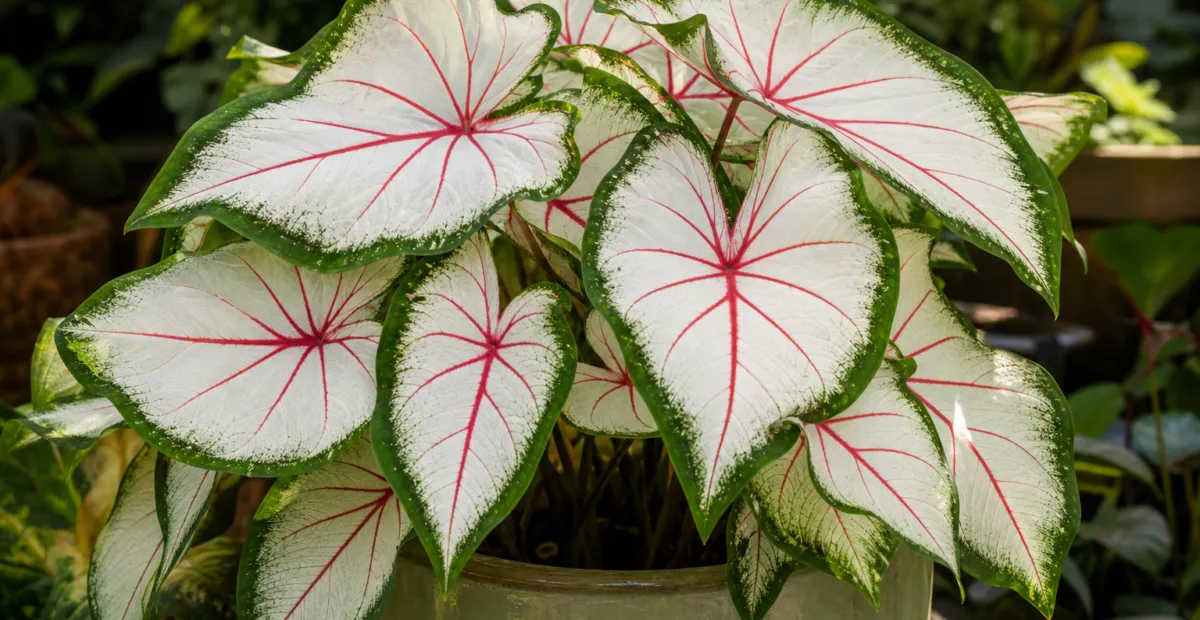
 AI-generated illustration
 Caladium ‘White Queen’ short overview
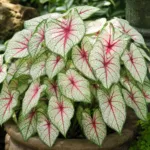
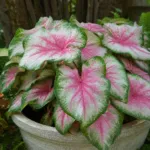
Caladium ‘White Queen’ is a tender, tuberous perennial prized for broad, heart-shaped leaves with a luminous white surface, strong red veins, and dark green margins. It brings high contrast to shaded beds, patios, and indoor displays. Give it warmth, humidity, bright filtered light or partial shade, and consistently moist but well-drained soil. In cold regions, lift the tubers before frost and store them dry and dormant.
Taxonomic classification
Caladium ‘White Queen’ care guide
Light and placement
Provide bright filtered light indoors or partial shade outdoors. Morning sun with afternoon shade is a useful placement in warm climates; intense midday sun can scorch pale leaves, while deep shade may produce lankier stems and weaker color. Turn containers periodically indoors for even growth. Protect foliage from hot reflected light and strong drying wind.
Watering and humidity
Water thoroughly when the upper surface begins to dry, then allow excess water to drain completely. Keep the medium evenly moist during active growth without leaving the tuber in standing water. Reduce watering as foliage yellows in late season, and keep dormant tubers nearly dry. High humidity helps indoors, but ventilation is important.
Soil and growing medium
Use a loose, humus-rich mix that drains freely while retaining moderate moisture. A quality peat-free or peat-based container medium amended with compost and perlite works well. Slightly acidic conditions are generally suitable. Avoid heavy, waterlogged soil, which greatly increases the risk of tuber and root rot.
Feeding
Feed only during active leaf production, using a balanced liquid fertilizer diluted to about half the label strength every 3–4 weeks, or apply a light controlled-release fertilizer at planting. Do not fertilize dormant tubers or recently divided, damaged, or rotting material. Excess nitrogen can produce soft growth and reduce ornamental color.
Growth and habit
This is a warm-season geophyte that produces leaves from an underground tuber, expands rapidly during suitable heat and moisture, and naturally becomes dormant as conditions cool or dry. Growth is clumping rather than woody. Remove declining foliage at dormancy and reduce watering gradually rather than forcing growth in cold conditions.
Planting and repotting
Plant outdoors only after soil has warmed and frost danger has passed. Set tubers with the growing points upward and cover with roughly 1–2 inches of mix or soil. Space plants about 8–12 inches apart for a fuller display, allowing extra room in rich, moist beds. Water gently until active growth is established.
Repot in spring as dormant tubers begin to sprout, or move established plants into a slightly larger container only when roots or tubers have filled the existing space. Use fresh, porous mix and avoid burying the growing point excessively. Handle emerging shoots carefully because they are brittle.
Propagation and pruning
Propagation
Propagate by dividing dormant tubers in spring. Each section should retain a viable bud or eye and should be allowed to callus briefly before planting. Division is more reliable for preserving ‘White Queen’ characteristics than seed, which may not reproduce the cultivar faithfully.
Pruning
No formative pruning is needed. Remove yellow, damaged, or collapsed leaves at the base with clean shears. At dormancy, cut back completely dry foliage and stop watering after the plant has naturally declined. Do not cut healthy leaves merely to shape the clump.
Overwintering
In cold climates, stop feeding as foliage declines, allow the tuber to dry somewhat, then lift it before frost. Cure briefly in a warm, dry place and store dormant tubers in dry peat, vermiculite, or similar material at about 60–70°F. Alternatively, keep them dry in their container. Restart in warmth in spring.
Uses
Used primarily as an ornamental foliage plant in shaded beds, containers, hanging displays, patios, conservatories, and bright indoor spaces. It is not an edible plant. Because all parts contain irritating calcium oxalates, place it where children, dogs, and cats cannot chew the foliage.
Appearance
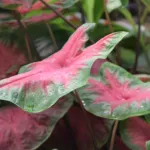
The hallmark is a large, fancy-shaped leaf with a predominantly white blade, contrasting green margin, and strong red primary venation that may appear to bleed outward. New leaves can show more pink before maturing. Leaves arise on upright petioles from a hidden tuber, and the plant dies back seasonally rather than forming woody stems.
Flowering
Flowering is secondary to the foliage and may be infrequent in cultivation. When produced, the inflorescence is a small greenish to yellow-green spathe surrounding a spadix, usually during warm-season growth. Remove it only if desired for appearance; it does not improve foliage quality.
Pollination and visitors
The best-documented pollination evidence comes from Caladium bicolor, whose inflorescences attract nocturnal Cyclocephala scarab beetles. This relationship should not be assumed to be specifically demonstrated for the ‘White Queen’ cultivar, which is rarely studied independently. Indoor plants generally receive few relevant visitors.
Diseases and pests
Diseases
Prevent tuber rot and leaf spot with porous soil, careful watering, good air movement, and clean planting material. Southern blight and root-knot nematodes may occur in warm outdoor soils. Remove badly affected tissue, discard rotting tubers, and avoid reusing contaminated mix. Do not keep the plant constantly wet during dormancy.
Pests
Aphids, spider mites, thrips, mealybugs, and occasional caterpillars may affect plants, especially indoors or under protection. Inspect leaf undersides and new growth regularly. Improve air circulation, isolate infested plants, and use water sprays or a labeled horticultural soap or oil according to instructions. Avoid stressing plants with drought or waterlogging.
Related diseases and pests
Only Plant Doctor profiles whose host data indicate this plant may be affected are shown here.
 Environmental stressLeaf sunburn
 DiseaseSouthern blightAthelia rolfsii
 PestMealy Plum AphidHyalopterus pruni (Geoffroy, 1762)
 DiseaseAlternaria leaf spot and fruit rotAlternaria alternata
 PestOnion thripsThrips tabaci Lindeman
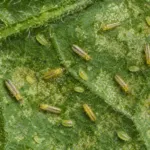 PestMelon thripsThrips palmi Karny
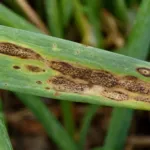 DiseaseStemphylium Leaf BlightStemphylium vesicarium (Wallr.) E.G. Simmons
 PestChilli thripsScirtothrips dorsalis Hood
Toxicity and pollen
Caladiums contain insoluble calcium oxalate crystals. Chewing or swallowing leaves, stems, flowers, or sap can cause immediate mouth irritation, burning, swelling, drooling, nausea, vomiting, or difficulty swallowing. Sap may irritate skin and eyes. Keep the plant away from children and pets, and wear gloves when handling damaged tissue or tubers.
- Typical season
- Usually summer when plants flower; outdoor exposure is limited because flowering is infrequent
- Pollination / pollen
- Limited-release pollen within an enclosed spadix
Caladium flowers are not usually a major airborne-pollen source in home cultivation because flowering is infrequent and the pollen is associated with an enclosed spadix. Sensitive people should still avoid handling inflorescences unnecessarily, and plant sap remains a separate irritation concern.
Native habitat
The genus is associated with warm, humid tropical and subtropical habitats of Central and South America, often in seasonal woodland margins and other sites with filtered light, organic soils, and a pronounced wet–dry rhythm. Cultivated plants prefer similar warmth and moisture but are not frost tolerant.
Interesting fact
The cultivar may emerge with pinkish foliage before leaves mature toward white. Caladium inflorescences have separate female and male zones on the same spadix. Wild Caladium bicolor is associated with heat-producing, night-active scarab beetle pollination. Leaf color can shift with light, age, nutrition, and growing conditions.
Frequently asked questions (FAQ)
The most relevant questions about this plant, with short and direct answers.
🌱Quick care
What is Caladium 'White Queen'?⌄
Caladium 'White Queen' is a tuberous ornamental caladium grown for large white, heart-shaped leaves with green margins and prominent red veins. It is commonly grown as a seasonal bedding plant, container plant, or houseplant.
How much light does Caladium 'White Queen' need?⌄
Give Caladium 'White Queen' bright filtered light to partial shade. It can tolerate some gentle morning sun when soil stays evenly moist, but hot direct afternoon sun may scorch its pale leaves.
How often should I water Caladium 'White Queen'?⌄
Water Caladium 'White Queen' whenever the surface begins to dry, keeping the mix evenly moist during active growth. Do not leave the tuber sitting in saturated soil, because excess moisture can cause rot.
Is Caladium 'White Queen' an indoor or outdoor plant?⌄
Caladium 'White Queen' can grow indoors or outdoors in warm weather. Indoors, provide bright filtered light and humidity; outdoors, place it in a sheltered, frost-free location.
🌤️Environment and placement
Can Caladium 'White Queen' grow in full sun?⌄
Caladium 'White Queen' performs most reliably in partial shade or filtered light, although it may tolerate limited sun in warm, humid conditions. Protect it from intense afternoon sun and prevent the soil from drying out.
What temperature is best for Caladium 'White Queen'?⌄
Keep Caladium 'White Queen' warm, ideally above 60°F during active growth. Cold soil and temperatures near freezing can damage the foliage and tuber.
What USDA hardiness zones can grow Caladium 'White Queen'?⌄
Caladium 'White Queen' is frost tender and is usually grown as an annual outdoors in colder parts of the United States. In USDA Zones 9–11 it may remain in the ground with suitable winter protection, while gardeners in colder zones should lift and store the tubers.
Can Caladium 'White Queen' grow in a shaded garden?⌄
Yes, Caladium 'White Queen' is well suited to partial shade and bright full shade. Filtered light generally helps preserve its white leaves and red veining while reducing scorch.
💧Care and problems
Why are the leaves of my Caladium 'White Queen' turning brown?⌄
Brown leaves on Caladium 'White Queen' are commonly caused by sun scorch, dry soil, cold exposure, low humidity, or inconsistent watering. Move it away from harsh sun, maintain even moisture, and remove badly damaged leaves.
Why is my Caladium 'White Queen' drooping?⌄
Caladium 'White Queen' may droop when the soil becomes too dry, temperatures fall, or the tuber begins seasonal dormancy. Check the moisture first, but avoid repeatedly soaking soil that is already wet.
Why is my Caladium 'White Queen' losing leaves?⌄
Leaf loss is normal when Caladium 'White Queen' enters dormancy, especially as days shorten or temperatures cool. Sudden leaf loss during warm active growth can indicate cold stress, drought, poor drainage, or tuber rot.
How do I prevent root or tuber rot in Caladium 'White Queen'?⌄
Prevent rot by using a moisture-retentive but well-drained mix, watering regularly without keeping the soil waterlogged, and planting the tuber in a container with drainage holes. Soft, foul-smelling tissue should be removed promptly.
Should I fertilize Caladium 'White Queen'?⌄
Fertilize Caladium 'White Queen' lightly during steady active growth with a balanced houseplant or garden fertilizer. Stop feeding when the plant becomes dormant, and avoid heavy nitrogen applications that can produce weak, overly lush growth.
How do I keep Caladium 'White Queen' leaves looking clean?⌄
Rinse or gently wipe Caladium 'White Queen' leaves with clean water and handle them carefully because the pale blades mark easily. Avoid leaf-shine products, which can damage or obstruct the leaf surface.
🪴Planting and repotting
When should I plant Caladium 'White Queen' tubers?⌄
Plant Caladium 'White Queen' tubers outdoors after the danger of frost has passed and the soil is at least about 60°F. In colder regions, start tubers indoors several weeks early and transplant them after conditions warm.
How deep should I plant Caladium 'White Queen' tubers?⌄
Plant Caladium 'White Queen' tubers about 1–2 inches deep with the puckered growing points facing upward. Cover them with loose soil and water thoroughly after planting.
How far apart should Caladium 'White Queen' tubers be planted?⌄
Space Caladium 'White Queen' tubers roughly 8–18 inches apart, depending on tuber size and the fullness desired. Closer spacing creates a denser display, while wider spacing improves air circulation.
What soil is best for Caladium 'White Queen'?⌄
Use a humus-rich, moisture-retentive but well-drained soil for Caladium 'White Queen'. A quality potting mix amended with organic matter works well, provided excess water can drain freely.
Can I grow Caladium 'White Queen' in a container?⌄
Yes, Caladium 'White Queen' grows well in containers with drainage holes and a loose, moisture-retentive potting mix. Containers also make it easier to move the plant indoors before cold weather.
How do I overwinter Caladium 'White Queen' in cold climates?⌄
Before freezing weather, stop watering as the foliage declines, lift the tubers after the leaves die back, and let them dry briefly. Store them in a dry, frost-free place around 60°F or warmer, then replant in spring.
✂️Propagation and pruning
How do I propagate Caladium 'White Queen'?⌄
Propagate Caladium 'White Queen' by dividing healthy tubers in spring before active growth begins. Each division should retain at least one viable eye, and cut surfaces should be allowed to dry before planting.
Can Caladium 'White Queen' be grown from leaf cuttings?⌄
No, ordinary leaf cuttings do not reliably produce new Caladium 'White Queen' plants. Propagation is normally done from tubers or tuber divisions.
Should I remove flowers from Caladium 'White Queen'?⌄
Removing flowers from Caladium 'White Queen' is optional because the foliage is its main ornamental feature. You may remove flower structures to keep the plant focused on foliage, but flowering usually does not seriously harm a healthy plant.
⚠️Toxicity and safety
Is Caladium 'White Queen' toxic to cats and dogs?⌄
Yes, Caladium 'White Queen' is toxic if chewed or swallowed by cats, dogs, and other pets. Keep the plant and tubers away from animals, because chewing may cause painful mouth irritation, drooling, vomiting, or difficulty swallowing.
Is Caladium 'White Queen' poisonous to people?⌄
Caladium 'White Queen' is moderately toxic if chewed or swallowed and may irritate the mouth, throat, stomach, or skin. Keep it away from children, avoid handling sap unnecessarily, and contact Poison Control or a medical professional after ingestion.
🌸Flowering and special interest
Does Caladium 'White Queen' produce flowers?⌄
Yes, Caladium 'White Queen' can produce small greenish-white spathe-like flowers, usually during warm active growth. The flowers are much less prominent than the white leaves and red veins.
Why is my Caladium 'White Queen' not flowering?⌄
A Caladium 'White Queen' that does not flower may simply be young, recently transplanted, dormant, or growing in conditions that favor foliage rather than reproduction. Flowering is not necessary for a healthy or attractive plant.
How tall does Caladium 'White Queen' grow?⌄
Caladium 'White Queen' commonly grows about 18–30 inches tall, with a similar spread under suitable conditions. Final size varies with tuber size, light, warmth, moisture, and whether it is grown in a container or garden bed.