
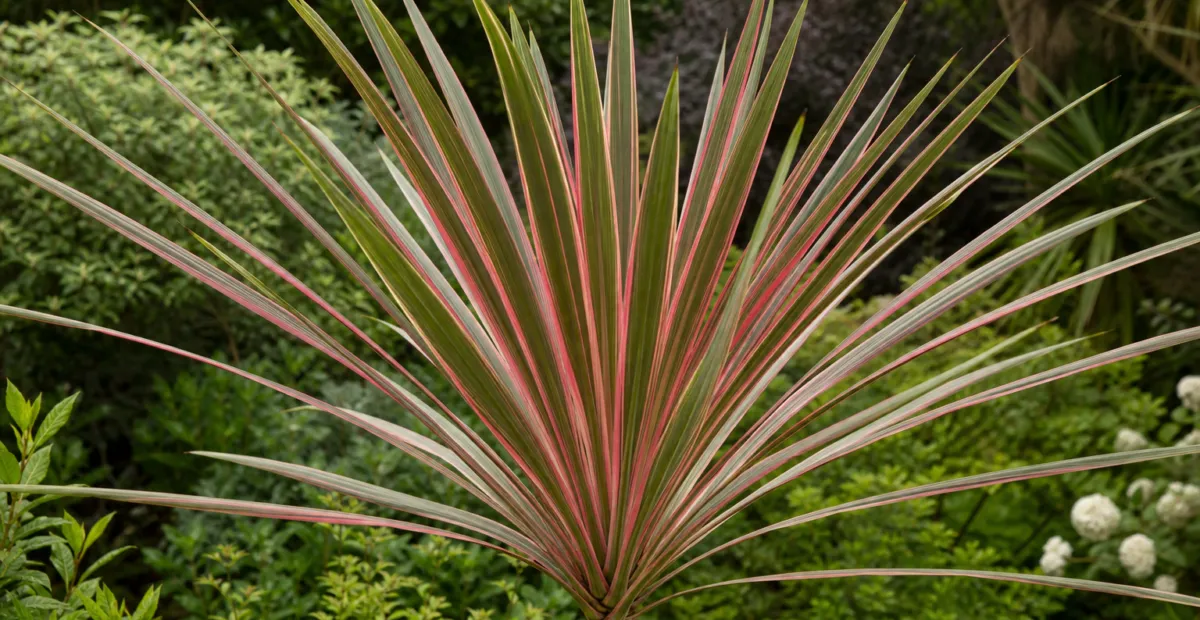
 AI-generated illustration
Pink Stripe (Cordyline australis ‘Pink Stripe’) short overview
Cordyline australis 'Pink Stripe' is an evergreen, architectural selection valued for its narrow gray-green leaves accented by a pink stripe along the center. It develops a palm-like trunk with age and may produce fragrant cream-white flower panicles when mature. Give it bright sun, sharply drained soil, and protection from severe frost. In much of the United States, it is best grown in a container or planted outdoors only in mild coastal and warm-winter regions.
Taxonomic classification
Pink Stripe (Cordyline australis ‘Pink Stripe’) care guide
Light and placement
Provide full sun to partial shade, ideally with morning or filtered afternoon light in hot inland climates. A sheltered south- or west-facing position helps maintain strong color and compact growth, but intense reflected heat can scorch leaves. Too little light produces weaker, greener growth and less pronounced pink marking; excessive wind, abrupt sun, or frost can brown and tear the foliage.
Watering and humidity
Water deeply when the upper inch of soil begins to dry, then allow excess water to drain completely. Keep newly planted and container-grown specimens more evenly moist during active growth. Reduce watering in winter, especially indoors, but do not let the root ball remain bone-dry for long periods. Water at the soil surface rather than repeatedly wetting the crown.
Soil and growing medium
Use a moderately fertile, moisture-retentive but well-drained soil or potting mix. Loam, sandy loam, and clay soils can work when drainage is reliable. A slightly acidic to slightly alkaline reaction is tolerated; avoid persistently waterlogged ground, especially in containers. Add compost or other organic matter to poor soil, but do not create a sharply contrasting pocket around the root ball.
Feeding
Feed container plants with a balanced liquid fertilizer at half strength every 4–6 weeks from spring through late summer, or use a controlled-release fertilizer according to its label. Outdoor plants in fertile soil usually need little feeding; a spring compost mulch is often sufficient. Do not fertilize during cold, dark winter conditions or immediately after severe root disturbance.
Growth and habit
Young plants form a dense fountain-like rosette without an obvious trunk. With age, the stem becomes cane-like and may branch, particularly after flowering, producing several leafy heads. Growth is generally slow, and wind exposure can tear the leaves or destabilize tall container specimens; use a heavy pot and shelter where needed.
Planting and repotting
Plant outdoors in spring after the local danger of hard frost has passed, allowing the root system a full growing season to establish. Set the root ball level with the surrounding soil and water deeply at planting. Space plants according to their eventual trunk and crown size; approximately 4–6 feet apart is suitable for a loose screen, while specimen plants need more room.
Repot container plants in spring when roots have filled the pot or growth has slowed. Choose a deep, heavy container because the plant develops a substantial root system and can become top-heavy. Move up only one pot size, use a free-draining mix, and keep the crown at its original level. Refresh the upper mix annually when full repotting is impractical.
Propagation and pruning
Propagation
Propagate by fresh seed, stem cuttings, trunk cuttings, or rooted shoots. Seed is practical for the species but will not reliably reproduce the cultivar's pink stripe. Use healthy stem sections in warm conditions during the growing season; keep the medium lightly moist and provide bright filtered light while roots form.
Pruning
Routine pruning is usually unnecessary. Remove dead, torn, or frost-damaged leaves at the base with clean tools. If a mature stem is badly damaged or too tall, cut it back in spring just above a healthy node or emerging shoot; new shoots may develop below the cut. Protect fresh cuts from prolonged wetness.
Overwintering
In USDA Zones 9–11, protect from drying winds and hard freezes with a sheltered placement and temporary frost fabric when needed. In colder regions, move containers indoors before freezing weather. Keep the plant in the brightest available window or greenhouse, water sparingly, and avoid placing it beside a heat vent. Return outdoors gradually in spring after frost danger has passed.
Uses
Use as an architectural specimen, accent plant, patio container, sheltered hedge, or tropical-style focal point. It is especially useful where upright form and colorful foliage are desired. In cold climates, grow it as a movable container plant. Do not use it as an edible plant, and prevent pets from chewing the foliage.
Appearance
The defining feature is the narrow pink stripe running along the center of otherwise gray-green, sword-shaped leaves. Leaves arise in dense terminal rosettes, with younger foliage held more upright and older leaves arching or drooping. Mature stems become rough and cane-like, giving the plant a distinctly palm-like silhouette.
Flowering
Mature plants can produce large, branched terminal panicles of numerous small, fragrant cream-white flowers. Flowering is more likely in established outdoor specimens than in young or container-grown plants. After flowering, branching may develop beneath the former flowering point, gradually creating a multi-headed crown.
Pollination and visitors
The species produces numerous fragrant flowers that may be visited by insects, but reliable cultivar-specific visitor records were not found. Container-grown plants often flower infrequently, so pollinator value depends strongly on plant maturity and local conditions.
Diseases and pests
Diseases
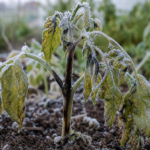
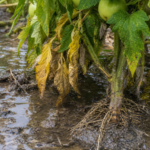
Avoid prolonged wetness and poor ventilation, which encourage root problems and stem or crown rots. Cordyline slime flux and honey fungus are reported but uncommon. Remove badly damaged tissue with clean tools, improve drainage, and avoid routine overhead watering. Frost injury can also create entry points for secondary decay.
Pests
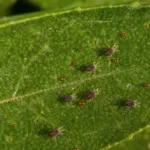
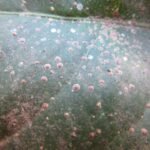
Mealybugs, scale, spider mites, and glasshouse red spider mite may occur, especially indoors or under stress. Inspect leaf bases and undersides regularly. Remove small infestations manually or with a suitable horticultural soap; repeat treatments as directed. Improve light and airflow, isolate affected containers, and avoid water stress that encourages outbreaks.
Related diseases and pests
Only Plant Doctor profiles whose host data indicate this plant may be affected are shown here.

Toxicity and pollen
Cordyline australis contains saponins and is listed as toxic to dogs and cats. Ingestion may cause vomiting, depression, reduced appetite, drooling, and in cats, dilated pupils; severe signs can occur. Keep leaves and fallen plant material away from pets and seek veterinary advice after ingestion. Human exposure data for this cultivar are limited; do not eat the plant.
- Pollination / pollen
- Pollen from insect-associated flowers; airborne relevance uncertain
Cordyline australis is a flowering plant, but dependable United States measurements of airborne pollen production and allergenicity were not located. Its showy flowers are generally associated with insect visitation, yet insect pollination does not prove that allergy risk is absent. During flowering, sensitive people should monitor their own reactions and avoid handling spent flower material if irritation occurs.
Native habitat
In its native New Zealand range, the species occurs across lowland and coastal landscapes, including stream margins, valleys, wetlands, dunes, and open forest edges. It tolerates varied moisture conditions but establishes best with dependable moisture during youth and good drainage. Mature plants can withstand some drought, while young plants are more frost-sensitive.
Interesting fact
The cultivar's pink marking is centered along the leaf rather than concentrated at the margins. Species plants can branch after flowering, eventually forming a broad crown of leafy heads. Cordyline australis is native to New Zealand and is one of its most widely cultivated native plants.
Frequently asked questions (FAQ)
The most relevant questions about this plant, with short and direct answers.
🌱Quick care
How do you care for Cordyline australis 'Pink Stripe'?⌄
Grow Cordyline australis 'Pink Stripe' in full sun to partial shade, using moderately fertile, moist but well-drained soil. Water moderately during active growth and reduce watering in winter, especially when conditions are cool.
Is Cordyline australis 'Pink Stripe' an indoor or outdoor plant?⌄
Cordyline australis 'Pink Stripe' can be grown outdoors in mild, frost-free areas or indoors as a bright-light container plant. In colder parts of the United States, move containers indoors before freezing temperatures.
How much light does Cordyline australis 'Pink Stripe' need?⌄
It grows best in full sun to partial shade, with bright light helping maintain its pink striping. Acclimate plants gradually when moving them from shade to strong afternoon sun to reduce leaf scorch.
How often should you water Cordyline australis 'Pink Stripe'?⌄
Water when the upper layer of soil begins to dry, keeping the root zone moderately moist but never waterlogged. Reduce frequency in winter or whenever the plant is growing slowly.
How fast does Cordyline australis 'Pink Stripe' grow?⌄
Cordyline australis 'Pink Stripe' generally grows at a moderate rate, but it may take many years to reach mature, tree-like proportions. Container growth is usually slower and more compact.
🌤️Environment and placement
What USDA hardiness zone is Cordyline australis 'Pink Stripe' suitable for?⌄
Cordyline australis 'Pink Stripe' is generally listed for USDA Zones 9a through 11, although exact cold tolerance varies with age, exposure, drainage, and winter moisture. Protect it from freezing temperatures and prolonged cold.
Can Cordyline australis 'Pink Stripe' tolerate frost?⌄
Cordyline australis 'Pink Stripe' should be protected from frost and freezing temperatures. A brief cold event may cause leaf damage, while prolonged freezing or cold, wet soil can damage the crown and roots.
Where should I plant Cordyline australis 'Pink Stripe' outdoors?⌄
Plant it in a sheltered location with full sun to partial shade and excellent drainage. Protection from strong winds and severe winter exposure is particularly useful because the long leaves can tear and cold damage can be serious.
Can Cordyline australis 'Pink Stripe' grow in full sun?⌄
Yes, Cordyline australis 'Pink Stripe' can grow in full sun, especially when gradually acclimated. In very hot climates, afternoon shade can help prevent leaf scorch and excessive drying.
Can Cordyline australis 'Pink Stripe' grow in shade?⌄
It tolerates partial shade, but very low light can weaken growth and make the pink coloration less pronounced. Provide bright filtered light or gentle morning sun when growing it in shade.
Is Cordyline australis 'Pink Stripe' drought tolerant?⌄
Established plants can tolerate short dry periods, but Cordyline australis 'Pink Stripe' looks best with regular moderate moisture. Container plants and newly planted specimens require more frequent watering than established in-ground plants.
Is Cordyline australis 'Pink Stripe' suitable for coastal gardens?⌄
It can work in sheltered coastal gardens where drainage is good and freezing temperatures are uncommon. Salt exposure, strong winds, and cold wet conditions can still cause foliage and root problems.
💧Care and problems
Why is the pink stripe fading on my Cordyline australis 'Pink Stripe'?⌄
The pink coloration may be less visible when the plant receives insufficient light or produces older leaves. Move it gradually toward brighter light, but avoid an abrupt change to intense midday or afternoon sun.
Why are the leaves of my Cordyline australis 'Pink Stripe' turning brown?⌄
Brown leaves can result from cold injury, dry soil, low humidity indoors, strong wind, or excessive fertilizer salts. Check the roots and soil moisture first, and remove only leaves that are mostly dead.
Why are the leaves of Cordyline australis 'Pink Stripe' yellowing?⌄
Yellowing commonly indicates overwatering, poor drainage, or root stress, although older leaves naturally yellow before dropping. Let excess water drain fully and avoid keeping the potting mix constantly saturated.
What pests affect Cordyline australis 'Pink Stripe'?⌄
Scale insects and spider mites can affect Cordyline australis 'Pink Stripe', particularly in dry indoor conditions. Inspect leaf undersides and stems regularly, then isolate affected plants and treat promptly with an appropriate labeled product.
Can overwatering kill Cordyline australis 'Pink Stripe'?⌄
Yes, persistently wet soil can cause root or rhizome rot and lead to leaf yellowing, dieback, or plant collapse. Use a container with drainage holes and a free-draining mix, and allow excess water to escape.
Should I fertilize Cordyline australis 'Pink Stripe'?⌄
Feed during active growth with a balanced, diluted fertilizer according to the product label. Avoid heavy feeding in winter or when the plant is stressed, recently repotted, or suffering from root problems.
🪴Planting and repotting
What soil is best for Cordyline australis 'Pink Stripe'?⌄
Use moderately fertile soil that holds some moisture but drains freely. In containers, combine a quality potting mix with extra drainage material if the mix stays wet for several days after watering.
Can Cordyline australis 'Pink Stripe' grow in a container?⌄
Yes, it is well suited to container growing and can remain smaller than an in-ground plant. Choose a sturdy pot with drainage holes and increase pot size only when the roots have substantially filled the existing container.
When should I repot Cordyline australis 'Pink Stripe'?⌄
Repot in spring or early summer when roots have filled the container or water runs through unusually quickly. Move it into a pot only slightly larger than the current one to avoid retaining excess wet soil.
How do I overwinter Cordyline australis 'Pink Stripe' in a pot?⌄
Move the container to a bright, cool, frost-free location before freezing weather arrives. Water less often through winter, provide good air circulation, and check regularly for scale or spider mites.
How large does Cordyline australis 'Pink Stripe' get?⌄
In cultivation, reported mature size varies considerably, from roughly 5 to 15 feet tall depending on climate and growing conditions. Container plants usually remain smaller, while old outdoor specimens may develop a trunk and tree-like form.
✂️Propagation and pruning
How can I propagate Cordyline australis 'Pink Stripe'?⌄
Cordyline australis 'Pink Stripe' can be propagated from seed or rooted offsets and suckers when available. Seed-grown plants may not reproduce the cultivar’s pink striping reliably, so vegetative propagation is preferred for maintaining its appearance.
Can Cordyline australis 'Pink Stripe' be propagated from cuttings?⌄
Stem cuttings may be possible with Cordyline australis, but success and cultivar fidelity are variable. Use healthy stem sections with viable growth points, keep the medium lightly moist, and provide warmth and bright indirect light.
When should I separate offsets from Cordyline australis 'Pink Stripe'?⌄
Separate well-rooted offsets or suckers in spring when active growth is beginning. Pot them individually in a free-draining mix and keep them evenly but lightly moist while they establish.
Should I prune Cordyline australis 'Pink Stripe'?⌄
Routine pruning is usually unnecessary; remove dead, damaged, or badly declining leaves at their base. If a trunk is cut back, new shoots may develop, but the plant’s response is not always predictable.
How do I remove dead leaves from Cordyline australis 'Pink Stripe'?⌄
Allow a dead leaf to dry and loosen before pulling it gently from the base. If it does not release easily, cut it cleanly with sterilized pruners rather than tearing the stem or crown.
⚠️Toxicity and safety
Is Cordyline australis 'Pink Stripe' toxic to dogs?⌄
Yes, Cordyline australis 'Pink Stripe' should be treated as toxic to dogs if ingested because Cordyline australis contains saponins. Possible signs include vomiting, drooling, depression, and loss of appetite; contact a veterinarian promptly after ingestion.
Is Cordyline australis 'Pink Stripe' toxic to cats?⌄
Yes, it is toxic to cats if eaten. Reported signs can include vomiting, drooling, depression, loss of appetite, and dilated pupils, so contact a veterinarian or pet poison service if ingestion is suspected.
Is Cordyline australis 'Pink Stripe' safe for children?⌄
It should not be intentionally eaten, and children should be supervised around the plant. Keep fallen leaves and plant material away from young children and seek medical advice if any part is swallowed.
🌸Flowering and special interest
Does Cordyline australis 'Pink Stripe' flower?⌄
Yes, mature plants may produce large sprays of small, fragrant white to pinkish-white flowers. Flowering is more likely on established outdoor specimens than on young or frequently moved container plants.
When does Cordyline australis 'Pink Stripe' bloom?⌄
It usually blooms in late spring or summer, depending on climate and plant maturity. Indoor plants and young specimens may flower rarely or not at all.
Should I remove the flowers from Cordyline australis 'Pink Stripe'?⌄
Remove faded flower stalks if you want to keep the plant tidy or reduce the weight of spent panicles. Otherwise, they can be left in place until they dry, then cut away with clean pruners.
Similar plants
 Yellow lantern chili (Capsicum chinense) care guideCapsicum chinense
 Capsicum baccatum care guideCapsicum baccatum
 Serrano (Capsicum annuum ‘Serrano’)Capsicum annuum 'Serrano'
 Purple Beauty (Capsicum annuum ‘Purple Beauty’)Capsicum annuum 'Purple Beauty'
 Numex Twilight (Capsicum annuum ‘Numex Twilight’)Capsicum annuum 'Numex Twilight'
 Explosive Ember Chili Pepper (Capsicum annuum ‘Explosive Ember’)Capsicum annuum 'Explosive Ember'