 AI-generated illustration
 Caladium ‘Fiesta’ short overview
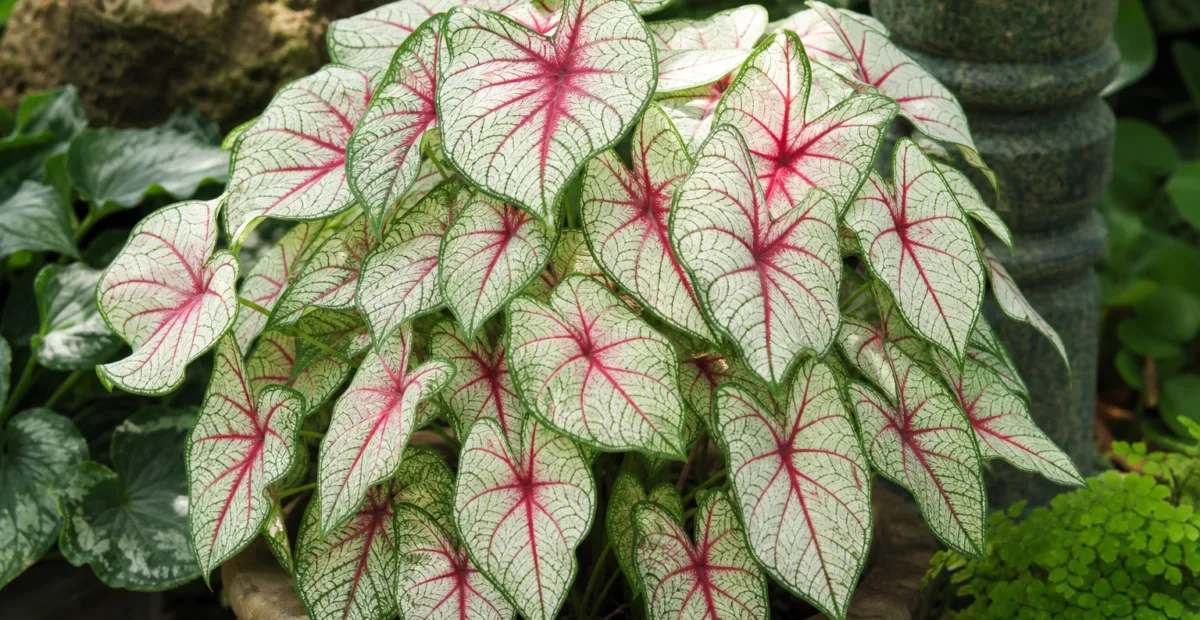
Caladium 'Fiesta' is a compact fancy-leaf cultivar prized for its dramatic contrast: large heart-shaped leaves carry a bright white background, vivid red to purple veins, fine green netting, and a narrow green edge. Bred for strong container and landscape performance, it develops a dense, rounded habit and sprouts earlier than some older cultivars. Grow it in warm, humid conditions with evenly moist soil, filtered light, and protection from frost.
Taxonomic classification
Caladium ‘Fiesta’ care guide
Light and placement
Provide bright filtered light or partial shade, ideally with morning sun and protection from intense afternoon rays. ‘Fiesta’ can perform in more sun than many older caladiums when adequately watered, but harsh afternoon exposure may scorch or bleach the white leaves. Too little light produces weaker, more stretched growth and may reduce color contrast; excessive shade can also slow growth.
Watering and humidity
Keep the medium evenly moist during active growth, watering thoroughly when the surface begins to dry but never leaving the tuber in standing water. Warm, bright conditions increase demand; reduce watering as temperatures fall and foliage enters dormancy. Higher humidity helps prevent crisp margins indoors, but it cannot compensate for poor drainage or saturated soil.
Soil and growing medium
Use a loose, fertile, humus-rich mix that drains freely but does not dry rapidly. A peat-free container medium amended with compost, fine bark, or coco fiber and perlite is suitable. Slightly acidic to neutral conditions are appropriate; avoid compacted clay, stagnant water, and very dry soil, all of which can reduce tuber and root health.
Feeding
Feed during active growth after new leaves have emerged, using a balanced water-soluble fertilizer at label strength or a controlled-release fertilizer according to its instructions. Container plants may need feeding every 3–4 weeks during sustained growth. Do not fertilize dormant plants or dry, heat-stressed, or freshly divided tubers; water first if the medium is dry.
Growth and habit
This cultivar forms a dense, symmetrical, outwardly arching mound from a tuber. Growth is rapid when temperatures are warm and soil moisture is consistent. Its compact habit and numerous leaves make it especially effective in containers. Plants commonly slow or enter dormancy as temperatures fall, so reduce watering as foliage declines.
Planting and repotting
Plant outdoors only after the soil has warmed to at least 60–70°F and frost danger has passed. Set the tuber with its eyes facing upward, about 1–2 inches deep, and space plants roughly 12 inches apart for a full display. Water after planting and keep the bed evenly moist while shoots establish.
Repot or divide container-grown plants in spring, just before active growth resumes. Handle the tuber carefully and use a clean pot only slightly larger than the root mass. Ensure the container has drainage holes and avoid burying the tuber excessively deeply.
Propagation and pruning
Propagation
Propagate vegetatively by dividing mature tubers. Each section should retain at least one healthy eye, though larger pieces with multiple eyes establish more reliably. Divide in late winter or spring before planting, allow fresh cuts to dry briefly, and use clean tools to reduce rot.
Pruning
Remove yellowing, damaged, or collapsed leaves at the base with clean snips. During dormancy, cut back remaining foliage only after it has naturally declined. Avoid routine shaping cuts, since the plant’s form is maintained by new leaves emerging from the tuber.
Overwintering
Treat the plant as frost tender outside Zones 9–11. In cooler areas, stop watering as foliage declines, lift the tuber before frost, allow it to dry briefly, and store it in a dry, ventilated medium at roughly 60–70°F. Keep it from chilling, freezing, or remaining wet. Replant in spring once soil is warm.
Uses
Use 'Fiesta' as a bold foliage accent in shaded beds, patio containers, hanging baskets, window boxes, and mixed tropical displays. Its compact, rounded form suits small-space plantings. It is ornamental only; do not consume any part, and position it where children and pets cannot chew the foliage or tubers.
Appearance
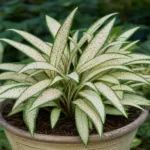
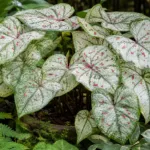
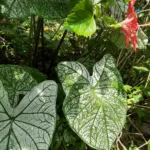
The cultivar has a compact, symmetrical, rounded habit with numerous fancy-type, heart-shaped leaves. Each blade has a broad white field, vivid red to greyed-purple midrib and primary veins, fine green secondary veining, and a narrow green margin. Mature petioles may show greyed-orange coloration. The large leaves create a strong foliage display despite the plant’s dwarf stature.
Flowering
Caladiums may occasionally produce a small, inconspicuous arum-type inflorescence consisting of a spadix enclosed by a greenish to yellow-green spathe. Flowers are not the ornamental feature of 'Fiesta', and flowering is sporadic compared with its prominent foliage. Outdoor plants generally flower during the warm growing season, while indoor flowering is uncommon.
Pollination and visitors
No reliable cultivar-specific documentation was found identifying a principal animal pollinator or visitor for ‘Fiesta’. The small arum-type inflorescences of caladiums are not a dependable wildlife feature, and the showy leaves—not the flowers—are the cultivar’s main ornamental value.
Diseases and pests
Diseases
Prevent tuber and root rots by using clean planting material, warm soil, and containers with excellent drainage. Avoid prolonged saturation and overhead watering. Remove collapsing foliage promptly. If soft rot develops in a tuber, discard affected tissue and sanitize tools; do not replant damaged material.
Pests
Watch for aphids, thrips, spider mites, mealybugs, slugs, and snails. Inspect leaf undersides and new growth regularly. Improve air movement, remove heavily damaged leaves, and use targeted insecticidal soap or horticultural oil when appropriate. Avoid chronic overwatering, which increases general plant stress and rot risk.
Related diseases and pests
Only Plant Doctor profiles whose host data indicate this plant may be affected are shown here.
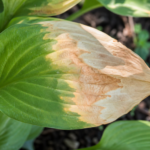 Environmental stressLeaf sunburn
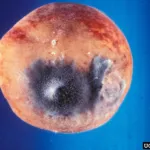 DiseaseRhizopus soft rotRhizopus stolonifer
 DiseaseBacterial soft rotPectobacterium carotovorum
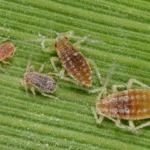 PestMealy Plum AphidHyalopterus pruni (Geoffroy, 1762)
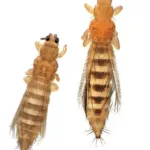 PestOnion thripsThrips tabaci Lindeman
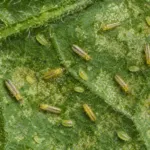 PestMelon thripsThrips palmi Karny
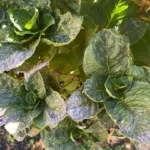 PestChilli thripsScirtothrips dorsalis Hood
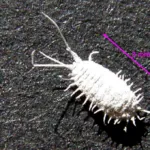 PestObscure mealybugPseudococcus viburni
Toxicity and pollen
Caladium tissues contain insoluble calcium oxalate crystals and can cause burning, swelling, and irritation of the mouth and throat if chewed or swallowed. Sap may irritate skin and eyes. Keep tubers, leaves, and plant debris away from children and pets; seek professional medical or veterinary advice after ingestion, especially if swelling or breathing difficulty occurs.
- Pollination / pollen
- Not well documented; pollen is produced only during occasional flowering
Caladium produces pollen only when it flowers, but reliable evidence quantifying airborne pollen or allergy risk for ‘Fiesta’ is lacking. Its flowers are small and inconspicuous, so no specific allergy classification can be assigned confidently. Avoid touching eyes after handling sap or flowers and wash hands after plant care.
Native habitat
The cultivated parent group is derived from tropical American caladiums associated with warm, humid environments and seasonally moist soils. In cultivation, the plants prefer heat, filtered light, fertile organic soil, and reliable moisture rather than cold or winter-wet conditions. ‘Fiesta’ itself is a bred horticultural cultivar and does not occur as a wild population.
Interesting fact
‘Fiesta’ originated from a cross between ‘Florida Cardinal’ and ‘Florida Sweetheart’. It was selected in Florida in 2005 and retains its distinctive traits through tuber division. Compared with ‘White Queen’, it is shorter, produces more leaves in containers, and can sprout earlier. Its compact stature contrasts with its relatively large, showy leaves.
Frequently asked questions (FAQ)
The most relevant questions about this plant, with short and direct answers.
🌱Quick care
How do you care for Caladium 'Fiesta'?⌄
Give Caladium 'Fiesta' bright filtered light or partial shade, evenly moist well-drained soil, warmth, and moderate to high humidity. Protect it from frost and cold drafts.
Is Caladium 'Fiesta' an indoor or outdoor plant?⌄
Caladium 'Fiesta' can grow indoors or outdoors during warm weather. Outdoors, it works especially well in shaded containers, hanging baskets, borders, and protected garden beds.
How big does Caladium 'Fiesta' get?⌄
Caladium 'Fiesta' is a compact caladium that commonly reaches about 12–18 inches tall, although growing conditions can affect its final size. It produces relatively large, showy leaves for its dwarf stature.
🌤️Environment and placement
How much light does Caladium 'Fiesta' need?⌄
Caladium 'Fiesta' grows best in bright filtered light to partial shade. Gentle morning sun may be tolerated, but strong afternoon sun can scorch or fade the foliage.
Can Caladium 'Fiesta' grow in full sun?⌄
Caladium 'Fiesta' may tolerate some sun when gradually acclimated, but partial shade is the safer choice for maintaining its white leaves and vivid pink-red veins. Avoid intense afternoon sunlight, especially in hot climates.
Is Caladium 'Fiesta' suitable for shade gardens?⌄
Yes, Caladium 'Fiesta' is well suited to shade gardens and bright woodland-style plantings. Filtered light often produces stronger-looking foliage colors than harsh direct sun.
What temperature is best for Caladium 'Fiesta'?⌄
Caladium 'Fiesta' prefers warm conditions, generally above 60°F, with active growth strongest in consistently warm soil and air. Growth slows substantially in cool weather.
Can Caladium 'Fiesta' survive winter outdoors?⌄
Caladium 'Fiesta' usually cannot survive freezing temperatures outdoors because it is frost tender. In colder parts of the United States, grow it as a seasonal plant or lift and store the tubers before frost.
💧Care and problems
How often should you water Caladium 'Fiesta'?⌄
Water Caladium 'Fiesta' whenever the surface of the soil begins to dry, keeping the root zone evenly moist during active growth. Do not leave the pot standing in water, because soggy soil can cause tuber or root rot.
Why are the leaves of my Caladium 'Fiesta' turning brown?⌄
Brown leaves on Caladium 'Fiesta' are commonly caused by underwatering, low humidity, leaf scorch, or cold exposure. Check soil moisture and light first, and protect the plant from direct hot sun and temperatures below about 60°F.
Why is my Caladium 'Fiesta' drooping?⌄
Caladium 'Fiesta' may droop when the soil is too dry, temperatures are too low, or the tuber is entering dormancy. If the soil is wet and the stems remain soft, inspect for root or tuber rot.
Why is my Caladium 'Fiesta' losing its color?⌄
Fading color can result from excessive direct sunlight, aging leaves, or stress from inconsistent watering. Move the plant to bright filtered light and keep the soil evenly moist during the growing season.
Does Caladium 'Fiesta' need high humidity?⌄
Caladium 'Fiesta' appreciates moderate to high humidity, particularly indoors in dry heated or air-conditioned rooms. Use a humidifier or group plants together, while still providing good air circulation.
Should you fertilize Caladium 'Fiesta'?⌄
Yes, feed actively growing Caladium 'Fiesta' with a balanced fertilizer at reduced strength about every 4–6 weeks. Avoid heavy feeding when the plant is dormant or not producing new leaves.
What pests attack Caladium 'Fiesta'?⌄
Caladium 'Fiesta' can be affected by common houseplant pests such as aphids, spider mites, mealybugs, and thrips. Inspect leaves regularly and treat infestations promptly with a suitable labeled insect-control product.
🪴Planting and repotting
What soil is best for Caladium 'Fiesta'?⌄
Use fertile, humus-rich, well-drained soil for Caladium 'Fiesta'. A quality potting mix amended with compost and an aerating material such as perlite works well, provided excess water can drain freely.
When should you plant Caladium 'Fiesta' tubers?⌄
Plant Caladium 'Fiesta' tubers outdoors after the danger of frost has passed and the soil is at least about 60°F. In cooler regions, start them indoors in containers and move them outside after temperatures stabilize.
How deep should Caladium 'Fiesta' tubers be planted?⌄
Plant Caladium 'Fiesta' tubers with the growing eyes facing upward and cover them with roughly 1–1½ inches of soil. Planting too deeply can delay emergence and increase the risk of rot in wet soil.
Can Caladium 'Fiesta' grow in containers?⌄
Yes, Caladium 'Fiesta' performs very well in containers, hanging baskets, and combination planters. Choose a pot with drainage holes and avoid placing it where the container will overheat in intense afternoon sun.
How far apart should Caladium 'Fiesta' tubers be planted?⌄
Space Caladium 'Fiesta' tubers about 12 inches apart for individual plants to develop a full, compact clump. In containers, one tuber is often sufficient for a medium pot, depending on tuber size.
Should Caladium 'Fiesta' be repotted every year?⌄
No, Caladium 'Fiesta' only needs repotting when the container is too small, the soil has deteriorated, or the tuber is being restarted for a new growing season. Repot in spring before or as new growth begins.
✂️Propagation and pruning
How do you propagate Caladium 'Fiesta'?⌄
Caladium 'Fiesta' is normally propagated by dividing its tubers rather than by stem cuttings. Each division should retain at least one healthy growing eye, and cut surfaces should be allowed to dry before planting.
Can you grow Caladium 'Fiesta' from seed?⌄
Caladium 'Fiesta' can produce seed, but seedlings may not resemble the named cultivar. To preserve the exact 'Fiesta' traits, use healthy tubers or properly divided tuber sections.
Should you remove damaged leaves from Caladium 'Fiesta'?⌄
Yes, remove badly damaged, yellow, or diseased leaves from Caladium 'Fiesta' with clean scissors. Removing declining foliage improves appearance and reduces potential sources of disease, but healthy leaves should be left in place.
How do you store Caladium 'Fiesta' tubers over winter?⌄
Before frost, stop watering as the foliage declines, lift the tubers, and let them dry in a warm, shaded location. Store them in a dry, ventilated medium such as peat or vermiculite at about 60°F or warmer, then replant in spring.
⚠️Toxicity and safety
Is Caladium 'Fiesta' poisonous to pets?⌄
Yes, Caladium 'Fiesta' is moderately toxic if chewed or swallowed because caladiums contain irritating calcium oxalate crystals. Keep it away from dogs, cats, and other pets, and seek veterinary advice if ingestion occurs.
Is Caladium 'Fiesta' poisonous to children?⌄
Yes, chewing or swallowing Caladium 'Fiesta' can cause painful irritation and swelling of the mouth, tongue, or throat. Keep the plant and tubers out of children’s reach and contact Poison Control or a medical professional after ingestion.
🌸Flowering and special interest
Does Caladium 'Fiesta' produce flowers?⌄
Caladium 'Fiesta' can produce small, hooded arum-like flowers, but it is grown primarily for its colorful foliage. Flowers may be hidden beneath the leaves and are not usually the plant’s main ornamental feature.
Should you remove flowers from Caladium 'Fiesta'?⌄
You may remove flowers from Caladium 'Fiesta' if you want the plant to direct more energy toward foliage, but removal is not essential. Cut the flower stalk near its base with clean scissors.