
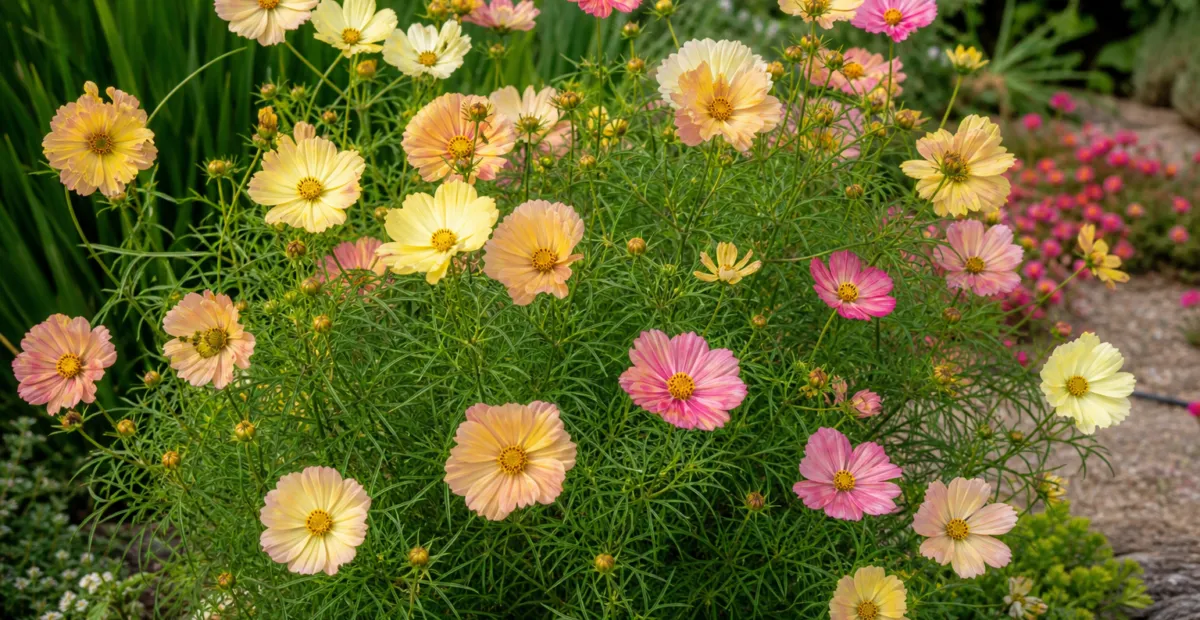
 AI-generated illustration
Apricot Lemon (Cosmos bipinnatus ‘Apricot Lemon’) short overview
Cosmos bipinnatus 'Apricot Lemon' is a distinctive annual cosmos with single, softly colored blooms that may combine pale apricot, lemon-yellow, cream, peach, and pink-mauve around a golden center. Plants form upright, branching growth with finely divided foliage and bloom through the warm season. Give it full sun, well-drained soil, moderate water during establishment, and regular cutting or deadheading for a longer display.
Taxonomic classification
Apricot Lemon (Cosmos bipinnatus ‘Apricot Lemon’) care guide
Light and placement
Give plants at least 6 hours of direct sun, ideally with bright morning-to-afternoon exposure and shelter from strong prevailing winds. Full sun produces sturdier stems and more flowers. Too little light causes weak, stretched growth and fewer blooms; severe heat combined with reflected afternoon light may scorch foliage or shorten flower life, especially in containers.
Watering and humidity
Water thoroughly when the upper inch of soil begins to dry, keeping young seedlings evenly moist until established. Once rooted, plants tolerate short dry periods and should not sit in soggy soil. Increase frequency during hot weather or when grown in containers, and water at the soil line in the morning to limit foliar disease.
Soil and growing medium
Use ordinary garden soil or potting mix that drains freely. Cosmos tolerates sandy, loamy, and even moderately clayey soils if they do not remain waterlogged. Neutral to slightly alkaline conditions are suitable. Avoid heavily enriched soil, which can produce lush foliage and weaker stems at the expense of flowers.
Feeding
Cosmos performs well in lean to average soil and usually needs little fertilizer. Incorporate a modest amount of compost before planting if the soil is poor, then avoid high-nitrogen feeding. If plants are grown in containers, use a diluted balanced fertilizer occasionally after establishment, but stop heavy feeding if foliage becomes lush and flowering declines.
Growth and habit
This is a rapid-growing, warm-season annual that branches readily from upright stems. Plants can become top-heavy or lean in exposed sites, especially after heavy rain or wind. Early pinching or frequent cutting encourages branching; staking is useful where storms are common. Deadheading redirects energy toward further flower production.
Planting and repotting
Direct-sow outdoors after frost danger has passed and soil has warmed, or start indoors about 3–4 weeks before planting out. Cover seeds only lightly, about 1/8–1/4 inch deep. Keep the seedbed evenly moist until emergence. Thin or transplant plants about 12–18 inches apart for good air circulation and branching.
Repotting is generally unnecessary because this is a fast-growing annual. If started in a container, transplant seedlings while young and before roots become crowded. Move them carefully with the root ball intact, then water thoroughly and protect from strong wind until established.
Propagation and pruning
Propagation
Propagate by seed. Direct-sow after the last spring frost, or sow indoors 3–4 weeks earlier. Press seed onto the surface or cover very lightly, keep warm and moist, and transplant young seedlings before they become root-bound. Seed may not reproduce every color nuance uniformly if the stock is not genetically stable.
Pruning
Pinch young plants once if a bushier form is wanted. Cut flowers frequently and remove faded blooms to encourage branching and continued flowering. At the end of the season, remove spent annual growth after frost or allow a few heads to mature if limited self-sowing is desired.
Overwintering
This is a frost-tender annual and normally is not overwintered outdoors. Remove plants after a killing frost. In frost-free climates, it may continue flowering through winter, but growth is generally seasonal. Seed can be saved from mature heads if the source is sufficiently true to type.
Uses
Use 'Apricot Lemon' in sunny annual borders, cottage gardens, cutting gardens, containers, and pollinator plantings. The single flowers are suitable for fresh bouquets when cut as buds begin to open. It is ornamental rather than a documented culinary or medicinal crop; avoid unsupported edible or medicinal claims.
Appearance
Plants have upright, branching green stems and opposite, finely divided bipinnate leaves with a delicate, fern-like appearance. The cultivar is recognized by its open single blooms and softly blended pastel coloration, often with an apricot or lemon outer area, a pink-mauve inner ring, and a golden center.
Flowering
The cultivar produces single, daisy-like flower heads with broad ray florets surrounding a yellow disc-floret center. Flowers open in changing pastel combinations, commonly beginning apricot or peach and showing cream, lemon-yellow, pink, or mauve tones as blooms mature. In the United States, flowering is typically strongest from early summer into fall when plants are regularly cut or deadheaded.
Pollination and visitors
The open flower heads expose yellow disc florets and pollen to visiting insects. US horticultural sources specifically note bees, butterflies, and beneficial insects on Cosmos bipinnatus, while other small flower visitors may also occur. Pollinator activity is usually greatest in warm, sunny weather when flowers are open.
Diseases and pests
Diseases
Good air circulation, full sun, and avoiding overhead irrigation help reduce powdery mildew, gray mold, and stem canker. Remove badly affected material and discard it rather than composting diseased debris. Persistent wet foliage, crowded planting, and overfertilization increase disease pressure.
Pests
Aphids, aster leafhoppers, thrips, and caterpillars may occasionally feed on foliage or flowers. Inspect growing tips and flower buds regularly, use a strong water spray for light aphid infestations, and remove heavily infested tissue. Encourage beneficial insects and avoid broad-spectrum insecticides while flowers are open.
Related diseases and pests
Only Plant Doctor profiles whose host data indicate this plant may be affected are shown here.
 DiseaseAster yellows‘Candidatus Phytoplasma asteris’
 DiseaseSouthern blightAthelia rolfsii
 DiseaseGray MoldBotrytis cinerea
 DiseaseMaple powdery mildewSawadaea bicornis
 PestOnion thripsThrips tabaci Lindeman
 PestMelon thripsThrips palmi Karny
 PestChilli thripsScirtothrips dorsalis Hood
 PestDracaena ThripsParthenothrips dracaenae
Toxicity and pollen
Cosmos bipinnatus is generally treated as non-toxic to dogs and cats by major companion-animal plant-safety references. Eating large amounts of any ornamental plant can still cause transient vomiting or digestive upset, and garden chemicals may pose separate risks. Do not use the cultivar as food unless it has been specifically grown and identified for that purpose.
- Typical season
- Typically June–October in much of the United States
- Pollination / pollen
- Exposed insect-visited flower pollen
Cosmos releases pollen from exposed disc florets, but it is primarily visited by insects rather than relying on wind dispersal. Garden exposure is usually lower than for strongly wind-pollinated plants, yet sensitive people may still react to contact with flowers or airborne pollen. Avoid rubbing eyes after handling and wash hands after cutting.
Native habitat
The species is native to Mexico and parts of southwestern North America, where it occurs in warm, open habitats and disturbed ground. It tolerates heat, dry spells, poor soil, and seasonal moisture provided drainage is adequate. The named cultivar is a garden selection rather than a wild-origin population.
Interesting fact
The flower colors can shift as individual blooms age, so one plant may show several pastel combinations at once. The species name bipinnatus refers to the doubly divided, feathery leaves. Regular cutting encourages branching and supplies long-lasting material for bouquets.
Frequently asked questions (FAQ)
The most relevant questions about this plant, with short and direct answers.
🌱Quick care
Is Cosmos bipinnatus 'Apricot Lemon' an annual or perennial?⌄
Cosmos bipinnatus 'Apricot Lemon' is a frost-tender annual in the United States. It grows, flowers, sets seed, and dies in one growing season, although fallen seed may produce volunteers the following year.
How much sun does Cosmos bipinnatus 'Apricot Lemon' need?⌄
Give it full sun, ideally at least 6–8 hours of direct light daily. More sun generally produces sturdier stems and better flowering.
How tall does Cosmos bipinnatus 'Apricot Lemon' get?⌄
Plants commonly reach about 2–3 feet tall, although height varies with soil, climate, and spacing. Rich soil and low light can encourage taller, floppier growth.
When does Cosmos bipinnatus 'Apricot Lemon' bloom?⌄
It generally flowers from midsummer into fall. Blooming continues until frost when plants receive adequate sun and spent flowers are removed.
Is Cosmos bipinnatus 'Apricot Lemon' easy to grow?⌄
Yes, it is generally an easy, low-maintenance annual for sunny gardens. It performs best when protected from waterlogged soil and excessive fertilization.
🌤️Environment and placement
What soil is best for Cosmos bipinnatus 'Apricot Lemon'?⌄
Use ordinary, well-drained garden soil or a well-draining potting mix. Average or even relatively poor soil is usually preferable to very rich soil, which can produce foliage at the expense of flowers.
Can Cosmos bipinnatus 'Apricot Lemon' tolerate drought?⌄
Established plants have good drought tolerance and need only low to moderate watering. Water during prolonged heat or drought, especially for container plants and newly transplanted seedlings.
Can Cosmos bipinnatus 'Apricot Lemon' grow in containers?⌄
Yes, it can grow successfully in a deep container filled with well-draining potting mix. Choose a container large enough for the roots and provide support if stems become tall or exposed to wind.
Is Cosmos bipinnatus 'Apricot Lemon' suitable for pollinator gardens?⌄
Yes, its open flowers can attract bees, butterflies, and other pollinating insects. Avoid insecticide use on open blooms whenever possible.
Can Cosmos bipinnatus 'Apricot Lemon' tolerate heat?⌄
Yes, it generally handles warm summer conditions well when grown in full sun and well-drained soil. Water deeply during extended extreme heat, but allow excess moisture to drain away.
💧Care and problems
How often should I water Cosmos bipinnatus 'Apricot Lemon'?⌄
Water when the soil surface begins to dry, keeping young plants more consistently moist while they establish. Once established, allow the soil to dry somewhat between waterings rather than keeping it constantly wet.
Does Cosmos bipinnatus 'Apricot Lemon' need fertilizer?⌄
Usually, it does not need regular fertilizer in reasonably fertile soil. Excess nitrogen can cause lush foliage, weak stems, and fewer flowers, so fertilize only sparingly if growth is poor.
Why is my Cosmos bipinnatus 'Apricot Lemon' tall and floppy?⌄
Floppiness is commonly caused by insufficient sunlight, overly rich soil, crowding, or excessive moisture. Grow it in full sun, avoid heavy feeding, provide adequate spacing, and use a discreet stake or support if necessary.
Should I deadhead Cosmos bipinnatus 'Apricot Lemon'?⌄
Yes, removing faded flowers can encourage the plant to produce more blooms and keeps the display tidy. Leave some mature flower heads in place if you want the plant to self-seed or if you plan to collect seed.
What problems commonly affect Cosmos bipinnatus 'Apricot Lemon'?⌄
The main problems are usually weak, leaning stems, poor flowering from low light or excess fertility, and root problems caused by waterlogged soil. Good drainage, full sun, and moderate watering prevent many issues.
🪴Planting and repotting
When should I plant Cosmos bipinnatus 'Apricot Lemon' seeds?⌄
Sow seeds outdoors after the danger of frost has passed and the soil has warmed, using your local USDA frost date as a guide. In shorter-season areas, start seeds indoors about 4–6 weeks before the expected last spring frost.
Can I direct-sow Cosmos bipinnatus 'Apricot Lemon' seeds?⌄
Yes, direct sowing is often the simplest method. Sow the seeds shallowly, about 1/8–1/4 inch deep, because light can help germination, and keep the seedbed lightly moist until seedlings emerge.
How long do Cosmos bipinnatus 'Apricot Lemon' seeds take to germinate?⌄
Seeds commonly germinate in about 7–14 days under warm conditions. Cool soil, deep sowing, or uneven moisture can slow or reduce emergence.
How far apart should I plant Cosmos bipinnatus 'Apricot Lemon'?⌄
Space plants about 10–12 inches apart for good airflow and a full display. Wider spacing may be useful in humid areas or where plants are expected to grow especially tall.
Can Cosmos bipinnatus 'Apricot Lemon' be transplanted?⌄
Yes, but direct sowing is often preferred because cosmos develop delicate roots. If transplanting, move young seedlings carefully with minimal root disturbance and harden them off before planting outdoors.
Can Cosmos bipinnatus 'Apricot Lemon' be grown in poor soil?⌄
Yes, it generally grows well in average to poor soil as long as drainage is good. Improving extremely compacted or waterlogged soil is more important than making it highly fertile.
✂️Propagation and pruning
How do I save seeds from Cosmos bipinnatus 'Apricot Lemon'?⌄
Allow selected flower heads to remain on the plant until they turn brown and dry, then collect the elongated seeds. Store fully dry seed in a cool, dark, airtight container until the next planting season.
Will Cosmos bipinnatus 'Apricot Lemon' self-seed?⌄
It may self-seed if mature flower heads drop seed onto bare soil. Volunteer seedlings may not appear reliably in cold-winter areas, and offspring can vary if other cosmos varieties flower nearby.
Will seed collected from Cosmos bipinnatus 'Apricot Lemon' come true?⌄
Not always, because cosmos are insect-pollinated and can cross with other cosmos varieties. For the most predictable flower colors, purchase fresh seed from a reliable source rather than relying exclusively on saved seed.
Can I propagate Cosmos bipinnatus 'Apricot Lemon' from cuttings?⌄
Seed propagation is the practical and standard method for this annual cosmos. Cuttings are not normally used for routine home propagation.
⚠️Toxicity and safety
Is Cosmos bipinnatus 'Apricot Lemon' toxic to dogs and cats?⌄
It is generally considered non-toxic to dogs and cats. Even non-toxic plants can cause mild stomach upset if eaten in quantity, so contact a veterinarian if a pet develops concerning symptoms.
Is Cosmos bipinnatus 'Apricot Lemon' edible?⌄
The flowers are generally treated as ornamental rather than as a food crop, and cultivar-specific culinary safety is not well established. Do not eat flowers that have been treated with pesticides or other products not labeled for edible plants.
🌸Flowering and special interest
What color are the flowers of Cosmos bipinnatus 'Apricot Lemon'?⌄
The flowers show soft apricot, lemon, cream, and blush-pink tones, often with noticeable variation between blooms. Color intensity can change with temperature, light, and the individual plant.
Is Cosmos bipinnatus 'Apricot Lemon' good for cut flowers?⌄
Yes, its long stems and delicate pastel flowers make it suitable for informal bouquets and arrangements. Cut stems when flowers are newly open and place them in water promptly for the best vase life.
How can I make Cosmos bipinnatus 'Apricot Lemon' produce more flowers?⌄
Provide full sun, avoid high-nitrogen fertilizer, and deadhead fading blooms regularly. Consistent establishment watering followed by moderate watering and good drainage also supports prolonged flowering.
Does Cosmos bipinnatus 'Apricot Lemon' bloom until frost?⌄
It can continue flowering through much of the summer and fall, but the first hard frost will usually end the display. In mild areas, flowering may last longer if plants remain healthy and spent blooms are removed.
Similar plants
 Azure Monkshood (Aconitum carmichaelii) care guideAconitum carmichaelii
 Monkshood (Aconitum ‘Stainless Steel’)Aconitum 'Stainless Steel'
 Monkshood (Aconitum ‘Bressingham Spire’)Aconitum 'Bressingham Spire'
 Golden full moon maple (Acer shirasawanum ‘Aureum’)Acer shirasawanum 'Aureum'
 Globosum (Acer platanoides ‘Globosum’)Acer platanoides 'Globosum'
 Striped maple (Acer pensylvanicum) care guideAcer pensylvanicum