
 Source:
 Whorled Coreopsis (Coreopsis verticillata) short overview
Whorled Coreopsis is a long-lived, rhizomatous perennial native to parts of eastern North America. Its slender stems carry finely divided, threadlike leaves and airy sprays of yellow, daisy-shaped flower heads through much of summer. Give it full sun, sharply drained soil, and moderate watering while it establishes; mature plants tolerate dry conditions and spread gradually into useful clumps for borders, meadow-style plantings, rock gardens, and pollinator beds.
Taxonomic classification
Whorled Coreopsis (Coreopsis verticillata) care guide
Light and placement
Grow in full sun for the strongest stems, densest habit, and most flowers; an east-facing or lightly shaded site can work in hot climates. In too little light, stems stretch and flowering decreases. In intense reflected heat, pale foliage or rapid wilting signals that afternoon protection or deeper watering may be needed.
Watering and humidity
Water deeply when the upper few inches of soil dry during establishment, generally once or twice weekly depending on heat and rainfall. After rooting in, allow the soil to dry between waterings and reduce irrigation in cool weather. Avoid frequent shallow watering and saturated crowns; average outdoor humidity is sufficient.
Soil and growing medium
Use a lean to moderately fertile soil that drains freely. Sandy, loamy, or gritty rocky soil is suitable, while heavy wet clay can cause weak growth or root problems. A slightly acidic to neutral soil is broadly suitable, and the plant can tolerate mildly alkaline conditions when drainage is good.
Feeding
Coreopsis verticillata generally performs best without heavy fertilization. Incorporate a modest amount of compost before planting in poor soil, then apply a balanced slow-release fertilizer in spring only if growth is weak. Avoid high-nitrogen feeding, which can produce floppy foliage and fewer flowers.
Growth and habit
Plants emerge from perennial rhizomes and gradually develop dense, spreading clumps. The fine texture can become open or floppy in shade, rich soil, or excessive moisture. Cutting plants back after the main flush of bloom often encourages tidier regrowth and may support repeat flowering.
Planting and repotting
Plant in spring after the soil can be worked, or in early fall where plants have time to root before winter. Set the crown at soil level and water deeply during the first growing season. Space plants about 18–24 inches apart to allow the rhizomatous clumps to knit together without immediate crowding.
Repot container-grown plants in spring when roots fill the pot. Move them into a container only slightly larger than the root ball, using a well-drained potting mix with added grit or perlite. Water thoroughly after transplanting and allow the surface to dry somewhat between later waterings.
Propagation and pruning
Propagation
Sow fresh or properly stored seed in spring, or divide established clumps in spring or early fall. Stem cuttings are also used horticulturally, although division is usually the simplest way to preserve a selected plant’s characteristics.
Pruning
Shear or cut back after the main flowering flush to remove spent stems and encourage fresh, compact growth. A late-winter cleanup is also suitable in colder regions. Leave some stems over winter if seedheads or shelter for small wildlife are desired.
Overwintering
Leave dormant crowns in the ground in Zones 3–9. After hard frost, optional mulch can protect newly planted divisions, but keep it loose and away from the crown to prevent rot. Container plants are more exposed to cold and should be sheltered in an unheated protected location in the coldest climates.
Uses
A durable ornamental for sunny perennial borders, native-style landscapes, rock gardens, dry slopes, and meadow plantings. The flowers are useful for attracting insect visitors and can be cut for informal arrangements. It is not profiled here as a culinary or medicinal plant.
Appearance
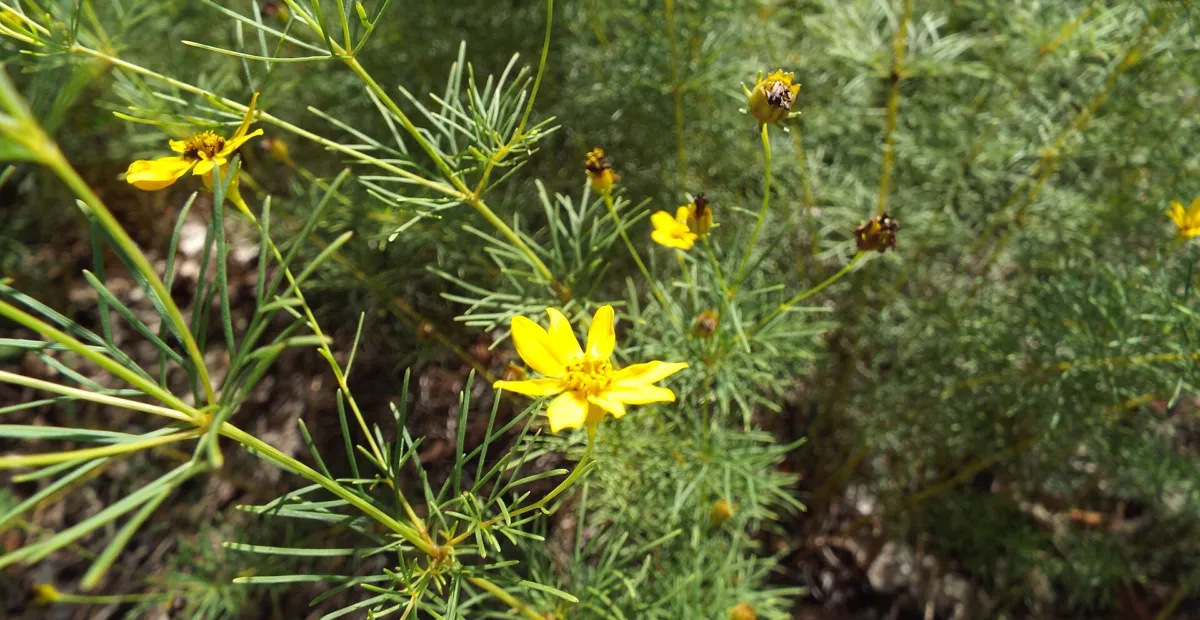
The species is recognized by slender, wiry, branching stems and leaves divided into narrow, threadlike segments arranged in whorls. The foliage creates a fine-textured, almost ferny effect, while the yellow flower heads are held above the leaves on delicate-looking stems.
Flowering
Flower heads are yellow, daisy-like capitula produced on branching, wiry stems. Bloom is typically concentrated from late spring through summer, with flowering often extended by removing spent flower heads. The species has a light, airy presentation rather than dense, heavy flower clusters.
Pollination and visitors
The yellow flower heads provide nectar and pollen resources for bees and butterflies. Flowering plants are especially useful in sunny pollinator plantings where successive bloom is desired; visitor activity is greatest during warm daylight hours.
Coreopsis verticillata photos
Click any photo for a larger view. Source, author and license are shown separately.
Diseases and pests
Diseases
Avoid persistently wet soil and crowding, which encourage foliar fungal problems and root or crown rot. Improve air circulation, water at the base, remove badly affected foliage, and cut back spent growth at season’s end. Healthy plants in sunny, well-drained sites usually need little disease management.
Pests
Watch for aphids, leafhoppers, and occasional beetle feeding, especially on stressed plants. Inspect new growth, spray small infestations with water, and use insecticidal soap only when needed. Avoid broad-spectrum insecticides while plants are blooming because flowers attract beneficial insects.
Toxicity and pollen
Reliable plant-toxicity references identify coreopsis or tickseed plants as non-toxic to dogs and cats, and no specific human toxicity concern is established for Coreopsis verticillata. Normal garden precautions still apply: do not encourage ingestion, and wash skin after handling if irritation occurs.
- Typical season
- Late spring through summer
- Pollination / pollen
- Insect-dispersed composite pollen
This is an insect-pollinated composite with pollen presented at the flower head rather than released in large windborne clouds. Airborne exposure is therefore generally lower than for strongly wind-pollinated plants, although sensitive individuals can still react to contact or incidental pollen.
Native habitat
Native populations occur in open, sunny habitats of the eastern United States, including dry woods, clearings, prairies, glades, and rocky or sandy sites. The species is associated with well-drained soils and can tolerate periodic drought once established.
Interesting fact
The species name verticillata refers to the whorled arrangement of its narrow leaves. Its threadlike foliage gives the plant a softer, more delicate appearance than many broad-leaved coreopsis species. Rhizomes allow established plants to form expanding clumps.
Frequently asked questions (FAQ)
The most relevant questions about this plant, with short and direct answers.
🌱Quick care
What is Whorled Coreopsis?⌄
Whorled Coreopsis is the common name for Coreopsis verticillata, a long-lived, clump-forming perennial with fine, threadlike foliage and yellow, daisy-shaped flowers. It is also commonly called threadleaf coreopsis or tickseed.
Is Coreopsis verticillata perennial or annual?⌄
Coreopsis verticillata is a hardy perennial that returns each year from underground rhizomes. It is generally hardy in USDA Zones 3 through 9, although performance depends on the cultivar and local conditions.
How much sun does Whorled Coreopsis need?⌄
Whorled Coreopsis grows best in full sun, meaning at least 6 hours of direct sunlight daily. It can tolerate light partial shade, but too little sun may reduce flowering and make the stems weaker or floppy.
How often should I water Coreopsis verticillata?⌄
Water Coreopsis verticillata when the soil has begun to dry, providing regular moisture while plants establish and during prolonged drought. Once established, it is fairly drought tolerant but may bloom better with occasional irrigation during extreme heat.
What soil is best for Whorled Coreopsis?⌄
The best soil is sandy, loamy, gritty, and well drained. Whorled Coreopsis tolerates poor or rocky soil better than heavy, consistently wet soil.
🌤️Environment and placement
Can Coreopsis verticillata grow in partial shade?⌄
Coreopsis verticillata can grow in light partial shade, but full sun produces the strongest growth and heaviest flowering. Avoid deep shade and locations where nearby plants significantly block afternoon light.
Is Whorled Coreopsis drought tolerant?⌄
Whorled Coreopsis is drought tolerant after it becomes established, especially in well-drained soil. Water it during its first growing season and during extended periods of severe heat or drought.
Can Coreopsis verticillata grow in clay soil?⌄
Coreopsis verticillata can grow in clay soil only if drainage is improved. Incorporating suitable organic matter, planting on a slight raised mound, or choosing a less compacted site can help prevent root and crown problems.
Does Whorled Coreopsis spread aggressively?⌄
Whorled Coreopsis can spread by underground rhizomes and, in some forms, by self-seeding. Species plants and vigorous cultivars may gradually form broad colonies, so divide or remove outer sections if they begin crowding neighboring plants.
Is Coreopsis verticillata native to the United States?⌄
Coreopsis verticillata is native to parts of the eastern United States. Its natural range does not cover every U.S. region, so gardeners should check regional native-plant guidance before using it in restoration projects.
Is Whorled Coreopsis deer resistant?⌄
Whorled Coreopsis is generally considered deer resistant, although no plant is completely deer proof. Hungry deer may still browse it, particularly when preferred food is scarce.
Does Coreopsis verticillata attract pollinators?⌄
Coreopsis verticillata attracts butterflies and other flower-visiting insects with its open yellow flower heads. It is a useful choice for sunny pollinator borders and naturalistic plantings.
💧Care and problems
How do I care for Coreopsis verticillata?⌄
Grow Coreopsis verticillata in sun and well-drained soil, water it during establishment or drought, and avoid excessive fertilizer. Light trimming can maintain a compact shape and encourage a fresh flush of flowers.
Does Whorled Coreopsis need fertilizer?⌄
Whorled Coreopsis usually needs little fertilizer when grown in reasonably fertile soil. Avoid heavy feeding because excessive fertility can produce soft, floppy growth and fewer-quality flower displays.
Why is my Coreopsis verticillata flopping?⌄
Coreopsis verticillata may flop because of insufficient sunlight, overly rich or moist soil, excess fertilizer, or dense growth. Move or divide crowded plants when practical, reduce feeding, and cut the plant back after its first flush of flowers.
Why are the leaves on my Whorled Coreopsis turning brown or spotted?⌄
Brown or spotted foliage can result from leaf-spot diseases, especially during wet weather, or from drought stress and poor airflow. Water at the soil surface, remove badly affected foliage, and improve spacing and drainage.
Can Coreopsis verticillata get powdery mildew?⌄
Coreopsis verticillata can develop powdery mildew, particularly when foliage is crowded, shaded, or exposed to poor air circulation. Grow it in sun, space plants adequately, and water the soil rather than repeatedly wetting the leaves.
Should I deadhead Whorled Coreopsis?⌄
Deadheading Whorled Coreopsis is optional but can improve its appearance, reduce self-seeding, and sometimes encourage additional flowering. The plant may continue blooming without deadheading, especially in large plantings or with self-cleaning cultivars.
When should I cut back Coreopsis verticillata?⌄
Cut Coreopsis verticillata back after its first major flush of flowers or in late fall after growth declines. Shearing it to roughly 6 inches can remove tired foliage and encourage a tidier or later flush of growth.
🪴Planting and repotting
When is the best time to plant Whorled Coreopsis?⌄
The best time to plant Whorled Coreopsis is spring or early fall, when temperatures are moderate and soil moisture is easier to maintain. Avoid planting during periods of extreme summer heat unless you can provide dependable irrigation.
How far apart should I plant Coreopsis verticillata?⌄
Space Coreopsis verticillata according to the mature size of the selected cultivar, commonly about 12 to 24 inches apart. Allow extra room for rhizomatous spread if you are planting the species rather than a compact selection.
Can Whorled Coreopsis grow in a container?⌄
Whorled Coreopsis can grow in a container if the pot has drainage holes and the growing mix drains freely. Container plants dry out faster than garden plants, so check moisture regularly during hot weather.
Can I grow Coreopsis verticillata from seed?⌄
Coreopsis verticillata can be grown from seed, although named cultivars may not come true to the parent plant. Sow fresh seed in a prepared bed or container and keep the medium lightly moist until germination.
✂️Propagation and pruning
How do I propagate Whorled Coreopsis?⌄
Whorled Coreopsis can be propagated by seed, stem cuttings, or division. Division is usually the most reliable way to reproduce a named plant while preserving its characteristics.
When should I divide Coreopsis verticillata?⌄
Divide Coreopsis verticillata in early spring or early fall, when temperatures are mild. Division is particularly useful when the center of a clump becomes thin, crowded, or less vigorous.
How often should I divide Whorled Coreopsis?⌄
Divide Whorled Coreopsis when clumps become overcrowded or decline, commonly every 3 to 4 years if needed. Vigorous plants may require division sooner when they begin spreading into nearby perennials.
Can I propagate Coreopsis verticillata from cuttings?⌄
Coreopsis verticillata can be propagated from softwood cuttings taken during active growth. Use healthy nonflowering shoots, keep the rooting medium evenly moist, and protect the cuttings from intense direct sun until roots form.
⚠️Toxicity and safety
Is Whorled Coreopsis poisonous to dogs?⌄
Whorled Coreopsis is generally regarded as non-toxic to dogs. Even nontoxic plants can cause mild stomach upset if eaten in large quantities, so contact a veterinarian if symptoms develop.
Is Coreopsis verticillata toxic to cats?⌄
Coreopsis verticillata is generally regarded as non-toxic to cats. Prevent excessive plant eating and seek veterinary advice if a cat develops vomiting, diarrhea, lethargy, or other concerning symptoms.
Is Whorled Coreopsis safe for children?⌄
Whorled Coreopsis is not generally known as a poisonous garden plant, but it should not be intentionally eaten. Supervise young children around plants and contact a poison-control service or medical professional if ingestion causes concern.
🌸Flowering and special interest
When does Coreopsis verticillata bloom?⌄
Coreopsis verticillata typically blooms from early or mid-summer into early fall, often from June through September. Bloom timing varies with climate, cultivar, planting site, and whether the plant is trimmed after its first flush.
How long does Whorled Coreopsis bloom?⌄
Whorled Coreopsis can provide several months of yellow flowers when grown in full sun and suitable soil. Removing some spent flowers or cutting the plant back after the first flush may help extend or renew flowering.
Why is my Coreopsis verticillata not blooming?⌄
The most common causes of poor flowering are insufficient sunlight, excessive nitrogen, overly rich or wet soil, drought stress, and immature plants. Give it full sun, avoid heavy fertilizer, and maintain even moisture while it establishes.
What are popular Coreopsis verticillata cultivars?⌄
Popular cultivars include ‘Moonbeam,’ known for pale yellow flowers and a compact habit, and ‘Zagreb,’ known for brighter golden-yellow flowers and vigorous growth. Cultivar height, spread, fertility, and self-seeding behavior can differ from the species.
Similar plants
 Large-flowered tickseed (Coreopsis grandiflora) care guideCoreopsis grandiflora
 Plains coreopsis (Coreopsis tinctoria) care guideCoreopsis tinctoria
 Coreopsis ‘Moonbeam’Coreopsis 'Moonbeam'
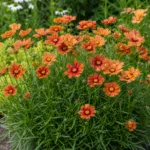 Coreopsis ‘Sienna Sunset’Coreopsis 'Sienna Sunset'
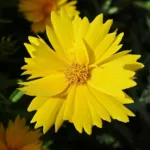 Lance-leaved Coreopsis (Coreopsis lanceolata) care guideCoreopsis lanceolata
 Coreopsis ‘Red Satin’Coreopsis 'Red Satin'