
 AI-generated illustration
 Coreopsis ‘Sienna Sunset’ short overview
Coreopsis ‘Sienna Sunset’ is a compact hybrid tickseed valued for its unusual burnt-sienna flowers, which soften toward peach and orange as they mature. Fine, deep-green foliage forms a branching clump suited to sunny borders, containers, sidewalk edges, and naturalized plantings. It blooms through much of summer and can attract butterflies, but heavy summer rain may encourage sprawling and poorly drained winter soil can lead to crown problems.
Taxonomic classification
Coreopsis ‘Sienna Sunset’ care guide
Light and placement
Give the plant full sun, ideally with six or more hours of direct light and good morning-to-afternoon exposure. In very hot regions, light afternoon shade may reduce stress, but too much shade produces weaker, leggier stems and fewer flowers. Excessive wetness combined with low light can also increase mildew and crown problems. Use an open position rather than a crowded, poorly ventilated corner.
Watering and humidity
Water deeply at planting and during the establishment season, allowing the surface to begin drying between irrigations. Once rooted, the plant tolerates dry conditions but flowers best with occasional deep watering during prolonged summer drought. Reduce watering in cool fall weather and avoid winter saturation. Water at the soil line when possible to keep foliage drier.
Soil and growing medium
Use lean to moderately fertile soil that drains quickly after rain. Sandy, loamy, or shallow rocky ground is suitable, provided the root crown is not kept wet. A slightly acidic to slightly alkaline reaction is generally tolerated, but avoid persistently saturated clay. Excess fertility can produce softer, more sprawling growth and fewer well-held stems.
Feeding
Feed sparingly. Incorporate a modest amount of compost before planting if the soil is poor, then use a balanced, slow-release fertilizer in spring only when growth is weak. Avoid heavy nitrogen applications, which can promote floppy stems and dense foliage. Do not fertilize drought-stressed, newly divided, or late-season plants.
Growth and habit
This cultivar forms a branching, clump-forming perennial with a tendency to spread modestly by rhizomes. Stems may sprawl in hot, humid weather or after repeated heavy rain. A mid- or late-summer cutback can restore a neater mound and support renewed flowering. Divide established clumps every few years if vigor declines.
Planting and repotting
Plant in spring after the soil is workable, or in early fall where plants have time to root before freezing weather. Set the crown at the original soil level and water thoroughly after planting. Allow roughly 18–24 inches between plants, using the wider spacing in humid or rainy climates to improve air movement.
Repot container plants in spring when roots fill the pot or growth slows. Move into a slightly larger container with a free-draining potting mix and drainage holes. Avoid burying the crown more deeply than it was growing previously. Divide and refresh older container specimens in spring if the center becomes weak or congested.
Propagation and pruning
Propagation
Propagate by division in spring or by basal root cuttings in spring. Rhizomatous spread is reported, but seed will not reliably reproduce the named cultivar. Commercial propagation may be restricted by plant-patent rights; use only legally permitted material.
Pruning
Deadhead spent flower heads to extend the display and reduce untidiness. If stems flop or foliage becomes ragged, shear the plant back by roughly one-third to one-half in mid- to late summer, then water during recovery. Remove dead top growth in late winter or early spring rather than cutting into wet crowns during winter.
Overwintering
Leave the crown in well-drained soil and avoid heavy winter mulch that traps moisture. In colder or wet regions, a light, breathable mulch after the ground freezes can reduce temperature swings. Container plants are more exposed to cold; move them to a sheltered location or protect the pot, while keeping the mix only lightly moist.
Uses
Useful for sunny perennial borders, sidewalk edging, containers, cottage gardens, naturalized areas, rock gardens, and informal cut-flower arrangements. Its long flowering period and documented butterfly attraction support use in pollinator plantings. It is not documented here as a culinary or medicinal plant.
Appearance
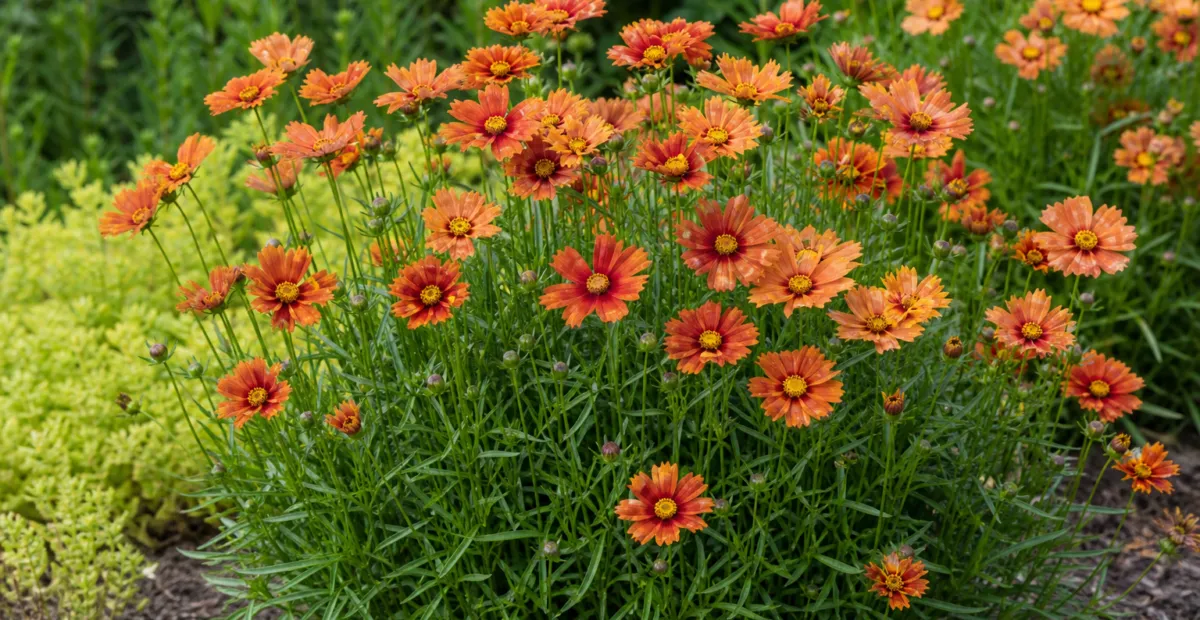
The plant has slender, branching stems and deep-green, finely divided foliage characteristic of threadleaf-type coreopsis. Its most distinctive feature is the warm burnt-sienna to apricot flower color, which fades lighter with age. The ray florets have lightly toothed tips and surround a contrasting yellow central disk.
Flowering
The daisy-like flower heads are carried on slender stems from early or mid-summer into early fall, with the strongest display typically from June through September. Ray florets open burnt sienna or apricot and gradually fade lighter toward peach-orange tones. Cutting the plant back in mid- to late summer can encourage tidier regrowth and additional autumn flowers.
Pollination and visitors
The open daisy-like flower heads are documented as attractive to butterflies. Their exposed central disks provide accessible floral resources, but no specific pollinator species was sufficiently documented for this cultivar. Avoid insecticides while plants are flowering.
Diseases and pests
Diseases
Crown rot is the principal concern in wet, poorly drained soil. Powdery mildew may develop during humid weather, and occasional problems include botrytis, fungal leaf spots, and aster yellows. Improve drainage and air circulation, avoid overhead irrigation, remove diseased foliage, and discard plants showing suspected aster yellows rather than composting them.
Pests
Slugs and snails may affect young or crowded plants. Monitor new growth and reduce hiding places with clean borders and improved air circulation. Avoid routine broad-spectrum insecticide use during bloom to protect flower visitors.
Toxicity and pollen
Coreopsis is listed by the ASPCA as non-toxic to dogs and cats. No cultivar-specific human toxicity evidence was identified. Normal garden handling is not expected to pose a poisoning risk, but prevent ingestion of large quantities and seek professional advice if a person or pet develops symptoms after eating plant material.
- Typical season
- No reliable cultivar-specific airborne pollen season documented; flowering is mainly June–September.
- Pollination / pollen
- Insect-dispersed composite-flower pollen
No reliable cultivar-specific measurements of airborne pollen or allergy risk were located. As an insect-pollinated daisy, its pollen is generally presented at the flower rather than released in large windborne clouds, but sensitive individuals can still react to pollen or plant contact. Keep expectations cautious rather than treating it as allergy-free.
Native habitat
This named hybrid is a cultivated garden plant rather than a wild habitat type. Its parentage is hybrid and its landscape performance is best interpreted through garden-trial observations. It prefers sunny, open conditions, lean to average soils, and rapid drainage similar to many drought-tolerant coreopsis selections.
Interesting fact
‘Sienna Sunset’ arose as a sport of ‘Creme Brulee’ and was introduced as a distinctive color form. Its ray florets change from darker burnt sienna to softer peach-orange as they age. Trial observations found that it can have an attractive color while showing less dependable winter survival than some other coreopsis cultivars.
Frequently asked questions (FAQ)
The most relevant questions about this plant, with short and direct answers.
🌱Quick care
What is Coreopsis 'Sienna Sunset' commonly called?⌄
Coreopsis 'Sienna Sunset' is commonly called Sienna Sunset tickseed. It is a herbaceous perennial cultivar in the daisy family, Asteraceae.
How much sun does Coreopsis 'Sienna Sunset' need?⌄
Coreopsis 'Sienna Sunset' grows best in full sun, ideally with at least 6 hours of direct sunlight daily. Some light afternoon shade may be tolerated, but too little light can reduce flowering and promote flopping.
How often should I water Coreopsis 'Sienna Sunset'?⌄
Water Coreopsis 'Sienna Sunset' when the soil has begun to dry, providing low to moderate moisture rather than keeping it constantly wet. Established plants tolerate short dry periods, but newly planted specimens need more regular watering.
How big does Coreopsis 'Sienna Sunset' get?⌄
Coreopsis 'Sienna Sunset' typically grows about 16–20 inches tall and 20–24 inches wide. Size can vary with soil fertility, moisture, climate, and winter survival.
Is Coreopsis 'Sienna Sunset' a perennial?⌄
Yes, Coreopsis 'Sienna Sunset' is a herbaceous perennial. Its foliage and stems may die back in winter before regrowing from the crown in spring.
🌤️Environment and placement
What USDA hardiness zones are suitable for Coreopsis 'Sienna Sunset'?⌄
Coreopsis 'Sienna Sunset' is generally listed for USDA Zones 5–9. Winter survival can be less reliable in exposed or wet sites, and some evaluations found it short-lived in colder climates.
What type of soil is best for Coreopsis 'Sienna Sunset'?⌄
Plant Coreopsis 'Sienna Sunset' in well-drained sandy or loamy soil. It tolerates rocky, shallow, and relatively dry ground better than heavy, poorly drained soil.
Can Coreopsis 'Sienna Sunset' grow in clay soil?⌄
Coreopsis 'Sienna Sunset' can grow in clay if drainage is improved and the site does not remain waterlogged. Amend the planting area or place the plant in a raised or sloped location when heavy clay drains poorly.
Is Coreopsis 'Sienna Sunset' drought tolerant?⌄
Yes, established Coreopsis 'Sienna Sunset' has good drought tolerance once its root system is established. Water it during prolonged heat or drought, especially during its first growing season.
Can Coreopsis 'Sienna Sunset' tolerate heat and humidity?⌄
Coreopsis 'Sienna Sunset' tolerates heat and some humidity, but hot, humid conditions with heavy summer rain can cause stems to sprawl and may increase powdery mildew risk. Good air circulation and well-drained soil help.
Can Coreopsis 'Sienna Sunset' grow in a container?⌄
Yes, Coreopsis 'Sienna Sunset' can be grown in a container. Use a pot with drainage holes and a fast-draining potting mix, and expect to water more often than plants growing in the ground.
Is Coreopsis 'Sienna Sunset' deer resistant?⌄
Coreopsis 'Sienna Sunset' is generally considered deer resistant, although no plant is completely deer-proof. Deer pressure, local food availability, and browsing habits can affect results.
💧Care and problems
Why is my Coreopsis 'Sienna Sunset' flopping?⌄
Coreopsis 'Sienna Sunset' may flop because of excessive moisture, rich soil, heavy summer rain, insufficient light, or natural post-bloom regrowth. Shearing sprawling stems in midsummer and avoiding overfertilization can improve its habit.
Should I deadhead Coreopsis 'Sienna Sunset'?⌄
Yes, deadheading Coreopsis 'Sienna Sunset' removes spent flowers and can encourage additional blooming. Cut flower stems back to a healthy leaf joint or trim the plant after the first major flush.
When should I cut back Coreopsis 'Sienna Sunset'?⌄
Cut back Coreopsis 'Sienna Sunset' in midsummer if it becomes untidy or sprawls, which may encourage a fall rebloom. Remove dead stems and foliage in late fall or early spring, depending on whether you want to provide winter habitat.
Does Coreopsis 'Sienna Sunset' need fertilizer?⌄
Coreopsis 'Sienna Sunset' usually needs little fertilizer when grown in average soil. Excess fertility can produce weak, floppy growth, so use only a light feeding if growth is poor or the soil is notably infertile.
What diseases affect Coreopsis 'Sienna Sunset'?⌄
Powdery mildew is a notable problem for Coreopsis 'Sienna Sunset', and crown rot can occur in wet, poorly drained soil. Improve air circulation, water at the base, and avoid saturated conditions.
How do I treat powdery mildew on Coreopsis 'Sienna Sunset'?⌄
Reduce powdery mildew by improving air circulation, thinning crowded growth, and watering the soil rather than the foliage. Remove badly affected leaves and consider a labeled fungicide if the disease is severe.
🪴Planting and repotting
When is the best time to plant Coreopsis 'Sienna Sunset'?⌄
Plant Coreopsis 'Sienna Sunset' in spring after the soil can be worked or in early fall several weeks before the ground freezes. Spring planting is preferable in colder areas where winter survival is uncertain.
How far apart should I plant Coreopsis 'Sienna Sunset'?⌄
Space Coreopsis 'Sienna Sunset' about 18–24 inches apart to allow for its mature spread and provide air circulation. Use closer spacing only when a quicker, denser planting is desired.
How do I plant Coreopsis 'Sienna Sunset' in the ground?⌄
Set the plant with its crown at the same level it occupied in the nursery pot, backfill with well-drained soil, and water thoroughly. Keep the soil lightly and evenly moist while the plant establishes, but do not leave it saturated.
Can Coreopsis 'Sienna Sunset' be planted in a rock garden?⌄
Yes, Coreopsis 'Sienna Sunset' is well suited to rock gardens, dry borders, sidewalk edges, and other sites with well-drained or shallow rocky soil. Full sun is important for compact growth and abundant flowers.
✂️Propagation and pruning
How can I propagate Coreopsis 'Sienna Sunset'?⌄
Propagate Coreopsis 'Sienna Sunset' primarily by division in spring or by basal root cuttings. Because this is a named cultivar, seed may not produce plants that match the parent.
Can I divide Coreopsis 'Sienna Sunset'?⌄
Yes, divide Coreopsis 'Sienna Sunset' in spring as new growth begins. Lift the clump, separate healthy rooted sections, and replant them promptly in well-drained soil.
Can Coreopsis 'Sienna Sunset' spread in the garden?⌄
Coreopsis 'Sienna Sunset' can spread gradually by rhizomes and may broaden into a clump over time. It is not generally considered aggressively invasive, but division may be useful if it outgrows its space.
⚠️Toxicity and safety
Is Coreopsis 'Sienna Sunset' toxic to dogs or cats?⌄
Coreopsis 'Sienna Sunset' is considered non-toxic to dogs and cats. Pets may still experience mild digestive upset after eating large amounts of any unfamiliar plant material.
Is Coreopsis 'Sienna Sunset' safe for people?⌄
No cultivar-specific human toxicity evidence was found for Coreopsis 'Sienna Sunset'. Even so, avoid eating ornamental plants and contact a medical professional or poison-control service if ingestion causes symptoms.
🌸Flowering and special interest
When does Coreopsis 'Sienna Sunset' bloom?⌄
Coreopsis 'Sienna Sunset' generally blooms from June into September, with timing varying by region and weather. Cutting it back after the first flush can encourage later-season flowers.
What color are the flowers of Coreopsis 'Sienna Sunset'?⌄
The flowers open in burnt sienna, peach, or warm apricot shades and gradually fade lighter toward orange, salmon, or yellow-orange. Individual flowers typically have a contrasting yellow center.
How large are the flowers on Coreopsis 'Sienna Sunset'?⌄
The daisy-like flowers of Coreopsis 'Sienna Sunset' are typically about 1½ inches across. Their warm, changing coloration is one of the cultivar’s main ornamental features.
Does Coreopsis 'Sienna Sunset' attract butterflies?⌄
Yes, Coreopsis 'Sienna Sunset' attracts butterflies and other pollinators. Its open daisy-shaped flowers provide accessible nectar during the summer bloom period.
Does Coreopsis 'Sienna Sunset' rebloom?⌄
Coreopsis 'Sienna Sunset' can produce a later flush of flowers after deadheading or midsummer shearing. Rebloom is more likely when the plant receives full sun and is not stressed by drought or excessive moisture.
Similar plants
 Coreopsis ‘Star Cluster’Coreopsis 'Star Cluster'
 Plains coreopsis (Coreopsis tinctoria) care guideCoreopsis tinctoria
 Coreopsis ‘Sunfire’Coreopsis 'Sunfire'
 Coreopsis ‘Moonbeam’Coreopsis 'Moonbeam'
 Whorled Coreopsis (Coreopsis verticillata) care guideCoreopsis verticillata
 Lance-leaved Coreopsis (Coreopsis lanceolata) care guideCoreopsis lanceolata