
 Source:
 Cosmos ‘Daydream’ short overview
Cosmos 'Daydream' is a graceful annual grown for its airy, finely divided foliage and open daisy-like flowers. The petals fade from a deep rosy-pink throat through blush pink to pale edges, surrounding a sunny yellow center. Plants perform best in full sun and lean, well-drained soil, flowering through the warm season and often until the first hard frost. This easy cultivar suits borders, containers, pollinator plantings, and cutting gardens.
Taxonomic classification
Cosmos ‘Daydream’ care guide
Light and placement
Give full sun, ideally 6–8 hours of direct light in an open south- or west-facing position. Strong light supports sturdy branching and abundant flowers. Too little light produces weak, stretched stems and fewer blooms; excessive heat is usually tolerated if roots do not dry severely. Avoid deep shade and sites blocked by walls or dense vegetation.
Watering and humidity
Water deeply when the upper inch of soil begins to dry, allowing excess water to drain away. Keep seedlings evenly moist during establishment, then reduce frequency as roots develop. During hot, dry weather, container plants may need more frequent watering than in-ground plants. Avoid constant wetness, which encourages weak growth and grey mold.
Soil and growing medium
Use average, loose, well-drained garden soil. Cosmos tolerates sandy, loamy, and clay soils if drainage is adequate, but excessive fertility produces foliage at the expense of flowers. A neutral to slightly acidic or slightly alkaline soil is suitable; avoid persistently waterlogged beds.
Feeding
Cosmos flowers best in soil that is not overly rich. Mix a modest amount of compost into poor ground before planting, then avoid routine high-nitrogen fertilizer. If container plants become pale or growth is weak, apply a balanced liquid fertilizer at half strength once during active growth. Do not feed drought-stressed or waterlogged plants.
Growth and habit
Plants develop quickly from seed, branch freely, and produce a light, airy display above fine foliage. In rich soil or low light they may become excessively leafy or lanky. Pinching young plants encourages branching; closer spacing or discreet support can help maintain a fuller display in exposed gardens.
Planting and repotting
Sow indoors 4–6 weeks before the expected last frost, or direct-sow outdoors after the soil has warmed and frost danger has passed. Cover seed only lightly, about 1/4 inch deep, and keep the surface evenly moist until emergence. Space plants about 12 inches apart; closer spacing can help stems support one another.
For containers, transplant seedlings once roots hold the potting mix together. Move them gently because the fine roots and stems can be damaged. Repotting is rarely needed after planting out; choose a container large enough for the mature root system and provide drainage holes.
Propagation and pruning
Propagation
Propagate by seed. Start indoors 4–6 weeks before the last frost or direct-sow after the soil warms. Press seed onto the surface or cover very lightly because light aids germination. Seedlings establish quickly, and plants may self-sow where spent heads are left in place.
Pruning
Pinch plants when they are about 8–12 inches tall to encourage branching and more harvestable stems. Deadhead faded flowers to prolong blooming, or leave some heads to mature if self-sowing is desired. Cut plants back after frost has blackened the foliage and remove diseased debris.
Overwintering
Plants are annual and normally die after the first hard frost. Remove frosted tops and compost healthy debris. In mild regions, allow a few seed heads to mature for possible self-sowing, but do not expect the parent cultivar to reproduce perfectly from saved seed. Indoor overwintering is generally impractical.
Uses
Use 'Daydream' in sunny annual borders, cottage gardens, meadow-style plantings, containers, and cutting gardens. Its long stems and open flowers are useful for informal bouquets. It can support garden visitors such as bees, bumblebees, butterflies, and hoverflies. It is ornamental only; no culinary or medicinal use is recommended.
Appearance
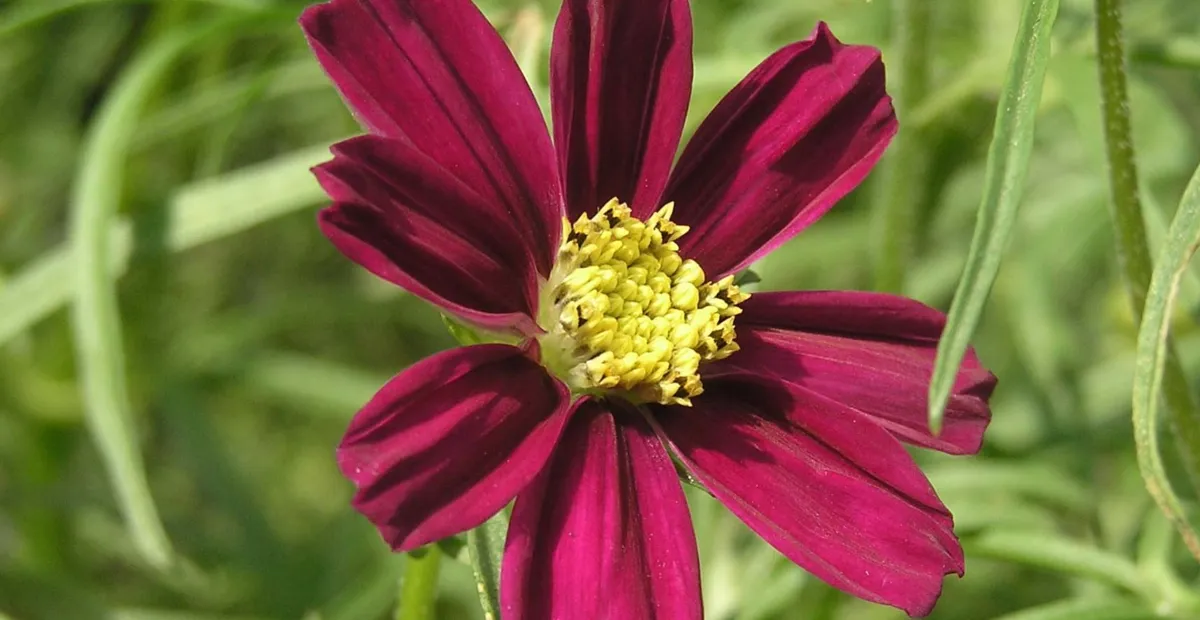
The plant has slender, branching green stems and very finely divided, thread-like leaves that give it a soft, feathery texture. Flower heads are held on long peduncles and show pale petals with a strong rosy basal flare and yellow disk center. The open habit and delicate foliage help distinguish it from broader-leaved sulfur cosmos.
Flowering
This cultivar bears open, single, daisy-like flower heads on long stems. Blooming begins in summer and can continue into early fall, often lasting until the first hard frost when spent flowers are removed. Flowers are carried above the finely textured foliage and open most freely in strong sunlight.
Pollination and visitors
Open cosmos flower heads provide accessible floral resources for bees, bumblebees, butterflies, and hoverflies. University extension observations report honey bees and other bees foraging on Cosmos bipinnatus, while broader horticultural references identify the species as useful for pollinating insects. Evidence specific to this named cultivar is less extensive than evidence for the species.
Cosmos 'Daydream' photos
Click any photo for a larger view. Source, author and license are shown separately.
Diseases and pests
Diseases
Grey mold may develop in crowded, humid, or poorly ventilated conditions, especially on aging flowers and wet foliage. Improve air circulation, water at the soil line, remove affected material, and avoid overhead irrigation. Good spacing and full sun are the main preventive measures.
Pests
Aphids and slugs may occur, especially on young growth. Inspect shoot tips and leaf undersides, rinse small aphid colonies with water, and encourage natural predators. Use barriers or hand-picking for slugs. Avoid broad-spectrum insecticides while flowers are open because the plant attracts beneficial insects.
Related diseases and pests
Only Plant Doctor profiles whose host data indicate this plant may be affected are shown here.


Toxicity and pollen
No reliable evidence was found identifying Cosmos 'Daydream' as toxic to people, dogs, or cats. Normal gardening precautions still apply: do not consume ornamental plant material unless positively identified, wash hands after handling, and seek medical or veterinary advice after an unusual reaction or substantial ingestion.
- Typical season
- Summer through fall
- Pollination / pollen
- Insect-associated flower pollen
Cosmos produces pollen in exposed central disk florets, but it is primarily visited by insects rather than dispersed broadly by wind. Airborne allergy risk is therefore likely lower than for strongly wind-pollinated plants, although sensitive individuals can still react to flower pollen or direct contact. The low rating is a cautious estimate rather than a cultivar-specific clinical finding.
Native habitat
Cosmos bipinnatus is native primarily to Mexico and grows naturally in sunny, open habitats such as disturbed ground, grassland edges, and warm seasonal sites. It favors freely draining soils and warm summers. 'Daydream' is a cultivated garden selection rather than a wild population, and its performance depends strongly on frost-free weather.
Interesting fact
The cultivar's distinctive color pattern is created by a deep rosy flare at the petal base fading outward toward pale pink and white. Cosmos flowers are composite heads made of ray florets around a central disk of tiny florets. Plants can reseed freely if mature seed heads are left in the garden.
Frequently asked questions (FAQ)
The most relevant questions about this plant, with short and direct answers.
🌱Quick care
What is Cosmos 'Daydream'?⌄
Cosmos 'Daydream' is a frost-tender annual cosmos cultivar grown for its pale pink, white-edged flowers with darker pink centers and airy, fern-like foliage.
How much sun does Cosmos 'Daydream' need?⌄
Grow Cosmos 'Daydream' in full sun, ideally where it receives at least 6 hours of direct light daily. More sun generally supports stronger stems and heavier flowering.
How tall does Cosmos 'Daydream' get?⌄
Cosmos 'Daydream' commonly reaches about 30–48 inches tall, although height varies with soil, weather, and growing conditions. Taller plants may benefit from support.
Is Cosmos 'Daydream' an annual or perennial?⌄
Cosmos 'Daydream' is a frost-tender annual in the United States. It completes its life cycle in one growing season but may self-sow where seeds mature.
🌤️Environment and placement
What USDA zones can grow Cosmos 'Daydream'?⌄
Cosmos 'Daydream' can be grown as a warm-season annual across the United States. Plant it outdoors after frost in colder areas and use local frost dates rather than treating it as a winter-hardy perennial.
What soil is best for Cosmos 'Daydream'?⌄
Use well-drained loam, sandy soil, or clay that does not remain waterlogged. Cosmos usually flowers well in average or even relatively poor soil, while excessive fertility can encourage foliage instead of blooms.
Can Cosmos 'Daydream' tolerate heat?⌄
Yes, established Cosmos 'Daydream' generally tolerates summer heat and short dry periods. Water more consistently during prolonged heat, especially in containers or sandy soil.
Can Cosmos 'Daydream' grow in a container?⌄
Yes, Cosmos 'Daydream' can grow in a large container with drainage holes and full sun. Choose a container deep and heavy enough to reduce tipping, and expect to water more often than plants in the ground.
Does Cosmos 'Daydream' need wind protection?⌄
Cosmos 'Daydream' grows best in a reasonably sheltered site because its tall, branching stems can bend or lodge in strong wind. Staking or a nearby plant support can help in exposed gardens.
💧Care and problems
How often should I water Cosmos 'Daydream'?⌄
Water Cosmos 'Daydream' when the soil begins to dry, keeping moisture moderate without saturating the roots. Once established, it is more drought-tolerant than newly planted seedlings.
Should I fertilize Cosmos 'Daydream'?⌄
Usually, little or no fertilizer is needed in average garden soil. Avoid heavy nitrogen feeding because it can produce lanky foliage and fewer flowers.
Why is my Cosmos 'Daydream' tall and floppy?⌄
Floppiness is commonly caused by insufficient light, rich soil, excess nitrogen, crowding, or wind. Grow it in full sun, avoid overfertilizing, space plants properly, and add support when needed.
Does Cosmos 'Daydream' need staking?⌄
Staking is optional but useful for tall plants, exposed locations, and cut-flower beds. Install supports early so stems can grow through them without being damaged later.
What pests affect Cosmos 'Daydream'?⌄
Cosmos 'Daydream' may attract aphids and slugs, especially on tender growth or in damp conditions. Regularly inspect new growth and use physical or locally approved controls if damage becomes significant.
What diseases affect Cosmos 'Daydream'?⌄
Poor airflow and persistently wet foliage can contribute to gray mold and other fungal problems. Improve spacing, water at the soil line, and remove badly affected plant material.
Why is Cosmos 'Daydream' not flowering?⌄
Limited sunlight, excessive fertilizer, transplant stress, or immature plants can delay flowering. Give it full sun, avoid high-nitrogen feeding, and allow several weeks after sowing or transplanting for buds to develop.
🪴Planting and repotting
When should I plant Cosmos 'Daydream' seeds outdoors?⌄
Direct-sow Cosmos 'Daydream' after the danger of frost has passed and the soil has begun to warm. In much of the United States, this means spring, with timing adjusted to local USDA-style frost dates.
How deep should I plant Cosmos 'Daydream' seeds?⌄
Sow Cosmos 'Daydream' seeds about 1/4 inch deep or barely cover them with soil. Keep the seedbed evenly moist until germination.
Can I start Cosmos 'Daydream' seeds indoors?⌄
Yes, start seeds indoors about 4–6 weeks before your average last frost date. Transplant carefully after hardening off, because cosmos seedlings can become stressed if their roots are disturbed.
How far apart should I space Cosmos 'Daydream'?⌄
Space Cosmos 'Daydream' plants about 9–18 inches apart, depending on the desired density and available support. Wider spacing improves airflow, while closer spacing can provide mutual support.
How long do Cosmos 'Daydream' seeds take to germinate?⌄
Cosmos 'Daydream' seeds commonly germinate in roughly 5–14 days under warm, evenly moist conditions. Germination may take longer in cool soil or if the seed is buried too deeply.
✂️Propagation and pruning
How do I propagate Cosmos 'Daydream'?⌄
Propagate Cosmos 'Daydream' primarily by seed. Sow fresh seed directly outdoors or start it indoors, because this annual is not normally propagated by division or woody cuttings.
Can I save seeds from Cosmos 'Daydream'?⌄
Yes, allow flower heads to dry on the plant, then collect the mature seeds before they drop. Because open-pollinated cosmos can cross with nearby cosmos, saved seedlings may not always look identical to the parent.
Does Cosmos 'Daydream' self-seed?⌄
Cosmos 'Daydream' may self-sow when mature seed heads remain in the garden. Seedlings are not guaranteed to survive winter, particularly where freezing temperatures are severe or soil stays wet.
Should I pinch Cosmos 'Daydream' seedlings?⌄
Pinching the growing tip when young can encourage branching and shorter, bushier plants. Do it before the plant becomes tall or develops many flower buds, and recognize that flowering may be delayed slightly.
Should I deadhead Cosmos 'Daydream'?⌄
Yes, remove faded flowers to encourage continued blooming and prevent unwanted self-sowing. Leave some spent heads in place if you want to collect seed or provide seed for birds.
Can I cut Cosmos 'Daydream' flowers for bouquets?⌄
Yes, Cosmos 'Daydream' is well suited to cutting and can produce more stems when harvested regularly. Cut stems when flowers are newly open and keep them in clean water.
⚠️Toxicity and safety
Is Cosmos 'Daydream' toxic to dogs, cats, or people?⌄
No documented toxicity is known for Cosmos 'Daydream'. Even so, prevent pets and children from eating unfamiliar plant material, and do not use the flowers medicinally or as food unless the identity and intended use are specifically verified.
🌸Flowering and special interest
When does Cosmos 'Daydream' bloom?⌄
Cosmos 'Daydream' generally blooms from summer into fall, with timing influenced by sowing date, temperature, and day length. Regular cutting or deadheading can help extend the display.
What do Cosmos 'Daydream' flowers look like?⌄
The flowers are daisy-like and typically show pale pink to nearly white petals with a deeper rosy-pink center around a golden disk. Individual color intensity can vary with growing conditions.
Does Cosmos 'Daydream' attract pollinators?⌄
Yes, its open flowers can attract bees, butterflies, and other pollinating insects. Planting several cosmos together can create a more noticeable nectar and pollen resource during the growing season.
Similar plants
 Azure Monkshood (Aconitum carmichaelii) care guideAconitum carmichaelii
 Monkshood (Aconitum ‘Stainless Steel’)Aconitum 'Stainless Steel'
 Monkshood (Aconitum ‘Bressingham Spire’)Aconitum 'Bressingham Spire'
 Golden full moon maple (Acer shirasawanum ‘Aureum’)Acer shirasawanum 'Aureum'
 Globosum (Acer platanoides ‘Globosum’)Acer platanoides 'Globosum'
 Striped maple (Acer pensylvanicum) care guideAcer pensylvanicum