 Source:
 Caladium ‘White Christmas’ short overview
Caladium 'White Christmas' is a classic fancy-leaved caladium valued for its luminous white, heart-shaped foliage, sharply marked by dark green veins and margins. It performs best in warm, sheltered conditions with bright filtered light or partial shade, evenly moist soil, and reliable drainage. In colder parts of the United States, grow it as a seasonal bedding or container plant, then lift and store the tubers indoors before frost.
Taxonomic classification
Caladium ‘White Christmas’ care guide
Light and placement
Give bright filtered light, dappled shade, or gentle morning sun with afternoon protection. A north- or east-facing exposure, shaded patio, or position beneath an open tree canopy is suitable. Too much direct sun can bleach or scorch the white leaves; too little light produces weak, stretched growth and less vivid foliage.
Watering and humidity
Keep the mix evenly moist during active growth, watering thoroughly when the surface begins to dry rather than following a rigid calendar. Containers may need frequent checks in hot weather. Reduce watering as foliage fades in autumn, then keep dormant tubers nearly dry. Good drainage is essential because saturated media can rot the tuber.
Soil and growing medium
Use a loose, fertile, moisture-retentive mix that drains freely. A loam-based soil amended with compost or leaf mold suits containers and beds. Avoid compacted clay and stagnant water, which can encourage tuber rot. A slightly acidic to neutral reaction is suitable; there is no strong evidence that this cultivar requires an unusually narrow pH range.
Feeding
Feed during active growth with a balanced, dilute liquid fertilizer every 2–4 weeks, or use a controlled-release product according to its label. Water before liquid feeding to reduce root stress. Stop or greatly reduce feeding when leaves decline and the plant enters dormancy; do not fertilize dry, dormant tubers.
Growth and habit
This cultivar forms a seasonal clump from underground tubers, producing leaves in warm conditions and becoming dormant as temperatures and light decline. It is most vigorous when root-zone moisture remains steady without saturation. Removing weak or damaged leaves and protecting tubers from cold helps maintain performance in following seasons.
Planting and repotting
Plant outdoors only after frost danger has passed and the soil is consistently warm, ideally at least 65–70°F. Set tubers with the knobby eyes upward, about 1–2 inches deep, or follow the supplier’s size-specific directions. Space plants about 8–12 inches apart for a fuller display, allowing air movement around the leaves.
Repot container plants in spring as growth resumes, using a clean pot with drainage holes and a fresh, porous mix. Handle the tuber and emerging shoots gently. Choose a container only modestly larger than the root mass so the mix does not remain wet for long periods.
Propagation and pruning
Propagation
Propagate by dividing tubers when dormant or just before spring growth. Each division must retain a viable bud or eye; allow cut surfaces to dry briefly before planting. Division is practical but requires careful handling because wounded tubers can rot. Seed propagation is not a dependable way to reproduce this named cultivar faithfully.
Pruning
Pruning is limited to removing yellowing, damaged, or diseased leaves at the base with clean scissors. If a flower spike appears and foliage production is the priority, it may be cut near the soil line. Allow leaves to decline naturally before dormancy rather than cutting healthy foliage early.
Overwintering
Before frost or when temperatures begin approaching 55–60°F, stop encouraging new growth and lift the tubers after foliage declines. Cure them for several days in a warm, dry, shaded, ventilated place, then store dry in a paper bag or breathable container with dry peat, vermiculite, or shredded paper at roughly 60–70°F. Restart in spring when warmth returns.
Uses
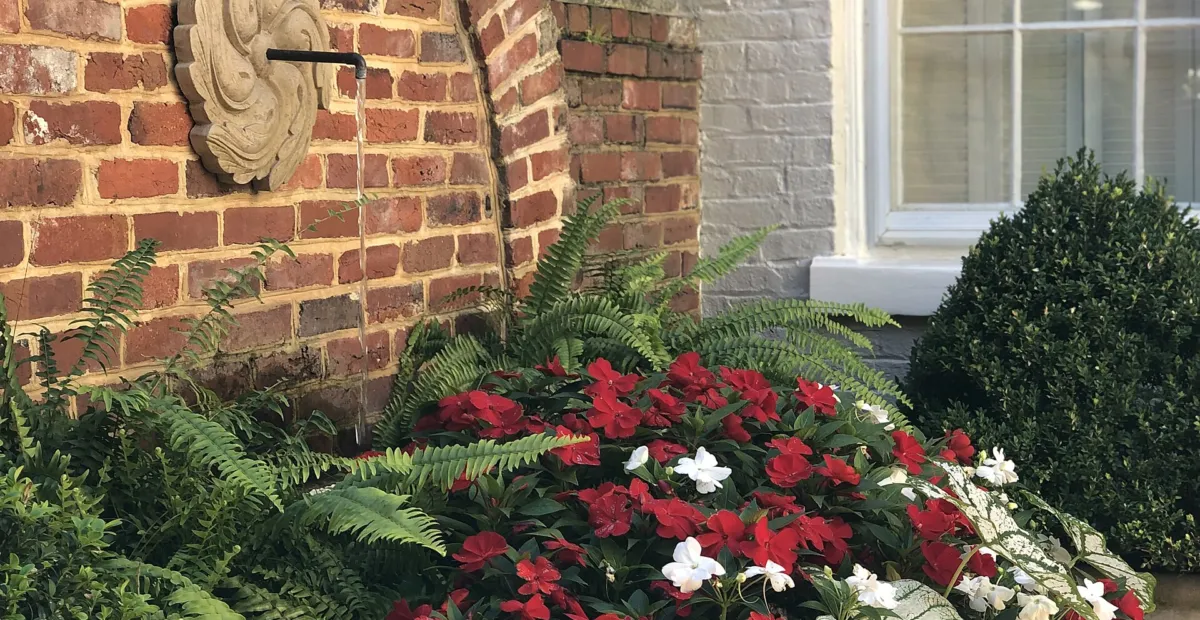
Use as a high-impact foliage accent in shaded beds, woodland-style plantings, patio containers, window boxes, and warm-season indoor displays. Its white leaves brighten low-light compositions and contrast well with green ferns, begonias, impatiens, and other shade plants. It is ornamental only and should not be eaten.
Appearance
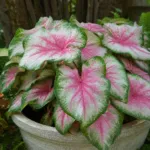
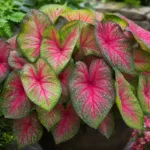
A fancy-leaved caladium with broad, heart-shaped to arrowhead-like leaves. The blade is predominantly bright white, while the primary and secondary venation and outer margin are dark green. Upright petioles arise from an underground tuber, creating a bold clumping display. Color intensity can vary with light, temperature, nutrition, and plant age.
Flowering
Caladiums are grown primarily for foliage but may occasionally produce a typical aroid inflorescence: a greenish spathe surrounding a short white spadix. Flowering is sporadic and usually visually secondary to the leaves. Cultivar-specific flowering dates and flower measurements are not reliably documented.
Pollination and visitors
Caladium inflorescences are aroid-type structures and may be visited by small insects, but reliable documentation for the specific ‘White Christmas’ cultivar is lacking. The plant is chiefly cultivated for foliage rather than for a demonstrated pollinator benefit.
Caladium 'White Christmas' photos
Click any photo for a larger view. Source, author and license are shown separately.
Diseases and pests
Diseases
The main risks are tuber and root rots, especially in cold, saturated soil, plus leaf-spot problems under persistently wet foliage. Start with sound tubers, use sterile or clean media, provide drainage and airflow, and water at the soil surface. Remove badly affected tissue and do not store damaged tubers.
Pests
Watch for aphids, mealybugs, spider mites, thrips, slugs, and snails. Inspect leaf undersides and new growth, isolate infested containers, rinse foliage when appropriate, and use labeled horticultural soap or another targeted treatment. Avoid chronically wet foliage and overcrowding, which increase pest and disease pressure.
Related diseases and pests
Only Plant Doctor profiles whose host data indicate this plant may be affected are shown here.
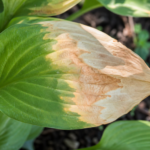 Environmental stressLeaf sunburn
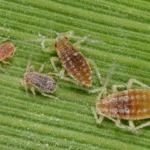 PestMealy Plum AphidHyalopterus pruni (Geoffroy, 1762)
 Environmental stressUnderwatering
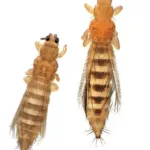 PestOnion thripsThrips tabaci Lindeman
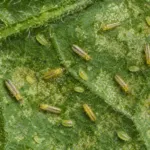 PestMelon thripsThrips palmi Karny
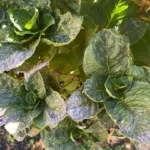 PestChilli thripsScirtothrips dorsalis Hood
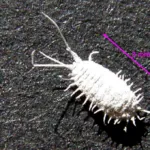 PestObscure mealybugPseudococcus viburni
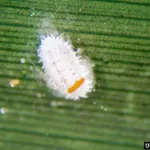 PestCitrus mealybugPlanococcus citri
Toxicity and pollen
Caladium tissues contain insoluble calcium oxalate crystals. Chewing or ingesting leaves, stems, or tubers can cause immediate mouth and throat irritation, pain, swelling, drooling, vomiting, and difficulty swallowing. Keep plant material away from children and pets, wear gloves when handling damaged tissue, and seek medical or veterinary advice after ingestion.
- Typical season
- No documented airborne pollen season for this cultivar
- Pollination / pollen
- Not well documented; occasional aroid inflorescences
Caladium pollen and airborne-allergy behavior are not well characterized for this named cultivar. Its flowers are produced only occasionally, and no dependable United States pollen-season listing was located. People with known plant sensitivities should avoid contact with sap and pollen-bearing structures and monitor individual reactions.
Native habitat
The cultivar is horticultural rather than a wild population. Its Caladium background derives from tropical American plants adapted to warm, humid conditions, filtered light, organic soils, and seasonal moisture. In cultivation, cold soil and prolonged wetness are more damaging than ordinary summer heat when the plant is shaded and watered consistently.
Interesting fact
‘White Christmas’ was among the leading fancy-leaved caladium cultivars in Florida’s commercial tuber industry survey. It has also been used as a parent in University of Florida caladium breeding. The bright white leaf surface reflects its distinctive ornamental value, while the dark venation provides strong visual contrast.
Frequently asked questions (FAQ)
The most relevant questions about this plant, with short and direct answers.
🌱Quick care
How do you care for Caladium 'White Christmas'?⌄
Grow Caladium 'White Christmas' in bright filtered light, fertile well-drained soil, and evenly moist conditions. Keep it warm and protect it from frost, freezing temperatures, and prolonged cold.
Is Caladium 'White Christmas' an indoor or outdoor plant?⌄
Caladium 'White Christmas' can grow indoors as a seasonal houseplant or outdoors in warm, frost-free weather. In the United States, bring it inside or store its tubers before temperatures approach freezing.
🌤️Environment and placement
How much light does Caladium 'White Christmas' need indoors?⌄
Place it in bright, indirect or filtered light, such as near an east-facing window or behind a sheer curtain. Too little light can weaken growth, while strong direct sun may scorch its predominantly white leaves.
Can Caladium 'White Christmas' tolerate direct sunlight?⌄
It is safest in partial shade or filtered light rather than strong direct sun. Gentle early-morning sun may be tolerated in some settings, but intense afternoon sunlight can cause leaf scorch, especially on the white areas.
Where should I place Caladium 'White Christmas' outdoors?⌄
Choose a warm, sheltered location with bright shade or dappled light. Avoid exposed afternoon sun, reflected heat, cold wind, and areas where rain or irrigation leaves the soil constantly saturated.
What temperature is best for Caladium 'White Christmas'?⌄
Keep it warm, with active growth generally strongest when temperatures remain above about 65°F. Protect the plant and its tubers from frost and freezing conditions, which can cause serious or fatal damage.
Does Caladium 'White Christmas' need high humidity?⌄
Moderate household humidity is usually adequate, although it may appreciate more humidity in very dry indoor air. Good air circulation and careful watering are more important than constantly misting the foliage.
💧Care and problems
How often should I water Caladium 'White Christmas'?⌄
Water when the upper layer of soil begins to dry, then water thoroughly and let excess drain away. Adjust the frequency for light, temperature, pot size, and season rather than following a fixed calendar schedule.
Should the soil of Caladium 'White Christmas' stay wet?⌄
Keep the soil evenly moist but never waterlogged. Constantly soggy soil reduces root and tuber oxygen and increases the risk of rot.
Why are the leaves of my Caladium 'White Christmas' drooping?⌄
Drooping can result from dry soil, excess moisture, low light, cold temperatures, or the plant entering dormancy. Check soil moisture and drainage first, then confirm that the plant is warm and receiving bright filtered light.
Why are Caladium 'White Christmas' leaves turning brown?⌄
Brown edges or patches commonly result from direct sun, underwatering, dry air, cold stress, or fertilizer residue on the leaves. Move it into filtered light, keep moisture more consistent, and avoid allowing fertilizer solution to dry on the foliage.
Why is my Caladium 'White Christmas' losing its green veins?⌄
The white-and-green pattern can vary with light and plant growth, and some leaves may develop more white tissue than others. If growth is weak or leaves are pale overall, improve filtered light and check watering, roots, and nutrition.
Why are the leaves of Caladium 'White Christmas' curling?⌄
Leaf curling may indicate underwatering, excessive light, low humidity, cold conditions, or pest activity. Inspect the undersides and stems for pests, then correct moisture and placement before removing damaged leaves.
What soil is best for Caladium 'White Christmas'?⌄
Use fertile, loose, humus-rich potting soil that drains freely while retaining some moisture. A quality indoor potting mix amended with perlite or another aerating material is generally suitable.
Does Caladium 'White Christmas' need fertilizer?⌄
It benefits from light, regular feeding during active growth if the potting mix is not already enriched. Use a balanced houseplant fertilizer at the label-recommended diluted rate and reduce or stop feeding as the plant enters dormancy.
🪴Planting and repotting
When should I plant Caladium 'White Christmas' tubers outdoors?⌄
Plant the tubers after the danger of frost has passed and the soil has warmed, typically when nights are consistently above about 60°F. Cold, wet soil can delay sprouting and encourage tuber rot.
How deep should I plant Caladium 'White Christmas' tubers?⌄
Plant tubers shallowly, generally with about 1 to 2 inches of soil covering them. Position visible growth eyes upward when possible, or place the tuber on its side if its orientation is unclear.
Why has my Caladium 'White Christmas' tuber not sprouted?⌄
Cool soil, insufficient warmth, excessive moisture, dormancy, or incorrect orientation can delay sprouting. Keep the container warm, lightly moist but not soggy, and allow several weeks before disturbing the tuber.
Can Caladium 'White Christmas' grow in a container?⌄
Yes, it grows well in a container with drainage holes and a loose, moisture-retentive but well-drained mix. Choose a pot only slightly larger than the tuber or root system to reduce the risk of persistently wet soil.
When should I repot Caladium 'White Christmas'?⌄
Repot it when the plant is actively growing and the roots or tuber have outgrown the container. Avoid unnecessary repotting during dormancy or immediately after a major watering or temperature stress.
✂️Propagation and pruning
How do you propagate Caladium 'White Christmas'?⌄
Propagation is usually done by dividing mature tubers so that each section contains at least one healthy growth eye. Let cut surfaces dry and callus briefly, then plant the divisions in warm, lightly moist, well-drained soil.
Can Caladium 'White Christmas' be propagated from leaf cuttings?⌄
No, ordinary leaf cuttings do not reliably produce new plants because caladiums are propagated from tubers or tuber divisions. Seed propagation is possible but does not reliably reproduce the named cultivar.
Should I cut off damaged Caladium 'White Christmas' leaves?⌄
Remove leaves that are fully brown, diseased, or badly scorched with clean scissors. Partially green leaves can continue contributing energy, so remove them only when the damage is extensive or unsightly.
How do I overwinter Caladium 'White Christmas' in the United States?⌄
Before frost, stop watering as foliage declines, then keep the dormant tuber dry and frost-free in its container or lift and store it in a dry medium. Restart watering and warmth in spring when new growth begins.
⚠️Toxicity and safety
Is Caladium 'White Christmas' toxic to cats and dogs?⌄
Yes, Caladium 'White Christmas' is toxic if chewed or ingested, including by pets. Keep it away from cats, dogs, children, and anyone who may bite or handle plant material, and contact a medical or veterinary professional if ingestion occurs.
🌸Flowering and special interest
Does Caladium 'White Christmas' produce flowers?⌄
It can produce small, inconspicuous arum-family flowers, but it is grown primarily for its white foliage and green veining. Flowering is not usually the main ornamental feature and may be limited indoors.