
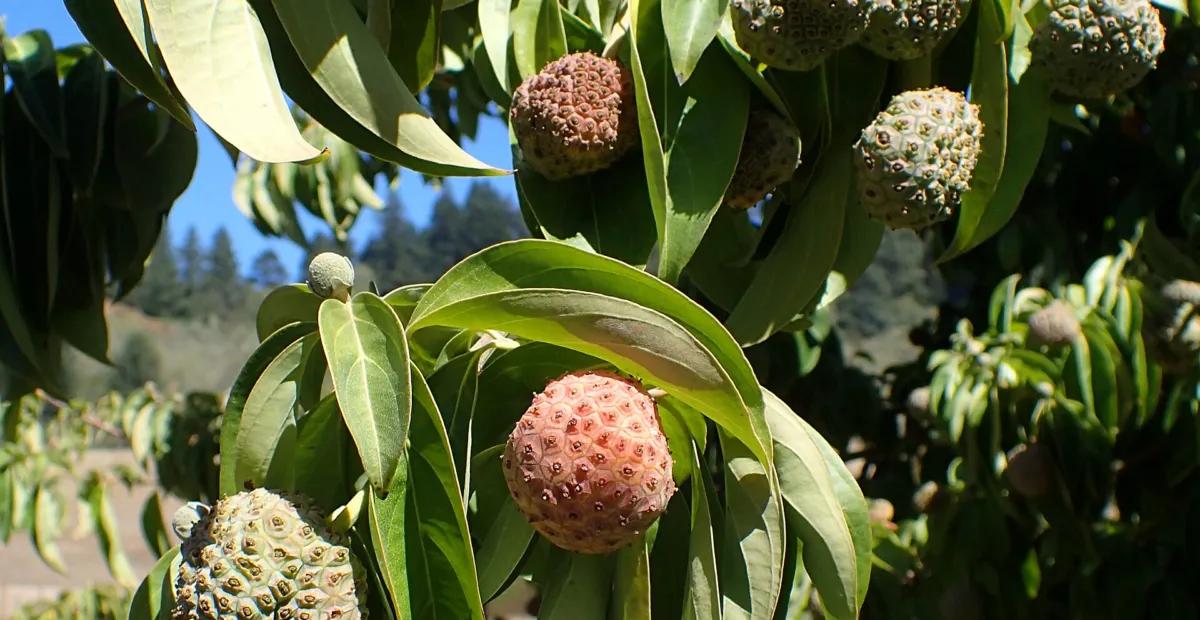
 Source:
 Bentham’s cornel (Cornus capitata) short overview
Bentham's cornel is an evergreen to semi-evergreen dogwood from the Himalayas and East Asia. It forms a broad small tree or shrub with leathery gray-green leaves, compact clusters of tiny true flowers and four large creamy bracts that create the showy display. Pollinated mainly by bees, the flowers can develop into unusual strawberry-like red compound fruits. It performs best in mild, sheltered sites with fertile, well-drained, acidic to neutral soil.
Taxonomic classification
Bentham’s cornel (Cornus capitata) care guide
Light and placement
Grow in full sun to partial shade. In mild, moist climates, several hours of direct sun encourages better flowering; in hot or dry regions, provide morning sun with afternoon protection. East-, south- or west-facing positions can work if roots stay cool and moist. Scorched margins, bleached foliage or premature leaf drop suggest excessive heat or drought, while sparse growth and weak flowering suggest insufficient light.
Watering and humidity
Water deeply when the upper few inches of soil begin to dry, rather than applying frequent shallow sips. Maintain even moisture during establishment, flowering and fruit development, then reduce slightly in cool or rainy weather without allowing prolonged drought. Keep foliage dry when possible and use mulch to moderate root-zone moisture.
Soil and growing medium
Use fertile, humus-rich soil that drains freely yet does not dry rapidly. Loam is ideal, but the species also tolerates clay or sand when drainage is improved with organic matter. Acidic to neutral soil is preferred; avoid persistently waterlogged ground and poorly drained planting pockets.
Feeding
Apply a thin layer of compost or well-rotted organic mulch in spring. If growth is weak, use a balanced slow-release fertilizer at the label rate after growth begins. Avoid heavy nitrogen feeding, late-season fertilization and feeding drought-stressed or newly transplanted plants.
Growth and habit
This species develops a broad, bushy structure and may be grown as a single-trunk tree or multi-stemmed shrub. Growth and flowering can be slow in young seed-grown plants, while established specimens are comparatively undemanding in suitable climates. Provenance strongly affects winter behavior, mature form and flowering performance.
Planting and repotting
Plant in spring or early fall where winters are mild and the site is protected from drying cold winds. Set the root flare level with the surrounding soil rather than burying the trunk. Mulch broadly with compost or bark, keeping it away from the stem, and water consistently through the first two growing seasons.
Young container plants can be shifted into a slightly larger pot in early spring before vigorous growth begins. Use a loam-based, free-draining mix with added organic matter. Minimize root disturbance, water thoroughly after transplanting, and move into the ground once the root system is well established.
Propagation and pruning
Propagation
Sow fresh seed in autumn, or clean and cold-stratify stored seed before spring sowing. Seed should not be allowed to dry excessively. Semi-hardwood cuttings are another documented method, while grafted plants may flower earlier than seedlings. Propagation can be slow and variable.
Pruning
Prune minimally. Remove dead, damaged or crossing branches after flowering or during dry, mild weather. Establish a preferred single- or multi-stemmed form while young, then avoid hard cutting that can spoil the natural habit and reduce the following season's display.
Overwintering
In Zones 8–9, protect young plants from drying winds and sudden hard freezes with a thick root mulch and temporary frost fabric. Container plants are more vulnerable than those in the ground and should be moved to a sheltered, unheated space before severe cold. Do not keep the plant warm indoors for extended periods unless necessary, because low light can weaken it.
Uses
Primarily an ornamental specimen or small shade-tree accent for mild regions. Its bracts, evergreen foliage and unusual red compound fruits provide several seasons of interest. It can contribute floral resources for bees, but it is not a dependable choice for severe-winter climates. Although ripe fruits are reported as edible, harvest and consumption should be approached cautiously because species-specific food-safety guidance is limited.
Appearance
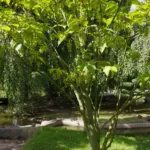
Leaves are leathery, narrow-elliptic to obovate and gray-green, often with paler undersides. The dense flower heads are surrounded by four broad cream-white bracts that can age pink. Fruits are flattened to rounded red syncarps with a strawberry-like appearance. Older trees develop characterful bark and a spreading silhouette.
Flowering
The showy display consists of four cream-white, sometimes yellowish or pink-tinged bracts surrounding a dense head of many tiny greenish flowers. Individual flowers are short-lived, while a flower head remains decorative for several days. Bloom timing varies with climate and provenance, generally occurring from late spring into summer in the United States.
Pollination and visitors
Research on the species documents insect pollination, with Anthophora bees recorded as the dominant visitors in studied East Asian populations; other small insects, including thrips, have also been observed. The large bracts provide a strong visual signal around otherwise inconspicuous flowers, and insect exclusion substantially reduces fruit set.
Cornus capitata photos
Click any photo for a larger view. Source, author and license are shown separately.
Diseases and pests
Diseases
Monitor for dogwood anthracnose, especially where foliage stays wet and air circulation is poor. Remove and discard infected leaves, prune out affected twigs during dry weather, irrigate at the soil line, and avoid overhead watering. Root disease and honey fungus are risks in poorly drained or previously infected soil.
Pests
Usually relatively pest-free, but scale insects may occur. Inspect stems and leaf undersides for fixed bumps, sticky honeydew or sooty mold. Improve plant vigor, prune lightly for airflow, and use horticultural oil only according to the product label and temperature restrictions.
Related diseases and pests
Only Plant Doctor profiles whose host data indicate this plant may be affected are shown here.
 DiseasePhytophthora plurivora Root and Collar RotPhytophthora plurivora
 PestEuropean Fruit Lecanium ScaleParthenolecanium corni
 DiseaseCoral Spot CankerNectria cinnabarina
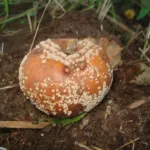 DiseaseEuropean brown rotMonilinia fructigena
 DiseasePhytophthora cactorum crown, collar, root and fruit rotPhytophthora cactorum
 DiseaseAnthracnoseColletotrichum gloeosporioides
 DiseaseWalnut AnthracnoseOphiognomonia leptostyla
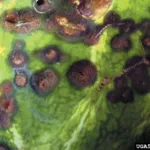 DiseaseCucurbit AnthracnoseColletotrichum orbiculare
Toxicity and pollen
Reliable species-specific toxicity evidence for humans, dogs, cats and children is limited. The ripe compound fruits are described in botanical and horticultural references as edible, but this should not be treated as a guarantee of safety for every person or animal, and unripe fruit, seeds and large quantities are best avoided. Prevent unsupervised ingestion and seek professional advice after significant exposure.
- Typical season
- Late spring to summer during flowering
- Pollination / pollen
- Insect-carried pollen with limited airborne dispersal
Cornus capitata is insect-pollinated rather than a major wind-pollinated tree. Species-specific clinical allergy evidence is scarce, so a zero-allergy claim would be unwarranted. The low label reflects the likely limited airborne release from insect-visited flowers, not confirmed medical safety for sensitive individuals.
Native habitat
In nature it occurs in the Himalayas and southwestern China, including evergreen or mixed forests at roughly 3,300–10,500 ft elevation. It is associated with woodland conditions, fertile soils and reliable moisture, but cultivated plants flower better in more open light than deep forest shade. Sheltered mountain and mild maritime climates suit it best.
Interesting fact
The showy structures are bracts, not petals. Dense heads contain many tiny true flowers. Successful fruit set depends strongly on insect visitation. The compound fruits resemble strawberries but are botanically different. Historical plants in cultivation vary greatly in hardiness and evergreen behavior.
Frequently asked questions (FAQ)
The most relevant questions about this plant, with short and direct answers.
🌱Quick care
What is Cornus capitata commonly called in the United States?⌄
Cornus capitata is commonly documented as Bentham's cornel. It is also sold under names such as evergreen dogwood or Himalayan flowering dogwood, but Bentham's cornel is the verified common name for this exact taxon. ([missouribotanicalgarden.org](https://www.missouribotanicalgarden.org/PlantFinder/PlantFinderDetails.aspx?taxonid=279360&utm_source=openai))
Is Cornus capitata evergreen?⌄
Cornus capitata is evergreen to semi-evergreen, depending on winter conditions. In colder parts of its range, it may shed much of its foliage during winter or as new leaves emerge in spring. ([missouribotanicalgarden.org](https://www.missouribotanicalgarden.org/PlantFinder/PlantFinderDetails.aspx?taxonid=279360&utm_source=openai))
How big does Bentham's cornel get?⌄
Bentham's cornel can grow about 20–40 feet tall and wide in favorable conditions. Its mature size makes it better suited to a spacious yard, woodland edge, or large landscape than to a small foundation bed. ([missouribotanicalgarden.org](https://www.missouribotanicalgarden.org/PlantFinder/PlantFinderDetails.aspx?taxonid=279360&utm_source=openai))
What USDA hardiness zones are suitable for Cornus capitata?⌄
Cornus capitata is generally recommended for USDA Zones 8–9, with some selections and local reports extending its potential range into warmer parts of Zone 7. Protection from hard freezes is important, and performance can vary substantially by cultivar and microclimate. ([missouribotanicalgarden.org](https://www.missouribotanicalgarden.org/PlantFinder/PlantFinderDetails.aspx?taxonid=279360&utm_source=openai))
🌤️Environment and placement
Where should I plant Cornus capitata?⌄
Plant Cornus capitata in full sun to partial shade in a sheltered location with fertile, humus-rich, well-drained soil. A protected site away from severe winter wind and hard freezes is especially important in the United States. ([missouribotanicalgarden.org](https://www.missouribotanicalgarden.org/PlantFinder/PlantFinderDetails.aspx?taxonid=279360&utm_source=openai))
Can Cornus capitata grow in full sun?⌄
Yes, Cornus capitata can grow in full sun, particularly where summers are moderate and the soil stays evenly moist. In hot, dry climates, afternoon shade and protection from reflected heat can reduce stress. ([missouribotanicalgarden.org](https://www.missouribotanicalgarden.org/PlantFinder/PlantFinderDetails.aspx?taxonid=279360&utm_source=openai))
Does Bentham's cornel tolerate shade?⌄
Bentham's cornel tolerates partial shade, but it generally flowers best with more open exposure. Dense shade may produce weaker growth and reduce the display of its showy bracts and fruit. ([missouribotanicalgarden.org](https://www.missouribotanicalgarden.org/PlantFinder/PlantFinderDetails.aspx?taxonid=279360&utm_source=openai))
What type of soil does Cornus capitata need?⌄
Cornus capitata prefers fertile, humus-rich, medium-moisture, well-drained loam. It can tolerate amended clay or sand, and sources report tolerance of a fairly broad soil range when drainage and fertility are adequate. ([missouribotanicalgarden.org](https://www.missouribotanicalgarden.org/PlantFinder/PlantFinderDetails.aspx?taxonid=279360&utm_source=openai))
Does Cornus capitata tolerate clay soil?⌄
Cornus capitata can tolerate clay soil if it is amended with organic matter and drains reasonably well. Avoid planting it where heavy clay remains waterlogged, because prolonged saturation can damage the roots. ([missouribotanicalgarden.org](https://www.missouribotanicalgarden.org/PlantFinder/PlantFinderDetails.aspx?taxonid=279360&utm_source=openai))
Is Cornus capitata drought tolerant?⌄
Cornus capitata is not best treated as drought tolerant; it prefers moderate, consistent moisture. Established trees may tolerate short dry periods, but supplemental watering is advisable during prolonged summer heat or drought. ([missouribotanicalgarden.org](https://www.missouribotanicalgarden.org/PlantFinder/PlantFinderDetails.aspx?taxonid=279360&utm_source=openai))
Can Cornus capitata grow near the coast?⌄
Cornus capitata can tolerate coastal exposure and wind when planted in suitable soil. Even so, a sheltered site is preferable in the United States where cold winter winds or salt spray may combine with marginal hardiness. ([treesandshrubsonline.org](https://www.treesandshrubsonline.org/articles/cornus/cornus-capitata/?utm_source=openai))
💧Care and problems
How often should I water Cornus capitata?⌄
Water Cornus capitata when the upper few inches of soil begin to dry, providing a deep soaking rather than frequent light sprinkling. Maintain more consistent moisture during establishment, summer heat, and extended drought, while avoiding saturated soil. ([missouribotanicalgarden.org](https://www.missouribotanicalgarden.org/PlantFinder/PlantFinderDetails.aspx?taxonid=279360&utm_source=openai))
Does Cornus capitata need fertilizer?⌄
Cornus capitata usually needs little fertilizer when planted in fertile soil enriched with organic matter. If growth is weak, use a soil test before applying a balanced, slow-release fertilizer, because excessive nitrogen can encourage foliage at the expense of flowering. ([missouribotanicalgarden.org](https://www.missouribotanicalgarden.org/PlantFinder/PlantFinderDetails.aspx?taxonid=279360&utm_source=openai))
What problems commonly affect Bentham's cornel?⌄
Bentham's cornel has no widely reported serious insect or disease problems under suitable growing conditions. Poor drainage, drought, heat stress, and winter injury are more likely concerns in marginal locations. ([missouribotanicalgarden.org](https://www.missouribotanicalgarden.org/PlantFinder/PlantFinderDetails.aspx?taxonid=279360&utm_source=openai))
Is Cornus capitata susceptible to dogwood anthracnose?⌄
Cornus capitata does not appear to suffer from the anthracnose problems that have severely affected some flowering dogwoods. This does not make it immune to every disease, especially when stressed by poor site conditions. ([missouribotanicalgarden.org](https://www.missouribotanicalgarden.org/PlantFinder/PlantFinderDetails.aspx?taxonid=279360&utm_source=openai))
Why is my Cornus capitata losing leaves?⌄
Leaf loss can occur because Cornus capitata is only semi-evergreen in colder conditions. Sudden or extensive loss may also indicate winter injury, drought, root stress, or poor drainage, so inspect the stems and soil before assuming the tree is dead. ([missouribotanicalgarden.org](https://www.missouribotanicalgarden.org/PlantFinder/PlantFinderDetails.aspx?taxonid=279360&utm_source=openai))
How do I protect Cornus capitata from frost?⌄
Protect Cornus capitata by planting it in a sheltered microclimate, mulching the root zone, and covering young plants during unusual freezes. Container-grown specimens should be moved to a protected, frost-free location when severe cold is forecast. ([missouribotanicalgarden.org](https://www.missouribotanicalgarden.org/PlantFinder/PlantFinderDetails.aspx?taxonid=279360&utm_source=openai))
🪴Planting and repotting
When is the best time to plant Cornus capitata?⌄
Plant Cornus capitata in spring after the danger of hard frost has passed or in fall well before the ground freezes. Spring planting is safer in marginal areas because it gives the root system a full growing season before winter. ([missouribotanicalgarden.org](https://www.missouribotanicalgarden.org/PlantFinder/PlantFinderDetails.aspx?taxonid=279360&utm_source=openai))
How do I plant Bentham's cornel in the ground?⌄
Plant Bentham's cornel with the root flare at or slightly above soil level, backfill with native soil improved with compost, and water deeply. Apply a few inches of mulch over the root zone, keeping it several inches away from the trunk. ([missouribotanicalgarden.org](https://www.missouribotanicalgarden.org/PlantFinder/PlantFinderDetails.aspx?taxonid=279360&utm_source=openai))
Can Cornus capitata be grown in a container?⌄
Cornus capitata can be grown temporarily in a large container while young, but it ultimately becomes a substantial tree or large shrub. Container plants require careful watering and should be overwintered in a protected location in climates colder than their reliable hardiness range. ([missouribotanicalgarden.org](https://www.missouribotanicalgarden.org/PlantFinder/PlantFinderDetails.aspx?taxonid=279360&utm_source=openai))
How far apart should Cornus capitata be planted?⌄
For a specimen planting, allow roughly 20 feet or more from buildings and other large trees, adjusting for the cultivar and desired form. Smaller spacing is appropriate only when deliberately creating a group or hedge and when regular formative pruning is planned. ([missouribotanicalgarden.org](https://www.missouribotanicalgarden.org/PlantFinder/PlantFinderDetails.aspx?taxonid=279360&utm_source=openai))
✂️Propagation and pruning
How do you propagate Cornus capitata from seed?⌄
Sow fresh, cleaned seed as soon as the fruit ripens or give stored seed a prolonged cold-stratification period. A commonly cited method uses about 90 days of cold stratification, but germination may still be slow and seedlings can take years to flower. ([treesandshrubsonline.org](https://www.treesandshrubsonline.org/articles/cornus/cornus-capitata/?utm_source=openai))
Can Cornus capitata be propagated from cuttings?⌄
Cornus capitata can be propagated from semi-ripe or mature-wood cuttings, although availability of dependable species-specific instructions is limited. Use healthy current-season material, rooting hormone, sterile medium, and consistently humid, protected conditions. ([practicalplants.org](https://practicalplants.org/wiki/cornus_capitata/?utm_source=openai))
Is grafted Cornus capitata better than a seed-grown plant?⌄
A grafted Cornus capitata may flower sooner and preserve a selected cultivar’s traits more reliably than a seed-grown plant. Seed-grown specimens can be variable and slow to reach flowering size, so grafted plants may be preferable when available. ([treesandshrubsonline.org](https://www.treesandshrubsonline.org/articles/cornus/cornus-capitata/?utm_source=openai))
When should Cornus capitata be pruned?⌄
Prune Cornus capitata after flowering or during dormancy to remove dead, damaged, crossing, or poorly placed branches. Avoid heavy pruning immediately before flowering if you want to preserve the current season’s bracts and fruiting potential. ([missouribotanicalgarden.org](https://www.missouribotanicalgarden.org/PlantFinder/PlantFinderDetails.aspx?taxonid=279360&utm_source=openai))
Does Cornus capitata need regular pruning?⌄
Cornus capitata generally needs only light maintenance pruning once its structure is established. Remove damaged or crossing branches and use formative pruning when young if you want a single-trunk tree rather than a multi-stemmed shrub. ([missouribotanicalgarden.org](https://www.missouribotanicalgarden.org/PlantFinder/PlantFinderDetails.aspx?taxonid=279360&utm_source=openai))
⚠️Toxicity and safety
Is Cornus capitata toxic to dogs, cats, or people?⌄
The toxicity of Cornus capitata is not well established, and species-specific safety evidence is limited. Because the fruits and plant parts may be confused with other dogwoods, keep children and pets from consuming them and seek professional advice after ingestion. ([missouribotanicalgarden.org](https://www.missouribotanicalgarden.org/PlantFinder/PlantFinderDetails.aspx?taxonid=279360&utm_source=openai))
🌸Flowering and special interest
When does Cornus capitata bloom?⌄
Cornus capitata typically blooms from late spring into early summer, often around June and July in reported cultivation. The exact timing varies with climate, exposure, plant age, and cultivar. ([missouribotanicalgarden.org](https://www.missouribotanicalgarden.org/PlantFinder/PlantFinderDetails.aspx?taxonid=279360&utm_source=openai))
Are Cornus capitata flowers actually bracts?⌄
Yes, the showy parts are mainly creamy-white to pale-yellow bracts surrounding a central cluster of small true flowers. The bracts create the flower-like display for which this dogwood is grown. ([missouribotanicalgarden.org](https://www.missouribotanicalgarden.org/PlantFinder/PlantFinderDetails.aspx?taxonid=279360&utm_source=openai))
Does Cornus capitata produce fruit?⌄
Yes, Cornus capitata produces fleshy, strawberry-like fruits that generally ripen in fall. The pinkish-red to purple-red fruits are ornamental and attract birds, although reliable species-specific information about human consumption is limited. ([missouribotanicalgarden.org](https://www.missouribotanicalgarden.org/PlantFinder/PlantFinderDetails.aspx?taxonid=279360&utm_source=openai))
Are Bentham's cornel fruits edible?⌄
Some horticultural references describe the fruits as edible, but species-specific evidence about safe preparation and human consumption is limited. Treat the fruit cautiously and do not eat it unless its identity and safety have been confirmed by a qualified local authority. ([missouribotanicalgarden.org](https://www.missouribotanicalgarden.org/PlantFinder/PlantFinderDetails.aspx?taxonid=279360&utm_source=openai))
Does Cornus capitata attract birds?⌄
Yes, the fall fruits of Cornus capitata are reported to provide food for birds. The fruit display also adds seasonal ornamental interest after the late-spring or early-summer bracts fade. ([missouribotanicalgarden.org](https://www.missouribotanicalgarden.org/PlantFinder/PlantFinderDetails.aspx?taxonid=279360&utm_source=openai))
Why is my Cornus capitata not flowering?⌄
Common possibilities include insufficient light, juvenile age, winter damage to flower buds, excessive nitrogen, drought stress, or unsuitable climate. Seed-grown plants can be particularly slow to flower, while grafted selections may reach flowering size sooner. ([missouribotanicalgarden.org](https://www.missouribotanicalgarden.org/PlantFinder/PlantFinderDetails.aspx?taxonid=279360&utm_source=openai))
Similar plants
 Azure Monkshood (Aconitum carmichaelii) care guideAconitum carmichaelii
 Monkshood (Aconitum ‘Stainless Steel’)Aconitum 'Stainless Steel'
 Monkshood (Aconitum ‘Bressingham Spire’)Aconitum 'Bressingham Spire'
 Golden full moon maple (Acer shirasawanum ‘Aureum’)Acer shirasawanum 'Aureum'
 Globosum (Acer platanoides ‘Globosum’)Acer platanoides 'Globosum'
 Striped maple (Acer pensylvanicum) care guideAcer pensylvanicum