
 Source:
 Caladium ‘Aaron’ short overview
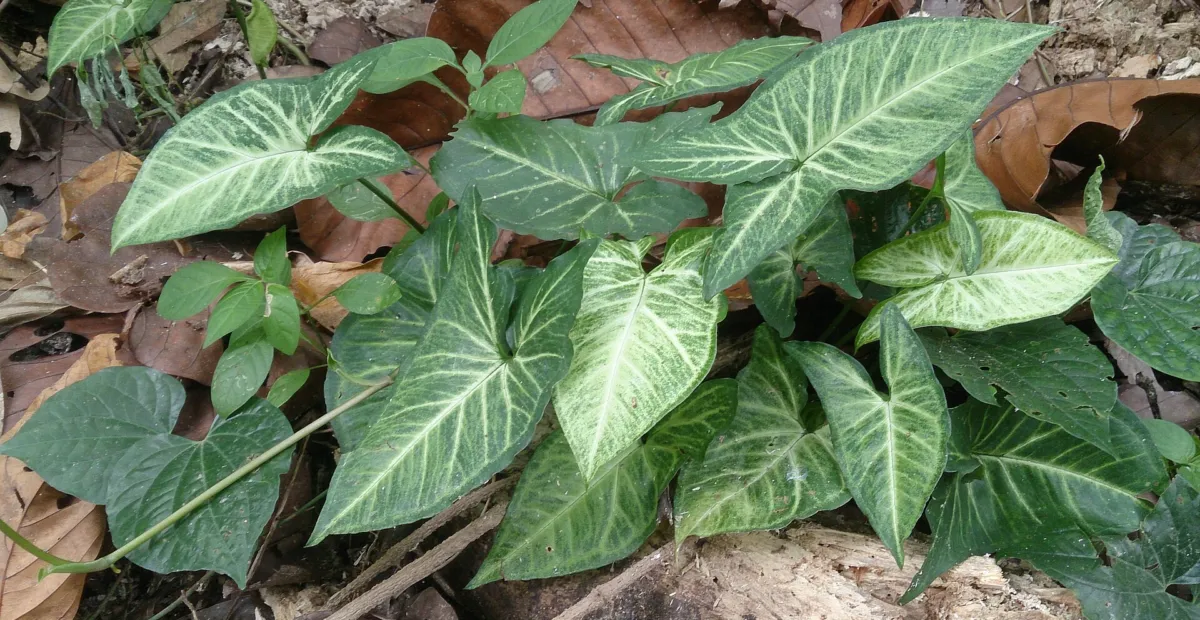
Caladium 'Aaron' is a fancy-leaved caladium grown primarily for its luminous foliage rather than its occasional, inconspicuous inflorescences. Its medium to large, heart-shaped leaves combine creamy-white centers and white veins with dark green margins. The tender tuberous perennial performs best in warm, evenly moist soil and bright filtered light or partial shade, making it useful in shaded beds, containers, patios, and indoor displays.
Taxonomic classification
Caladium ‘Aaron’ care guide
Light and placement
Grow in bright filtered light, partial shade, or shade, ideally with morning light or dappled exposure and protection from intense afternoon sun. ‘Aaron’ tolerates some sun, but harsh direct light can scorch pale leaves and fade contrast. Too little light produces weaker, greener growth and fewer sturdy leaves; too much sun causes bleaching, brown margins, and wilting.
Watering and humidity
Keep the soil consistently moist during active growth, watering thoroughly when the surface begins to dry rather than relying on frequent light sips. Containers may need water more often in summer. Reduce watering as foliage naturally declines, then keep dormant tubers only slightly dry; saturated, cool media encourage rot. Moderate humidity helps indoor plants, but avoid stagnant wet foliage.
Soil and growing medium
Use a loose, organically enriched potting mix or well-drained garden soil that remains evenly moist without becoming waterlogged. A slightly acidic to neutral reaction is suitable. Heavy, compacted soil increases the risk of tuber and root problems; incorporate compost and improve drainage before planting.
Feeding
Feed during active leaf growth with a balanced, diluted liquid fertilizer about monthly, or use a controlled-release product according to its label. Avoid heavy nitrogen feeding, which can reduce foliage contrast, and do not fertilize dormant plants or dry, heat-stressed plants. Water the soil after applying granular fertilizer.
Growth and habit
Growth is clumping and seasonal, with leaves emerging from an underground tuber during warm weather. The plant expands through successive petioles rather than woody branching. Removing flowers, protecting leaves from wind, and maintaining steady moisture helps preserve a fuller foliage display and supports tuber development.
Planting and repotting
Plant outdoors after the soil has warmed and frost danger has passed, generally in late spring in much of the United States. Set tubers with the buds facing upward and cover with about 1 inch of soil. Space plants about 8–12 inches apart for a dense display, allowing extra room in humid areas for air movement.
Repot in spring when dormant tubers begin to sprout, or move established plants into a slightly larger container when roots fill the pot. Use fresh, well-drained mix and avoid burying the tuber too deeply. Handle emerging shoots carefully because new foliage and petioles are easily damaged.
Propagation and pruning
Propagation
Divide tubers in spring before active growth. Each division should retain at least one viable bud or eye. Allow freshly cut surfaces to dry and callus for several days before planting to reduce decay. Seed is not a reliable way to reproduce the named cultivar because offspring may not come true.
Pruning
Little pruning is required. Remove yellowing or damaged leaves at the base with clean scissors, and remove small inflorescences if maximum foliage production is desired. Stop cutting once foliage has naturally declined for dormancy; allow healthy leaves to finish transferring energy to the tuber.
Overwintering
In areas subject to frost, allow foliage to decline naturally, then lift and dry the tubers before storing them in a dry, frost-free place around 70–75°F. Alternatively, keep container plants indoors while warm and bright, reducing water during dormancy. Replant outdoors only after frost has passed and soil temperatures have risen.
Uses
Use as a shaded border accent, mass planting, patio or porch container, hanging-basket component, or seasonal indoor foliage plant. It is especially effective beside dark green plants where the white leaf centers stand out. Do not use as an edible plant; ingestion is hazardous.
Appearance
This fancy-leaved cultivar forms a mound of long-petioled, medium to large, heart-shaped leaves. The blade has a luminous creamy-white center and white primary veins framed by dark green margins, producing a clean, high-contrast pattern. Leaves arise directly from the underground tuber, and the petioles can arch outward as the clump matures.
Flowering
This cultivar is grown for foliage and may flower only occasionally. Caladium inflorescences are arum-like, with a spathe surrounding a short spadix; they are usually greenish to white and not ornamentally important. Removing an emerging inflorescence can redirect energy toward leaf production and tuber development.
Pollination and visitors
Caladiums are not grown as pollinator plants and ‘Aaron’ flowers only occasionally. Arum-family floral biology is associated with beetle visitation, but a specific pollinator species has not been established for this cultivar. The inconspicuous inflorescences provide limited documented wildlife value in ordinary garden use.
Caladium 'Aaron' photos
Click any photo for a larger view. Source, author and license are shown separately.
Diseases and pests
Diseases
Prevent problems by using clean tubers, warm soil, moderate spacing, and containers with drainage holes. Excess moisture and cool conditions can promote tuber or root rots. Remove collapsing tissue, avoid overhead irrigation, and discard severely rotted planting material rather than propagating from it.
Pests
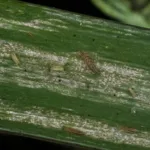
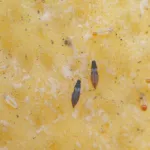
Watch for aphids, spider mites, thrips, slugs, and snails. Leaf chewing is more common outdoors, while spider mites are favored by hot, dry indoor air. Improve watering and humidity, inspect undersides of leaves, remove pests manually when practical, and use a labeled treatment only when needed.
Related diseases and pests
Only Plant Doctor profiles whose host data indicate this plant may be affected are shown here.

Toxicity and pollen
Caladium tissue contains insoluble calcium oxalate crystals and can cause burning, pain, swelling, drooling, vomiting, or difficulty swallowing if chewed or swallowed. Sap may irritate sensitive skin. Keep tubers, leaves, and plant debris away from children and pets, and wear gloves when handling damaged tissue.
- Typical season
- Summer during the uncommon flowering period
- Pollination / pollen
- Localized pollen in occasional inflorescences
The cultivar is primarily a foliage plant and produces inflorescences only occasionally. Its pollen is not generally considered a major airborne seasonal allergen in the United States, but individual sensitivity cannot be ruled out when flowers are present.
Native habitat
The cultivated caladium complex derives from warm, humid tropical American environments where tuberous plants grow in filtered light and moisture-retentive but aerated soils. In cultivation, growth slows sharply with cool temperatures, drought, or low light, and the plant commonly enters dormancy outside frost-free conditions.
Interesting fact
‘Aaron’ is classified as a fancy-leaved cultivar. Its pale leaf centers create a strong contrast effect in shade. The plant has no conventional woody stem; leaves arise on long petioles from an underground tuber. ‘Aaron’ has also been used as a parent in caladium breeding.
Frequently asked questions (FAQ)
The most relevant questions about this plant, with short and direct answers.
🌱Quick care
How do you care for Caladium 'Aaron'?⌄
Grow Caladium 'Aaron' in bright filtered light or shade, rich well-drained soil, and evenly moist conditions. Keep it warm and protect it from frost, because cold temperatures can damage the foliage and tuber.
Is Caladium 'Aaron' an indoor or outdoor plant?⌄
Caladium 'Aaron' can be grown indoors or outdoors during warm weather. In most of the United States, grow it outdoors seasonally and overwinter the tuber indoors before frost.
How big does Caladium 'Aaron' get?⌄
Caladium 'Aaron' typically grows about 12 to 18 inches tall. Its medium to large, heart-shaped leaves form a compact clump that works well in containers and shaded beds.
🌤️Environment and placement
How much light does Caladium 'Aaron' need?⌄
Caladium 'Aaron' performs best in bright filtered light to shade. Avoid intense afternoon sun, which can scorch its pale leaves, although gentle morning sun may be tolerated.
Can Caladium 'Aaron' grow in full shade?⌄
Caladium 'Aaron' can grow in full shade, but its growth may be less vigorous and its foliage may show weaker coloration. Bright indirect light or dappled shade usually produces the best balance of color and leaf quality.
Can Caladium 'Aaron' tolerate direct sunlight?⌄
Caladium 'Aaron' tolerates limited gentle sunlight better than harsh direct sun. Protect it from strong midday and afternoon rays, especially in hot climates, to reduce leaf scorch.
What temperature is best for Caladium 'Aaron'?⌄
Caladium 'Aaron' grows best in warm conditions, generally above 60°F. Protect it from temperatures near 50°F and bring outdoor plants or tubers indoors before frost.
Can Caladium 'Aaron' grow outdoors in the United States?⌄
Caladium 'Aaron' can grow outdoors during the warm growing season throughout much of the United States. In colder areas, lift the tuber before frost or grow the plant in a container that can be moved indoors.
Is Caladium 'Aaron' suitable for a shaded porch?⌄
A shaded porch with bright indirect light is an excellent location for Caladium 'Aaron'. Make sure the container has drainage and the plant is protected from cold drafts and prolonged heavy rain.
💧Care and problems
How often should you water Caladium 'Aaron'?⌄
Water Caladium 'Aaron' whenever the soil surface begins to feel slightly dry, keeping the root zone evenly moist. Do not leave the pot standing in water, because saturated soil can cause tuber or root rot.
Why are the leaves on my Caladium 'Aaron' drooping?⌄
Drooping leaves on Caladium 'Aaron' are commonly caused by dry soil, heat stress, cold temperatures, or the plant entering dormancy. Check the soil moisture and temperature first, but do not compensate for drooping caused by cold with excessive watering.
Why are Caladium 'Aaron' leaves turning yellow?⌄
Yellow leaves may indicate overwatering, poor drainage, cold stress, or normal seasonal dormancy. If yellowing occurs in fall and the foliage gradually dies back, reduce watering and allow the tuber to rest.
Why does Caladium 'Aaron' have brown leaf edges?⌄
Brown edges on Caladium 'Aaron' usually result from dry soil, low humidity, direct sun, heat, or fertilizer residue. Keep the soil evenly moist, provide filtered light, and avoid letting concentrated fertilizer contact the leaves.
Why are the white leaves of Caladium 'Aaron' fading?⌄
Fading foliage on Caladium 'Aaron' can result from excessive light, aging leaves, nutritional stress, or the approach of dormancy. Move the plant away from harsh sun and maintain even moisture while checking for seasonal dieback.
Does Caladium 'Aaron' need fertilizer?⌄
Caladium 'Aaron' benefits from light, regular feeding during active growth. Apply a balanced fertilizer according to the product label, avoiding heavy applications that can damage roots or cause leaf-edge burn.
How do you prevent Caladium 'Aaron' tuber rot?⌄
Prevent tuber rot by using loose, well-drained soil, a container with drainage holes, and moderate watering. Keep the soil moist during growth but never waterlogged, and store dormant tubers dry rather than in wet soil.
🪴Planting and repotting
What soil is best for Caladium 'Aaron'?⌄
Use rich, loose, well-drained soil that retains some moisture without becoming soggy. A quality potting mix amended with organic matter is suitable for containers and garden beds.
When should you plant Caladium 'Aaron' tubers?⌄
Plant Caladium 'Aaron' tubers outdoors after the danger of frost has passed and the soil has warmed. In colder regions, start them indoors about four to six weeks before the average last frost date.
Which way up do you plant Caladium 'Aaron' tubers?⌄
Plant Caladium 'Aaron' tubers with the knobby eyes facing upward. Cover them lightly with about 1 to 2 inches of soil, keeping the planting medium warm and evenly moist as growth begins.
Can Caladium 'Aaron' grow in a container?⌄
Caladium 'Aaron' grows well in containers with drainage holes and moisture-retentive but well-drained potting mix. Choose a container large enough for the tuber and place it in bright filtered light or shade.
How do you overwinter Caladium 'Aaron' tubers?⌄
Before frost, dig up Caladium 'Aaron' tubers, let them dry in a warm, shady place for about a week, and store them in dry sphagnum moss or another breathable medium. Keep them at roughly 55 to 60°F and protected from freezing.
✂️Propagation and pruning
How do you propagate Caladium 'Aaron'?⌄
Propagate Caladium 'Aaron' by dividing its tuber in spring before planting. Each division should contain at least one viable eye; allow cut surfaces to dry and callus for a few days before potting.
Can you grow Caladium 'Aaron' from leaf cuttings?⌄
Caladium 'Aaron' is not normally propagated from leaf cuttings. Division of the tuber is the practical home-propagation method because new shoots develop from its eyes.
Should you prune Caladium 'Aaron'?⌄
Routine pruning is not necessary for Caladium 'Aaron'. Remove yellow, damaged, or completely spent leaves at the base with clean scissors, but avoid cutting healthy foliage because the tuber uses it to build energy.
⚠️Toxicity and safety
Is Caladium 'Aaron' toxic to dogs and cats?⌄
Caladium 'Aaron' is moderately toxic if ingested by pets or people. Its tissues contain irritating calcium oxalate crystals that can cause mouth pain, drooling, swelling, vomiting, or difficulty swallowing, so keep it away from children and animals.
What should you do if a pet eats Caladium 'Aaron'?⌄
If a pet eats Caladium 'Aaron', remove remaining plant material and contact a veterinarian or animal poison-control service promptly. Seek urgent care for severe swelling, breathing difficulty, repeated vomiting, or trouble swallowing.
🌸Flowering and special interest
Does Caladium 'Aaron' flower?⌄
Caladium 'Aaron' can produce small, inconspicuous arum-like flowers, but it is grown primarily for its white-and-green foliage. Flowering is not the plant’s main ornamental feature.
Why is my Caladium 'Aaron' not flowering?⌄
A lack of flowers is usually not a problem because Caladium 'Aaron' is valued for foliage rather than blooms. Warm temperatures, active growth, and adequate moisture may encourage flowering, but flowering is not reliably abundant.
Similar plants
 Yellow lantern chili (Capsicum chinense) care guideCapsicum chinense
 Capsicum baccatum care guideCapsicum baccatum
 Serrano (Capsicum annuum ‘Serrano’)Capsicum annuum 'Serrano'
 Purple Beauty (Capsicum annuum ‘Purple Beauty’)Capsicum annuum 'Purple Beauty'
 Numex Twilight (Capsicum annuum ‘Numex Twilight’)Capsicum annuum 'Numex Twilight'
 Explosive Ember Chili Pepper (Capsicum annuum ‘Explosive Ember’)Capsicum annuum 'Explosive Ember'