
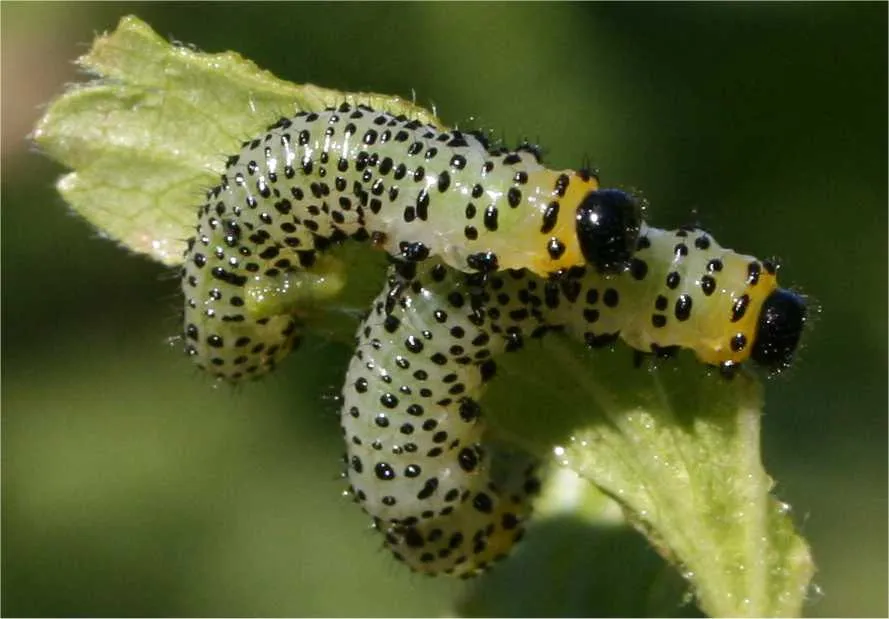
Imported currantworm
Nematus ribesiiImported currantworm overview
Imported currantworm, Nematus ribesii, is a sawfly pest of currants and gooseberries in the genus Ribes. Its green larvae, marked with dark spots, often begin feeding in groups and can strip a shrub’s leaves within days. The pest is most effectively managed by finding young larvae early, removing them or using carefully selected, legally labeled controls, and preventing repeat generations from developing in the planting.
Typical conditions
Overview
Imported currantworm is the common U.S. name generally used for Nematus ribesii, a sawfly in the family Tenthredinidae. Although the adult is a wasp-like insect, its larvae resemble green caterpillars. They feed on the foliage of currants and gooseberries, usually starting within the interior of the shrub and along leaf margins.
Larvae may occur in groups when young and later spread across the plant. Heavy feeding can leave only major veins and petioles, reduce fruit size and quality, and weaken the shrub. A defoliated plant may refoliate, but repeated or severe injury can reduce vigor and the following crop.
Identification should be confirmed where practical because several other sawflies and caterpillars also feed on Ribes. Sawfly larvae have more abdominal prolegs than true caterpillars and do not have the characteristic two pairs of small prolegs at the rear found in many moth larvae.
Symptoms and identification
- Small holes or scalloped feeding along leaf margins, often beginning in the inner canopy.
- Green to pale green larvae with a dark head and conspicuous black spots; mature larvae are commonly about 1/2 inch long in U.S. extension descriptions, though size varies with stage and source.
- Rapid progression from window-like feeding to skeletonized leaves with veins remaining.
- Partial or complete defoliation within a few days when larval numbers are high.
- Reduced fruit size, delayed growth or weakened shrubs after repeated heavy injury.
Do not diagnose from leaf holes alone. Look for the larvae, eggs on the underside of leaves or sawfly feeding activity to distinguish this pest from caterpillars, beetles and other Ribes feeders.
Causes and spread
Spread within a planting occurs mainly when adult sawflies lay eggs on nearby Ribes foliage and successive larval generations develop without detection. Dense shrubs, overlapping branches and abundant tender foliage make larvae harder to find and allow feeding to continue. Larvae that finish feeding leave the plant and pupate in or near the soil, where they can produce another generation.
Moving infested nursery stock or plant material can transport eggs or larvae, although local buildup is usually driven by adult activity and overwintering cocoons already present near the planting.
Life cycle and persistence
Adults overwinter as immature stages in capsule-like cocoons on or just below the soil surface. Wasps emerge in spring, and females insert eggs along or near the midrib on the underside of Ribes leaves. Eggs commonly hatch in about a week, although development depends on temperature.
Larvae feed for roughly two to three weeks, first in groups and later singly. Fully developed larvae leave the shrub and enter the soil or soil surface to form cocoons. In parts of the United States, a second generation is common and a partial third generation may occur where the growing season is long and conditions are favorable. Because generation timing varies by climate, scout from leaf emergence through late summer rather than relying on one calendar date.
Treatment and control
Act promptly when larvae are first detected. On small plantings, hand-picking, pruning of heavily infested leaves and a firm water spray can provide effective control. Reinspect several times because eggs and larvae may be present at different stages.
Where damage is substantial, choose a treatment specifically labeled for the crop and sawfly or imported currantworm, and target young larvae before they mature and leave the plant. Follow the current U.S. label, observe harvest intervals and protect pollinators. Avoid treating solely on the basis of old chewing damage after larvae have already dropped into the soil.
After control, irrigate during drought and maintain normal fertility, but avoid excessive nitrogen that promotes soft, highly attractive growth. Healthy shrubs often produce replacement foliage, although fruit yield may remain reduced after severe early-season defoliation.
Low-impact and biological control
Use an integrated, least-disruptive approach whenever possible:
- Inspect the undersides of leaves from spring onward, especially after bloom and during new flushes of foliage.
- Hand-pick and crush egg-bearing leaves or larvae when infestations are small. Drop larvae into soapy water rather than onto the soil.
- Shake or gently hose infested branches over a sheet or container and remove dislodged larvae.
- Prune only badly infested portions when appropriate, while preserving enough foliage for plant recovery.
- Keep weeds, fallen leaves and dense debris from accumulating beneath shrubs; this improves inspection and may remove some exposed prepupae, although soil sanitation alone will not eliminate the pest.
- Preserve insectivorous birds, predatory insects and parasitoids by avoiding unnecessary broad-spectrum sprays.
- If a treatment is needed, select a product permitted for the crop and pest in the United States, apply it when larvae are small, and follow all label restrictions concerning pollinators and harvest.
Prevention
- Begin checking currants and gooseberries as soon as leaves expand, then repeat inspections every few days during active growth.
- Examine the inner canopy and leaf undersides for eggs, young clustered larvae and fresh feeding.
- Maintain open, well-spaced shrubs that are easier to inspect and treat accurately.
- Remove and dispose of heavily infested leaves or larvae before they mature and drop to the soil.
- After harvest, continue monitoring because later generations may still defoliate plants and reduce stored vigor.
- Use resistant or less susceptible cultivars only when supported by local trial or extension information; susceptibility can vary among Ribes types.
Interesting facts
- Imported currantworm is a sawfly, not a true fly and not a moth caterpillar; adults belong to the wasp order Hymenoptera.
- The larvae can defoliate a currant or gooseberry bush surprisingly quickly when numbers are high.
- Eggs are commonly placed on the underside of leaves near the midrib, providing a useful scouting point.
- Individuals may vary in color after molting, so very young larvae may look paler and less distinctly spotted.
- The species is primarily associated with Ribes; reports of exact cultivated host species differ by region and reference.
Use only insecticides legally authorized and currently labeled in the United States for the specific crop, site and imported currantworm or sawfly problem. Follow the current product label exactly, including application rate, preharvest interval, pollinator precautions and personal protective equipment requirements. Avoid spraying open flowers or actively foraging bees, and do not assume that a product labeled for caterpillars is legal or effective for sawfly larvae.
Affected plants
The plants below are linked to this problem by structured host-plant data. The list updates automatically as new plant profiles are added.
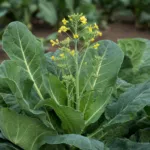 Collard greens (Brassica oleracea) care guideBrassica oleracea
 Capitata Group (Lactuca sativa Capitata Group)Lactuca sativa Capitata Group
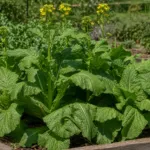 Broad-leaved mustard (Brassica juncea Rugosa Group)Brassica juncea Rugosa Group
 White Mustard (Sinapis alba) care guideSinapis alba
 Aster dumosus care guideAster dumosus
 Cryptomeria (Cryptomeria japonica) care guideCryptomeria japonica
 Narcissus ‘Actaea’Narcissus 'Actaea'
 Narcissus ‘Cheerfulness’Narcissus 'Cheerfulness'
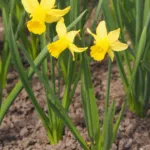 Cyclamineus daffodil (Narcissus ‘February Gold’)Narcissus 'February Gold'
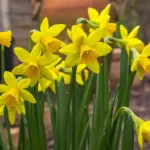 Narcissus ‘Tete A Tete’Narcissus 'Tete A Tete'
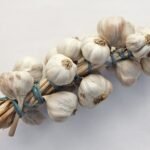 Garlic (Allium sativum) care guideAllium sativum
 Downy Japanese Maple (Acer japonicum) care guideAcer japonicum