
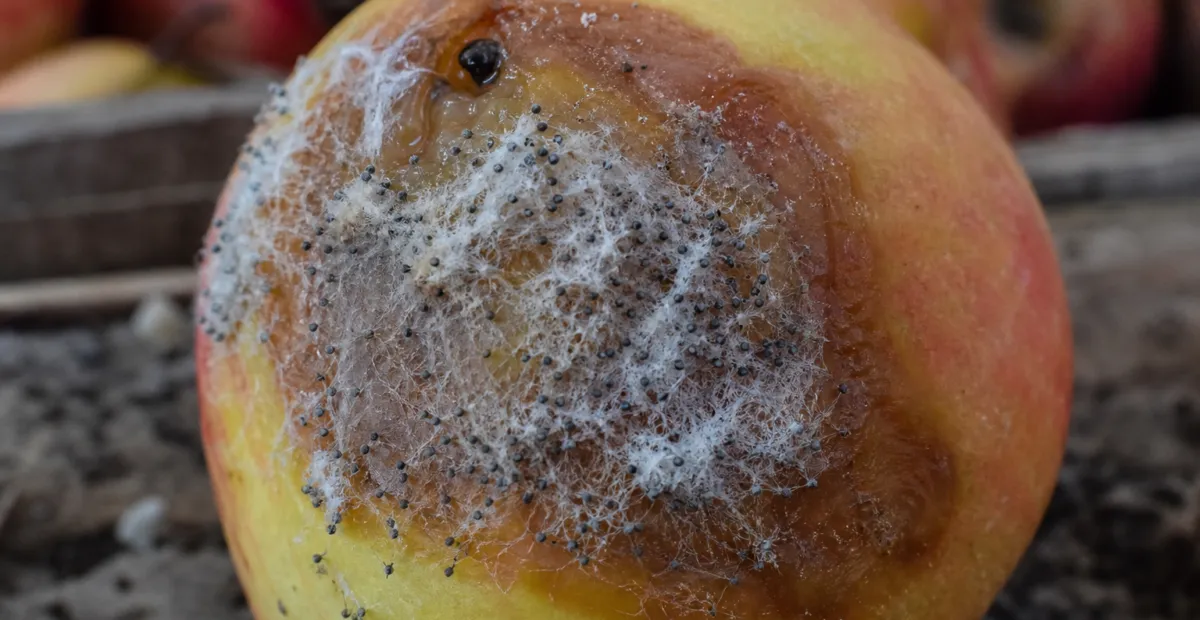
Mucor rot
Mucor piriformisMucor rot overview
Mucor rot is a postharvest soft rot of apples, pears and some other fruit caused primarily by the soilborne fungus Mucor piriformis. Infection usually begins at harvest wounds, bruises, stem or calyx ends, or fruit cracks. The flesh becomes light brown, watery and rapidly liquefies, while white to gray fungal growth with dark sporangia develops. Careful handling, clean bins, orchard sanitation and hygienic packinghouse water are the main defenses.
Typical conditions
Overview
Mucor rot is a storage and packinghouse disease rather than a typical foliar or root disease. In the United States it is most consistently associated with apples and pears, particularly where fruit, bins or water become contaminated with soilborne spores. Other documented hosts include peach, nectarine, plum, cherry, citrus fruit and raspberry, although the importance of the disease varies by crop, cultivar, region and handling system.
Diagnosis is based on the characteristic rapid soft liquefaction of the fruit, the origin of decay at a wound or fruit end, and coarse white to gray mycelium bearing dark sporangia. Laboratory confirmation may be needed because several postharvest rots can look similar during early stages.
Symptoms and identification
Initial lesions commonly develop at puncture wounds, bruises, cracks, lenticels, or the stem and calyx ends. The affected flesh becomes light brown to golden-brown, very soft, wet and watery. The skin may separate easily from the underlying flesh, and the decay can rapidly expand through the fruit.
White or gray, coarse, hair-like mycelium may emerge from the lesion and produce dark, pin-shaped sporangia. Fully decayed fruit may release large amounts of liquid containing spores, allowing contamination of nearby fruit. A sweet odor can occur and may help distinguish Mucor rot from the earthy or musty odor often associated with blue mold, but odor is not diagnostic by itself.
Causes and spread
Mucor piriformis survives primarily in orchard soil and organic debris, including fallen fruit. Spores can contaminate fruit through soil on bins, equipment or orchard surfaces. Infection usually occurs through wounds made by harvesting, dropping, bruising, cracking, insects or rough handling; susceptibility is often greater in overmature or late-harvested fruit.
Spread is favored when contaminated bins, dump tanks, flumes, rinse water or packinghouse surfaces contact sound fruit. Birds, rodents, vinegar flies and nitidulid beetles can move spores, especially where wounded or decaying fruit is present. Liquid draining from rotted fruit may cause secondary contamination within storage bins.
Life cycle and persistence
The fungus persists in soil and decaying plant material as spore-producing structures and spores. Populations may increase when moisture, organic matter and suitable temperatures support sporulation, often during the fall and winter in orchard systems. Spores are moved onto fruit, bins and equipment by soil, water, air movement and insects.
After a spore reaches a wound or other susceptible site, it germinates and colonizes fruit tissue. Unlike many postharvest fungi, M. piriformis can grow and sporulate slowly even near 32°F, so refrigeration slows but does not reliably stop disease development. Affected fruit can decay completely during extended storage.
Treatment and control
There is no curative treatment that restores fruit once Mucor rot has begun. Sort out infected, leaking and badly bruised fruit as soon as possible, place it in sealed waste containers or an appropriate cull stream, and prevent contact with sound fruit. Clean and sanitize bins, tools, floors and affected storage or packing equipment before reuse.
For commercial operations, review the complete postharvest system: fruit handling, bin hygiene, dump-tank and flume-water management, water replacement or treatment, storage conditions and decay monitoring. Rinsing can remove some surface spores, but recycled water can also spread them if it is not properly managed.
Low-impact and biological control
The most dependable nonchemical measures are sanitation and exclusion: remove fallen and rotting fruit, use clean bins, keep soil out of harvest containers, minimize wounds, harvest in dry weather, and rapidly remove decayed fruit from storage. Maintain clean packinghouse surfaces and manage recirculated water to avoid moving spores from culls to sound fruit.
Biological and alternative postharvest products may be available for some crops, but performance and legal status are product- and crop-specific. Use them only when the product is labeled for the crop, site and disease, and integrate them with sanitation rather than relying on them alone.
Prevention
- Harvest apples, pears and other susceptible fruit in dry conditions whenever practical, and avoid picking fruit from the ground for fresh-market storage.
- Handle fruit gently to prevent punctures, bruises and stem-end damage. Reduce drops, rough bin filling and excessive pressure during transport and packing.
- Clean and sanitize harvest bins, trailers, dump tanks, flumes, brushes, floors and storage rooms before use. Keep soil out of bins and packinghouse water.
- Remove fallen fruit, cull piles and decaying fruit from orchard and packing areas so they do not build inoculum.
- Monitor fruit during storage and promptly remove leaking or visibly decayed fruit. Avoid allowing contaminated juice to contact sound fruit.
- Manage harvest maturity carefully; late-harvested and overmature fruit is generally more vulnerable to postharvest decay.
Interesting facts
- Mucor rot is unusual because the fruit can liquefy very readily, making it a useful diagnostic clue when distinguishing it from some other storage rots.
- The pathogen can continue growing and producing spores at approximately 32°F, so cold storage does not provide complete protection.
- Infection pressure is strongly influenced by orchard-floor inoculum and the cleanliness of harvest bins, linking field sanitation directly to storage losses.
- Although apples and pears are the best-known U.S. hosts, peer-reviewed reports document Mucor rot on peach and mandarin fruit, and extension references list additional stone fruit and small-fruit hosts.
Do not assume that a fungicide effective against blue mold or gray mold will control Mucor rot. Use only products legally authorized for Mucor rot on the specific crop and application site in the United States, and follow the current EPA-approved label, crop restrictions, worker-protection requirements, resistance-management directions and preharvest or postharvest intervals. Product registrations and efficacy can change; consult current state Extension and label information before application.