 Source:
 Cyclamineus daffodil (Narcissus ‘February Gold’) short overview
Narcissus 'February Gold' is a dependable Cyclamineus daffodil valued for its bright, early-season display. Each leafless stem carries a solitary golden-yellow flower with slightly reflexed petals surrounding a prominent corona. The bulbs return for many years when planted in well-drained soil, and they perform in sunny beds, light woodland settings, rock gardens and containers. In the United States, flowering commonly falls from February in milder regions to March or April in colder climates.
Taxonomic classification
Cyclamineus daffodil (Narcissus ‘February Gold’) care guide
Light and placement
Grow in full sun for the strongest flowering, though light partial shade is tolerated, especially beneath deciduous trees. East-, south- or west-facing positions are suitable. Too little light can produce weak stems and reduced bloom; excessive heat or reflected afternoon light may shorten flowering but is rarely a serious problem in spring.
Watering and humidity
Water after planting and during dry periods while roots and foliage are active, keeping the soil evenly but moderately moist. Improve drainage rather than watering heavily in wet ground. Reduce watering as foliage dies back and keep dormant bulbs from sitting in saturated soil. Normal outdoor humidity is sufficient.
Soil and growing medium
Use moderately fertile, well-drained soil that holds steady moisture during active growth but does not remain waterlogged. Loam is ideal, although sandy or clay soils can work if amended for drainage. A broad pH range is tolerated, from mildly acidic through neutral to mildly alkaline.
Feeding
Apply a balanced bulb fertilizer or a light compost dressing after flowering, while leaves remain green and active. Do not overfeed nitrogen, which can produce lush foliage with weaker flowering. Avoid cutting or tying the leaves until they yellow naturally, because they replenish the bulb for next year.
Growth and habit
Forms a persistent clump of bulbs with seasonal foliage and flowering stems. It can remain undisturbed for years and gradually multiply by offsets. Divide when clumps become crowded or flowering declines, and allow foliage to finish naturally after bloom.
Planting and repotting
Plant in early to mid-fall, before the ground freezes. Set bulbs with the pointed end upward at roughly two to three times the bulb's height, commonly about 4–6 inches deep, and space them 4–8 inches apart. Water after planting and allow the foliage to mature naturally after bloom.
Container-grown bulbs usually do not need annual repotting. Refresh overcrowded pots after the foliage has died back, separating offsets and replanting them in fresh, well-drained potting mix. Choose a container with drainage holes and enough depth for the bulbs and their roots.
Propagation and pruning
Propagation
Propagate vegetatively by lifting established clumps just after the foliage dies back and separating offsets. Replant offsets promptly at normal bulb depth. Seed propagation is possible but slow and does not reproduce the named cultivar reliably.
Pruning
Deadhead spent flowers or remove the upper flower stem after bloom to reduce seed formation. Leave the foliage untouched until it has yellowed and can be removed easily. Do not braid, tie or cut green leaves prematurely.
Overwintering
Leave bulbs outdoors in the ground in USDA Zones 4–8. A light mulch can protect newly planted bulbs from temperature swings, but avoid thick, wet coverings that encourage rot. Container bulbs are more exposed to freezing; insulate pots or move them to a cold, sheltered location without bringing them into warm indoor conditions.
Uses
Useful for spring borders, naturalized lawns or woodland edges, rock gardens, patio containers and cut-flower arrangements. Plant in groups for stronger visual impact. Keep cut stems and bulbs away from edible crops and wash hands after handling; daffodils must not be eaten.
Appearance
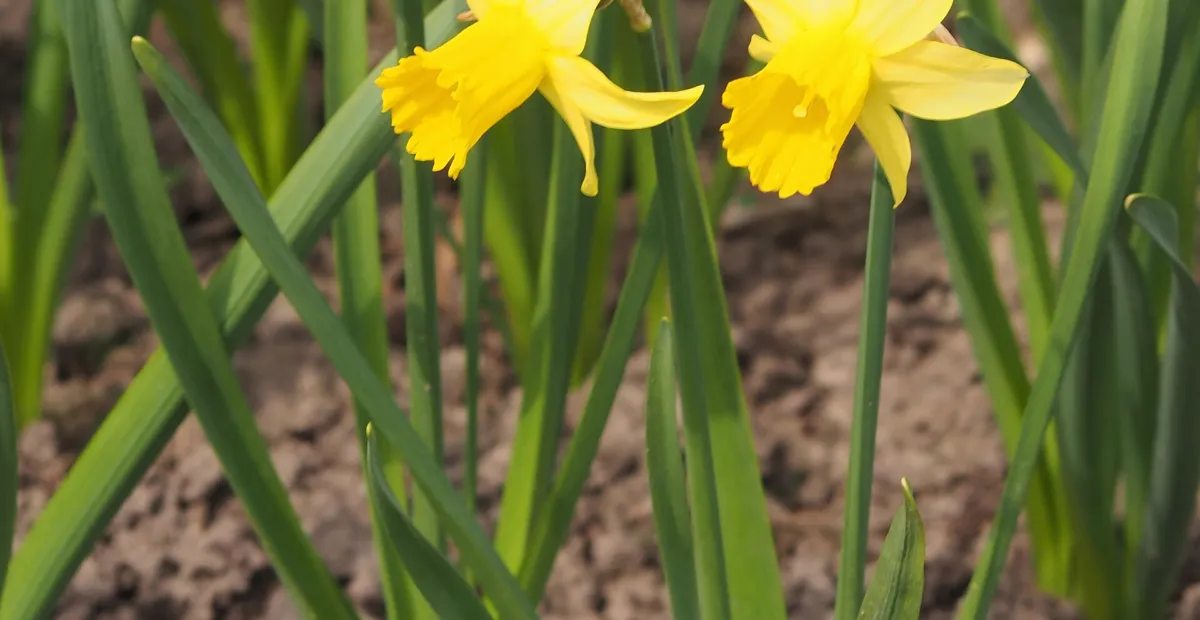
Produces narrow, strap-shaped green leaves from a bulb and leafless flowering stems bearing one bloom each. The flowers are unmistakable for their vivid yellow color, long corona and petals that turn backward from the center. Foliage fades after flowering as the bulb enters summer dormancy.
Flowering
This Cyclamineus daffodil produces one flower per stem in early spring. Its petals are slightly reflexed, giving the bloom a cyclamen-like profile, while the central corona is long and prominent. Bloom timing varies with climate: February is possible in mild areas, while March and April are more typical in colder parts of the United States.
Pollination and visitors
The open, nectar-bearing flowers may be visited by early-season bees, bumblebees and hoverflies when temperatures allow insect activity. Visitor numbers are weather-dependent and generally lower than for highly nectar-rich, heavily scented spring plants.
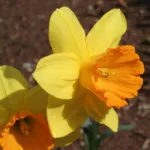
Narcissus 'February Gold' photos
Click any photo for a larger view. Source, author and license are shown separately.
Diseases and pests
Diseases
Usually trouble-free in suitable soil. Reduce risk of basal rot by avoiding saturated conditions and removing damaged bulbs before planting. Watch for narcissus viruses, leaf scorch and bulb rots; discard infected plants rather than composting them.
Pests
Possible pests include narcissus bulb fly, narcissus eelworm or nematode, bulb scale mite, slugs and snails. Inspect bulbs before planting, use clean stock, avoid poorly drained soil and remove badly infested or rotting bulbs. Deer and rabbits generally avoid daffodil foliage and bulbs.
Toxicity and pollen
Narcissus contains alkaloids including lycorine. All parts are poisonous if eaten, with bulbs presenting the greatest risk. Ingestion may cause gastrointestinal upset and more serious systemic signs. Wear gloves when handling bulbs, keep them away from children and pets, and never confuse them with edible onions.
- Typical season
- Late winter through spring flowering
- Pollination / pollen
- Mostly insect-carried pollen; limited airborne dispersal
Daffodil pollen is mainly presented within the flower and is not typically dispersed in large airborne clouds. Allergy risk is therefore generally low, but sensitive individuals may still react to direct contact with flowers, pollen or plant sap.
Native habitat
The cultivar is a garden hybrid rather than a wild native plant. Its parentage connects it with Narcissus from southwestern Europe, while cultivated plants are adapted to temperate gardens with a cool dormant season, autumn planting and well-drained soils.
Interesting fact
‘February Gold’ was reportedly hybridized in the Netherlands by de Graaff in 1923 from Narcissus cyclamineus and N. pseudonarcissus. It belongs to Division VI, the Cyclamineus daffodils, recognized for reflexed perianth segments. The cultivar has received the RHS Award of Garden Merit and can naturalize over time.
Frequently asked questions (FAQ)
The most relevant questions about this plant, with short and direct answers.
🌱Quick care
What is Narcissus 'February Gold'?⌄
Narcissus 'February Gold' is a cyclamineus daffodil, a hardy spring-flowering bulb with bright yellow flowers and slightly reflexed petals. It is a perennial that can return for many years when planted in well-drained soil.
How tall does Narcissus 'February Gold' grow?⌄
Narcissus 'February Gold' usually grows about 12 to 16 inches tall. Its narrow foliage forms a compact clump, making it suitable for borders, rock gardens, lawns, and containers.
When does Narcissus 'February Gold' bloom?⌄
Narcissus 'February Gold' blooms in very early spring, commonly from February through April depending on the local climate. In colder parts of the United States, flowering may occur later than its name suggests.
Is Narcissus 'February Gold' easy to grow?⌄
Yes, Narcissus 'February Gold' is generally easy to grow and low maintenance. The main requirements are autumn planting, adequate winter chilling, moderate moisture, and soil that drains freely.
🌤️Environment and placement
What light does Narcissus 'February Gold' need?⌄
Narcissus 'February Gold' grows best in full sun but also tolerates partial shade. More sunlight usually supports stronger flowering, while light shade can be useful in warmer climates or beneath deciduous trees.
What soil is best for Narcissus 'February Gold'?⌄
Use well-drained, moderately fertile soil for Narcissus 'February Gold'. Improve heavy clay or poorly drained ground with organic matter and avoid sites where water remains around the bulbs.
What USDA hardiness zones are suitable for Narcissus 'February Gold'?⌄
Narcissus 'February Gold' is commonly grown in USDA Zones 4 through 8. Gardeners outside that range may still succeed if local winter temperatures and chilling conditions are suitable.
Can Narcissus 'February Gold' grow under deciduous trees?⌄
Yes, Narcissus 'February Gold' can grow beneath deciduous trees because it receives sunlight before the tree canopy fills out. Choose a location with good drainage and avoid dense, year-round shade.
Is Narcissus 'February Gold' suitable for containers?⌄
Yes, Narcissus 'February Gold' performs well in containers and window boxes. Use a container with drainage holes, a well-drained potting mix, and provide winter protection in areas where the container may freeze solid.
Are Narcissus 'February Gold' bulbs deer- and rabbit-resistant?⌄
Narcissus 'February Gold' is generally avoided by deer and rabbits. This resistance is not absolute, especially when other food is scarce, but daffodils are usually more dependable than many edible spring bulbs.
💧Care and problems
How often should I water Narcissus 'February Gold'?⌄
Water Narcissus 'February Gold' when the soil begins to dry, keeping it moderately and evenly moist during active growth. Reduce watering after the foliage dies back because dormant bulbs tolerate drier conditions.
Should I fertilize Narcissus 'February Gold'?⌄
Apply a balanced bulb fertilizer at planting or after flowering if the soil is poor. Avoid heavy nitrogen applications, which can encourage foliage at the expense of flowers.
Should I deadhead Narcissus 'February Gold'?⌄
Yes, remove the faded flower head or upper flower stem of Narcissus 'February Gold' to limit seed production. Leave the leaves intact so the bulb can replenish its energy for the next season.
Why is Narcissus 'February Gold' not blooming?⌄
Poor flowering can result from insufficient sunlight, overcrowded bulbs, shallow planting, immature bulbs, or foliage removed too early the previous year. Poor drainage and inadequate winter chilling can also reduce blooming.
Why are the leaves of Narcissus 'February Gold' turning yellow?⌄
Yellowing leaves after flowering are usually a normal sign that Narcissus 'February Gold' is entering dormancy. Do not cut or braid the foliage until it has yellowed naturally and can be removed easily.
What should I do with Narcissus 'February Gold' after flowering?⌄
Deadhead the spent flowers, continue moderate watering while the leaves remain green, and allow the foliage to die back naturally. After dormancy begins, the bulbs can be left in the ground with little additional care.
What problems affect Narcissus 'February Gold'?⌄
Narcissus 'February Gold' has few serious problems when grown in well-drained soil. Excess moisture can cause bulb rot, while occasional pests include narcissus bulb fly, bulb mites, nematodes, slugs, and snails.
🪴Planting and repotting
When should I plant Narcissus 'February Gold' bulbs in the United States?⌄
Plant Narcissus 'February Gold' bulbs in early to mid-fall, before the ground freezes. This gives the bulbs time to develop roots and receive the winter chilling needed for reliable spring flowering.
How deep should I plant Narcissus 'February Gold' bulbs?⌄
Plant Narcissus 'February Gold' bulbs about 4 to 6 inches deep, measured from the soil surface to the bulb’s base, adjusting for bulb size. A general rule is to plant at a depth about two to three times the bulb’s height.
How far apart should Narcissus 'February Gold' bulbs be planted?⌄
Space Narcissus 'February Gold' bulbs about 4 to 6 inches apart for natural-looking clumps, or farther apart if you want to delay division. Planting several bulbs together creates a stronger early-season display.
Can I plant Narcissus 'February Gold' bulbs in a lawn?⌄
Yes, Narcissus 'February Gold' can be naturalized in lawns or open grassy areas. Delay mowing until the foliage has yellowed and begun to die back, because early mowing can weaken the bulbs and reduce future flowering.
Can I plant Narcissus 'February Gold' in wet soil?⌄
No, Narcissus 'February Gold' should not be planted in persistently wet or waterlogged soil. Poor drainage increases the risk of bulb rot, so choose raised ground or amend the site to improve drainage.
How should I grow Narcissus 'February Gold' in a pot?⌄
Plant Narcissus 'February Gold' in a pot with drainage holes and a loose, well-drained potting mix, placing the bulbs slightly less deeply for a seasonal display. After flowering, keep the foliage growing and transplant the bulbs into garden soil if the container is too small for long-term growth.
✂️Propagation and pruning
Can Narcissus 'February Gold' naturalize and spread?⌄
Yes, Narcissus 'February Gold' can naturalize and gradually form larger clumps when left undisturbed. Expansion occurs mainly through offsets produced by the bulbs rather than through identical seedlings.
How do I divide Narcissus 'February Gold' bulbs?⌄
Divide Narcissus 'February Gold' after the foliage has completely died back, usually in early summer. Lift the clump, separate healthy offsets from the parent bulb, and replant them promptly at the proper depth.
Can Narcissus 'February Gold' be grown from seed?⌄
It can be grown from seed, but seedlings may not be identical to Narcissus 'February Gold' and usually take several years to flower. Dividing offsets is the preferred method for preserving the cultivar.
Should I cut back Narcissus 'February Gold' foliage after flowering?⌄
Do not cut back Narcissus 'February Gold' foliage while it is green. Leave it in place until it yellows naturally, because the leaves manufacture and store energy for next year’s flowers.
⚠️Toxicity and safety
Is Narcissus 'February Gold' toxic to people or pets?⌄
Yes, all parts of Narcissus 'February Gold', especially the bulbs, are toxic if eaten. Keep bulbs away from children and pets, and seek medical or veterinary advice promptly if ingestion occurs.
Can Narcissus 'February Gold' cause skin irritation?⌄
Yes, Narcissus 'February Gold' sap can irritate the skin and may cause dermatitis in sensitive people. Wear gloves when planting, dividing, or handling bulbs, and wash exposed skin afterward.
Can Narcissus 'February Gold' bulbs be mistaken for onions?⌄
Yes, daffodil bulbs can be mistaken for edible bulbs such as onions. Store them in clearly labeled containers and never plant or store them together with vegetables intended for eating.
🌸Flowering and special interest
What do Narcissus 'February Gold' flowers look like?⌄
Narcissus 'February Gold' produces bright golden-yellow flowers with a prominent trumpet and slightly reflexed outer petals. The swept-back petal shape is characteristic of cyclamineus daffodils.
Does Narcissus 'February Gold' have fragrant flowers?⌄
Narcissus 'February Gold' is grown primarily for its early golden flowers, but fragrance can be subtle or variable. Do not choose it solely for strong scent unless the individual bulbs are observed in bloom.
How long do Narcissus 'February Gold' flowers last?⌄
The flowers of Narcissus 'February Gold' typically last for several weeks, depending on temperature, wind, and moisture. Cool weather generally extends the display, while warm conditions shorten it.
Why does Narcissus 'February Gold' bloom later than February?⌄
The flowering date of Narcissus 'February Gold' depends on winter temperatures, local climate, and exposure. In colder regions or after a late winter, it may bloom in March or April rather than February.
Can Narcissus 'February Gold' bloom again in the same year?⌄
Narcissus 'February Gold' normally flowers once per growing season. It may produce more flowers in later years as offsets mature, but a second bloom in the same season is not typical.