
 Source:
 Common daffodil (Narcissus pseudonarcissus) short overview
Common daffodil (Narcissus pseudonarcissus) is a long-lived bulbous perennial valued for its nodding, trumpet-shaped yellow flowers and early spring display. It grows best in full sun to partial shade, in fertile soil that drains well yet stays moderately moist while leaves are active. Plant bulbs in fall for dependable spring bloom, allow foliage to mature naturally after flowering, and keep bulbs away from children and pets because all parts—especially the bulbs—contain toxic alkaloids.
Taxonomic classification
Common daffodil (Narcissus pseudonarcissus) care guide
Light and placement
Give full sun for the strongest flowering, although partial shade is tolerated, especially beneath open deciduous trees. A site receiving several hours of direct spring light is ideal. Too little light produces weak, floppy foliage and fewer flowers; intense reflected heat in hot climates can shorten bloom quality, so afternoon shade may help in warmer regions.
Watering and humidity
Water after fall planting and during dry periods while roots and leaves are developing. Keep soil evenly, moderately moist in spring, but never saturated. Reduce watering as foliage yellows and the bulb enters summer dormancy. Normal outdoor humidity is sufficient; supplemental misting is unnecessary and can encourage foliar disease.
Soil and growing medium
Use fertile, well-drained soil that remains moderately moist during active growth. Loam enriched with compost is suitable, while heavy wet clay can encourage bulb problems and very dry, sharply draining soil may shorten flowering. A slightly acidic to neutral reaction is generally suitable; avoid waterlogged sites and improve drainage before planting.
Feeding
At planting, incorporate a modest amount of finished compost if the soil is poor. In established beds, a balanced bulb fertilizer can be applied in fall or as growth begins in spring according to the label; avoid heavy nitrogen, which favors foliage over flowers. Do not feed heavily after leaves begin to die back, when the bulb is entering dormancy.
Growth and habit
The plant emerges from an underground bulb in late winter or spring, flowers, then gradually returns to dormancy after the leaves replenish the bulb. Clumps can expand through offsets and may naturalize when left undisturbed. For stronger displays, avoid tying, braiding, or cutting green leaves prematurely.
Planting and repotting
Plant firm bulbs in fall, usually six to eight weeks before the ground freezes. Set them with the pointed end upward at a depth of about 4–6 inches, or roughly two to three times the bulb’s height, and space them 4–6 inches apart. Water after planting, mulch lightly in cold regions, and let the foliage remain until it yellows naturally.
Container-grown bulbs can remain in place for several seasons if flowering remains strong. Repot or divide overcrowded clumps after the foliage fades and begins to yellow, using fresh, well-drained potting mix and replanting bulbs promptly at the recommended depth. Avoid disturbing bulbs while leaves are still green unless drainage failure or another urgent problem requires intervention.
Propagation and pruning
Propagation
The practical method is division of offsets. Lift crowded clumps after the leaves fade in early summer, separate naturally formed offsets, and replant them promptly. Seed propagation is possible but slow and is mainly useful for breeding or conservation because seedlings may take several years to flower and may not reproduce selected horticultural traits.
Pruning
No routine pruning is needed. Remove spent flowers if seed formation is unwanted, but leave the leaves intact until they yellow and detach naturally, usually several weeks after bloom. Cutting or braiding green foliage reduces the bulb’s ability to store energy for the following season.
Overwintering
Leave bulbs outdoors in the ground in their hardiness range. A light mulch after the soil cools can moderate temperature swings, but avoid deep, wet mulch directly over the crown. Container bulbs are more exposed to freezing than in-ground bulbs; place pots in a sheltered location or insulate them in colder climates while maintaining drainage.
Uses
Use it for spring borders, naturalized plantings, meadow-style displays, woodland edges, containers, and cut flowers. It is valuable as a long-lived ornamental bulb and can provide early-season floral resources. Do not use any part as food or medicine; the bulbs are easily confused with edible bulbs and are toxic when ingested.
Appearance
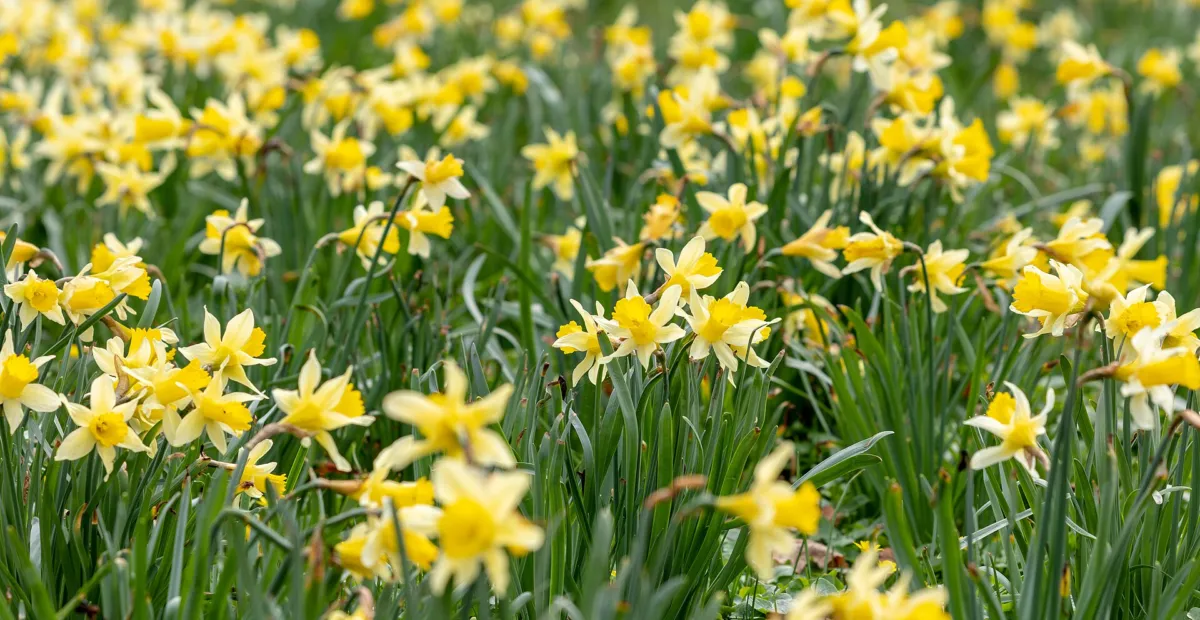
Leaves are narrow, strap-like, and blue-green, arising from the bulb in a basal cluster. Leafless flower stalks rise above the foliage and usually carry one nodding bloom. The distinctive yellow flower combines six spreading perianth segments with a central trumpet-shaped corona, helping separate it from many smaller-cupped daffodils.
Flowering
Flowers appear in early spring, usually singly on leafless, solid stalks. Each bloom has six yellow perianth segments surrounding a prominent trumpet-shaped corona. Flowering is encouraged by a cold period in winter. Established clumps may naturalize and return for many years, while removing faded flowers can prevent unwanted seed production without harming the bulb.
Pollination and visitors
The open trumpet flowers provide early-season nectar and pollen for visiting bees, bumblebees, and hoverflies. Visitor activity depends on weather and local insect abundance, and the species should not be treated as a major pollinator plant compared with more nectar-rich spring flowers.
Narcissus pseudonarcissus photos
Click any photo for a larger view. Source, author and license are shown separately.
Diseases and pests
Diseases
Use healthy bulbs, avoid poorly drained soil, and prevent overwatering to reduce basal rot and other bulb rots. Watch for distorted or streaked foliage that may indicate virus infection; remove and discard affected plants rather than composting them. Good air circulation and careful sanitation help limit leaf scorch and foliar disease.
Pests
Common problems include narcissus bulb fly, narcissus eelworm, bulb scale mite, slugs, and snails. Buy clean bulbs, inspect planting material, avoid injury during handling, and provide good drainage. Remove badly infested or rotting bulbs. Slugs and snails can be managed with hand-picking, barriers, habitat reduction, or appropriately labeled controls used according to the product directions.
Related diseases and pests
Only Plant Doctor profiles whose host data indicate this plant may be affected are shown here.
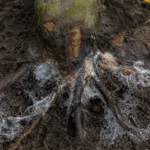 DiseaseWhite Root Rot (Rosellinia Root Rot)Rosellinia necatrix Berl. ex Prill. (synonym: Dematophora necatrix)
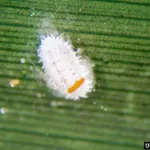 PestCitrus mealybugPlanococcus citri
 Environmental stressOverwatering
 PestBrown planthopperNilaparvata lugens (Stål)
 PestRosy Apple AphidDysaphis plantaginea
 Environmental stressWind scorch
 Environmental stressHeat scorch
Toxicity and pollen
Narcissus contains toxic alkaloids, including lycorine. All parts can be harmful if eaten, with bulbs generally presenting the greatest risk; mistaken ingestion of bulbs can cause nausea, vomiting, abdominal pain, and diarrhea, with more serious effects after larger exposures. Sap may irritate skin. Do not eat the bulbs, and wash hands after handling damaged plant material.
- Typical season
- March–April in much of the United States
- Pollination / pollen
- Insect-dispersed pollen
This insect-pollinated bulb is not typically treated as a major airborne-pollen source in U.S. garden allergy guidance, but pollen exposure is not necessarily zero. Cutting flowers, handling blooms, or working closely with flowering plants may expose sensitive people. Individual reactions vary; avoid rubbing the eyes and wash hands after handling.
Native habitat
The species is native to parts of western Europe, where it occurs in damp grasslands, woodland margins, rocky slopes, and other temperate habitats. It favors soils that retain moisture during spring but are not persistently waterlogged. In gardens, a seasonal pattern of spring moisture followed by summer rest suits the bulb’s ecology.
Interesting fact
The species belongs to the botanical group commonly called trumpet daffodils.
Its bulbs, leaves, stems, and flowers contain toxic alkaloids.
Wild populations can naturalize in suitable temperate grasslands and woods.
Narcissus pseudonarcissus has contributed to many cultivated daffodil forms.
Its common name reflects the familiar daffodil appearance, not a separate cultivar.
Frequently asked questions (FAQ)
The most relevant questions about this plant, with short and direct answers.
🌱Quick care
What is Narcissus pseudonarcissus?⌄
Narcissus pseudonarcissus is the common daffodil, a hardy spring-flowering bulbous perennial in the Amaryllidaceae family. It typically produces one yellow trumpet-shaped flower per stem.
How much sun does common daffodil need?⌄
Common daffodil grows best in full sun to partial shade. More shade may extend flower life, but dense shade can produce foliage without flowers.
How often should I water Narcissus pseudonarcissus?⌄
Water common daffodil moderately, keeping the soil evenly moist during active growth and flowering. Avoid consistently wet soil, which can cause bulb rot, and reduce watering after the foliage dies back.
Is Narcissus pseudonarcissus hardy outdoors?⌄
Yes, common daffodil is hardy outdoors and usually returns for many years when planted in well-drained soil. Hardiness can vary with local conditions, drainage, and bulb health.
How tall does common daffodil get?⌄
Common daffodil usually grows about 8 to 18 inches tall. Individual plants may be smaller or larger depending on soil, light, climate, and bulb maturity.
🌤️Environment and placement
What is the best soil for Narcissus pseudonarcissus?⌄
Plant common daffodil in fertile, well-drained loam. It tolerates a range of soil types, but heavy or waterlogged soil should be improved with organic matter and better drainage.
Can common daffodils grow in partial shade?⌄
Yes, common daffodils can grow and flower in partial shade, especially beneath deciduous trees. They may produce fewer flowers if the site remains deeply shaded during spring.
Where should I plant common daffodil in the garden?⌄
Plant common daffodil in borders, lawns, informal beds, rock gardens, woodland edges, or beneath deciduous shrubs and trees. Choose a location with good drainage and enough spring sunlight.
Can Narcissus pseudonarcissus naturalize in a lawn or meadow?⌄
Yes, common daffodil can naturalize in lawns, meadows, and open woodland settings. Allow the foliage to mature naturally after flowering so the bulbs can rebuild energy.
Can common daffodil grow in containers?⌄
Yes, common daffodil can grow in containers with drainage holes and a well-drained potting mix. Protect containers from excessive winter wet and provide a cool period for dependable flowering.
💧Care and problems
Why are my common daffodils not flowering?⌄
Common daffodils may fail to flower because of insufficient light, shallow or overly deep planting, overcrowding, premature foliage removal, or excessive nitrogen. Moving divisions to brighter, well-drained soil may restore flowering.
Why do common daffodils have leaves but no flowers?⌄
Leaves without flowers often indicate inadequate sunlight, immature or depleted bulbs, overcrowding, or incorrect planting depth. Let the foliage remain until it yellows naturally and avoid cutting it early.
Should I deadhead Narcissus pseudonarcissus?⌄
Yes, remove faded flowers if you want to prevent seed production and direct energy back to the bulb. Do not remove the green leaves until they have yellowed and died naturally.
When can I cut back common daffodil foliage?⌄
Cut back common daffodil foliage only after it has naturally turned yellow or brown, usually several weeks after flowering. The leaves recharge the bulb for the following season.
Do common daffodils need fertilizer?⌄
Common daffodils usually need little fertilizer when grown in fertile soil. If growth or flowering is weak, apply a bulb fertilizer according to the product label rather than excessive nitrogen.
What pests and diseases affect Narcissus pseudonarcissus?⌄
Common daffodil can be affected by slugs, snails, bulb mites, narcissus bulb fly, basal rot, leaf scorch, and viruses. Good drainage, healthy bulbs, and removal of diseased plants help reduce problems.
Can common daffodils tolerate drought?⌄
Established common daffodils tolerate short dry periods, but they need moderate moisture during root growth, leaf development, and flowering. Avoid regular summer watering unless conditions are unusually dry.
🪴Planting and repotting
When should I plant common daffodil bulbs in the United States?⌄
Plant common daffodil bulbs in fall, ideally while the soil is cool but before it freezes. The exact timing varies by region, but planting about six weeks before the first hard freeze is a useful guideline.
How deep should I plant Narcissus pseudonarcissus bulbs?⌄
Plant common daffodil bulbs so the soil above the bulb is about two times the bulb’s height; many bulbs are planted roughly 4 to 5 inches deep. Set the pointed end upward and the flattened base downward.
How far apart should common daffodil bulbs be planted?⌄
Space common daffodil bulbs about 6 to 8 inches apart for a natural-looking planting. Closer spacing creates a fuller display but may require division sooner as the clump expands.
Should I water common daffodil bulbs after planting?⌄
Yes, water common daffodil bulbs thoroughly after planting to settle the soil and encourage root growth. Afterward, water only as needed to keep the soil moderately moist without making it soggy.
Can I plant common daffodils under trees?⌄
Yes, common daffodils can be planted under deciduous trees where they receive spring light before the canopy fills in. Avoid dry sites beneath dense evergreen trees or areas with poor drainage.
✂️Propagation and pruning
How do I propagate Narcissus pseudonarcissus?⌄
The easiest way to propagate common daffodil is by dividing offsets from established bulbs. Lift the clump after the foliage has faded, separate offsets that detach easily, and replant them promptly.
Can common daffodils be grown from seed?⌄
Yes, common daffodils can be grown from seed, but seedlings usually take several years to flower and may differ from the parent plant. Division is the practical method for producing flowering-size plants.
When should I divide common daffodil bulbs?⌄
Divide common daffodil bulbs after the foliage has died back in early summer or during dormancy. Division is most useful when clumps become crowded or flowering becomes sparse and small.
Do common daffodils need to be lifted every year?⌄
No, common daffodils generally do not need to be lifted every year and can remain in the ground to naturalize. Lift and divide them only when clumps are overcrowded, declining, or poorly flowering.
⚠️Toxicity and safety
Is Narcissus pseudonarcissus poisonous to humans?⌄
Yes, all parts of common daffodil are toxic if eaten, with the bulbs containing especially high concentrations of toxic alkaloids. Ingestion can cause nausea, vomiting, diarrhea, drooling, and more serious symptoms after large amounts.
Are common daffodils toxic to dogs and cats?⌄
Yes, common daffodils are toxic to dogs and cats, especially the bulbs. Keep bulbs and plant material away from pets and contact a veterinarian or animal poison service promptly if ingestion occurs.
Can touching common daffodils irritate skin?⌄
Handling common daffodils can irritate some people’s skin, particularly after prolonged contact with sap or cut plant material. Wear gloves when planting, dividing, or arranging large quantities.
Can I eat common daffodil bulbs or flowers?⌄
No, common daffodil bulbs, flowers, leaves, and roots should not be eaten. Treat every part as toxic and keep them away from children, pets, and food-preparation areas.
🌸Flowering and special interest
When does Narcissus pseudonarcissus bloom?⌄
Common daffodil usually blooms in early spring, often from March through May depending on climate and local weather. Flowers appear after the foliage emerges from the bulb.
What do common daffodil flowers look like?⌄
Common daffodil typically has one yellow flower per leafless stem, with a long trumpet-shaped corona surrounded by six lighter yellow perianth segments. Mature plants commonly reach about 8 to 18 inches.
How long do common daffodils bloom?⌄
Individual common daffodil flowers usually last for several days, while the overall display may continue for a few weeks. Temperature, sunlight, moisture, and the number of bulbs affect the display period.
Why are my common daffodil flowers smaller this year?⌄
Smaller flowers commonly result from overcrowded bulbs, weak soil fertility, drought during active growth, insufficient light, or foliage removed too early the previous year. Dividing the clump after dieback can help.
Do common daffodils bloom every year?⌄
Yes, common daffodils usually bloom every year when planted at the correct depth in well-drained soil and allowed to retain their foliage after flowering. Blooming may decline when bulbs become crowded or depleted.
Similar plants
 Azure Monkshood (Aconitum carmichaelii) care guideAconitum carmichaelii
 Monkshood (Aconitum ‘Stainless Steel’)Aconitum 'Stainless Steel'
 Monkshood (Aconitum ‘Bressingham Spire’)Aconitum 'Bressingham Spire'
 Golden full moon maple (Acer shirasawanum ‘Aureum’)Acer shirasawanum 'Aureum'
 Globosum (Acer platanoides ‘Globosum’)Acer platanoides 'Globosum'
 Striped maple (Acer pensylvanicum) care guideAcer pensylvanicum