
 Source:
 Fortune large-cupped daffodil (Narcissus ‘Fortune’) short overview
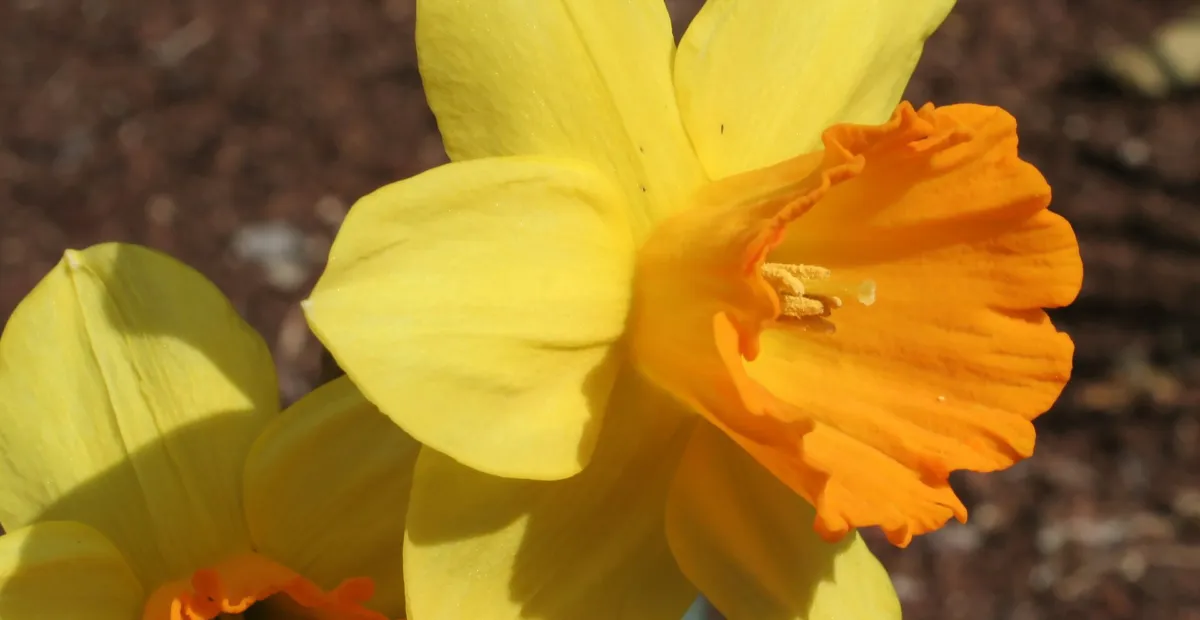
Narcissus 'Fortune' is a vigorous large-cupped daffodil prized for its early spring display of brilliant yellow perianth segments and a deep orange, funnel-shaped cup. The upright perennial bulb reaches about 2 feet tall and performs well in full sun or light shade, in borders, containers, naturalized grass, and cut-flower plantings. It is long-lived and generally low maintenance, but bulbs and foliage are harmful if eaten.
Taxonomic classification
Fortune large-cupped daffodil (Narcissus ‘Fortune’) care guide
Light and placement
Grow in full sun for strongest flowering, with light or partial shade acceptable, especially beneath deciduous trees. An east-, south-, west-, or north-facing position can work if spring light is adequate. Excessive shade may produce abundant leaves but few or no flowers; very hot, dry reflected exposure can shorten bloom and stress foliage.
Watering and humidity
Water after fall planting and during dry periods while roots establish. Maintain moderate soil moisture through spring growth and flowering, but allow the bed to drain freely. Reduce watering as foliage yellows and the bulb enters summer dormancy. Outdoor humidity usually needs no adjustment; avoid overhead irrigation when disease pressure is high.
Soil and growing medium
Use fertile, well-drained soil that holds moderate moisture during active spring growth but does not remain waterlogged. Loam enriched with organic matter is ideal, although the cultivar tolerates sandy, clay, chalky, acidic, neutral, and alkaline soils. Improve heavy clay with organic matter and drainage rather than planting in a persistently wet site.
Feeding
At planting, incorporate a modest amount of finished compost into poor soil. In established beds, apply a balanced bulb fertilizer as shoots emerge or immediately after flowering, following the product label. Avoid heavy nitrogen feeding, which encourages leaves at the expense of flowers, and do not fertilize dry, dormant bulbs heavily.
Growth and habit
The bulb produces a seasonal tuft of linear leaves and leafless flowering stems, then becomes dormant after the foliage dies back. Mature clumps expand gradually through offsets. Leave leaves attached until they yellow naturally; premature cutting reduces energy storage and may weaken flowering in later years.
Planting and repotting
Plant dormant bulbs in fall, ideally before the ground freezes. Set each bulb at about one-and-a-half times its own height, measuring from the bulb base to the soil surface; plant a little deeper in light soil or grass. Water after planting, then allow natural rainfall to establish roots. Space bulbs about 4–6 inches apart for a naturalized effect or farther apart for long-term clump development.
Container-grown bulbs can remain in place for several seasons if flowering stays strong. Repot or divide when clumps become crowded, after the foliage has yellowed in early summer. Use a fresh, well-drained bulb mix and replant bulbs promptly at the recommended depth.
Propagation and pruning
Propagation
Propagate vegetatively by separating offsets as leaves fade in early summer, or in early fall before new roots develop. Replant offsets promptly at normal bulb depth. Seed propagation is possible for breeding but does not reproduce the named cultivar reliably.
Pruning
Deadhead spent flowers to prevent unnecessary seed production, but do not tie, braid, or cut the leaves while they are green. Let foliage yellow and collapse naturally, usually several weeks after flowering, then remove it at soil level.
Overwintering
Leave bulbs outdoors in the ground in suitable climates, using well-drained soil and normal winter mulch only where needed. In colder containers, protect pots from repeated freeze-thaw cycles by sinking them into soil or moving them to an unheated sheltered location. Do not keep dormant bulbs warm and wet.
Uses
Use in spring borders, mixed perennial beds, containers, naturalized grass, slopes, under deciduous shrubs, and cut-flower arrangements. Keep cut stems separate initially because daffodil sap can shorten the vase life of some companion flowers. All plant parts are unsafe to eat.
Appearance
The plant forms an upright seasonal clump of narrow, grey-green, strap-like leaves. Leafless stems carry one large flower each. Identification is especially distinctive in bloom: six brilliant yellow perianth segments surround a relatively short, deep orange, funnel-shaped corona.
Flowering
This is an early-spring, large-cupped daffodil in Division 2, producing one solitary flower per stem. The corona is more than one-third but shorter than the surrounding perianth segments. Bloom timing varies by region, generally appearing from March into April in much of the United States. Allow foliage to mature after flowering so the bulb can replenish energy.
Pollination and visitors
The open, solitary flowers can be visited by early-season bees, bumblebees, and other insects. Cultivar-specific visitor studies are limited, so no single pollinator species is assigned. Animal visitation should be considered separately from the plant's toxic bulbs and sap.
Narcissus 'Fortune' photos
Click any photo for a larger view. Source, author and license are shown separately.
Diseases and pests
Diseases
Watch for basal rot, leaf scorch, smoulder, grey bulb rot, virus diseases, and narcissus yellow stripe virus. Reduce risk with healthy bulbs, good drainage, clean tools, and removal of diseased plants. Do not overwater dormant bulbs or replant daffodils immediately into contaminated soil.
Pests
Slugs, snails, narcissus bulb fly, narcissus eelworm, and pollen beetles may damage bulbs, roots, foliage, or flowers. Start with healthy bulbs, avoid saturated soil, inspect stored bulbs, and remove badly infested or rotting material. Use barriers or locally approved controls only when damage is significant.
Toxicity and pollen
Narcissus bulbs, foliage, and flowers contain toxic compounds and can cause gastrointestinal illness if eaten; bulb exposure is the principal concern. Sap may irritate skin. Keep bulbs away from children and pets, wear gloves when handling damaged bulbs, and do not use this plant as food or medicine.
- Typical season
- Spring flowering period
- Pollination / pollen
- Mostly insect-carried pollen; limited airborne dispersal
Daffodil pollen is primarily released within the flower and is not generally regarded as a major airborne spring allergen. However, sensitive people may still react to pollen or sap, and handling flowers or bulbs can cause irritation. Avoid rubbing the eyes after handling and wash hands afterward.
Native habitat
As a cultivated hybrid, 'Fortune' does not have a single wild native habitat. Its Narcissus background is associated broadly with temperate regions of Europe and North Africa. In cultivation it prefers cool-to-mild winters, spring moisture, and soils that drain freely during summer dormancy.
Interesting fact
The cultivar is classified in Division 2, Large-cupped Daffodils. Its corona is shorter than the perianth but exceeds one-third of their length. Historic daffodil literature praised 'Fortune' for early flowering, vigor, tall stems, lasting flowers, and strong color. It is suitable for both naturalized displays and cut flowers.
Frequently asked questions (FAQ)
The most relevant questions about this plant, with short and direct answers.
🌱Quick care
What is Narcissus 'Fortune'?⌄
Narcissus 'Fortune' is a large-cupped daffodil with yellow petals and a contrasting orange cup. It is a hardy, spring-flowering bulb commonly grown in borders, lawns, containers, and cut-flower gardens.
How much sun does Narcissus 'Fortune' need?⌄
Narcissus 'Fortune' grows best in full sun but also tolerates partial or light dappled shade. More sun generally supports stronger stems and better flowering, provided the soil drains well.
How often should I water Narcissus 'Fortune'?⌄
Water Narcissus 'Fortune' moderately when it is actively growing, keeping the soil lightly moist but never soggy. Reduce watering after the foliage begins to yellow and the bulb enters dormancy.
How tall does Narcissus 'Fortune' grow?⌄
Narcissus 'Fortune' typically grows about 16–18 inches tall. Height can vary with bulb size, soil conditions, sunlight, and local climate.
🌤️Environment and placement
What USDA hardiness zones can grow Narcissus 'Fortune'?⌄
Narcissus 'Fortune' is generally hardy in USDA Zones 3–8, with some suppliers listing it for Zone 9. In warmer areas, reliable flowering may depend on receiving sufficient winter chilling.
What type of soil is best for Narcissus 'Fortune'?⌄
Plant Narcissus 'Fortune' in well-drained loam, sandy soil, clay improved with organic matter, or chalky soil. It is adaptable to soil pH, but standing water can cause bulb rot.
Can Narcissus 'Fortune' grow under trees?⌄
Narcissus 'Fortune' can grow under deciduous trees or in light dappled shade. Choose a site that receives good spring light and does not remain waterlogged after rain.
Can Narcissus 'Fortune' be naturalized in a lawn?⌄
Yes, Narcissus 'Fortune' can be naturalized in lawns, especially where the grass is not cut until the foliage has faded. Plant groups of bulbs in well-drained soil for a more natural appearance.
Is Narcissus 'Fortune' deer resistant?⌄
Narcissus 'Fortune' is generally avoided by deer, rabbits, and many rodents because daffodil bulbs and foliage contain irritating compounds. However, no ornamental plant is completely immune to unusual animal damage.
💧Care and problems
Why is my Narcissus 'Fortune' not blooming?⌄
Narcissus 'Fortune' may fail to bloom because of insufficient sunlight, immature or weak bulbs, overcrowding, excessive nitrogen, drought, or foliage removed too early the previous year. Let the leaves mature naturally after flowering so the bulb can rebuild its reserves.
Should I deadhead Narcissus 'Fortune'?⌄
Deadhead Narcissus 'Fortune' after the flowers fade to prevent energy being diverted into seed production. Remove the spent flower and stem, but keep the leaves until they yellow naturally.
When can I cut back Narcissus 'Fortune' foliage?⌄
Cut back Narcissus 'Fortune' foliage only after it has yellowed and collapsed naturally, usually several weeks after flowering. Do not braid, tie, or remove green leaves because they replenish the bulb.
How do I prevent Narcissus 'Fortune' bulbs from rotting?⌄
Prevent bulb rot by planting Narcissus 'Fortune' in well-drained soil, avoiding overwatering, and using healthy, undamaged bulbs. Poor drainage and warm, wet storage or planting conditions increase the risk of fungal problems.
What pests affect Narcissus 'Fortune'?⌄
Narcissus 'Fortune' can be affected by slugs, snails, narcissus bulb flies, eelworms, and occasional pollen beetles. Good drainage, clean planting material, and removal of diseased foliage help reduce problems.
Can Narcissus 'Fortune' tolerate clay soil?⌄
Narcissus 'Fortune' can grow in clay soil if drainage is improved before planting. Incorporate organic matter and avoid locations where water stands during winter or spring.
🪴Planting and repotting
When should I plant Narcissus 'Fortune' bulbs?⌄
Plant Narcissus 'Fortune' bulbs in early to mid-fall, before the ground freezes. Fall planting allows roots to develop before winter and supports flowering the following spring.
How deep should I plant Narcissus 'Fortune' bulbs?⌄
Plant Narcissus 'Fortune' bulbs at roughly one and a half times the bulb's own height, measured from the bulb base. In light soils or lawns, plant slightly deeper, commonly around 5 inches for standard bulbs.
How far apart should Narcissus 'Fortune' bulbs be planted?⌄
Space Narcissus 'Fortune' bulbs about 4–6 inches apart for a naturalized display or wider for permanent clumps. Planting in groups produces a stronger visual effect than scattering single bulbs evenly.
Can Narcissus 'Fortune' grow in containers?⌄
Yes, Narcissus 'Fortune' grows well in containers with drainage holes and a free-draining potting mix. Plant bulbs at the recommended depth, keep the container cool and moderately moist, and protect it from prolonged extreme freezing.
Can I plant Narcissus 'Fortune' bulbs in spring?⌄
You can plant dormant Narcissus 'Fortune' bulbs in spring, but flowering may be reduced or delayed that year. Fall planting is preferable because the bulbs need time to root before spring growth.
How do I grow Narcissus 'Fortune' indoors?⌄
Narcissus 'Fortune' can be forced in a container by planting bulbs in early fall and giving them a cool rooting period before bringing them into brighter, warmer conditions. Flowering quality is less predictable than with specially prepared forcing bulbs.
✂️Propagation and pruning
How do I propagate Narcissus 'Fortune'?⌄
Propagate Narcissus 'Fortune' by dividing offsets from established bulbs. Lift and separate offsets as the foliage fades in early summer or in early fall before new roots develop, then replant them promptly.
Does Narcissus 'Fortune' multiply over time?⌄
Narcissus 'Fortune' can multiply gradually by producing offsets around the original bulb. Clumps may be divided when crowded, although newly separated offsets can require several seasons to reach flowering size.
Can Narcissus 'Fortune' be grown from seed?⌄
Narcissus 'Fortune' can be grown from seed, but seed propagation is slow and the seedlings may not reproduce the named cultivar exactly. Division of offsets is the practical method for maintaining true-to-type plants.
⚠️Toxicity and safety
Is Narcissus 'Fortune' poisonous?⌄
Yes, Narcissus 'Fortune' is harmful if eaten, particularly the bulbs, and its sap can irritate skin. Keep bulbs and plant parts away from children, pets, and food, and wear gloves when handling them.
Can Narcissus 'Fortune' cause skin irritation?⌄
Yes, the sap of Narcissus 'Fortune' can cause skin irritation or dermatitis in sensitive people. Wear gloves when planting, dividing, or cutting the flowers, and wash exposed skin afterward.
Are Narcissus 'Fortune' flowers safe to put in a vase with other flowers?⌄
Narcissus 'Fortune' flowers can be used in arrangements, but their sap may shorten the vase life of other flowers. Condition them separately in water for several hours before combining them, and do not recut their stems after mixing.
🌸Flowering and special interest
When does Narcissus 'Fortune' bloom?⌄
Narcissus 'Fortune' usually blooms in early to mid-spring, often during March or April in much of the United States. The exact timing varies with USDA zone, winter temperatures, and spring weather.
What do Narcissus 'Fortune' flowers look like?⌄
Narcissus 'Fortune' produces large, single flowers with yellow petals and a prominent orange or pale-orange cup. Each stem generally carries one flower, and the blooms can reach about 4 inches across under good conditions.
Is Narcissus 'Fortune' good for cut flowers?⌄
Yes, Narcissus 'Fortune' is suitable for cut-flower displays because its large blooms have strong visual contrast and useful stems. Handle the sap carefully because it can irritate skin and affect other flowers in the same vase.
How can I make Narcissus 'Fortune' flower better next year?⌄
To improve flowering, plant the bulbs in well-drained soil with full sun or light shade, avoid excessive nitrogen, and allow the foliage to remain until it dies back naturally. Divide severely crowded clumps after the leaves fade.
Similar plants
 Common daffodil (Narcissus pseudonarcissus) care guideNarcissus pseudonarcissus
 Narcissus ‘Cheerfulness’Narcissus 'Cheerfulness'
 Narcissus ‘Tete A Tete’Narcissus 'Tete A Tete'
 Narcissus ‘Ice King’Narcissus 'Ice King'
 Daffodil ‘Ice Follies’ (Narcissus ‘Ice Follies’)Narcissus 'Ice Follies'
 Narcissus ‘Bridal Crown’Narcissus 'Bridal Crown'