
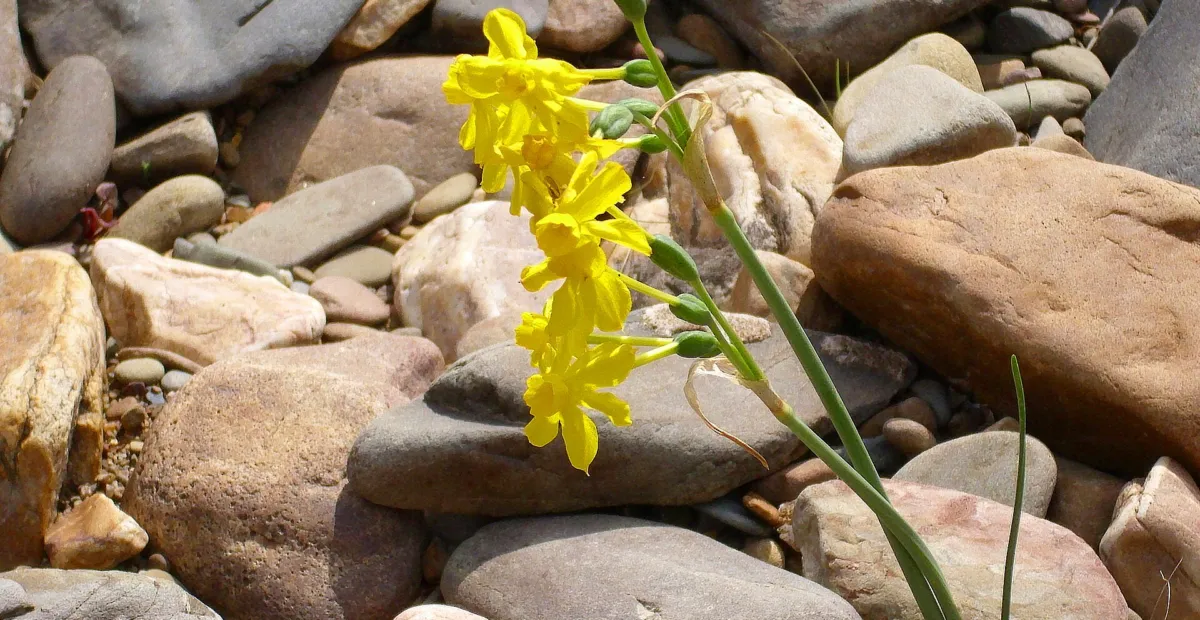
 Source:
 Jonquil (Narcissus jonquilla) short overview
Jonquil (Narcissus jonquilla) is a fragrant, bulb-forming perennial daffodil native to Portugal and Spain. It produces narrow, cylindrical, rush-like leaves and leafless stems topped with small deep-yellow flowers, often several to a stem. Plant bulbs in fall in well-drained soil, preferably in full sun, and let the foliage mature naturally after flowering so the bulbs can replenish for the following spring.
Taxonomic classification
Jonquil (Narcissus jonquilla) care guide
Light and placement
Grow in full sun for strongest flowering, ideally with at least 6 hours of direct light, or in light partial shade. East-, south- and west-facing beds work well. Too little light produces weaker flowering and floppier growth; excessive heat combined with dry soil can shorten bloom, especially in exposed southern sites.
Watering and humidity
Water deeply after planting and whenever the upper soil begins to dry during active growth. Keep soil moderately moist from autumn through flowering, but never saturated. Reduce watering as leaves yellow and stop routine irrigation during summer dormancy unless conditions are exceptionally dry and bulbs show stress. Average outdoor humidity is adequate.
Soil and growing medium
Use fertile, well-drained soil that remains moderately moist during active growth but does not stay waterlogged. Sandy, loamy, clay or calcareous soils can work if drainage is improved. A slightly acidic to slightly alkaline reaction is tolerated; avoid persistently saturated sites, especially in summer dormancy.
Feeding
At planting, incorporate a modest amount of finished compost if the soil is poor. In spring, apply a balanced bulb fertilizer as shoots emerge or immediately after flowering, following the product label and avoiding heavy nitrogen. Do not feed heavily once foliage has fully died back or while bulbs are dormant.
Growth and habit
This bulbous geophyte emerges seasonally, flowers, then enters summer dormancy as the leaves fade. Clumps can broaden through offsets. For reliable flowering, avoid cutting green leaves early and mark the planting site so dormant bulbs are not disturbed.
Planting and repotting
Plant in fall, before the ground freezes, with the bulb base about 4–6 inches deep or at roughly 1.5–2 times the bulb’s own height. Space bulbs about 4–6 inches apart for natural-looking clumps. Water after planting, then maintain moderate moisture while roots and shoots develop.
Container-grown bulbs rarely need annual repotting. Refresh the potting mix and divide crowded offsets after the foliage has yellowed. Use a container with drainage holes, plant bulbs at the same depth as in the ground, and keep pots from sitting in water.
Propagation and pruning
Propagation
The usual garden method is to separate offsets when foliage has faded in early summer. Replant offsets promptly at normal bulb depth. Seed propagation is possible but slow, with seedlings requiring several years to reach flowering size.
Pruning
Deadhead spent flowers if seed formation is not wanted, but do not cut or braid the leaves while they are green. Allow foliage to yellow and die back naturally, then remove it cleanly at soil level. Avoid aggressive digging around dormant bulbs.
Overwintering
Leave bulbs outdoors in the ground in suitable USDA zones. A light mulch can moderate freeze-thaw cycles, but avoid thick, wet mulch directly over the crown. In colder or poorly drained locations, grow in containers that can be protected from prolonged saturation and severe temperature swings.
Uses
Useful for spring borders, naturalistic bulb plantings, cottage-style gardens, containers and fragrant cut flowers. It can be combined with shrubs or late-emerging perennials that disguise fading foliage. All plant parts, especially bulbs, are poisonous if eaten, so avoid culinary use and keep cut flowers away from pets and children.
Appearance
Leaves are narrow, cylindrical and rush-like rather than flat, giving the plant a distinctive grasslike texture. Leafless flowering stems rise above the foliage and carry umbels of small, deep-yellow flowers. The bulbous underground habit and clump-forming growth help distinguish it from unrelated rush-leaved plants.
Flowering
This species bears umbels of small, shallow-cupped flowers, commonly several on one stem. Flowers are strongly fragrant and typically deep yellow, with flowering in spring; timing varies with climate, exposure and winter temperatures. Leave foliage in place after bloom until it naturally fades.
Pollination and visitors
The scented, nectar-bearing flowers are visited by bees, bumblebees and other flower-visiting insects. Available references support general insect visitation but do not establish one obligatory pollinator species for this exact plant.
Narcissus jonquilla photos
Click any photo for a larger view. Source, author and license are shown separately.
Diseases and pests
Diseases
Potential problems include basal rot, leaf scorch and daffodil viruses. Prevent disease with healthy bulbs, well-drained soil, good air circulation and removal of visibly infected plants. Avoid planting damaged bulbs and do not overwater dormant bulbs.
Pests
Watch for slugs, narcissus bulb fly, narcissus eelworm and bulb scale mite. Buy firm, disease-free bulbs, avoid waterlogged soil and remove plant debris. Manage slugs with non-toxic barriers or hand removal where practical; discard badly infested bulbs rather than storing them.
Related diseases and pests
Only Plant Doctor profiles whose host data indicate this plant may be affected are shown here.


Toxicity and pollen
Narcissus species contain toxic alkaloids, especially in bulbs, and can cause gastrointestinal illness if eaten. Sap may irritate skin. Keep bulbs and plant parts away from children and pets, wash hands after handling, and do not use the bulbs as food.
- Typical season
- Late winter through spring in the United States
- Pollination / pollen
- Insect-dispersed pollen
Jonquil is insect-pollinated, so its pollen is not typically dispersed in large airborne clouds like wind-pollinated tree or grass pollen. However, fragrant flowering plants can still cause sensitivity in some people, and direct contact with sap or flowers may irritate susceptible skin.
Native habitat
In its native Iberian range, the species occurs in temperate habitats including open grassland, woodland margins and moist sites such as riverbanks or marshy ground. It favors seasonal moisture during active growth and summer dormancy, with climate and drainage strongly influencing persistence.
Interesting fact
The common name jonquil is associated with the species’ rush-like cylindrical leaves. Its small, fragrant flowers distinguish it from many large-flowered garden daffodils. The species is native to southern and eastern Portugal and central and southern Spain. Jonquil characteristics contribute to the horticultural jonquilla daffodil division.
Frequently asked questions (FAQ)
The most relevant questions about this plant, with short and direct answers.
🌱Quick care
What is Narcissus jonquilla?⌄
Narcissus jonquilla is the species commonly called Jonquil, a hardy, spring-flowering bulbous perennial in the Amaryllidaceae family. It produces narrow, rush-like leaves and fragrant yellow flowers, and it is part of the broader daffodil group.
How much sun does Jonquil need?⌄
Jonquil grows best in full sun but also tolerates partial shade. Aim for at least 6 hours of direct sunlight for the strongest flowering, although light afternoon shade can work in hot climates.
How often should I water Jonquil?⌄
Water Jonquil moderately while it is actively growing, keeping the soil evenly moist but not soggy. Reduce watering after the foliage fades because the bulb enters dormancy and prefers drier conditions.
Is Jonquil hardy?⌄
Jonquil is a hardy perennial generally suited to USDA Zones 4 through 8. In colder areas, plant bulbs deeply and use well-drained soil to reduce the risk of winter rot.
🌤️Environment and placement
What kind of soil does Narcissus jonquilla prefer?⌄
Narcissus jonquilla prefers fertile, well-drained soil, especially sandy loam, but it can tolerate clay, loam, sand, or calcareous soil. Improve heavy or poorly drained ground with organic matter and avoid locations that stay waterlogged.
Can Jonquil grow in clay soil?⌄
Jonquil can grow in clay soil if drainage is adequate. Plant on a slight slope or raised bed, incorporate organic matter, and avoid compacted areas where water collects around the bulbs.
Can Jonquil grow in partial shade?⌄
Jonquil can grow in partial shade, particularly beneath deciduous trees or at the back of a sunny border. Flowering is usually better with several hours of direct light, and deep shade may produce fewer blooms.
Is Jonquil drought tolerant?⌄
Established Jonquil is relatively tolerant of heat and short periods of drought. It still needs moderate moisture during active growth and flowering, but the soil should become drier after the leaves naturally die back.
Can Jonquil be grown in containers?⌄
Jonquil can be grown in containers with drainage holes and a well-drained potting mix. Keep the bulbs cool and moderately moist during growth, then reduce watering after the foliage dies back.
Where should I plant Jonquil in the garden?⌄
Plant Jonquil in sunny beds, borders, rock gardens, woodland edges, or beneath deciduous shrubs where spring light reaches the bulbs. Because the flowers tend to face the sun, place shaded areas behind the planting when possible.
💧Care and problems
Why is my Jonquil not flowering?⌄
Jonquil may fail to flower because of insufficient sunlight, overcrowding, immature bulbs, excessive nitrogen, or foliage removed too early the previous year. Move crowded clumps only after the leaves fade, and allow foliage to mature naturally.
Why are my Jonquil bulbs rotting?⌄
Jonquil bulbs usually rot when planted in poorly drained or consistently wet soil. Improve drainage, avoid overwatering during dormancy, and discard soft or diseased bulbs rather than replanting them.
Does Jonquil need fertilizer?⌄
Jonquil usually needs little fertilizer when grown in fertile soil. If feeding is necessary, apply a bulb fertilizer according to its label in fall or after flowering, and avoid excessive nitrogen that encourages leaves instead of blooms.
Should I deadhead Jonquil flowers?⌄
Deadhead Jonquil flowers as they fade to prevent unnecessary seed production and keep the planting tidy. Remove the flower heads or upper flower stems, but leave the green leaves intact.
When can I cut back Jonquil foliage?⌄
Cut back Jonquil foliage only after it has yellowed or browned and is easy to pull away. The leaves replenish the bulb for next year, so cutting them while green can reduce future flowering.
🪴Planting and repotting
When should I plant Narcissus jonquilla bulbs?⌄
Plant Narcissus jonquilla bulbs in fall, before the ground freezes but while the soil is workable. Fall planting allows roots to develop before spring growth and flowering.
How deep should I plant Jonquil bulbs?⌄
Plant Jonquil bulbs about 3 to 5 inches deep, measured from the bulb base to the soil surface, adjusting for bulb size and soil drainage. In heavy soil, slightly shallower planting may be safer if drainage is poor.
How far apart should Jonquil bulbs be planted?⌄
Space Jonquil bulbs about 3 to 6 inches apart. Planting groups of at least six bulbs creates a fuller display, while wider spacing allows clumps to naturalize over time.
Can Jonquil bulbs stay in the ground year-round?⌄
Jonquil bulbs can remain in the ground year-round and generally do not need lifting or storage. Leave them undisturbed for several years unless flowering declines, the clumps become crowded, or the site requires renovation.
✂️Propagation and pruning
How do you propagate Narcissus jonquilla?⌄
The easiest way to propagate Narcissus jonquilla is by dividing offsets from established bulbs. Dig and separate the offsets after the foliage fades in early summer, then replant healthy bulbs promptly.
Can Jonquil be grown from seed?⌄
Jonquil can be grown from seed, but seedlings develop much more slowly than offset divisions and may take several years to flower. Division is the practical method for producing flowering plants more quickly.
When should Jonquil clumps be divided?⌄
Divide Jonquil clumps just after the foliage has died back, usually in early summer. Separate healthy offsets carefully, discard damaged bulbs, and replant them at the recommended depth.
How quickly does Jonquil multiply?⌄
Jonquil bulbs multiply gradually through offsets and can naturalize when left undisturbed. Full plant height and a strong established clump may take roughly 2 to 5 years, depending on growing conditions.
⚠️Toxicity and safety
Is Narcissus jonquilla toxic to humans?⌄
Narcissus jonquilla is toxic if eaten, with the bulbs posing the greatest risk. Ingestion can cause nausea, vomiting, diarrhea, salivation, trembling, or more serious symptoms, so contact a poison-control center or medical professional after suspected ingestion.
Is Jonquil toxic to dogs and cats?⌄
Jonquil is toxic to dogs and cats, especially if the bulbs are eaten. Keep bulbs and plant debris away from pets, and contact a veterinarian promptly if ingestion causes vomiting, diarrhea, drooling, weakness, or other concerning symptoms.
Can Jonquil sap irritate skin?⌄
Jonquil sap can irritate the skin and may cause contact dermatitis in sensitive people. Wear gloves when planting, dividing, or handling bulbs and sap, and wash exposed skin afterward.
🌸Flowering and special interest
When does Jonquil bloom?⌄
Jonquil generally blooms in mid- to late spring, often from April into May in much of the United States. Exact timing varies with USDA Zone, winter temperatures, and spring weather.
Are Jonquil flowers fragrant?⌄
Jonquil flowers are notably fragrant, with small deep-yellow cups carried singly or in clusters on each stem. Fragrance is strongest in warm, calm conditions and is especially noticeable when bulbs are planted in groups.
How many flowers does a Jonquil stem produce?⌄
A Jonquil stem commonly carries one to three fragrant yellow flowers, although some plants or related jonquilla types may produce more. The flowers have spreading petals and a relatively small cup-shaped corona.
Can Jonquil naturalize in lawns or meadows?⌄
Jonquil can naturalize in suitable lawns, meadows, borders, and open woodland settings when the soil drains well and the foliage is allowed to mature. Avoid mowing until the leaves have yellowed naturally.
Similar plants
 Azure Monkshood (Aconitum carmichaelii) care guideAconitum carmichaelii
 Monkshood (Aconitum ‘Stainless Steel’)Aconitum 'Stainless Steel'
 Monkshood (Aconitum ‘Bressingham Spire’)Aconitum 'Bressingham Spire'
 Golden full moon maple (Acer shirasawanum ‘Aureum’)Acer shirasawanum 'Aureum'
 Globosum (Acer platanoides ‘Globosum’)Acer platanoides 'Globosum'
 Striped maple (Acer pensylvanicum) care guideAcer pensylvanicum